



What to Do If You Are Taken Hostage
In this day and age, hostage incidents have become almost commonplace. Hostage-takers and criminals in general view us as "symbols" of an institution (criminal justice system) or a way of life that they despise.

In this day and age, hostage incidents have become almost commonplace. Hostage-takers and criminals in general view us as "symbols" of an institution (criminal justice system) or a way of life that they despise. Whichever the case, our only response is to be trained physically and mentally to confront the issue of survival. The intent of this article is not to make you paranoid but to make you prepared. What follows is a list of tips to aid in your preparedness.
Be Human
There are no guarantees that I can give to law enforcement and corrections personnel who might fall victim to a hostage situation. If taken hostage, you should avoid turning into the "super cop." Remember, you pose a threat in the hostage-taker's mind simply because you are an officer. Therefore, be human in your demeanor. Project the image of a person who can accept adversity with dignity. Do not display bravado—this may provoke cruelty from the hostage-taker. Nor should you show cowardice—this may provoke contempt. Understand that orders and directions will be issued to you by the hostage-taker and that you will have to comply with them, willingly or by force.
Communicate
While you are being held hostage, there will probably be times when you and the hostage-taker speak to each other. Generally, speak only if spoken to, and never provoke your captor. Do not become argumentative or give the hostage-taker any reason to grow angry. Attempt to answer any questions truthfully. Above all, do not attempt to negotiate with the hostage-taker. You may inadvertently interfere with trained negotiators from the outside who will be endeavoring to fain rapport with and the trust of the hostage-taker.
Set Goals
Depending upon the total length of the incident, personal goal setting is an essential survival technique. A hostage must place in his mind certain obtainable items that he or she wishes to accomplish. Certain tasks, such as eating and exercising (if possible), are vital in maintaining a healthy outlook and preparedness for a rescue attempt. Although the major goal for a hostage is survival, these minor obtainable goals are also vital.
Have Faith
As a hostage, you must never doubt that you will be rescued. Understand that officers and trained negotiators have perfected their talents to a point where these types of incidents have been brought to a successful conclusion time and time again. Truly believe that given time, the incident will be terminated and you will be safely released.
Time Is On Your Side
The first two hours of any hostage incident are the most dangerous. Tension, stress and anxiety are all extremely high in the hostage-taker, hostage and rescue personnel. As time progresses, the hostage and his captor have the opportunity to emotionally bond and, in general, calm down. As a hostage, understand that the longer an incident lasts, the better prepared a rescue attempt will be. While negotiations are actively taking place, assault plans are being drawn and reviewed.
Cooperate
Always consider yourself a target for the hostage-taker. You are always a threat. Keeping this in mind, you must not become more of a problem than you already are. Attempt to do the things that you are ordered to do. Simply put, behave yourself and be the best hostage you can be.
Avoid Windows and Doors
Make an effort to locate yourself away from windows and doors. Naturally, if a rescue attempt is initiated, these two avenues are the most commonly used entrances. Further, if there are additional hostages, try to remain as close together as possible. This facilitates better communication among the hostages and better control by the rescuers if an assault is made.[PAGEBREAK]
Avoid Abrupt Movements
During the hostage-taker incident, continue to mentally record all events that transpire. Note the hostage-taker's general demeanor, weapons, appearance, name, etc. If a crime occurs in your presence (assault, battery, etc.), note all the specifics surrounding the incident. Think twice about attempting to intercede-this may cause you additional problems.
Overpower Hostage-Taker
Every hostage situation is different. There may be times when the hostage has the opportunity to overpower and gain control of the hostage-taker. If this opportunity presents itself, the hostage will have only one chance to carry it out. If you are unsuccessful, prepare for and expect swift retaliation.
Escape
As with the previous section, the hostage will have only one chance to execute a plan of escape. Failing will result in some type of retribution. No one can state when or where to execute an escape, but one statement should be made: If a hostage truly feels that he or she has a chance to escape, a total of 100-percent effort must be made. Anything less will result in failure.
Maintain Morale
Attempt to display a non-troublesome and rational attitude as a hostage. This is accomplished by maintaining high morale. In doing so, you project order and calm in the center of a bizarre event.
The Aftermath
Hostage incidents may be terminated in one of two ways. A negotiated settlement is the preferred conclusion. This occurs when rapport and trust are built between the hostage-taker and the negotiators. When this occurs, do not be surprised to be secured and transported out of the area before or after the hostage-taker is placed into custody. Remember that the rescue team may not know you and, therefore, may treat you as a possible suspect until your identity is clear, especially if you have been ordered to remove your uniform. The main concept is to follow all directions that the rescue team gives you.
The less preferred method to terminate a hostage incident is a tactical assault. This erupts when there is a breakdown in negotiations or the incident commander orders an assault. Immediately upon the rescuers' entrance, the hostage, if possible, should "hit the deck" and be motionless. Ideally, you should seek cover. If is extremely important for the hostage to comply with any and all directions issued by the rescue team. Once again, expect to be secured and moved out of the area until you are identified.
In all instances, released hostages must be interviewed and debriefed. Valuable information may be obtained through intelligence supplied by these former hostages. Law enforcement and corrections officers serve as excellent sources of reliable information in these types of situations. After a thorough debriefing, hostages should be examined by a physician and therapist to assess their physical and mental conditions. This is imperative, based upon the future welfare of the hostage officer. There have been instances when officers have been held hostage, released and immediately sent back to work. This is not the ideal situation.
As a freed hostage, be prepared to experience a tremendous release of pent-up emotions. You may laugh or cry; you may be extremely excited or completely drained. All these reactions are acceptable and should be looked upon as normal.
Capt. (Ret.) Cecil Pearson is a nationally recognized consultant and training provider. He is president of Pearson-Radli & Associates Inc, which provides quality training to law enforcement and correctional personnel. He can be reached at (702) 645-3166 or E-mail: peaccc@aol.com.
More Patrol

Streamlight Portable Scene Light III Wins 2026 OH&S New Product of the Year Award
Streamlight’s Portable Scene Light III has won the 2026 Occupational Health & Safety (OH&S) New Product of the Year Award in the Lighting category.
Read More →
Adept Armor Introduces Two New Rifle Plates
Adept Armor has launched two new Level IV ballistic plates, the Emperor and the Archon Mark 2, which brings Adept Armor’s new Quatroid ceramic to the high-threat, performance-value center of the range at 5.2 pounds.
Read More →
POLICE Product Test: Benchmade Bailout
The Benchmade Bailout is a slim, lightweight carry knife with a deep-ride pocket clip and comes in a variety of blade steels and scales. Here is a detailed review of the Taiga Green Bailout, released earlier this year.
Read More →
NLEOMF Announces July 2026 Officer of the Month
NLEOMF honored a Michigan deputy sheriff as the July 2026 Officer of the Month for rescuing a trapped driver from a burning vehicle following a Fourth of July crash.
Read More →
Streamlight to Showcase Newest Lighting Products at National Safety Council’s Safety Congress & Expo 2026
Streamlight will showcase its latest lights, including the Portable Scene Light III and the LiteBox 1Million, at the 2026 National Safety Council (NSC) Safety Congress & Expo.
Read More →
The 2027 World Police & Fire Games Set for Perth, Australia
The 2027 World Police & Fire Games (WPFG) will take place in Perth, Western Australia, from Friday, March 12 through Sunday, March 21, 2027.
Read More →
5.11 Partners with National Fallen Firefighters Foundation to Support #ForThe343
5.11 has joined the nationwide movement honoring the 343 New York City Fire Department firefighters lost on Sept. 11, 2001.
Read More →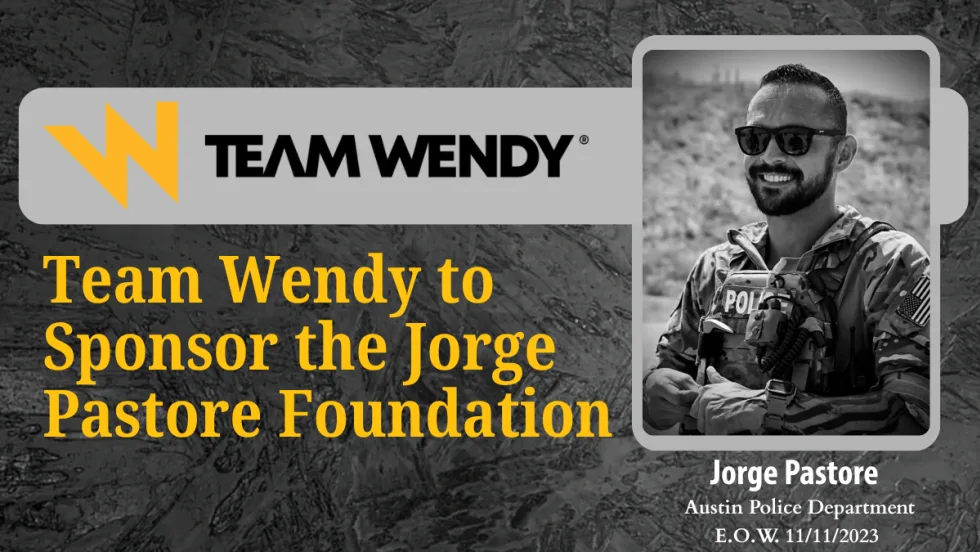
Team Wendy Announces Title Sponsorship of the Jorge Pastore Foundation
Team Wendy’s 3-year partnership with the Jorge Pastore Foundation expands access to programs that strengthen those who serve.
Read More →
National Law Enforcement Memorial and Museum Hosting 9/11 25th-Year Commemoration Ceremony
The National Law Enforcement Memorial and Museum is hosting a 9/11 25th Year Commemoration Ceremony on Sept. 11 at 4 p.m.
Read More →
National Law Enforcement Officers Memorial Fund Announces June 2026 Officers of the Month
The National Law Enforcement Officers Memorial Fund (NLEOMF) named 15 officers of the Chico Police Department (California) as the Officers of the Month for June 2026 for their roles in responding to an active-shooter incident at a public library.
Read More →