



Wargaming as Training
The reason wargaming training is so cost effective is that in its most basic form, the only resources an agency needs are time and imagination.

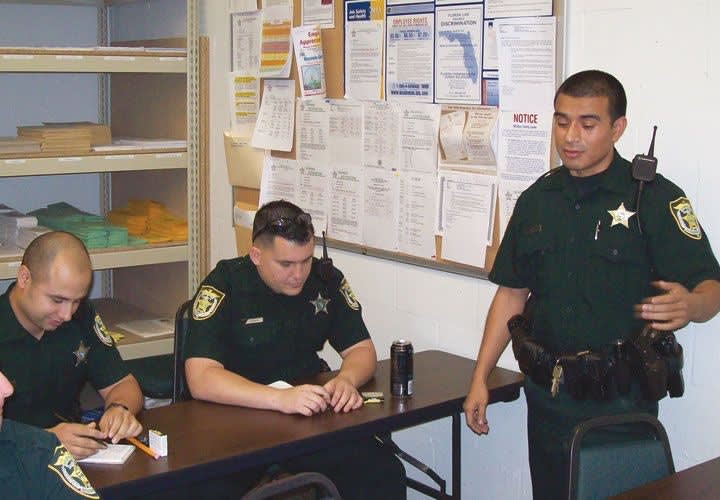
There is a school of thought that suggests good training is proportionate to the amount of money you spend; the more you spend the better the training. But effective trainers know that's not the case. They know the will to train is far more important than any other factor. They also know that the responsibility to train remains the same regardless of agency size or budget.
A successful strategy therefore starts by leaving excuses behind and continues with identifying specific goals and objectives. The final step is figuring out how you can meet them with the resources you have.
Training is an issue you meet head on and build upon over time. The trick is not reinventing the wheel but keeping it rolling. We can keep our training rolling forward with wargaming.
Though any agency can benefit from wargaming, it tends to be more beneficial for smaller agencies because they start off with fewer resources. It's simple, cost effective, and highly adaptable to individual needs. The reason it's so cost effective is that in its most basic form, the only resources an agency needs are time and imagination.
What Exactly is Wargaming?
Wargaming is a simulation based on theoretical strategic decision-making. It is used primarily by the military. A similar technique is used outside the military and is commonly referred to as table top exercises. This approach of working through scenarios with key players is used by Fortune 500 companies and the federal government.
A table top exercise can be as low-tech as using pen and paper or as high-tech as a computer simulation spanning several days. It is a proven training vehicle that allows you to evaluate your effectiveness during a critical incident before one happens. Instead of waiting for the real thing to surprise you, you run through it theoretically first.
The intrinsic value of this process is it allows you to train at any level and work on any issue. Since your only limitations are time and imagination, funding and agency size can no longer be viewed as obstacles.
In his book "Leadership," former New York City Mayor Rudy Giuliani attributed much of his response tactics after the attack of the Twin Towers on September 11, 2001, to this type of training. Members of Giuliani's key staff routinely participated in many table top exercises. One in particular revolved around a single engine aircraft slamming into one of the twin towers.
Obviously that simulation was not on the same scale as the terrorist attack, but it did give Giuliani's staff an opportunity to work out some of the bugs in their overall response planning. By the end of the exercise, the group was able to resolve many important issues that had not been confronted before. Many key issues were simply identified from casual conversation between participants.
I can only imagine the number of what ifs and I never thought of that befores going on. When the terrorist attack did come, Giuliani and his crew responded with a higher level of preparedness than had they not done their table top exercise.[PAGEBREAK]
What Do You Wargame?
The scenarios you develop will depend on your specific goals and objectives. It can be as basic as asking your squad to go over the necessary steps of an in-progress call like a bank robbery or a barricaded suspect. It could be more complicated like handling a train derailment. You also have the option of incorporating previous training and seeing how much has been retained.
The depth and breadth of the scenarios you can create are almost endless. One of the keys as facilitator is to base the exercise on what you intend to accomplish.
In other words, you tailor the training to meet a specific need. A scenario for a detective might be different than the one you create for a street cop. This strategy also works well for training supervisors. If you are a first line supervisor, you may want to evaluate your squad. If you are a second line supervisor, you may just want to work with your first line supervisors. Whether working with one, 10, or 100, the procedures are fundamentally the same.
One thing I have incorporated in the past is asking for more than just one level of response. I have taken a scenario and asked members of my command to think in terms of themselves plus one level up. As a sergeant, I made my squad answer both as a first responder and as an acting sergeant.
Responding with the next level up makes people think outside of their comfort zone, thus improving their own responses in the process. This helps with the overall decision-making process because it forces everyone involved to look at the bigger picture.
This tactic can easily apply to any level of your agency's organization. If you use sergeants and lieutenants for first and second line supervisors, you could ask for responses from positions such as officer to sergeant, sergeant to lieutenant, and so on up the organizational ladder. It places someone else in the hot seat.
You often hear murmurs of how things should have been done. It's the old battle cry of if I were in charge things would have been different. Here is the perfect opportunity to let them do just that; put up or shut up. It's been my experience that if you are not part of the solution you are part of the problem.
Working With the Smallest Common Denominator
As an example, let's focus on the smallest common denominator found within an agency. We'll use low-tech means and discuss how it might play out. Every agency has some sort of response element that handles its day-to-day operational needs. For the sake of this article we will call it a squad even if for some agencies it might mean having a squad of one.
As the supervisor, you will give your squad a written scenario. Your scenario has all the information needed to start the ball rolling. It will be no different than any other initial call for service that comes out over the radio. You then ask your squad to respond in writing as to their intended course of action. You specify that their answer will come twofold; as a first responder and next as an acting supervisor. They are to use their standard operating procedures, agency policies, and any applicable laws (local, state, federal) when formulating their response.
As facilitator, however, you do have to make sure participants have any resources they need or at least the knowledge of where to get them. For example, if you're running a Hazmat scenario but your agency does not issue the Emergency Response Guide, you can direct the participants to the interactive Website for it online. Lastly, include a time frame for when the project is due and make sure you schedule a debriefing.
If overtime is a consideration, you can save time by giving your squad the opportunity to finish the project while at work. I used to give my squad 30 minutes every shift to work on their assignments assuming the call load and staffing allowed it. Let's face it, there is always some down time during your shift. Instead of networking with a zone partner (meeting to talk about last night's game), they can work on the project.
When the completion date arrives, you gather up all the answers and review them individually and comment back with notes. You next review them as a unit and go over best case responses at your debrief. It's an opportunity to work out any deficiencies you identified and work toward streamlining your response. If all goes well, you have completely gone through a course of action, made adjustments for the future, and become better prepared in the process.
When you do come up against a similar scenario in real time, it will not be as unfamiliar as if it were your first time handling it. Sports science acknowledges the power of visualizing. The mind doesn't care if the incident is real or imagined. As you work through it, it gets stored in your mind the same way.
When you start looking for how to handle something and reach into the filing cabinet of your mind for answers, instead of finding a blank file you will find information you can use. That is one of the main reasons this type of training is so important. Another reason is that as with New York's Mayor Giuliani, many possible issues that would have negatively impacted your response will be identified and cleared up well in advance of an actual incident. With some time and imagination, you can make wargaming training work for you.
Amaury Murgado is a road patrol lieutenant with the Osceola County (Fla.) Sheriff's Office. He is a retired master sergeant (U.S. Army Reserve), has 23 years of law enforcement experience, and has been involved with martial arts for 37 years.
Wargaming Tips
1. Focus on your mission.
2. Identify goals and objectives.
3. Create a realistic scenario/problem.
4. Request a response using agency policy and procedure.
5. Review responses individually and collectively.
Do you use table top exercises for training? Tell us about it in the comments below.
More Patrol
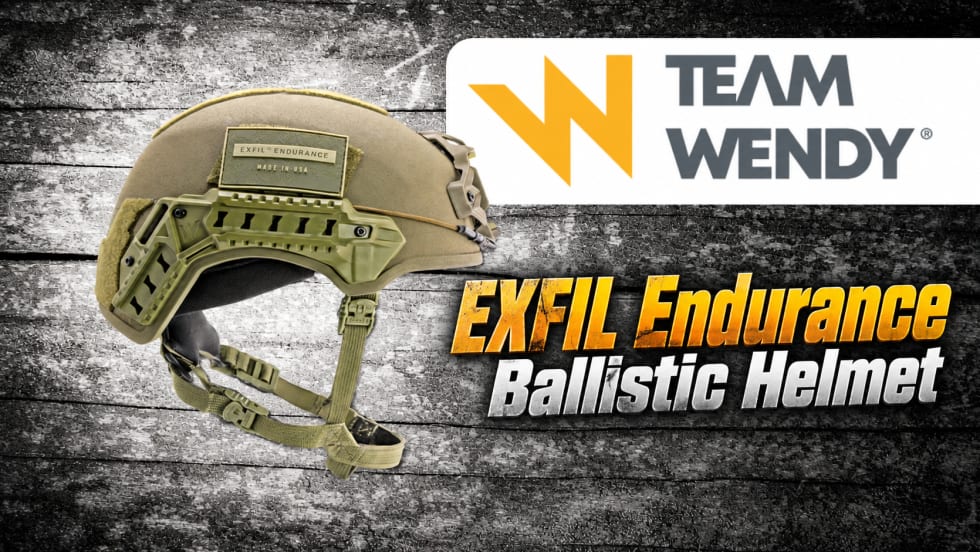
Team Wendy Introduces the EXFIL Endurance Ballistic Helmet, Engineered to Reduce the Burden of Extended Wear
Team Wendy has launched its EXFIL Endurance, a new lightweight ballistic helmet engineered to deliver protection, comfort, and fit during demanding, extended operations.
Read More →
The First Responders Children’s Foundation National First Responders Day Roll Call of Heroes Ceremony Returns to Times Square, NYC
First Responders Children’s Foundation (FRCF), in collaboration with T-Mobile, will host the Roll Call of Heroes ceremony in Times Square to commemorate National First Responders Day on Wednesday, Oct. 28. During the event, FRCF will present 18 Hero Awards.
Read More →
Streamlight to Showcase Newest Lighting Products for Law Enforcement Professionals at IACP 2026
Streamlight will showcase its newest lights for law enforcement at the International Association of Chiefs of Police Annual Conference & Expo. Featured lights will include the TLR-3 X, the PolyTac 1X, and more.
Read More →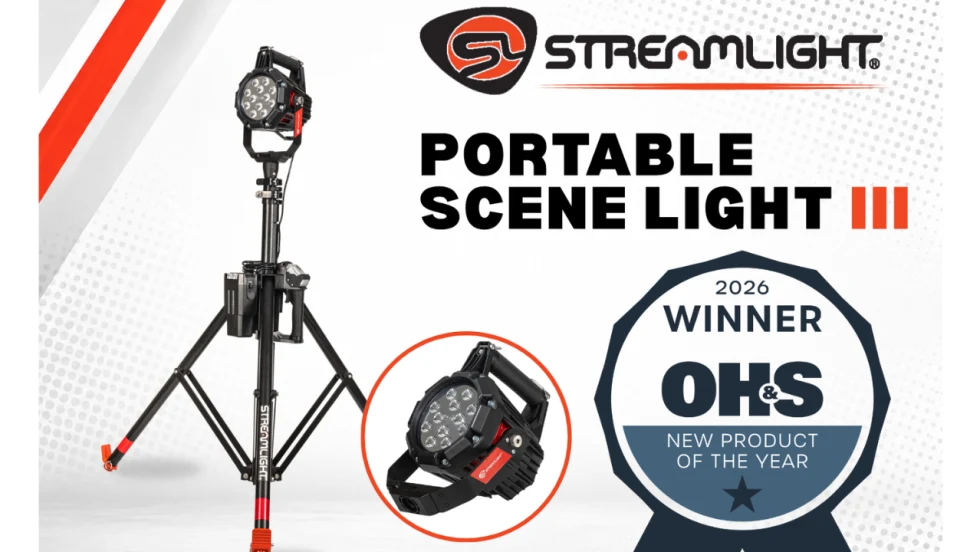
Streamlight Portable Scene Light III Wins 2026 OH&S New Product of the Year Award
Streamlight’s Portable Scene Light III has won the 2026 Occupational Health & Safety (OH&S) New Product of the Year Award in the Lighting category.
Read More →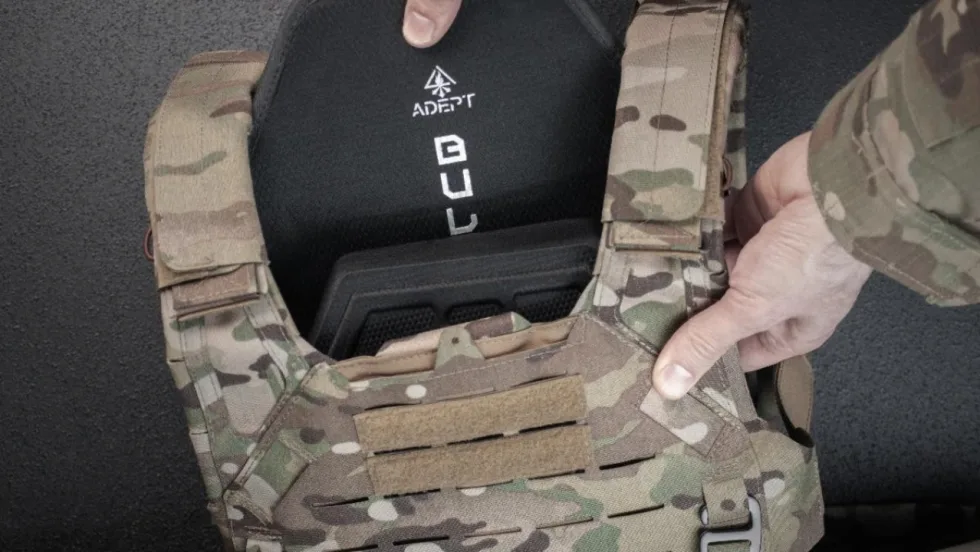
Adept Armor Introduces Two New Rifle Plates
Adept Armor has launched two new Level IV ballistic plates, the Emperor and the Archon Mark 2, which brings Adept Armor’s new Quatroid ceramic to the high-threat, performance-value center of the range at 5.2 pounds.
Read More →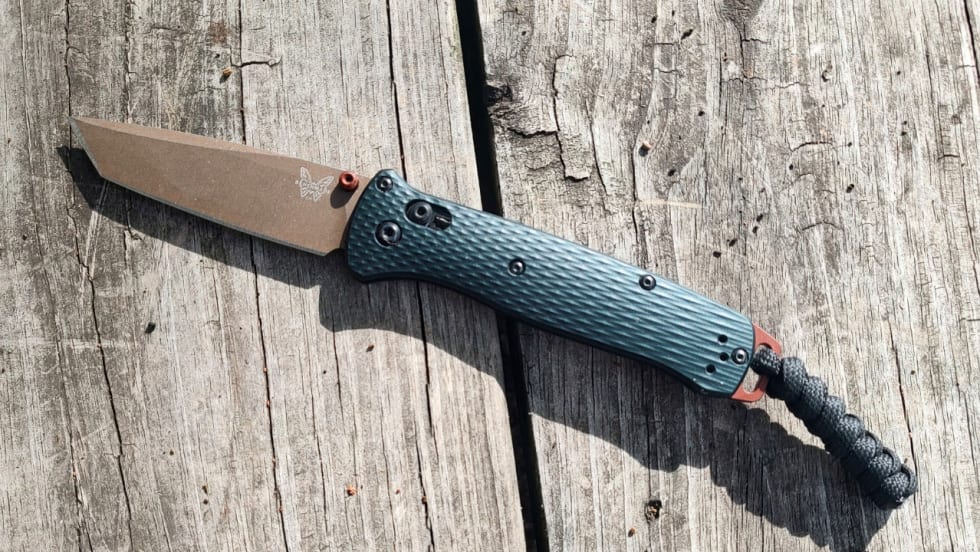
POLICE Product Test: Benchmade Bailout
The Benchmade Bailout is a slim, lightweight carry knife with a deep-ride pocket clip and comes in a variety of blade steels and scales. Here is a detailed review of the Taiga Green Bailout, released earlier this year.
Read More →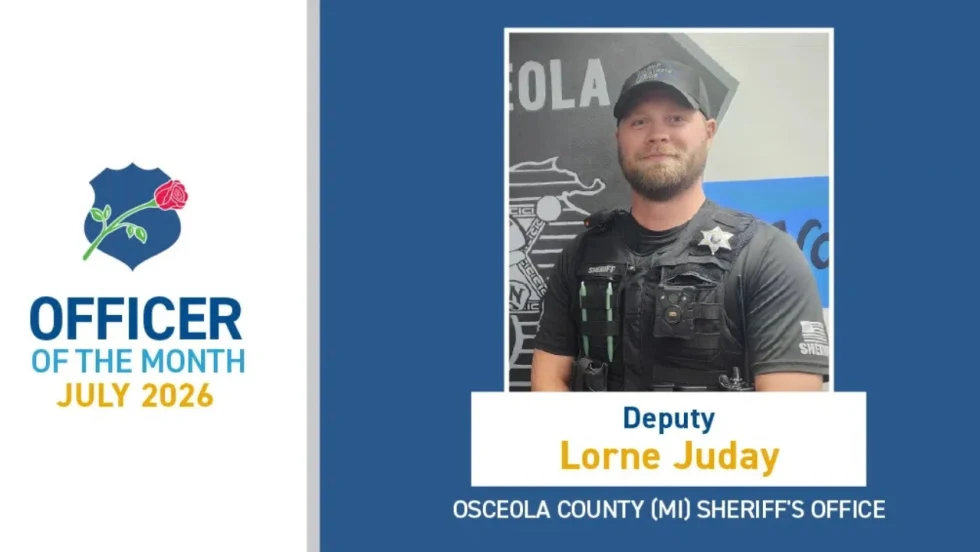
NLEOMF Announces July 2026 Officer of the Month
NLEOMF honored a Michigan deputy sheriff as the July 2026 Officer of the Month for rescuing a trapped driver from a burning vehicle following a Fourth of July crash.
Read More →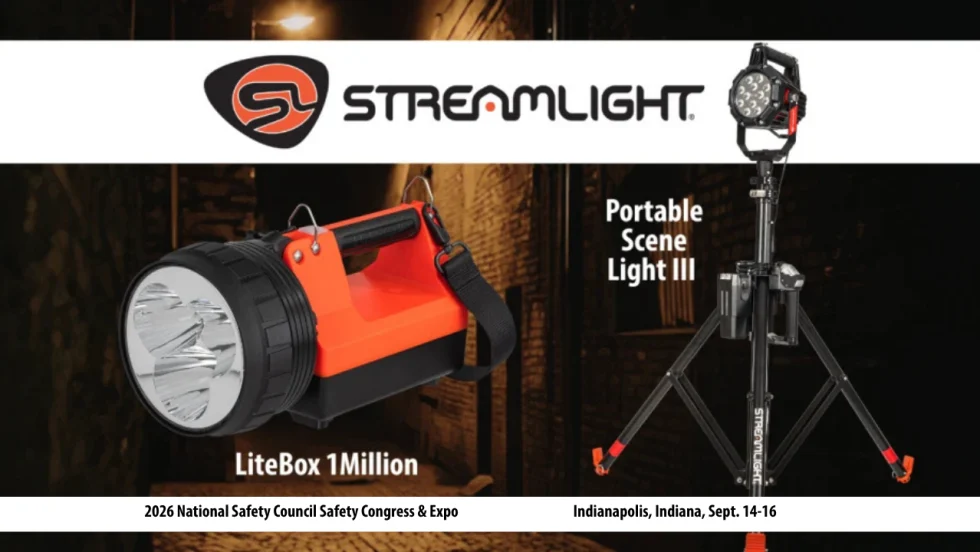
Streamlight to Showcase Newest Lighting Products at National Safety Council’s Safety Congress & Expo 2026
Streamlight will showcase its latest lights, including the Portable Scene Light III and the LiteBox 1Million, at the 2026 National Safety Council (NSC) Safety Congress & Expo.
Read More →
The 2027 World Police & Fire Games Set for Perth, Australia
The 2027 World Police & Fire Games (WPFG) will take place in Perth, Western Australia, from Friday, March 12 through Sunday, March 21, 2027.
Read More →
5.11 Partners with National Fallen Firefighters Foundation to Support #ForThe343
5.11 has joined the nationwide movement honoring the 343 New York City Fire Department firefighters lost on Sept. 11, 2001.
Read More →