



War Wagons
One of the first times I realized the need for armored vehicles in police operations was during the 1968 Glenville Shootout and riot in Cleveland. Here's what happened.

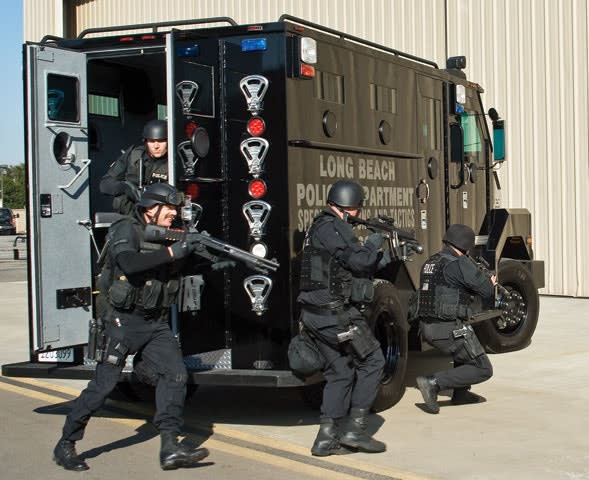
Today, there is a greater variety of ARVs available to law enforcement than ever before and most mid- to large-size agencies have their own ARV(s) or have access to one that they share with other agencies. So to say that ARVs have finally arrived would be an understatement.
In many ways, the popularity of ARVs in law enforcement parallels SWAT, which began in the tumultuous riot/sniper era of the 1960s.
One of the first times I realized the need for armored vehicles in police operations was during the 1968 Glenville Shootout and riot in Cleveland. Here's what happened.
Cleveland police officers conducting surveillance on a militant group's headquarters suddenly found themselves shot at by 25 militants armed with M-1 carbines. Police reinforcements raced to the scene from across the city, only to come under intense rifle fire from the militants who had fanned out throughout a multi-block area. The scene was deadly and chaotic, made worse by the darkness the fact that the police had no portable radios, no body armor, and little extra ammunition.
When the 90-minute gun battle ended, seven people were dead: three police officers, a civilian helping police, and three militants. Another dozen officers were seriously wounded, and one died years later from his wounds, bringing the total of police killed to four.
Many of the police casualties occurred as a result of courageous attempts to rescue downed officers. Calls for armored vehicles went out over the airwaves and, eventually, seven Brinks armored trucks arrived. It was too little, too late. But the Brinks trucks proved their worth in the ensuing massive rioting that followed the shootout.
Lesson learned. Through a 1970 federal grant, the Cleveland Police Department formed a new tactical unit, equipped with a custom-built armored command post. Cleveland PD's original armored vehicle would continue to see service until late 1997, when it was replaced by a new, improved ARV.
Cleveland PD was an early adopter of armored vehicles. Most agencies got their first ARV when U.S. Military surplus armored cars—mostly Peacekeepers and some M113 APCs—were made available to police in the '80s and '90s, often for the cost of transport. As surplus, many of these ARVs required mechanical overhauling, but at least now a growing number of LE agencies finally had ARVs. An additional handful of LE agencies (including the Los Angeles Police Department) were able to obtain used ARVs (V-100s and Dragoons) through creative persistence.
Of course, the military eventually ran out of surplus ARVs, so many law enforcement agencies acquired used commercial armored transport trucks and converted them for SWAT with beefed up armor. Between military surplus and commercial conversions, ARVs were becoming more common throughout America law enforcement.
In the last decade, a new wave of commercial ARVs specifically built for law enforcement has hit the market. Few agencies could afford these "big-ticket" items, so initially the expense made it slow-going for the police armored vehicle industry.
Then 9/11 changed law enforcement's attitude, and the formation of the Department of Homeland Security and its grant programs led to unprecedented funding for local law enforcement equipment, including ARVs.
Responding to this increased demand, ARV manufacturers are developing the next generation of ARVs to meet the needs of contemporary tactical officer.
Virtually all contemporary ARVs are operator friendly with powerful diesel engines, automatic transmissions, heavy-duty chassis, armor capable of stopping high-caliber rifle rounds, multiple doors and gunports, creature comforts such as heat and air conditioning, and other desirable features that make early ARVs look primitive by comparison. Also, ARV manufacturers are almost always willing to work with end users to provide custom features and options that meet the needs of individual agencies.
The following is a look at some ARV manufacturers and some of their products.
Alpine Armoring
Alpine Armoring offers two primary ARVs for SWAT: the Pit Bull and the larger Bulldog.
Both have the capacity to carry 10 to 14 operators. And both provide all-around ballistic protection, including floor and roof armor and run-flat tire insets. CBRNE protection is available as an option.
The Pit Bull has six gunports, a front ram-type bumper, side and rear standing platforms and/or running boards, and external grab bars. It's built on a Ford F550XL truck chassis, 4x4, turbo diesel, with automatic transmission. It also has climate control.
The larger Bulldog has seven gunports, grab bars, and a ram front bumper. It's built on an International Navistar 4700 chassis.
Need FREEInfo? Use #13410
GENERAL PURPOSE VEHICLES
General Purpose Vehicles (GPV) produces a number of armored vehicles for both police and military. The two GPV ARVs with the most application for law enforcement are the 4x4x4 Sergeant and the larger 6x6x6 Commander.
Both the Sergeant and Commander offer very high ballistic protection with skins of high-end hardened steel. The vehicles seat a driver and a passenger up front and 10 fully equipped tactical officers in the rear. Both vehicles are available in two-wheel drive or four-wheel drive, and feature multiple gunports, great road visibility, run-flat tire inserts, 12-volt electrical systems, and anti-lock brakes. They can reach highway speeds of 75 mph.
The Sergeant has an additional pair of doors for the passenger compartment and is capable of fording up to three feet of water. A central tire inflation system is available as an option.
The Commander is fully amphibious. It also has a deep hull design that is anti-tank mine resistant, is equipped with multiple panoramic periscopes and thermal/optical cameras, and features ride height control with enhanced side and grade slope capability.
An interesting option available on both ARVs is an NBC over-pressure system to protect the occupants from outside contaminants in "hot zones."
During the first deployment for Pinelles County's new Sergeant, the ARV pulled into the suspect's driveway, and he immediately surrendered…to the vehicle. That's an example of what an ARV can do for a police agency.
Need FREEInfo? Use #13411
Lenco Armored Products
Lenco is the largest ARV manufacturer in the United States, with an estimated 4,000 ARVs worldwide. Lenco's two primary ARVs are the BearCat and the much larger B.E.A.R. (Ballistic Engineered Armored Response).
A growing number of agencies, including the LAPD, the Los Angeles County Sheriff's Department, the Dallas Police Department, and others now deploy both the B.E.A.R. and BearCat in tandem during high-threat incidents, with great success.
On March 16, 2006, I had a chance to witness this tactic on live TV in Los Angeles during TREXPO West. What began as a vehicle pursuit, turned into a standoff. LAPD SWAT deployed both the B.E.A.R. and the BearCat, working in tandem, to successfully resolve the situation.
Both the B.E.A.R. and the BearCat are built on commercial truck chassis, using commercial parts. This makes them mechanic-friendly and gives them warranty support from the manufacturer. Both vehicles have certified hardened steel armor and ballistic glass, capable of multi-hits, blast-resistant floors, specially designed gunports, roof hatches, and multiple ingress/egress doors.
The B.E.A.R.'s larger size allows up to 15 personnel to be transported and 25 to 30 persons to be evacuated. This is an ARV with multiple uses, including emergency/hostage rescue, TEMS, etc. The interior compartment is capable of housing the logistics needs of most SWAT teams.
Smaller than the B.E.A.R., the BearCat is well suited to easy maneuvering, particularly in urban and suburban environments with narrow streets.
Both ARVs are capable of maintaining highway speeds, an important consideration when time is of the essence.
The Southwest Enforcement Bureau (SEB) in Ohio has the original B.E.A.R. and, SEB Tactical Commander Lt. Mark Stepanovich says the vehicle has been a good investment. SEB now has access to two B.E.A.R.s. In fact, the Greater Cleveland region has a number of B.E.A.R.s and BearCats. That's a far cry from not too many years ago when Cleveland had the only ARV in the region.
Need FREEInfo? Use #13412
The Spiller Group
The Spiller Group's Rook is a multi-purpose tracked, armored vehicle that looks a lot like a miniature bulldozer.
Operators can deploy on the front and rear of the Rook shielded by armor that can stop rifle rounds. Its most interesting feature is an armored deployment and rescue platform, with hydraulic lift. The platform can be raised up to the level of a second floor window, and it is shielded by armor that has gunports. There is a sliding door in the armored shield, so officers can deploy forward through the shield.
Other features on the Rook include a breaching, surveillance device attachment (penetrating arm with camera), a vehicle extraction attachment, a grapple bucket (optional) for removal of barriers and obstacles, and a tactical video recording system.
The Rook is operated by a joy stick. Its tracks are rubber so it can be driven on roads without damaging the pavement. It can carry eight fully equipped operators, has heat and air conditioning, and it can be used in CBRN environments.
Need FREEInfo? Use #13413
Supreme Armored
Supreme produces a variety of armored vehicles, including the Avenger ARV and M.A.D. (Mobile Armored Device) specialty AV.
The Avenger features seating for 10 to 12, eight gunports, tow hooks, grab bars (all doors), running boards (sides and rear), and ladder roof access. Equipped with four-wheel drive, the Avenger ARV is capable of highway speeds (70 mph) and off-road operation.
Innovative features on the Avenger include front driver and passenger doors that swing open to the rear, with optional electro-magnetic door hold-backs. Also, there is an optional roof hatch with rotating turret and a stowable, height-adjustable turret platform.
The M.A.D. (Mobile Armored Device) is a one-officer electric vehicle designed for immediate entry and/or interdiction into hostile fire zones, including hostage rescue situations and active shooter response. It's capable of entering doorways and elevators and maneuvering inside buildings.
M.A.D. can maneuver over obstacles up to 1.5 inches tall, the swivel seat and all around visibility, with five gunports allow the officer inside to effectively cover all sides. In addition, the two front wheels and one rear wheel are designed to allow the M.A.D. to spin in a circle, if required. The vehicle is operated by joystick control and powered by two 24-volt electric motors. Options include spotlights, a weapons holder, and electric ventilation.
Need FREEInfo? Use #13414
TacArm
TacArm's Juggernaut is a rugged, multi-purpose, tracked armored vehicle developed by a Washington State SWAT operator. It looks kind of like a tracked backhoe, and it's designed to perform a lot of tasks that cannot be accomplished with a standard armored vehicle.
The Juggernaut's key feature is its telescoping hydraulic arm with a 24-foot reach. Using various attachments on this arm, operators can breach barricaded and/or fortified doors, windows, roofs, and attics; rip new openings in solid walls; and insert chemical agents or communication equipment such as throw phones.
Fully armored, the Juggernaut can be used to evacuate hostages and deploy operators. It can carry six operators inside its armored box, plus five more on a rear platform.
The Juggernaut's features include a hydraulic roof turret with adjustable gunport, a rubber track system, joystick operation, a flatbed trailer with tilt, and heat and air conditioning.
Need FREEInfo? Use #13415
A member of the TREXPO Advisory Board, Bob O'Brien co-founded Cleveland PD's full-time SWAT team and served with that unit for 25 years. The retired sergeant is also the founder of the R.J. O'Brien Group Ltd., a law enforcement training and consulting service that advises and trains SWAT teams.
More Special Units
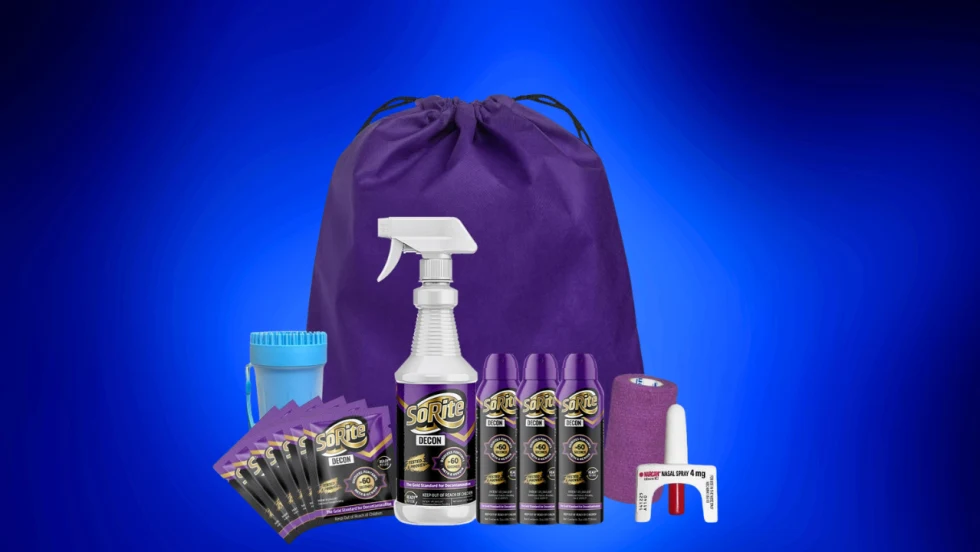
New K9 Decontamination Protocol Launched
A new K-9 protocol from the SoRite Company gives law enforcement agencies a standardized rapid-response framework to decontaminate K-9s, their handlers, and police vehicles, from dangerous narcotics.
Read More →
OZ Lifting Doubles Impact of K9 Guardian Program
In response to the positive impact the program has had on local communities. OZ Lifting Products has expanded its K9 Guardian Program by committing to fund a second police dog each year.
Read More →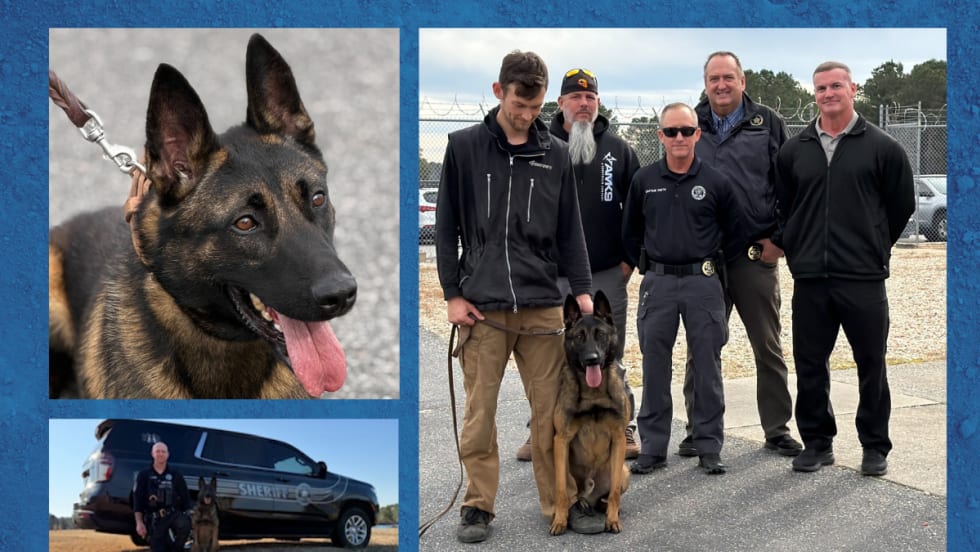
Constellis’ AMK9 to Donate K9 Officer to Currituck County Sheriff’s Office
AMK9 will donate a fully trained K9 officer to the Currituck County Sheriff’s Office K9 Unit. DAX, a 20-month-old Belgian Malinois, joined his new handler and has begun training at the Constellis Training Center.
Read More →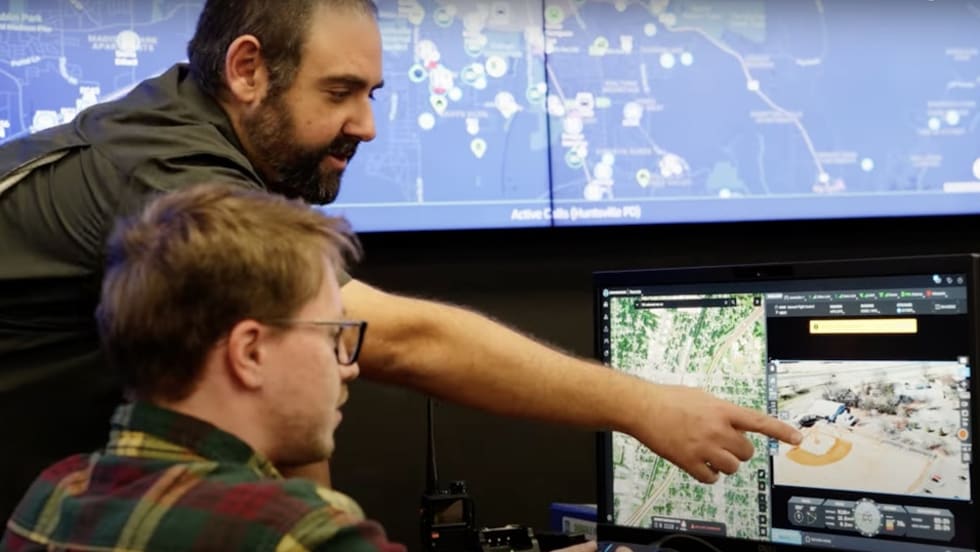
Ohio’s Statewide Drone First Responder Program to Take Flight
Over the next two years, the Ohio DFR Pilot Program will equip municipalities with advanced drone systems, deliver comprehensive training for first responders, and enable FAA-approved Beyond Visual Line of Sight operations.
Read More →
Louisiana Motor Sergeant Dies from Injuries Suffered in June “Intentional” Crash
A motor officer, Sgt. Caleb Eisworth was on his way to participate in a funeral escort when he was struck by another vehicle.
Read More →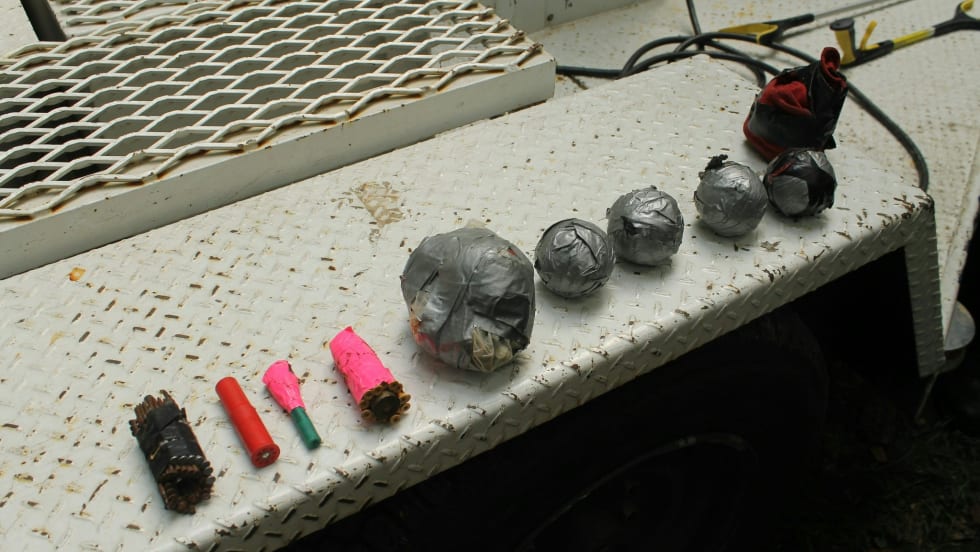
Tennessee Officers Say Man Tried to Detonate IED During Arrest
Inside the bedroom officers found what they believed to be an IED. The officers evacuated the house and called for the Chattanooga Police Bomb Squad and ATF agents.
Read More →
Florida School Officer Dies After On-Duty Medical Emergency
Sergeant Greg Graff was “preparing school leaders for the upcoming year during a safety training program at Clearwater High School,” the school district said.
Read More →
Grenade is Missing from Explosion That Killed 3 LASD Deputies
ATF Special Agent in Charge Kenny Cooper said definitively that only one grenade detonated at the facility on July 18.
Read More →
Los Angeles County Sheriff's Department Names Deputies Lost in Friday Explosion
LASD said Detective Joshua Kelley-Eklund, Detective Victor Lemus, and Detective William Osborn who were all assigned to Special Enforcement Bureau’s Arson Explosives Detail were killed in the incident.
Read More →
Maryland State Police Helicopter Rescues Victim from Overturned Boat in Chesapeake Bay
The Maryland State Police Aviation Command Trooper 7 crew, the MSP helicopter based in California, Maryland, were monitoring the county dispatch radio, overheard the dispatch, and self-launched.
Read More →