



Vehicle Searches: Where and When?
It would be great if there were a single, simple rule to tell you where and when you may lawfully search a vehicle for contraband or evidence. Unfortunately, there are multiple rules, and sometimes more than one of them may apply.

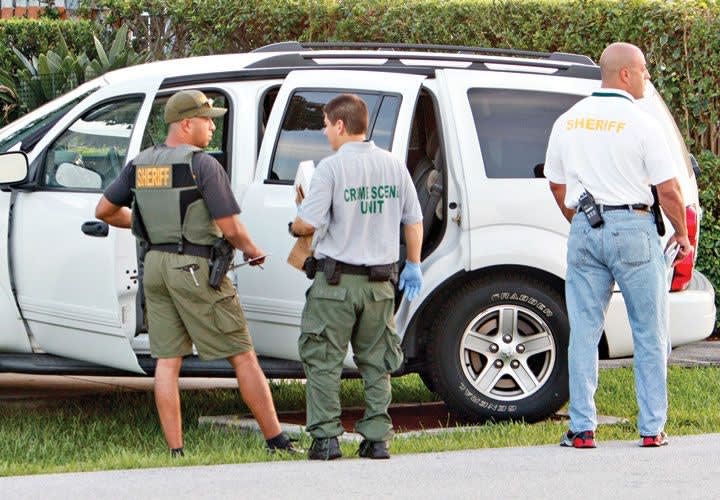
Must the search of a vehicle be conducted where the vehicle is first encountered, or could it be done at the station or impound lot? Must the search be carried out immediately, or could it be delayed to a later time?
It would be great if there were a single, simple rule to tell you where and when you may lawfully search a vehicle for contraband or evidence. Unfortunately, there are multiple rules, and sometimes more than one of them may apply.
The only way to determine where and when a vehicle search may lawfully be conducted is to identify the justification for searching. This is because the Supreme Court has said that the circumstances allowing the search to be made will dictate where and when a search is reasonable. In other words, the why controls the where and the when of vehicle searches. Here are the basic rules.
Search Warrants
If your justification for searching is a warrant, you may search in accordance with the authority set forth there. Typically, the warrant will permit a full search of the vehicle and all of its compartments and containers that could conceal the objects of the search. (U.S. v. Ross) If the affidavit of probable cause supports removal to a different location for disassembly or laboratory analysis, that can be authorized in the warrant also.
If you have no warrant, you need one or more of the recognized exceptions for warrantless search. (Katz v. U.S.) The following summaries describe the most common exceptions.
Incident to Arrest
When any recent occupant of the vehicle is lawfully arrested, the passenger compartment and all compartments and containers within it may be searched (but not the trunk). (New York v. Belton) This search may only be made while the arrestee is unsecured and within reaching distance of the passenger compartment, unless there are reasons to believe evidence of the arrest offense may be found in the vehicle. (Arizona v. Gant) A vehicle search incident to arrest must be completed at or near the time and place of arrest; it may not be done later at another place. (Dyke v. Taylor)
Fleeting Targets
If you have PCto believe there is seizable contraband or the fruits, instrumentalities, or evidence of crime inside the vehicle, and if you have lawful access to the vehicle (no garage entry required), you may search any part of the vehicle and its contents that could contain the objects of your search. (U.S. v. Ross) This includes closed and locked containers. (California v. Acevedo)
Unlike a search incident to arrest, this search need not be made immediately at the scene. It may be made later at another location, as long as you continue to have PC and lawful access. This concept eluded state and federal courts for many years, despite the Supreme Court's repeated restatement of it, as shown by the following cases:
Carroll v. U.S.-OK to rip the upholstery of a car stopped on the highway to find bootleg whiskey
Chambers v. Maroney-OK to search robbers' car after it was driven to the police station
Texas v. White-OK to search arrestee's car at the station 45 minutes after it was driven there
Pennsylvania v. Kilgore-OK to search drug dealer's car parked in a driveway, even though there was no exigency
Pennsylvania v. Labron-OK to search drug dealer's car on the street, even though there was time to get a warrant
Maryland v. Dyson-OK to search interdicted drug courier's car on the highway
Michigan v. Thomas-OK to search air vents under the dashboard
Florida v. Meyers-OK to search again at the impound lot if the property for which there is PC was not found during an earlier search
U.S. v. Johns-OK to search contents of a drug truck three days after impound
Consent
Consent searches are governed by the conditions (if any) imposed by the person who gives consent-or by you. If you request unconditional consent ("OK if I search your car?"), you may search any part of the vehicle and any containers you encounter, unless the suspect withdraws his consent or tells you that a particular compartment or container is off limits. (Florida v. Jimeno) It's best not to impose restrictions by the way you ask for consent. ("May we search your car for drugs/weapons?" may limit the places you can look; "May I take a quick look inside your car?" puts a time limit on your search and arguably does not extend to the trunk.)
Probation/Parole
In some jurisdictions, convicted criminals may be placed on probation or parole on condition they submit any vehicle they own or control to warrantless, suspicionless search by any law enforcement officer. Under such circumstances, a thorough search is permissible. (U.S. v. Knights; Samson v. California)
Officer Safety
At a lawful traffic stop, if you see evidence that the suspect may be armed and dangerous (such as visible guns, ammo, holsters, gun cases, knives, etc.), you may "pat down" the passenger compartment of the vehicle for weapons. This search is limited to areas, compartments and containers that could conceal a weapon. (Michigan v. Long) This limited weapons search may also be based on reliable information from identified citizens (Adams v. Williams) or from official channels. (U.S. v. Hensley)
Instrumentality
In certain kinds of crimes (hit-run, drive-by shooting, kidnap-rape, and assault/murder by vehicle, for example), the vehicle may be the implement the suspect uses to accomplish the crime. When the vehicle serves as an instrumentality of the crime, it may be seized (assuming no garage entry) and subjected to search and laboratory examination. (California v. Carney-child molestation occurred inside motor home; Cardwell v. Lewis-car used to push the victim's car over a cliff; Cooper v. California-car used to transport narcotics). This exception does not apply if the vehicle was merely used as transportation to and from the crime scene.
Inventory
Strictly speaking, an inventory is not a targeted search for contraband or evidence but is an administrative procedure used to account for personal property found inside a vehicle that is impounded or parked and locked at the scene of arrest. The purposes of the inventory are to safeguard valuables, to remove dangerous instrumentalities, and to protect the agency against false claims of loss. Evidence discovered during the course of an inventory conducted according to standard procedure is admissible under the "plain view" doctrine. (Colorado v. Bertine; Florida v. Wells)
Border Search
At the international border or its "functional equivalent" (such as at highway checkpoints near the border), no suspicion is required to inspect vehicles entering the country. A search can be as thorough as necessary to find impermissible property. (U.S. v. Flores-Montano-OK to disassemble the fuel tank of drug smuggler's car).
Local Rules May Vary
Because some statesrely on state constitutions or statutes to impose greater restrictions on police activity than those imposed by the Fourth Amendment, officers in those states may not be able to base their vehicle searches on the U.S. Supreme Court decisions cited above.
Devallis Rutledge is a former police officer and veteran prosecutor who currently serves as Special Counsel to the Los Angeles County District Attorney. He is the author of 12 books, including "Investigative Constitutional Law."
More Patrol

Adept Armor Introduces Two New Rifle Plates
Adept Armor has launched two new Level IV ballistic plates, the Emperor and the Archon Mark 2, which brings Adept Armor’s new Quatroid ceramic to the high-threat, performance-value center of the range at 5.2 pounds.
Read More →
POLICE Product Test: Benchmade Bailout
The Benchmade Bailout is a slim, lightweight carry knife with a deep-ride pocket clip and comes in a variety of blade steels and scales. Here is a detailed review of the Taiga Green Bailout, released earlier this year.
Read More →
NLEOMF Announces July 2026 Officer of the Month
NLEOMF honored a Michigan deputy sheriff as the July 2026 Officer of the Month for rescuing a trapped driver from a burning vehicle following a Fourth of July crash.
Read More →
Streamlight to Showcase Newest Lighting Products at National Safety Council’s Safety Congress & Expo 2026
Streamlight will showcase its latest lights, including the Portable Scene Light III and the LiteBox 1Million, at the 2026 National Safety Council (NSC) Safety Congress & Expo.
Read More →
The 2027 World Police & Fire Games Set for Perth, Australia
The 2027 World Police & Fire Games (WPFG) will take place in Perth, Western Australia, from Friday, March 12 through Sunday, March 21, 2027.
Read More →
5.11 Partners with National Fallen Firefighters Foundation to Support #ForThe343
5.11 has joined the nationwide movement honoring the 343 New York City Fire Department firefighters lost on Sept. 11, 2001.
Read More →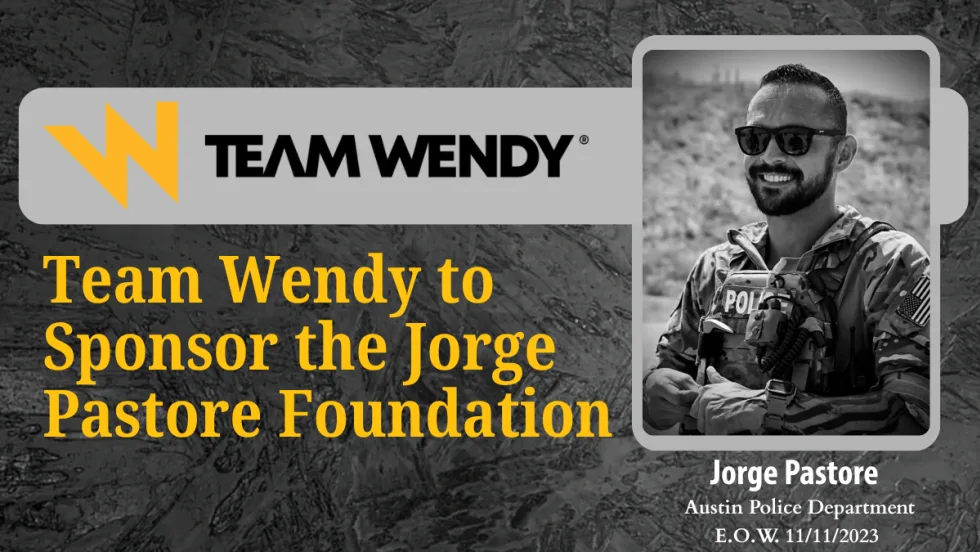
Team Wendy Announces Title Sponsorship of the Jorge Pastore Foundation
Team Wendy’s 3-year partnership with the Jorge Pastore Foundation expands access to programs that strengthen those who serve.
Read More →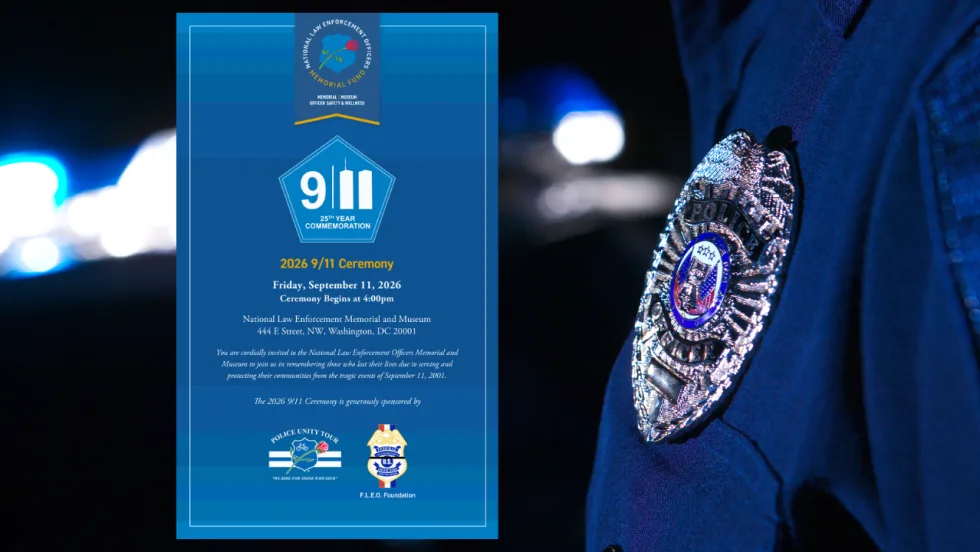
National Law Enforcement Memorial and Museum Hosting 9/11 25th-Year Commemoration Ceremony
The National Law Enforcement Memorial and Museum is hosting a 9/11 25th Year Commemoration Ceremony on Sept. 11 at 4 p.m.
Read More →
National Law Enforcement Officers Memorial Fund Announces June 2026 Officers of the Month
The National Law Enforcement Officers Memorial Fund (NLEOMF) named 15 officers of the Chico Police Department (California) as the Officers of the Month for June 2026 for their roles in responding to an active-shooter incident at a public library.
Read More →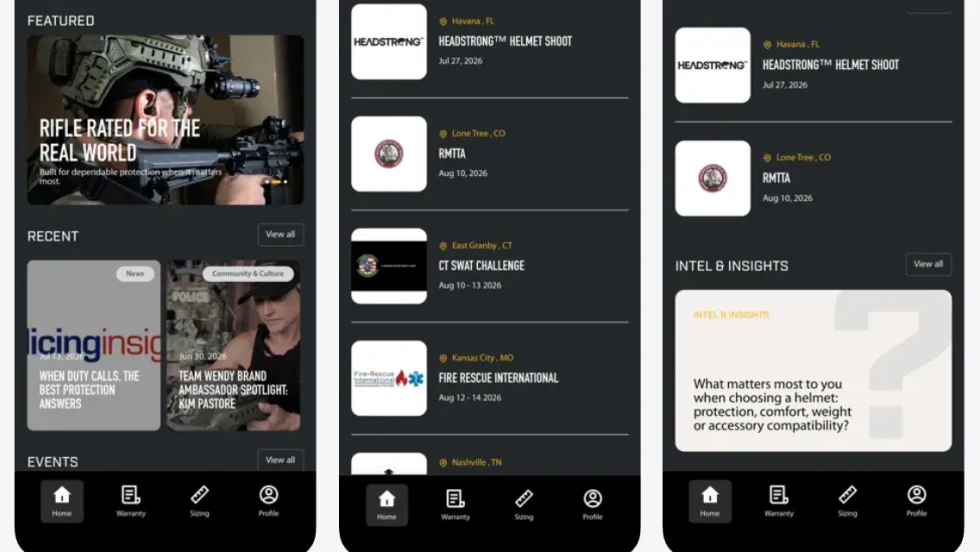
Team Wendy App Creates New Digital Hub for Helmet Owners
The Team Wendy Community App provides one location for warranty registration, size-fit tools, product updates, and community connection. For helmet owners, the new app creates a simpler path to the information and tools that matter most.
Read More →