



Unlawfully Prolonged Traffic Stop
Is it OK under the Fourth Amendment to turn a traffic stop into a criminal investigation? Of course it is, provided the justification for the additional investigation is developed during the reasonable duration of the traffic stop—not after.


On April 19, 1995, Trooper Charlie Hanger of the Oklahoma Highway Patrol stopped a car that had no license plate. He told the lone occupant, "Driver, get out of the car." Moments later, Hanger saw the bulge of a handgun in a shoulder holster beneath the driver's windbreaker. What started as a "routine" traffic stop then turned into an arrest for carrying a concealed weapon, and this arrest subsequently led to the conviction and execution of the driver for the murder of 168 men, women, and children in the Oklahoma City bombing that had occurred 90 minutes before Trooper Hanger made the stop on Timothy McVeigh.
Is it OK under the Fourth Amendment to turn a traffic stop into a criminal investigation? Of course it is, provided the justification for the additional investigation is developed during the reasonable duration of the traffic stop—not after, as the U.S. Supreme Court recently explained.
Rodriguez v. U.S.
A K-9 officer in Nebraska saw a vehicle drive off the highway onto the shoulder, and then jerk back onto the pavement. Because Nebraska law prohibits driving on the shoulder, the officer stopped the vehicle. Driver Dennys Rodriguez and his passenger stayed inside the SUV while the officer obtained license, registration, and insurance documents and ran a warrant check. There were no wants, so the officer issued a warning ticket to Rodriguez.
Thereafter, the officer requested permission to run his dog around the vehicle, but Rodriguez refused. Not wanting to conduct a dog sniff without a backup officer on scene, the officer detained the occupants of the vehicle another seven minutes. After backup arrived, the K-9 sniffed the vehicle and alerted for drugs; a search revealed a bag containing more than 50 grams of meth. Rodriguez was arrested and charged with a federal offense.
Before trial, Rodriguez moved to suppress the drugs as the fruit of an unlawfully prolonged detention. The trial court denied suppression, and the Eighth Circuit Court of Appeals upheld that ruling, reasoning that the brief detention after the traffic warning had been issued amounted to only a "de minimis" intrusion that did not violate the Fourth Amendment. In a 6-3 ruling, the Supreme Court reversed.
The majority opinion said this: "A seizure for a traffic violation justifies a police investigation of that violation. Because addressing the infraction is the purpose of the stop, it may last no longer than is necessary to effectuate that purpose. Authority for the seizure thus ends when tasks tied to the traffic infraction are—or reasonably should have been—completed.
"We hold that a police stop exceeding the time limit needed to handle the matter for which the stop was made violates the Constitution's shield against unreasonable seizure. A seizure justified only by a police-observed traffic violation, therefore, becomes unlawful if it is prolonged beyond the time reasonably required to complete the mission of issuing a ticket for the violation."
Since the purpose of the traffic stop was satisfied once the warning ticket had been issued, the court held that the additional seven-minute detention of Rodriguez for investigation of possible narcotics violations was not permissible within the scope of the traffic stop.
Permissible Activity
Even though the Supreme Court found Rodriguez's detention past the time necessary to complete traffic enforcement activities to have been unjustifiable by the moving violation, the court acknowledged that a normal traffic stop includes authority for several actions you may routinely take.
Ordering out. It remains the law that officers may order all occupants out of the vehicle at any lawful traffic stop, for officer safety. The court's earlier rulings to this effect in Pennsylvania v. Mimms and Maryland v. Wilson were specifically acknowledged in Rodriguez.
Demanding and examining documents. The Supreme Court also recognized that normal traffic enforcement activities may properly include "checking the driver's license and inspecting the automobile's registration and proof of insurance."
Running warrant checks. According to the court, "Normal inquiries incident to the traffic stop include determining whether there are outstanding warrants against the driver." The time it takes to get results on your warrant check provides a good opportunity to run the K-9 (safety permitting), or to question the occupants, or to make plain-view observations through the car windows, all of which may establish grounds for further detention or arrest and search.
Concurrent, unrelated investigation. While you're waiting for the warrant check to come back, or as you perform the document inspection, you may investigate unrelated criminal activity, as long as doing so doesn't prolong the stop. Said the court, "The Fourth Amendment tolerates certain unrelated investigations that do not lengthen the roadside detention."
The court gave as examples of its prior cases upholding legitimate investigative activities that could be carried out during a traffic stop, Illinois v. Caballes (OK for one officer to run the K-9 around the car while another officer was writing a ticket), and Arizona v. Johnson (OK to question a passenger about suspicious activities while writing the driver a citation). In both of these cases, the unrelated investigation did not prolong the traffic detention.
Requesting consent to search. Although the Rodriguez opinion did not address it, the Supreme Court has also said that officers may request consent to search during a traffic stop, even though there may be no suspicion of criminal activity. (Ohio v. Robinette)
Probation and parole searches. Another earlier Supreme Court ruling allows officers to detain and search a person known to be subject to suspicionless, warrantless search and seizure as a condition of a grant of probation or release on parole. (Samson v. California)
Justifying a Prolonged Detention
As you can see, all that Rodriguez has prohibited is prolonging a stop that was initially justified by a traffic violation in order to conduct a criminal investigation, when nothing that occurs during your traffic enforcement activities would justify keeping the person detained. The Rodriguez majority qualified its ruling by saying that a traffic stop may not be prolonged, "absent the reasonable suspicion ordinarily demanded to justify detaining an individual." In other words, if you are able to show that information lawfully developed during the normal course of the traffic stop created reasonable suspicion to believe criminal activity was involved, this new suspicion can justify further detention, and further investigation.
In fact, this is what happened in Caballes, where the drug sniff during the stop for speeding provided PC to search the car; and in Johnson, where questioning during the traffic stop furnished PC to arrest for a weapons offense; and in Mimms, where a stop for speeding resulted in the plain-view observation of a waistline-bulge that turned out to be a pistol; and in Wilson, where a passenger dropped cocaine on the ground when he was ordered out at a traffic stop. And it's what happened when Charlie Hanger stopped Timothy McVeigh for having no license plate.
Summary
Traffic stops can legitimately be used to further criminal investigations. (Whren v. U.S.) However, a stop cannot exceed the length of time it should take to do those things normally incident to a traffic stop, unless additional facts developed within that time justify further detention.
Devallis Rutledge is a former police officer and veteran prosecutor who currently serves as special counsel to the Los Angeles County district attorney. He is the author of 12 books, including "Investigative Constitutional Law."
More Patrol

Adept Armor Introduces Two New Rifle Plates
Adept Armor has launched two new Level IV ballistic plates, the Emperor and the Archon Mark 2, which brings Adept Armor’s new Quatroid ceramic to the high-threat, performance-value center of the range at 5.2 pounds.
Read More →
POLICE Product Test: Benchmade Bailout
The Benchmade Bailout is a slim, lightweight carry knife with a deep-ride pocket clip and comes in a variety of blade steels and scales. Here is a detailed review of the Taiga Green Bailout, released earlier this year.
Read More →
NLEOMF Announces July 2026 Officer of the Month
NLEOMF honored a Michigan deputy sheriff as the July 2026 Officer of the Month for rescuing a trapped driver from a burning vehicle following a Fourth of July crash.
Read More →
Streamlight to Showcase Newest Lighting Products at National Safety Council’s Safety Congress & Expo 2026
Streamlight will showcase its latest lights, including the Portable Scene Light III and the LiteBox 1Million, at the 2026 National Safety Council (NSC) Safety Congress & Expo.
Read More →
The 2027 World Police & Fire Games Set for Perth, Australia
The 2027 World Police & Fire Games (WPFG) will take place in Perth, Western Australia, from Friday, March 12 through Sunday, March 21, 2027.
Read More →
5.11 Partners with National Fallen Firefighters Foundation to Support #ForThe343
5.11 has joined the nationwide movement honoring the 343 New York City Fire Department firefighters lost on Sept. 11, 2001.
Read More →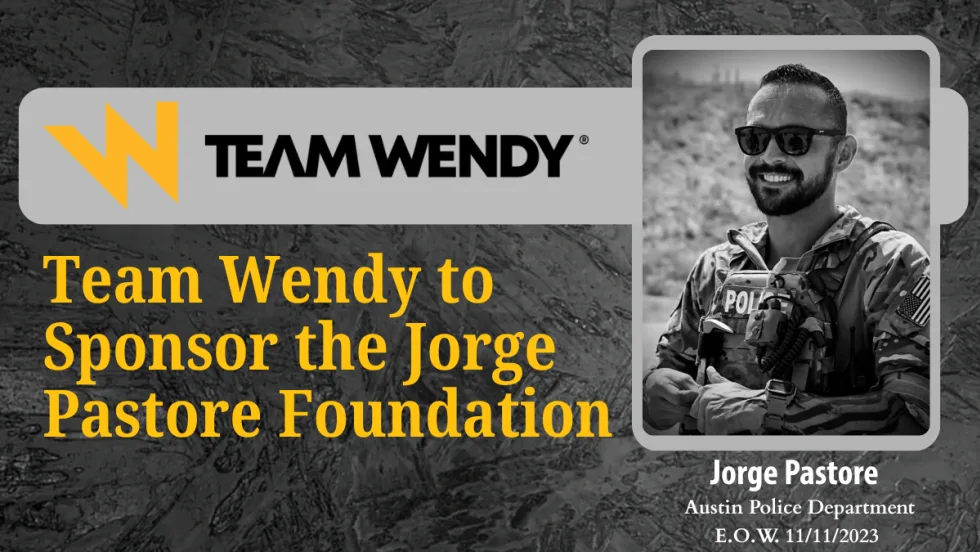
Team Wendy Announces Title Sponsorship of the Jorge Pastore Foundation
Team Wendy’s 3-year partnership with the Jorge Pastore Foundation expands access to programs that strengthen those who serve.
Read More →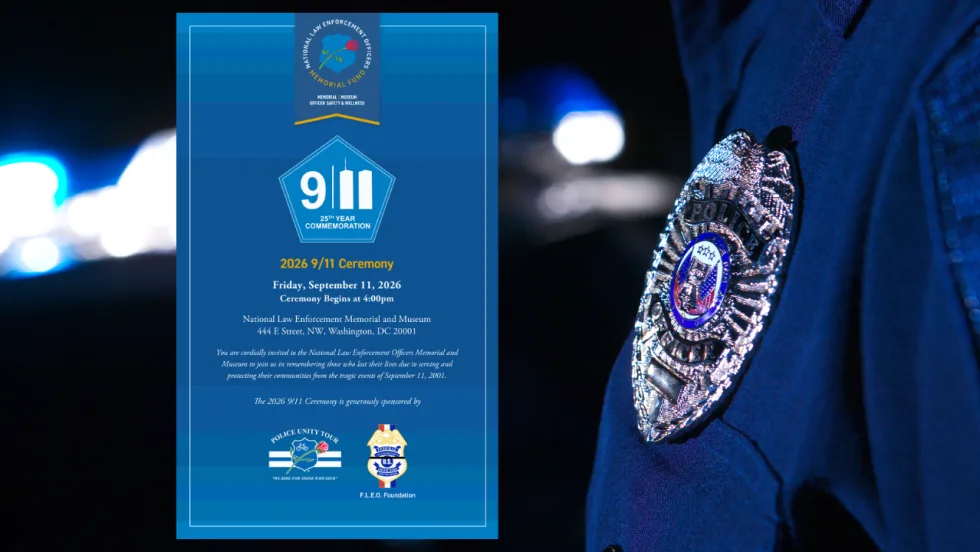
National Law Enforcement Memorial and Museum Hosting 9/11 25th-Year Commemoration Ceremony
The National Law Enforcement Memorial and Museum is hosting a 9/11 25th Year Commemoration Ceremony on Sept. 11 at 4 p.m.
Read More →
National Law Enforcement Officers Memorial Fund Announces June 2026 Officers of the Month
The National Law Enforcement Officers Memorial Fund (NLEOMF) named 15 officers of the Chico Police Department (California) as the Officers of the Month for June 2026 for their roles in responding to an active-shooter incident at a public library.
Read More →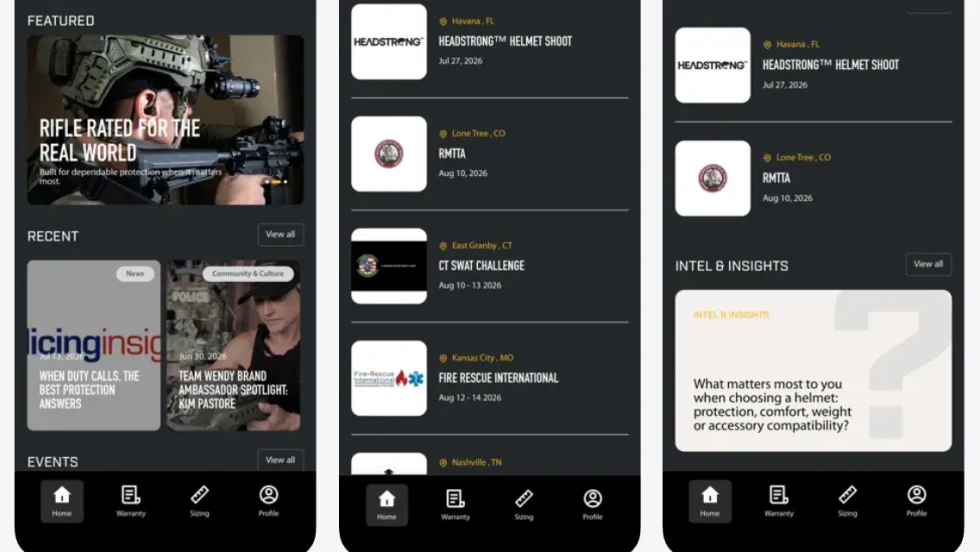
Team Wendy App Creates New Digital Hub for Helmet Owners
The Team Wendy Community App provides one location for warranty registration, size-fit tools, product updates, and community connection. For helmet owners, the new app creates a simpler path to the information and tools that matter most.
Read More →