



Understanding the OODA Loop
The more you study law enforcement training, the more you are likely to see the term "OODA loop." This term was coined by U.S. Air Force Col. John Boyd to explain the dynamics of fighter combat and why some pilots succeed when others fail.

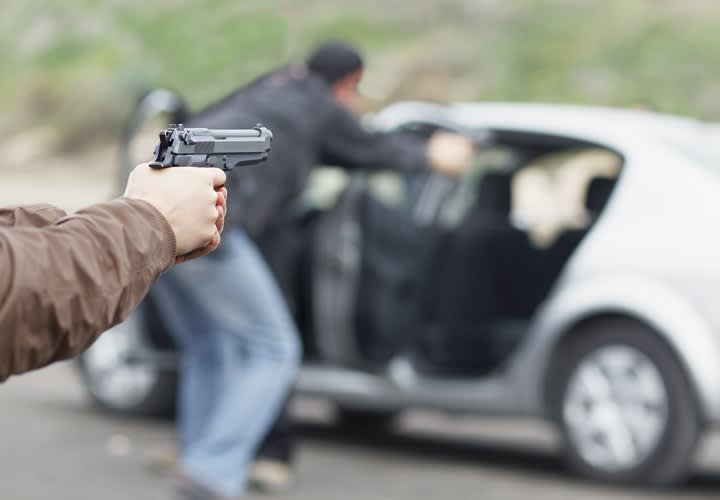
Photo courtesy of iStockPhoto.com.
The more you study law enforcement training, the more you are likely to see the term "OODA loop." This term was coined by U.S. Air Force Col. John Boyd to explain the dynamics of fighter combat and why some pilots succeed when others fail. Boyd concluded that the outcomes of aerial engagements were often determined by how quickly a fighter pilot can process through the OODA, which meant to observe the enemy, orient to the stimulus presented by the enemy, decide to take action, and then act on that decision. Boyd added "loop" to signify that the process was continuous as long as combat was engaged.
Today, Boyd's combat theory is being applied to military engagements, to business strategy, to litigation, and of course to law enforcement operations and individual officer defense.
The OODA Loop has its place in law enforcement, but unfortunately, the concept has become something of a training catch phrase that is often misunderstood.
What It All Means
The OODA loop is a simple yet complex summation of how the human brain processes information and how humans react. First, you observe what is going on around you using your senses. Next, you orient to what is going on around you and put it into context with information rooted in your long-term memory, including training—both good and bad—life experiences, and your genetic heritage. After processing this information you must come to a conclusion about your surroundings, and you must make a decision to act or react. The final stage, if there truly is one, is the physical action. In order to process through the OODA loop, you must perform a physical action to implement the decision you have made. If your action is appropriate and effective you begin to gain the upper hand and can often process through more OODA loop cycles at a faster tempo than your adversary, which ultimately leads to victory.
Failing to act, or failing to act quickly and appropriately, will often result in defeat. The more defeat you suffer without being able to gain an advantage, the less likely you are to have an effective physical and mental performance. This puts you behind the reaction curve, where you process information more slowly and every time you cycle through the OODA loop you are at even more of a disadvantage.
Boyd understood how people process information in combat and the role that training, experience, and forethought play in maximizing your ability to be victorious.
The Way to Victory
One of the most important things that Boyd's OODA loop can teach you as law enforcement officers is that your survival skills such as firearms training and defensive tactics training must be properly encoded into memory.
In a life or death situation, you need to be able to process through the OODA loop as quickly and effectively as possible in order to increase your odds of survival and triumph. The fastest way to process through the OODA loop is to quickly orient to what is happening and virtually bypass the decision-making process by already knowing what action to take based on the stimulus. Boyd called the process of bypassing steps of the OODA loop "implicit guidance and control."
Implicit guidance and control is an unconscious preplanned physical response to a known threat stimulus, which is often referred to by psychologists as a "learned automatic response." Some experts also refer to this as a "threat stimulus response pairing."
Mental Bridges
In order for survival skills training to truly be effective, training needs to be capable of rooting its goal, purpose, tactic, or maneuver into your long-term memory. Psychologist E.R. Guthrie wrote that "A skill consists of the ability to bring about some end result with maximum certainty and minimum outlay of energy, or of time and energy." For our purposes in law enforcement this seems to be a perfect definition of a skill because we must continue to face countless dangers, seen and unseen, and be able to bring about a proper end result with maximum certainty as quickly and safely as possible. Failure for us to do so can end in tragedy and/or unnecessary danger to the public at large.
Building these skill sets can often be accomplished by using repetitive, emotionally based interactive training that utilizes at least two human senses and is relevant to the trainee. When a skill set is encoded into your long-term memory, the body is physically building synaptic connections between brain cells. These connections help form your unconscious memory and, much like the physical training itself, the more you exercise your brain the stronger the connections become. This process can include both physical and mental training.
An easy way to understand this is to imagine two bridges as representing these synaptic connections in your mind.
The first bridge is a rickety old rope bridge with missing planks. The bridge sways high above the bottom of a deep cavern and it creaks in the wind. This rickety bridge is there because you built it in one day, and you did not put the proper effort into building it. The failure to properly maintain the bridge over the years has also caused it to become more and more unstable; the ropes are rotting and the connections are weak. Unfortunately, the only reason you built the bridge was because you were told to do so by a skill set instructor, and you only had to walk across it one time by taking baby steps in order to show you could. This happens all the time in law enforcement when officers and trainers don't think the training will actually have to be used to survive.
On the other hand, the second bridge is a large, multilane highway span that you and your brain can race across. When you built this bridge you put lots of time, effort, and physical expense into its completion, and you understand that you must properly maintain it so that it too does not deteriorate. You had expert help in building it to make certain all the connections are correct and the bridge does not fail you. You built it because you understood the need to do so, and you have most likely raced across it at least once at work, or have at least envisioned racing across it often while mentally preparing for your survival.
To understand why we want the skill sets built into your long-term unconscious memory, you should be familiar with the Theory of Schema, which states that "The conscious mind is slow and the unconscious mind is fast."
According to this theory, if you have to think before reacting, your body will suffer an approximately half-second delay. On the other hand, if you unconsciously react to a threat or stimulus, your reaction time is a small fraction of a half second.
With these pictures in your mind, simply think about which bridge you want your brain and your trained survival skill set to have to race across while engaging someone who is determined on taking your life in a cold, dark alley.
When you have a greater understanding of how the OODA loop works, how skills training is set into your long-term unconscious memory, and how these can affect your physical response to a threat stimulus, it is easier to understand the need for proper skills training. Not only can the training assist you in properly orienting and responding to a threat, it can help you avoid improper responses.
Unfortunately, officers are sometimes improperly trained, and habits are not corrected and allowed to continue in training. When this happens officers are unfairly placed in situations that may lead to ultimate failure and loss. Take, for example, the tragic story in Colorado where an officer was involved in a deadly gun battle with an armed assailant and reportedly fired at the assailant at distance from the high-tuck position. This improper, most likely unconscious response, allowed the firearm to entangle with the officer's uniform, causing the officer's gun to jam. Unable to quickly fix the jam, the officer then reportedly raised a hand and appeared to wait momentarily for assistance, only to be executed by an advancing assailant who was more than willing to take advantage of the situation.
The tragic loss of an officer's life in this situation may have stemmed from both improper training, shooting from the high-tuck position while the assailant was not in close quarters, and from a bad, uncorrected habit of raising a hand for assistance on the firing range. When trainers allow officers to do such things on the range they allow them to become a learned automatic response to a malfunction.
In order to help prevent future tragedies, we owe it to ourselves and our families to ensure that we, as officers, trainers, and supervisors, know and understand how the OODA loop works and how to maximize our training for survival. Take time to look at your physical traits and habits at work. Could you be unknowingly setting yourself up for failure?
Are your trainers presenting training because they are required to, or are they presenting well thought out training that is more likely to help you survive life and death struggles?
Derek Stephens has been an officer in Colorado since 1997. He is the founder of Rally Point Training Consulting, specializing in OODA loop-based officer survival instruction.
Related:
More Training
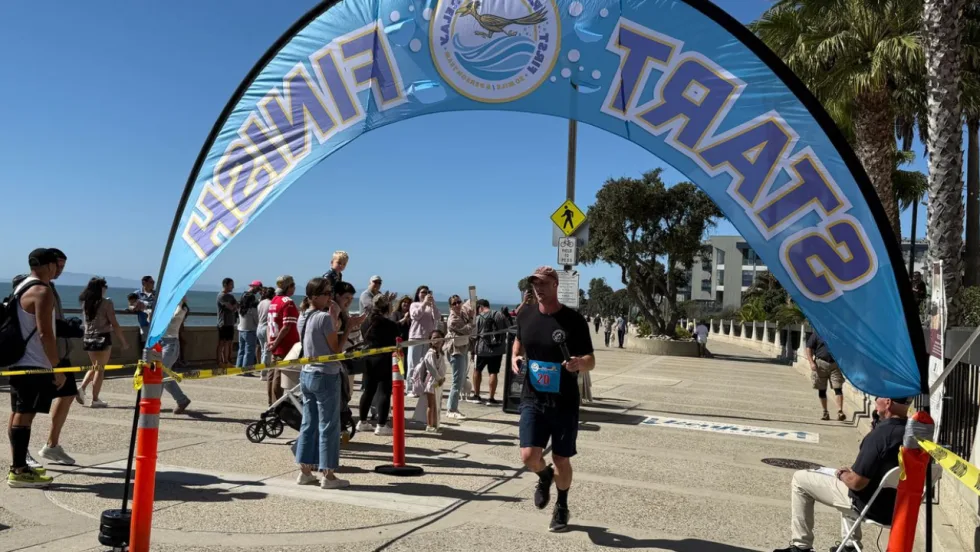
Registration Underway for Sixth Annual First Responders Relay
The California Police Athletic Federation’s annual First Responder Relay will welcome first responder teams from across the globe to compete along Ventura's scenic coastline on Oct. 11. Registration is underway.
Read More →
Vector Solutions Launches Comprehensive Online Dispatch Training Catalog for Emergency Communications Professionals
Vector Solutions’ new catalog of 35 expert-developed online courses can help emergency communication centers strengthen training, meet certification requirements, and simplify continuing education.
Read More →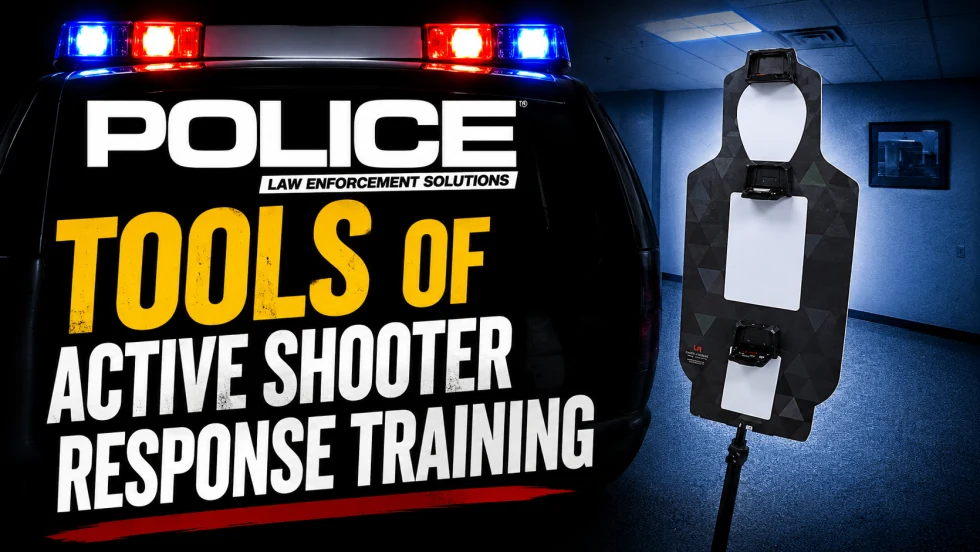
Tools for Active Shooter Response Training
What technologies help prepare officers for active shooter response situations? This behind-the-scenes look at law enforcement training explores shot simulators, smart firearms, laser target systems, and the tools used to build safer, more effective training environments.
Read More →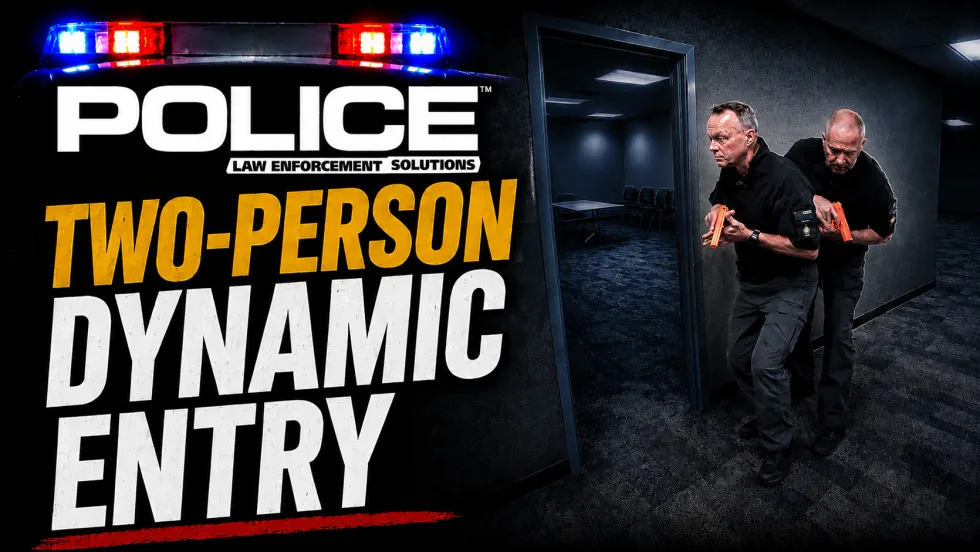
Two-Officer Tactical Doorway Entry Techniques
Entering a room during active-threat situations requires communication, coordination, and disciplined tactical movement. In this video, trainers from the United States Deputy Sheriff’s Association demonstrate critical room entry concepts, including fatal funnel awareness, team coordination, and safe tactical movement.
Read More →
High Compressed Ready Explained | Muzzle Control For Room Entry
In this video, Mike Willis, law enforcement national training and program director for the United States Deputy Sheriffs’ Association, demonstrates the high compressed ready position and discusses muzzle control during room entry.
Read More →
Why Attend the DroneSense Innovation Summit by Versaterm?
Let’s hear from Ryan Bracken, head of product, about why your agency should send someone to the first annual DroneSense Innovation Summit by Versaterm in April.
Read More →
Caswell Live Fire Spins Off from InVeris
Caswell Live Fire has spun off from parent company InVeris, coinciding with the 100th anniversary of Caswell’s founding. Over the past 100 years, Caswell has developed pioneering solutions that support military, law enforcement, and commercial clients worldwide.
Read More →
When Do You Transport a Wounded Officer Instead of Waiting for EMS?
Thumbnail for video series POLICE Topics, Tactics & Tips with a yellow headline that reads When Do You Transport a Wounded Officer Instead of Waiting for EMS?
Read More →
How to Pick Your High-Risk Stop Location for Tactical Advantage
Hear veteran trainer Mike Willis, of the United States Deputy Sheriff’s Association, explain several considerations that can help you wisely pick your best spot to initiate high-risk or felony traffic stops.
Read More →
Coffee Break with Police Experts: Using Your Patrol Vehicle for Cover
In this video, hear from Dustin Mowery, a product specialist at Team Wendy, as he discusses how to best use a patrol vehicle for cover.
Read More →