



Understanding Armor Plates
Soft body armor ballistic vest packages are rated levels 1 through 4 by the National Institute of Justice (NIJ) based on how much protection from ballistic rounds they are rated to provide. Similarly, armor plates are available in two different types or classes tested and recognized by the NIJ: type 3 and type 4.

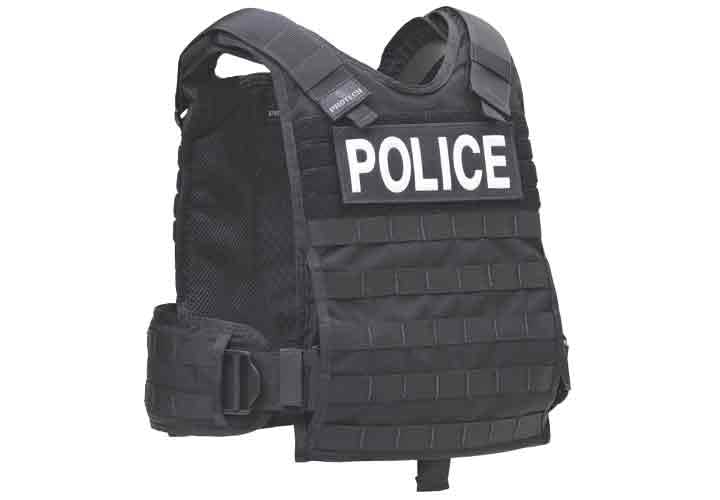
The ProTech Tactical TAC PR Plate Carrier. Photo courtesy of Safariland.
You wear your soft body armor when you're on duty. But what if you have to respond to a school shooting or other incident that might involve rounds your armor isn't rated to stop? The hard armor plates that fit inside front and back pockets in armor carriers offer protection against rifle rounds, and some protect against armor-piercing rounds. But should you have them? And if so, how do you know which kind to choose?
With an increase in active shooter incidents, individual officers are becoming more interested in purchasing armor plates, says Georg Olsen, general manager of body armor and plate manufacturer U.S. Armor. But he also emphasizes that such protection needs are not limited to urban areas.
"I've talked to officers working in rural jurisdictions who say, 'You guys who work in the city, you're wondering if there's going to be a rifle there [on a call]. Out here, we wonder how many,' because it's a given," he says.
Wherever you work, knowing more about your protection options is a good idea.
Armor Classes
Soft body armor ballistic vest packages are rated levels 1 through 4 by the National Institute of Justice (NIJ) based on how much protection from ballistic rounds they are rated to provide. Similarly, armor plates are available in two different types or classes tested and recognized by the NIJ: type 3 and type 4.
Type 3 plates are rated to stop rifle rounds. A plate must survive three rounds to pass. Type 4 plates are rated to stop armor-piercing rounds. One round is shot at the plate for this test, and if it compromises the plate then it fails. There are many different ways to create armor plates of both types, with differing effects. That's where it gets complicated.
It then becomes the officer's choice whether to select type 3 or type 4 protection, as well as what that plate will be made out of.
Ceramic Plates
Plates that use a ceramic tile to slow a bullet have been around for decades. Different types of backing help to both increase absorption and protect the ceramic itself from accidental breakage. "The ceramic breaks up the bullet, and then the plate catches the pieces with the steel and the Kevlar" or other backing materials, Olsen explains. "The theory is it's a lot easier to stop four pieces at, say 600 feet per second than it is to stop one piece concentrated at 2,400 feet per second of energy."
Ceramic tiles have become lighter and stronger because of the materials used to create them, says Dan McNeil, director II category sales product manager in marketing at armor and plate manufacturer Safariland. The most common material used to make ceramic plates for law enforcement is lumina oxide. "The next step up from that is a slightly lighter tile that's maybe three times more costly, silicon carbide," McNeil says. "And the top is boron carbide. It's a very high-density tile ceramic, but it reduces the weight by a couple pounds," and it can be used to create type 4 protection level plates that will stop armor-piercing rounds. But because of cost, boron carbide is used more often by the military than by domestic law enforcement.
Ceramic armor plates have been around for so long because they work well. But they do have some downsides related to their construction.
One of those drawbacks comes from how it stops a bullet. The ceramic is designed to break when a bullet hits it. But it can only take a limited number of bullets because of how damaged the tile becomes once it's hit. "While the bullet diameter is probably no bigger than a pencil eraser's diameter, it makes a cavern in the ceramic when it hits and gets stopped, maybe up to 3 inches in diameter in terms of affected area," says Olsen. Once an area has been affected, that section of the plate will no longer provide protection against a round.
Another drawback is that the ceramic tile in the plate can crack if it's dropped or hit in any way, such as when thrown into a bag or cruiser trunk. Such cracks diminish the plate's ability to protect an officer from a bullet. And the cracks aren't always visible. A plate might have an imperceptible hairline crack that you're unaware of until the plate fails. If you know a plate is damaged, it must be replaced.
A major consideration for any type of armor is of course weight. For ceramic, this varies based on the type of ceramic used as well as the backing materials. For example, "A 10x12-inch ceramic plate is going to weigh about 7.5 pounds, and that's if you're just using a front plate," says U.S. Armor's Olsen. "If you're using a front and back plate, double that weight. That's an extra 15 pounds to carry."
Polyethylene Plates
When contemplating which hard armor plate to purchase, the only option other than ceramic is currently polyethylene. "It's a lightweight unidirectional material that resists bullets itself [without backing materials]," says Safariland's McNeil. "It's 50% lighter than ceramic plates." While they've been around since the late 1980s, the technology to make polyethylene plates thin enough for practical use is more recent. High-pressure treatment increases performance and decreases weight.
The word polyethylene may not be as familiar as ceramic, but it's not as strange a substance as it sounds. "If you have a milk jug you purchase, it's made of that," explains McNeil. But rest assured that no armor plates are made of milk jugs. There are many different forms of polyethylene, including woven and shield materials.
Unlike ceramic, these plates take advantage of the spin of a bullet to slow it down. "The bullet's friction creates heat, which partially melts the polyethylene until it stops the bullet," explains Olsen. Then once the bullet slows and eventually stops, the polyethylene cools and rehardens. Olsen compares the action to a self-cauterizing wound.
Because of the way in which polyethylene plates work, they can stop multiple bullets. "With polyethylene, you can pretty much put in as many bullets as you can fit on the plate because it doesn't impact a very large surrounding area when the bullet hits," says Olsen. And because the material is more resilient than a hard material like ceramic, dropping a polyethylene plate will not cause damage. They are also relatively light, weighing 3.5 pounds at most for a 10x12-inch plate.
Polyethylene plates have their own downsides, however. For example, technology doesn't exist to create a commercial type 4 plate made entirely of polyethylene yet. It would require too much material to be practical. "You could get enough newspaper together to stop a round, but no one's going to wear a bale of it," says Safariland's McNeil. Price is also a factor. Polyethylene plates cost approximately 25% more than comparable ceramic plates.
Size and Shape
Materials aren't the only differences in armor plates. The shapes and sizes available have changed significantly over the years. Not long ago, the 10x12-inch plate was the standard. It was a rectangle designed to maximize protection of internal organs when placed in the front and then also back pockets of body armor. But this size and shape had its limitations.
Squared edges on the upper corners of front plates impeded the motions of officers and military personnel when they attempted to shoulder a rifle or swim. In response to feedback, manufacturers cut off and tapered the upper corners. As for size, While 8x10-inch plates have been available, they don't work for everyone either. Now, thanks to the military's insistence that companies create five sizes of SAPIs (small arms protective inserts) to fit different soldiers' torsos, more size options are just now becoming available to law enforcement in the United States.
Even smaller side plates are now available to protect the area under the arms that becomes exposed when aiming a weapon. This is in large part due to advances in shaping technology.
In addition to absolutely flat plates, officers now also have the option of purchasing a single curve or a multi- or sometimes called triple-curve plate. These are designed to wrap around the body for a better fit, which improves comfort and performance.
The Trade-Offs
Deciding what plates to purchase and use is not easy, but it helps to look at the available options. It comes down to the level of threat you need protection from and the material that will best satisfy your operational and cost considerations. Olsen suggests focusing on the trade-offs between protection level and comfort, mobility, and wearablity.
"We get a lot of initial inquiries for an armor plate that will stop AP," says Olsen. "But the officer or the agency has to ask the question, 'How often do you encounter people with armor piercing rounds?' The answer will be rarely if ever. Understand that you will never, ever be able to protect against everything."
So, do you really want to pay for and carry around a level 4 plate? When it comes to construction, you also have to ask yourself if you are more comfortable with ceramic or polyethylene plates and factor in initial costs and possible replacement costs.
"In a perfect world all of us plate manufacturers would be able to offer one single solution that would be the most economical, the highest performing, the lightest and thinnest plate," says Safariland's Tactical Category Product Manager Brian Santimauro. "But really where we are with technology today and how it's constantly evolving, in choosing a plate there's always a lot of trade-offs to consider."
More Patrol

Adept Armor Introduces Two New Rifle Plates
Adept Armor has launched two new Level IV ballistic plates, the Emperor and the Archon Mark 2, which brings Adept Armor’s new Quatroid ceramic to the high-threat, performance-value center of the range at 5.2 pounds.
Read More →
POLICE Product Test: Benchmade Bailout
The Benchmade Bailout is a slim, lightweight carry knife with a deep-ride pocket clip and comes in a variety of blade steels and scales. Here is a detailed review of the Taiga Green Bailout, released earlier this year.
Read More →
NLEOMF Announces July 2026 Officer of the Month
NLEOMF honored a Michigan deputy sheriff as the July 2026 Officer of the Month for rescuing a trapped driver from a burning vehicle following a Fourth of July crash.
Read More →
Streamlight to Showcase Newest Lighting Products at National Safety Council’s Safety Congress & Expo 2026
Streamlight will showcase its latest lights, including the Portable Scene Light III and the LiteBox 1Million, at the 2026 National Safety Council (NSC) Safety Congress & Expo.
Read More →
The 2027 World Police & Fire Games Set for Perth, Australia
The 2027 World Police & Fire Games (WPFG) will take place in Perth, Western Australia, from Friday, March 12 through Sunday, March 21, 2027.
Read More →
5.11 Partners with National Fallen Firefighters Foundation to Support #ForThe343
5.11 has joined the nationwide movement honoring the 343 New York City Fire Department firefighters lost on Sept. 11, 2001.
Read More →
Team Wendy Announces Title Sponsorship of the Jorge Pastore Foundation
Team Wendy’s 3-year partnership with the Jorge Pastore Foundation expands access to programs that strengthen those who serve.
Read More →
National Law Enforcement Memorial and Museum Hosting 9/11 25th-Year Commemoration Ceremony
The National Law Enforcement Memorial and Museum is hosting a 9/11 25th Year Commemoration Ceremony on Sept. 11 at 4 p.m.
Read More →
National Law Enforcement Officers Memorial Fund Announces June 2026 Officers of the Month
The National Law Enforcement Officers Memorial Fund (NLEOMF) named 15 officers of the Chico Police Department (California) as the Officers of the Month for June 2026 for their roles in responding to an active-shooter incident at a public library.
Read More →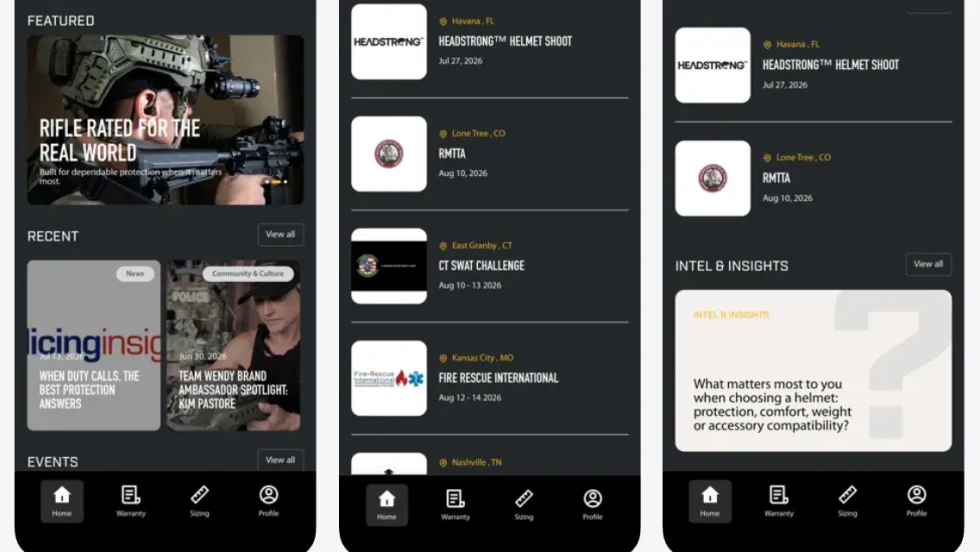
Team Wendy App Creates New Digital Hub for Helmet Owners
The Team Wendy Community App provides one location for warranty registration, size-fit tools, product updates, and community connection. For helmet owners, the new app creates a simpler path to the information and tools that matter most.
Read More →