



Train to Win Quickly
Most police confrontations do not make for pleasant dinnertime viewing, regardless of what tactics are used and regardless of whether the force is justified.

Whether you work in Los Angeles, Miami, Cincinnati, or any other city, you've seen videotapes of police use-of-force incidents. Typically these images cause raging controversies on television news, radio talk shows, the front page of the papers, and often in both civil and criminal courts.
The general public does not like use-of-force incidents, and the public certainly does not like to actually see them occur. Most police confrontations do not make for pleasant dinnertime viewing, regardless of what tactics are used and regardless of whether the force is justified.
Use of force by police naturally upsets onlookers across the street as well as viewers of the six o'clock news. William Geller has written that, conditioned by fictional media depictions of sanitized violence on one hand and fantastic movie "megaviolence" on the other, most people have no frame of reference other than personal emotions to evaluate an incident. The average viewer has little or no experience with real violence and the chaos that typically surrounds it.
Reasonable Force
As law enforcement officers, we hold a unique position in society because we are permitted by law to use physical force to compel others to do our bidding. Charles Silberman has observed that we intervene in a variety of urgent, unpredictable situations, and our mission is to keep the peace or to restore it. This awesome power must be wielded sparingly in a democratic society. Terry Cooper says the public rightly holds public administrators, including police officials, responsive to public preferences and demands. When officers use force they must do so to control a situation, not to punish an offender.
You may moan about the public not understanding your job and the pressures you face, and you may well be right about that. But moaning about it does not alter the reality that the court of public opinion is a major force when we have an incident.
Each of us knows that while protecting and serving society, our personal goal is to go home safely at the end of each shift. The public does not generally appreciate the split-second decisions we must make, with limited information, while outnumbered, in some smelly alley, in the dark.
In his recent book, "Understanding Police Use of Force," Howard Rahtz notes that we learn early in our careers that in a force situation we may use only the degree of force that is "reasonable." That sounds simple enough, but applying that standard in practice is difficult.
Fifteen years ago, in the Graham case (Graham v. Connor, 1989), the U.S. Supreme Court gave us the following helpful words to guide us: "The 'reasonableness' of a particular use of force must be judged from the perspective of a reasonable officer on the scene rather than with the 20/20 vision of hindsight. Not every push or shove, even if it may later seem unnecessary in the peace of a judge's chambers, violates the Fourth Amendment. The calculus of reasonableness must embody an allowance for the fact that police officers are often forced to make split-second judgments-in circumstances that are tense, uncertain, and rapidly evolving-about the amount of force that is necessary in a particular situation."
It is clearly in the public interest, as well as in our own personal and professional interests, that we do our jobs in a reasonable fashion. Although multiple studies have shown that police officers generally put people in jail without a use-of-force incident in literally 99 percent of all arrests, that still means there will be an incident one percent of the time.
When these incidents happen, you must be physically and psychologically ready, and you need to prevail and end the incident quickly. Any confrontation that is not effectively controlled may degenerate into a deadly one. The bystanders across the street are already shocked and horrified by what they are witnessing. The longer it goes on, the more shocked and horrified they will be. And you will see those people in administrative hearings, civil court, criminal court, or all three. So end it quickly.
The Unblinking Eye
Incidents involving use of force may be viewed from many perspectives: the officers on the scene, officers with the same policy and training who were not on the scene, officers in other jurisdictions who do not have similar policy and training, police management, and the public all apply their own life experiences to the situation.
And after a use-of-force incident is captured on tape, politicians, special interest groups, the media, and countless others will all loudly voice their opinion. But no videotape will ever show the perspective of the officer who is in the heat of battle. So you have to be able to explain and defend your actions as reasonable.
The 1991 Rodney King videotape, which was shot from a balcony across the street from the action, is a profound example of what the camera doesn't see and what the media chooses not to show. Even today, few people have seen the entire video, and fewer still have any perspective on how policy, training, equipment, and tactics drove the decisions of the officers on that videotape. But nearly everyone has a personal reaction to the Rodney King incident. The case is still argued by the public and the police, and it will be for some years to come.
We have an obligation to do our jobs as safely and professionally as possible. This is why proper training is essential to our personal and career survival.[PAGEBREAK]
Training Gap
Much law enforcement "training" is merely classroom presentation or it is given in the form of a handout or (ironically) a videotape. Even training that is intended to be practical tends to be static instead of dynamic. For example, standing on the line on the pistol range and shooting at the target, reloading, then shooting more is mainly static training.
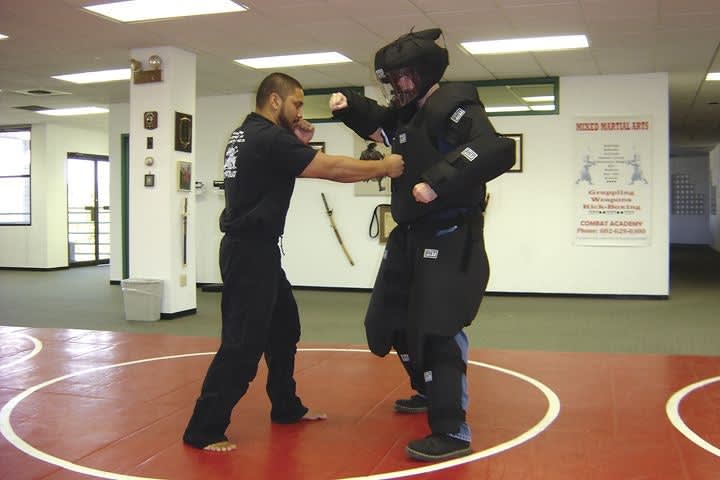
Dynamic training puts the participants into fast-breaking situations, featuring fire-and-movement and cover-and-concealment concepts that force participants to act out shoot/don't-shoot simulation scenarios and experience emergency decision making and psychological pressures likely to be encountered on the street. The advent of protective gear and marking round, laser, and paintball technology facilitates dynamic training that simulates realistic deadly force encounters. Apart from firearms training, dynamic body-contact training requires participants to resist, grapple, and fight each other in a manner that attempts to minimize injuries to provide experience and build individual confidence in more realistic ways than static training allows.
A study by Charles Remsberg revealed that the results of an agency providing dynamic training can be dramatic. One major East Coast police department switched from static to dynamic firearms training and experienced a 45 percent reduction in armed confrontations, a 56 percent decrease in officers wounded or killed, and a 51 percent decrease in offenders wounded or killed.
Tools Policies
Training is not the only tool we must have in order to prevent or quickly win violent confrontations. We must have use-of-force policies that prevent officers from acting with unreasonable force but remain flexible enough that officers can react quickly to attacks.
For example, in some cities, flashlights have been banned as impact weapons. My agency, the Los Angeles Police Department, is currently going through the process of changing flashlight policy and equipment in the wake of a recent videotaped arrest incident. Back in 1991, my own research showed that flashlights are not often used as impact devices but when they are, the injuries tend to be more severe than with other tools, except firearms.
Still, that doesn't necessarily mean that an officer should never be allowed to defend himself or herself with a flashlight. There are numerous cases of flashlights being used as legitimate self-defense tools in fast-breaking situations where officers were under attack.
These are not easy issues to address, but address them we must. "Policy" is more than what comes out of some thick book. Policy includes choices of tactics, equipment, application, and training. Choices can be based on whim or fancy, or they can be based on objective research and findings.
All weapons and tactics have their limitations. Many police use-of-force situations are sudden close-contact situations that require immediate, instinctive response. Other situations begin as "stand-off" situations, with time for planning and maneuvering, but change to immediate-response situations if the suspect increases resistance, if officers approach the suspect without a plan, or if officers do not take appropriate, aggressive actions to control the suspect before the standoff situation deteriorates. Our mindsets must take all these possibilities into consideration.
Good choices of policy, training, equipment, tactics, supervision, and review processes usually won't make the videotape of a use-of-force incident look appealing to the public eye. But because they make for good public policy, they will make you and your agency more defendable when push comes to shove.
Your sergeant's advice to "always assume you are being videotaped" is good advice, these days more than ever. It's not just bystander video cameras that capture use-of-force incidents, it's also our "in-car" video cameras and nearby security video cameras. The chances that an incident will be captured on video are greater than ever.
You and your agency need to be ready for the aftermath of all use-of-force incidents. Your training and your agency's policy must show that you were acting reasonably and according to policy. This is your only defense. And still, you may end up being crucified in the media and the courts. Such is the nature of society and the dirty job we have chosen to do.
Greg Meyer is a member of the Police Advisory Board. He is a captain with the Los Angeles Police Department and an expert witness and consultant for police use-of-force issues. His views are his own.
More Patrol

Streamlight Portable Scene Light III Wins 2026 OH&S New Product of the Year Award
Streamlight’s Portable Scene Light III has won the 2026 Occupational Health & Safety (OH&S) New Product of the Year Award in the Lighting category.
Read More →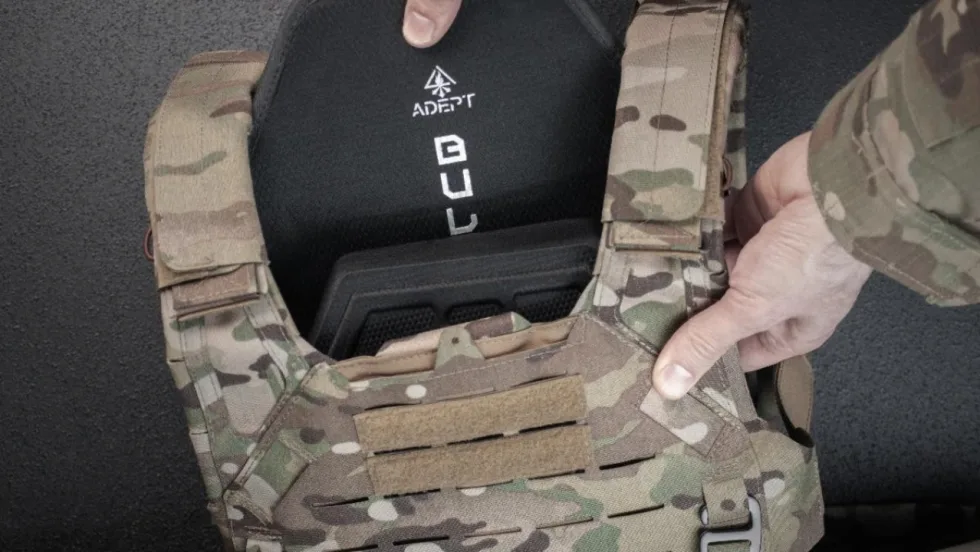
Adept Armor Introduces Two New Rifle Plates
Adept Armor has launched two new Level IV ballistic plates, the Emperor and the Archon Mark 2, which brings Adept Armor’s new Quatroid ceramic to the high-threat, performance-value center of the range at 5.2 pounds.
Read More →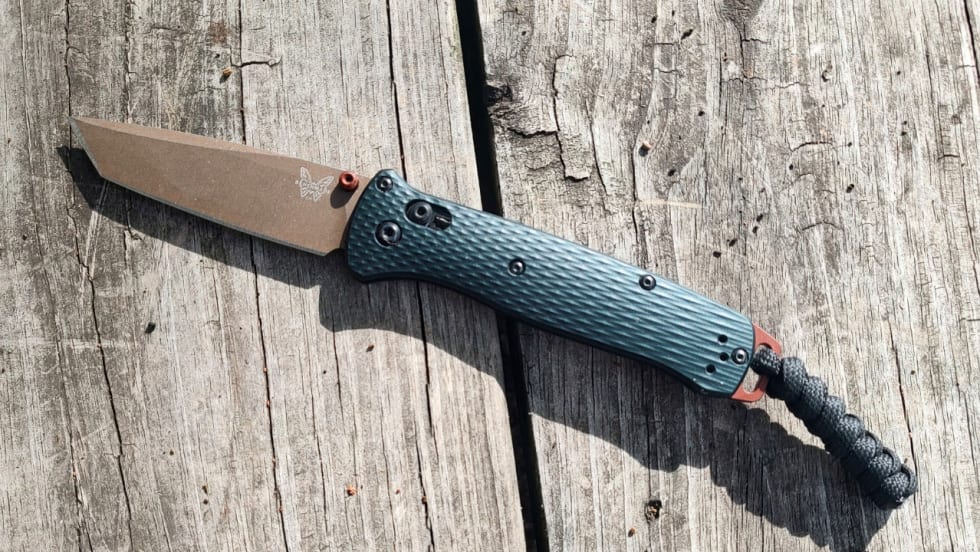
POLICE Product Test: Benchmade Bailout
The Benchmade Bailout is a slim, lightweight carry knife with a deep-ride pocket clip and comes in a variety of blade steels and scales. Here is a detailed review of the Taiga Green Bailout, released earlier this year.
Read More →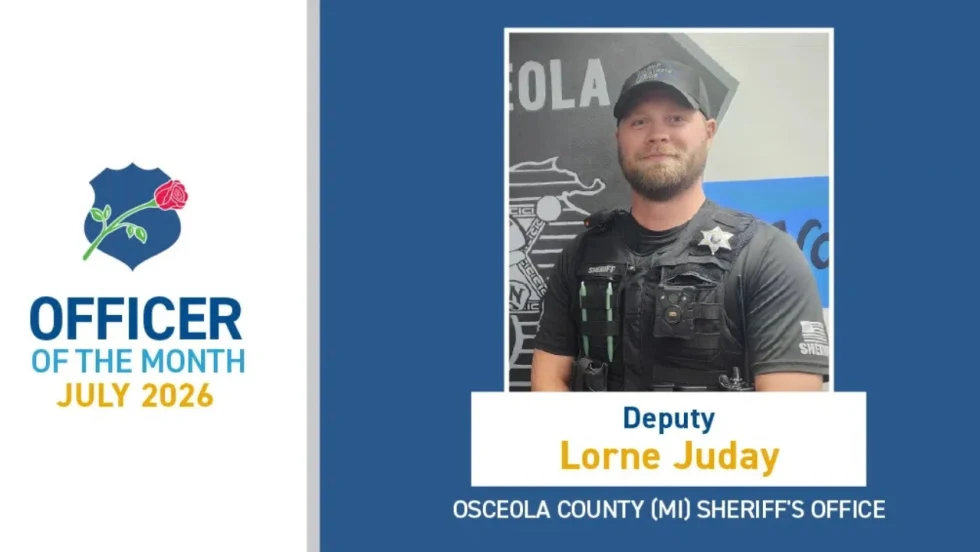
NLEOMF Announces July 2026 Officer of the Month
NLEOMF honored a Michigan deputy sheriff as the July 2026 Officer of the Month for rescuing a trapped driver from a burning vehicle following a Fourth of July crash.
Read More →
Streamlight to Showcase Newest Lighting Products at National Safety Council’s Safety Congress & Expo 2026
Streamlight will showcase its latest lights, including the Portable Scene Light III and the LiteBox 1Million, at the 2026 National Safety Council (NSC) Safety Congress & Expo.
Read More →
The 2027 World Police & Fire Games Set for Perth, Australia
The 2027 World Police & Fire Games (WPFG) will take place in Perth, Western Australia, from Friday, March 12 through Sunday, March 21, 2027.
Read More →
5.11 Partners with National Fallen Firefighters Foundation to Support #ForThe343
5.11 has joined the nationwide movement honoring the 343 New York City Fire Department firefighters lost on Sept. 11, 2001.
Read More →
Team Wendy Announces Title Sponsorship of the Jorge Pastore Foundation
Team Wendy’s 3-year partnership with the Jorge Pastore Foundation expands access to programs that strengthen those who serve.
Read More →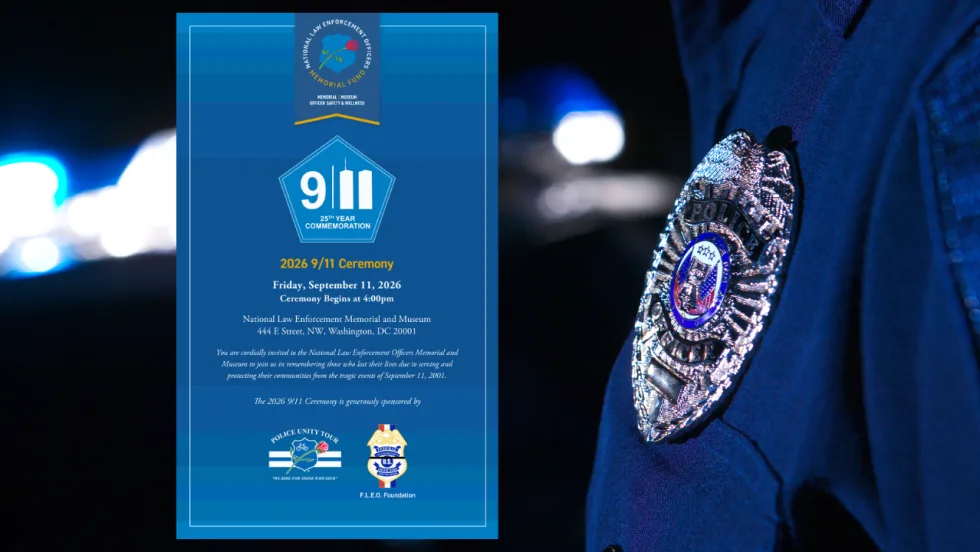
National Law Enforcement Memorial and Museum Hosting 9/11 25th-Year Commemoration Ceremony
The National Law Enforcement Memorial and Museum is hosting a 9/11 25th Year Commemoration Ceremony on Sept. 11 at 4 p.m.
Read More →
National Law Enforcement Officers Memorial Fund Announces June 2026 Officers of the Month
The National Law Enforcement Officers Memorial Fund (NLEOMF) named 15 officers of the Chico Police Department (California) as the Officers of the Month for June 2026 for their roles in responding to an active-shooter incident at a public library.
Read More →