



To Serve and Protect?
"To Serve and Protect," is a phrase made famous by the Los Angeles Police Department and adopted, in various forms, by law enforcement agencies across the United States.

"To Serve and Protect," is a phrase made famous by the Los Angeles Police Department and adopted, in various forms, by law enforcement agencies across the United States.
While what constitutes "protect" may be open to some debate, it seems to be more clear-cut than does the word "serve." It's obvious that we protect the citizens and their property from the criminal element. The word "serve" on the other hand is somewhat ambiguous. What "to serve" may mean to one law enforcement agency it may mean quite the opposite to another. "To serve" also takes on a different meaning depending upon department size. For example, I know a chief in a small village not far from the city where I work. He recently had a call to "assist the woman." We all get these types of calls, but his was to assist the woman in re-hanging her draperies! To serve? Is that what people want? A tax supported drapery service?
U,S, News and World Report (June 17, 1996) ran an interesting cover story entitled, "this is 9-1-1, please hold!" the article showed that the 9-1-1 problem isn't confined to any certain size of department. It is, in fact; nationwide problem that is oblivious to agency size and has a great deal to do with the "to serve" phrase.
I was aware that our agency received numerous non-emergency 9-1-1 calls, but I guess I never looked much past our local government available after 5 p.m. front door. I never realized the magnitude of the problem. The article stated that 9-1-1 service covers approximately 85 percent of the population. On a daily basis, an average of 268,000 9-1-1 calls are made, 80 to 85 percent of which are for law enforcement assistance.
U.S. News went on to say that the problem is not the volume of the calls but the fact that an increasingly large percentage of the calls don't fit anyone's definition of an emergency.
People use 9-1-1 because it's there, it's handy and they know they'll get a response. They call in for the time of day, directions and numerous other non- emergencies. We once received a 9-1-1 call from a woman because she hadn't received her Sunday paper!
According to the article, some agencies have reported that on busy nights, some citizens have had to wait up to two hours for officers to respond to non-emergency calls. In response to that, citizens with non-emergencies have been telling 9-1-1 operators that a gun is involved in order to obtain a faster response by the police! It goes on to say, "...in many cities response time is still considered the key test of a police department's effectiveness." So, where do we draw the line? What separates service from servitude? Running from call to call vs. community policing?
While the problem may be nationwide in scope, the solutions, I believe, lie within our own jurisdictions. Oftentimes we must simple tell our citizens that their request is not a police function, but refer them to someone who can help them. In doing so, perhaps the next time they will call that agency or person first, instead of 9-1-1.
In many small cities, the police are the only visible and accessible arm of the local government available after 5pm and on weekends. Because of that we become the water department, the street department, the dog warden, etc.--and people begin to expect it from us.
The old saying, "To Protect and to Serve-After Coffee" is a humorous one. Perhaps it's not so humorous to our colleagues in the larger cities. The U.S. News article reported that at times, officers' requests for time off to eat were being denied due to the fact that they had too many calls pending!
In order to ease the burden on the patrol officers, some of the larger departments have initiated a system where, if the calls meet certain criteria, they transfer the caller to an officer who will take the report/complaint over the phone. While I understand the reasoning behind this, I can't help but wonder how many citizens will be happy with this type of response.
I believe that it is essential that officers, in most instances, talk one-on-one with the complainant. The personal contact not only indicates to the citizens that we are concerned with their problem(s) but also provides opportunities to receive unexpected tips regarding other situations. Not an uncommon occurrence.
So, if the scenario is to "see the woman," and while you're assisting her in re-hanging her drapes, she tells you about the strange glow from her neighbor's house each night, and in following up on that, you discover a marijuana hydroponics operation...
There is no question that we need to strike a balance between "to serve" and community policing. Both are beneficial. We must do both. And yes, that may sometimes even include helping a woman re-hang her drapes!
Sgt. Mike Burg works with the Rittman (Ohio) Police Department.
More Patrol

Adept Armor Introduces Two New Rifle Plates
Adept Armor has launched two new Level IV ballistic plates, the Emperor and the Archon Mark 2, which brings Adept Armor’s new Quatroid ceramic to the high-threat, performance-value center of the range at 5.2 pounds.
Read More →
POLICE Product Test: Benchmade Bailout
The Benchmade Bailout is a slim, lightweight carry knife with a deep-ride pocket clip and comes in a variety of blade steels and scales. Here is a detailed review of the Taiga Green Bailout, released earlier this year.
Read More →
NLEOMF Announces July 2026 Officer of the Month
NLEOMF honored a Michigan deputy sheriff as the July 2026 Officer of the Month for rescuing a trapped driver from a burning vehicle following a Fourth of July crash.
Read More →
Streamlight to Showcase Newest Lighting Products at National Safety Council’s Safety Congress & Expo 2026
Streamlight will showcase its latest lights, including the Portable Scene Light III and the LiteBox 1Million, at the 2026 National Safety Council (NSC) Safety Congress & Expo.
Read More →
The 2027 World Police & Fire Games Set for Perth, Australia
The 2027 World Police & Fire Games (WPFG) will take place in Perth, Western Australia, from Friday, March 12 through Sunday, March 21, 2027.
Read More →
5.11 Partners with National Fallen Firefighters Foundation to Support #ForThe343
5.11 has joined the nationwide movement honoring the 343 New York City Fire Department firefighters lost on Sept. 11, 2001.
Read More →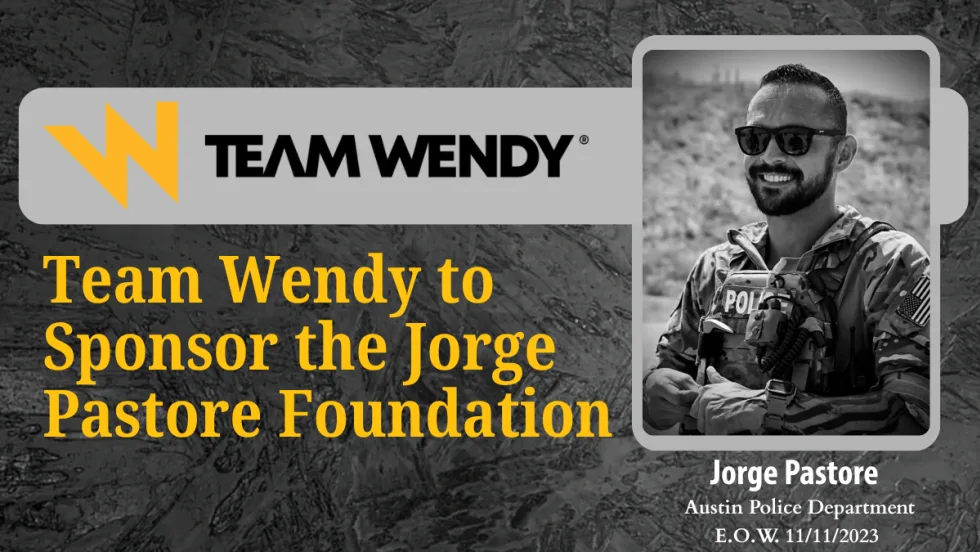
Team Wendy Announces Title Sponsorship of the Jorge Pastore Foundation
Team Wendy’s 3-year partnership with the Jorge Pastore Foundation expands access to programs that strengthen those who serve.
Read More →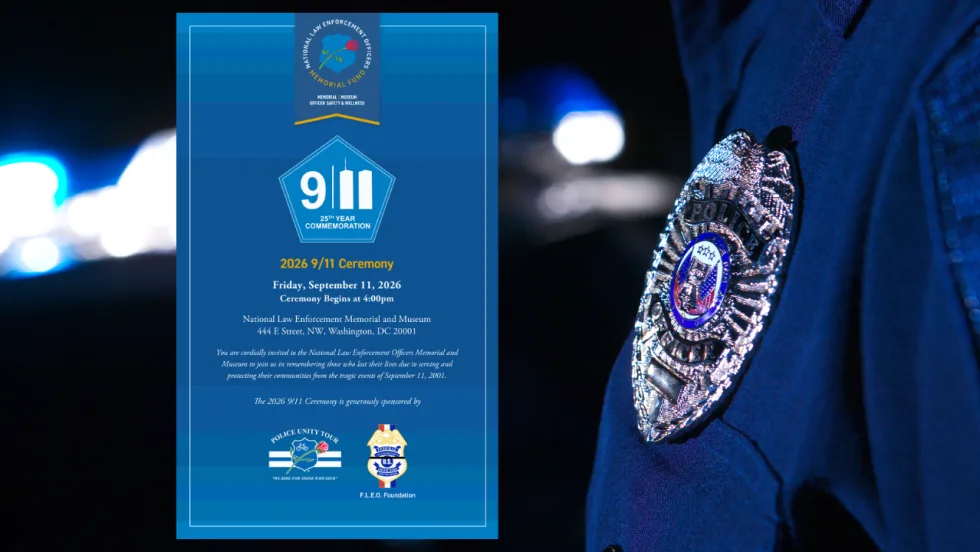
National Law Enforcement Memorial and Museum Hosting 9/11 25th-Year Commemoration Ceremony
The National Law Enforcement Memorial and Museum is hosting a 9/11 25th Year Commemoration Ceremony on Sept. 11 at 4 p.m.
Read More →
National Law Enforcement Officers Memorial Fund Announces June 2026 Officers of the Month
The National Law Enforcement Officers Memorial Fund (NLEOMF) named 15 officers of the Chico Police Department (California) as the Officers of the Month for June 2026 for their roles in responding to an active-shooter incident at a public library.
Read More →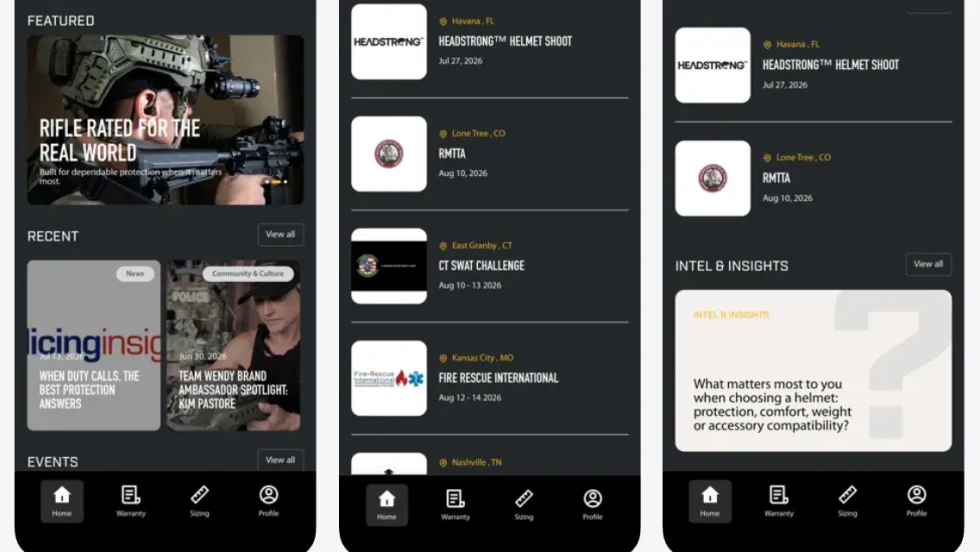
Team Wendy App Creates New Digital Hub for Helmet Owners
The Team Wendy Community App provides one location for warranty registration, size-fit tools, product updates, and community connection. For helmet owners, the new app creates a simpler path to the information and tools that matter most.
Read More →