



Time for Sacrifice
If you really want a safer, more secure America, then stop the tax cuts.

A popular T-shirt and poster slogan from the anti-war movements of the '60s and '70s read, "What if they gave a war and nobody came?" To date, America's homeland security efforts amount to, "What if they gave a war and only one side came, the enemy?"
The enemy is out there. He is motivated, he is dangerous, and he is coming. But the American people have moved on with their lives, and the government is concentrating on prosecuting a war in Iraq and diplomatically containing North Korea. Consequently, homeland security is nothing more than unfunded mandates and empty promises.
During World War II, the American public was willing to make any sacrifice to win. Children collected scraps of iron and other metals, drivers coped with gas and rubber rationing, and then-popular cigarette brand Lucky Strike changed its packages from green to white, so that the chromium in the green ink could be channeled into the war effort. Today, facing an enemy who has already killed more U.S. civilians than Hitler, Mussolini, and Tojo combined, patriotic Americans aren't willing to part with a few dollars to improve domestic safety.
I'm writing this editorial in late February, and soldiers, sailors, Marines, and airmen of this great nation may now be in combat in Iraq. The war will not be inexpensive in terms of blood or treasure. Some estimates say the invasion and occupation of Saddam's sandbox may cost $100 billion to $1 trillion over the next decade. Yet the Bush Administration insists on cutting taxes.
Don't get me wrong, I'm not against cutting taxes. But even if U.S. forces are not now in combat with the Republican Guard, we are awash in red ink. The 2003 federal budget deficit is likely to be north of $300 billion. And regardless of where you stand on tax cuts, that can't go on forever. To make matters worse, more than 28 states are also facing deficits.
Government budgets can only hemorrhage for so long before national defense and homeland security suffers. Already, a number of major police agencies, including the New York Police Department and Los Angeles County Sheriff's Department, have warned that budget shortfalls could lead to personnel cuts and even layoffs of sworn officers.
The bottom line here is that cutting taxes in a time of national emergency when increased public safety services are needed is dangerous and shortsighted.
The 9/11 atrocities are now more than 18 months in the past, and while some efforts have been made to improve homeland security, most Americans say they feel no safer than they did on Sept. 12, 2001. There are gaping holes in our defense against terrorists, and all it would take to fill these holes is money.
For example, all terrorism analysts will tell you that the Achilles' heel of Fortress America is her ports. As you read this editorial, a container ship could be docking in New Orleans, Norfolk, Boston, or Los Angeles with a hull full of Al Qaeda fanatics or a piggyback trailer full of VX nerve gas, and we would have no way of detecting it, tracking it, or stopping it. We need more Customs inspectors, a satellite tracking system for all vessels inbound to the United States, and other measures to ensure that we don't wake up some morning to a CNN report that Seattle has been nuked.
And the ports are just our most pressing concern. Our commercial airliners need missile countermeasures; our public safety agencies require better communications equipment; first responders should have weapons of mass destruction gear, and training budgets need to be increased.
It comes down to this. About $39 billion was allocated to homeland security in the aftermath of 9/11, with $3.5 billion earmarked for local agencies. Most agencies haven't seen dime one of that money.
If we are serious about fighting a war on terror, if we are serious about homeland security, then we need to find the money to pay for it. Otherwise, we have no hope of defending ourselves.
The common sense answer to this problem would be to stop cutting taxes on things like dividends and capital gains and dedicate the money to public safety. Surely, those who stand to benefit from these cuts can make such a minor contribution to the war effort. Or have we forgotten that winning a war requires sacrifices of both soldiers abroad and citizens at home?
More Patrol
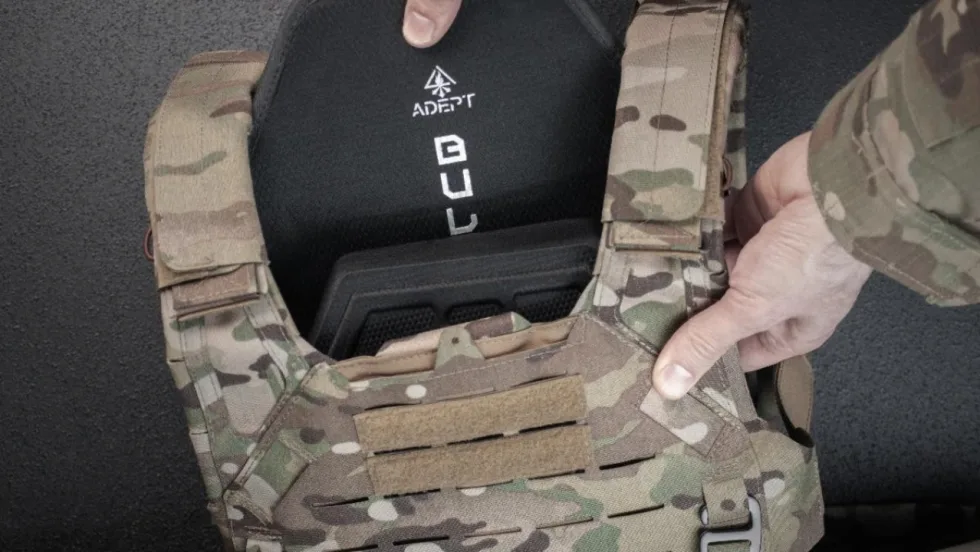
Adept Armor Introduces Two New Rifle Plates
Adept Armor has launched two new Level IV ballistic plates, the Emperor and the Archon Mark 2, which brings Adept Armor’s new Quatroid ceramic to the high-threat, performance-value center of the range at 5.2 pounds.
Read More →
POLICE Product Test: Benchmade Bailout
The Benchmade Bailout is a slim, lightweight carry knife with a deep-ride pocket clip and comes in a variety of blade steels and scales. Here is a detailed review of the Taiga Green Bailout, released earlier this year.
Read More →
NLEOMF Announces July 2026 Officer of the Month
NLEOMF honored a Michigan deputy sheriff as the July 2026 Officer of the Month for rescuing a trapped driver from a burning vehicle following a Fourth of July crash.
Read More →
Streamlight to Showcase Newest Lighting Products at National Safety Council’s Safety Congress & Expo 2026
Streamlight will showcase its latest lights, including the Portable Scene Light III and the LiteBox 1Million, at the 2026 National Safety Council (NSC) Safety Congress & Expo.
Read More →
The 2027 World Police & Fire Games Set for Perth, Australia
The 2027 World Police & Fire Games (WPFG) will take place in Perth, Western Australia, from Friday, March 12 through Sunday, March 21, 2027.
Read More →
5.11 Partners with National Fallen Firefighters Foundation to Support #ForThe343
5.11 has joined the nationwide movement honoring the 343 New York City Fire Department firefighters lost on Sept. 11, 2001.
Read More →
Team Wendy Announces Title Sponsorship of the Jorge Pastore Foundation
Team Wendy’s 3-year partnership with the Jorge Pastore Foundation expands access to programs that strengthen those who serve.
Read More →
National Law Enforcement Memorial and Museum Hosting 9/11 25th-Year Commemoration Ceremony
The National Law Enforcement Memorial and Museum is hosting a 9/11 25th Year Commemoration Ceremony on Sept. 11 at 4 p.m.
Read More →
National Law Enforcement Officers Memorial Fund Announces June 2026 Officers of the Month
The National Law Enforcement Officers Memorial Fund (NLEOMF) named 15 officers of the Chico Police Department (California) as the Officers of the Month for June 2026 for their roles in responding to an active-shooter incident at a public library.
Read More →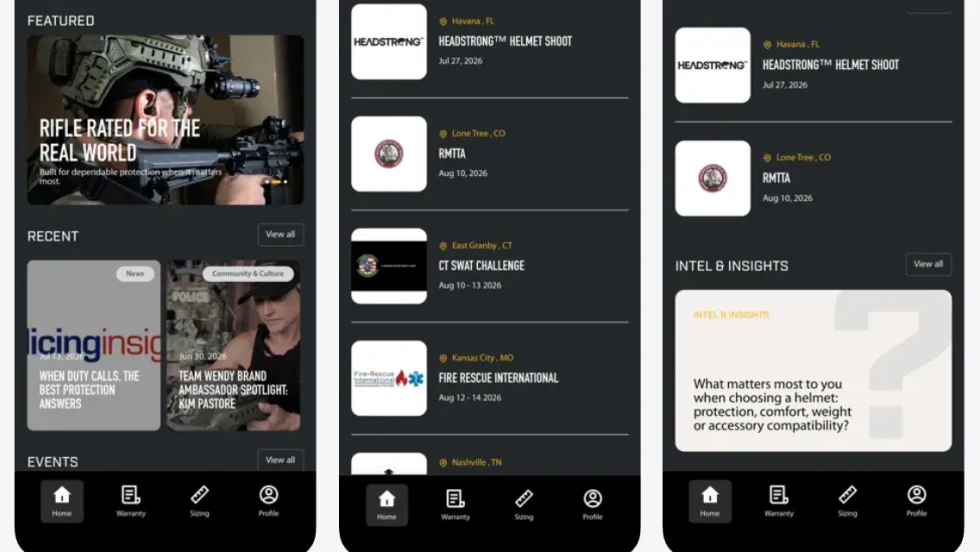
Team Wendy App Creates New Digital Hub for Helmet Owners
The Team Wendy Community App provides one location for warranty registration, size-fit tools, product updates, and community connection. For helmet owners, the new app creates a simpler path to the information and tools that matter most.
Read More →