



The Road to Wellness
What is wellness? Is it a myth or a goal. We have the ability to perceive and change our lives if we chose to do so. Personal wellness, there-fore, is an uniquely human prerogative.

What is wellness? Is it a myth or a goal. Most of us can remember a time when we felt especially well, when goals were being realized, rewards seemed reasonable or a relationship was good. Some of us can also remember feeling unwell because of emotional or physical conditions, losses or frustrations. We can also remember periods of time when we were living our lives in a particularly healthy pattern and times when we were not, either by personal choice or circumstance. We have the ability to perceive and change our lives if we chose to do so. Personal wellness, there-fore, is an uniquely human prerogative.
As police officers, we recognize the relationship between personal and professional well-ness. As professional, we constantly work to changes in law enforcement. And as individuals of diverse backgrounds, we simultaneously nurture relationships and seek personal and professional growth. Yet many of us also know that with a challenging and exciting career in law enforcement comes stress on our bodies, minds and relationships.
The key to longevity in law enforcement is maintaining physical and mental health. The decision to make healthy lifestyle changes, such as starting a regular exercise program or quitting smoking, must be followed by an emotional decision for these changes to actually take place. Changing bad habits is difficult; It may even seem impossible at first. But the rewards of good habits are a new sense of energy and Physical freedom.
In the last 10 years, research has indicated that a low-fat, high-complex carbohydrate diet is the best way to improve health and increase life span.
The National Research Council recommends a total fat intake of no more than 30 percent of total calories consumed, saturated fat of less than 10 percent of calories and a total daily cholesterol level of less than 200 milligrams. The council also recommends an increased intake of complex carbohydrates and moderate protein intake. Meeting the RDA (recommended daily allowance) of supplemental vitamins and minerals, and consuming less than 6 grams of salt per day along with adequate amounts of calcium and fluoride are also recommended. Other important considerations in planning a healthy diet are moderation and variety. Consuming a variety of foods in each category provides a better balance of nutrients. A moderate diet provides limited salt and simple sugars without excess calories.
The four food groups we learned about in school as children have been replaced by a new classification system called the food pyramid. The new system represents a big reduction in the consumption of animal products and instead emphasizes carbohydrates, fruits and vegetables. For an adult, the pyramid recommends daily intake of the following:
1. Six to 11 servings of bread, cereal, rice, pasta or other complex carbohydrates
2. Four to six servings of vegetables or beans
3. Two to four servings of fruit, two to three servings of dairy products, and one to two servings of poultry, fish and meat.
Although quick weight-loss programs are popular, they almost never work long term. The majority of participants eventually gain the weight back. A weight-reduction program that works is one that includes dietary changes you can live with for the rest of your life. Exercise is an essential part of any weight-loss program. Reducing caloric intake alone will not only reduce adipose (fat) tissue, but also muscle mass. The combination of decreased caloric intake and exercise, however, will maintain muscle mass while reducing adipose tissue.
Ideally, you should only eat when you are at least moderately hungry, and you should stop when you are satisfied. People often do not recognize the sensation of satiety and, therefore, do not know when to discontinue eating. Eating slowly is important to readily evaluate your satiety. This, however, is often difficult for officers on patrol.
For police officers, work is usually busy and stressful, lending itself to quick meals and fast-food restaurants. You must learn to eat more slowly and take time to listen to the satiety signals. Do not use food as a stress reducer. Make time for an adequate meal break during the shift, and bring some fruit, low-fat muffins or high-fiber snacks with you.
Total Fitness
Law enforcement requires a high degree of physical and mental fitness. The demands of a busy shift can be both mentally and physically exhausting. Physical fitness requires planned and regular exercise. Being physically fit means that you will not only be prepared for your busy shift, but will look and feel better, too.
Advantages of aerobic exercise include decreased risk of cardiovascular disease and increased ability to keep on the go during your entire shift without physical fatigue.
It is also possible to squeeze in small bits of exercise throughout the day by using stairs, for example, instead of elevators. Once you have established your daily exercise routine" you may find that you will need incentives to maintain your program. These incentives can include working out with a fellow officer or friend, setting goals or keeping a daily log of workout accomplishments.[PAGEBREAK]
Changing Shifts
Shift work is commonplace in law enforcement.
Although there is a large amount of research that addresses shift work in other industries, police officers are often unaware of these studies. In a 1986 review of 200 studies done on shift workers, 63 percent complained of sleep disturbance compared with 20 percent of those working only day shift. Shift workers were also found to average only five-hours of sleep daily when on rotations lasting less than three weeks, compared with eight hours of sleep for day workers and those whose shift rotations last longer than three weeks. Longer shift rotations give the body more time to adjust.
Shift workers are eight times more likely to develop stomach ulcers than those who work only day shifts. Mood swings and depression are up to 15 times more likely in shift workers than in non-shift workers. In addition, alcohol abuse, high blood pressure, divorce, infertility in women and work-related accidents are all more common among shift workers.
Sleep Patterns
There are basically two types of sleep, both of which are based on the presence or absence of rapid eye movement (REM). These movements can then be recorded and studied by means of an electroretinogram. Slow wave sleep (SWS) is characterized by cortical brain cells firing synchronously in slow wave spikes. Most sleep in this stage happens early in the sleep period. It is often difficult to arouse someone an hour after onset of sleep because slow wave sleep is the deepest. SWS is very important for physical recuperation, and those individuals deprived of it often complain of fatigue and muscle aches.
The second type of sleep is REM sleep. This is where the brain is active and the body is inactive. REM sleep typically occurs after about 90 to 120 minutes of non-REM sleep. Most sleep periods will have four to six REM episodes. REM sleep is vital for psychological wellbeing. Those individuals deprived of it typically complain of moodiness and irritability. Since REM sleep is clustered toward the end of the normal seven to eight-hour sleep period, those whose sleep tends to be shorter or fragmented, as in shift workers, are more likely to be REM-deprived.
The traditional shift rotation is a weekly counterclockwise rotation. Recently, it has begun to fall out of favor because medical research has demonstrated that it leaves the biological clock in shambles. Researchers now increasingly recommend clockwise shift rotation with at least a month between rotations to allow for circadian rhythm stabilization.
The Gold Standard circadian rhythm for any industry that requires continuous service has been to work the same shift all the time. Those working shifts exclusively must maintain the same sleep period, even during nights off, to prevent disruption of their biological clocks. Because sunlight is a powerful time-giver, nocturnal training will be lost after two or three days unless this rule is strictly followed. Most police officers resist this concept because it interferes with daytime social and family functions. Unfortunately, resistance also compromises anchor sleep, which minimizes circadian desynchronization.
Anchor sleep is a period of at least four hours during which one sleeps every day while on a particular shift rotation. If you sleep from 8 a.m. to 4 p.m. after working nights, for example, and from 4 a.m. to noon on days off, the overlapping interval from 8 a.m. to noon is called anchor sleep. Sleeping until noon is preferable to sleeping all day for most individuals with families and daytime social commitments. By sleeping through at least half of the time normally reserved for sleep, the circadian rhythms are anchored to a particular schedule and minimally disrupted.
Napping is thought by most investigators to be restorative and useful in promoting alertness during or following night work. Napping before work seems to provide some benefit, and most medical researchers believe it does no harm. If you do nap, allow at least 20 minutes before starting your shift to leave enough time for sleep inertia to dissipate. Power naps of 30 to 45 minutes can be helpful for maintaining alertness. However, napping for longer than one hour can affect the next night's sleep. A longer nap is useful prior to a night shift.
Exposure to bright light changes the pattern of a hormone called cortisol. This hormone affects the subjective assessment of alertness and improves the ability to think and process information. Shift workers exposed to a 10,000 lux ambient-light environment had significantly higher levels of alertness and better cognitive performance across an eight-hour shift than shift workers in a one to 20 lux ambient-light environment. It is beneficial to avoid bright light prior to daytime sleep and to spend one to two hours outside in bright sunlight after daytime sleep.[PAGEBREAK]
Performance and Alertness
Being alert is of great concern and importance for police officers. The major determinants of alertness include the total sleep time the night before, the amount of slow wave sleep (SWS) and the regularity of the sleep and work schedule. It is well-established that performance varies with the time of day. Most performance curves can be brought into line with the well-known 24-hour body temperature curves. Those who like to go to bed late and sleep in have their temperature peak later in the day. There is a definite relationship between speed, accuracy, reaction time and body temperature. People generally do their best when their temperature is highest, usually in the middle of the wakeful period, with poorer performance in the morning and evening.
Supportive Sleep Measures
Research suggests that a steady exercise program deepens sleep. However, those one-day exercise binges may not deepen sleep that night. Vigorous aerobic exercise after waking has been shown to decrease the time needed to shift the circadian sleep/wake cycle from eight to 1.5 days. Although there is no direct correlation between caloric intake and sleep, those individuals who wake early might try a bedtime snack. Milk products also seem to improve sleep. Maintaining regular meals during the waking period aids in sleep and in general alertness. Avoid caffeine and alcohol before bedtime. Try to develop and practice a regular sleep ritual, and sleep only as much as you need to be alert. If you find that you cannot fall asleep in 30 minutes, then get out of bed and do an activity conducive to sleep, such as watching television or reading.
Relationship Maintenance
Personal relationships are essential for wellness. As humans, we need closeness with other people. We also have a need to feel accepted. A healthy life is characterized by relationships of endurance and personal significance. These relationships nurture us, but they also require giving. Devoting the efforts necessary for maintaining relationships is essential for our continued wellness.
There is no correlation between the time a police officer spends at work and marital happiness. Just being at home does not make a happy marriage. Marital problems may include communication gaps, perceptions of problems and differing needs for intimacy. Spending at least 15 minutes each day discussing feelings and emotions with your significant other is an important part of growing relationships. Frequent discussions should take place regarding the demands of family life, work and the impact of rotating shifts.
Critical Incident Stress
Critical incidents are traumatic events that have sufficient emotional power to overcome the usual coping mechanisms of people exposed to them. Typical critical incidents that involve police officers are officer-involved shootings, multiple-casualty automobile accidents, injuries, deaths of children and line-of-duty deaths, all of which can have a traumatic emotional impact on police officers. Most law enforcement personnel will experience some degree of acute or delayed stress reaction in their lifetime, manifested by emotional, cognitive or behavioral side effects. For the majority of individuals, these side effects will be resolved in time. However, when an incident is extremely powerful or greatly outside the range of human experience, post traumatic stress disorder may develop.
Post Traumatic Stress Disorder
Post traumatic stress disorder (PTSD) refers to a prolonged, sometimes permanent, abnormal emotional reaction to a critical incident. The primary characteristics of PTSD include the following: An individual is exposed to a sufficiently disturbing event. He or she continually re-experiences the event in dreams, thoughts or daily life. The individual avoids any stimuli associated with the event. He or she typically exhibits emotional, cognitive or behavioral signs that were not present before the event and have lasted more than one month.
Signs and symptoms of PTSD often include the loss of memory of important aspects of the event, loss of interest in activities previously enjoyed and feeling detached from others. Other associated symptoms include sleep disturbances, difficulty concentrating, intense irritability and loss of emotional control.
Debriefing
In the last 20 years, the concept of critical incident stress debriefing (CIS D) has evolved based on the combined experiences of police and emergency medical and disaster personnel. The two main goals of CISD are to lessen the impact of distressing critical incidents on personnel exposed to them and to accelerate recovery from such events before stress reactions occur.
Critical incident stress debriefings are structured group meetings that emphasize venting emotions and discussing other reactions to a critical event. Most police departments and communities have a variety of resources capable of providing CISD. In addition, community hospitals and mental health services have assistance programs that can be used for debriefing purposes. Formal CISD teams also may be available through local fire and EMS agencies.
WeIIness is a complex subject. A career in law enforcement can place stress on a marriage and family. Shift work interferes with evenings, weekends and holidays. That police officers need to sleep in a quiet place is difficult to explain to young children who have expectations for interaction with their mother or father.
The disruption of circadian rhythms causes mood swings and chronic fatigue. Unpleasant work situations may spillover into interactions at home. Family members may become fearful that the officer will be injured or even killed at work by violence.
However, recognizing the imp0l1ance of proper nutrition, diet, exercise, sufficient sleep, communication and healthy relationships will allow officers to achieve personal wellness and a satisfying career in law enforcement. Only by integrating personal and professional wellness can police officers continue to function effectively and maintain longevity in a law enforcement career.
Lawrence Heiskell is a reserve police officer and a SWAT team physician for the Palm Springs (Calif.) Police Department.
More Patrol

Adept Armor Introduces Two New Rifle Plates
Adept Armor has launched two new Level IV ballistic plates, the Emperor and the Archon Mark 2, which brings Adept Armor’s new Quatroid ceramic to the high-threat, performance-value center of the range at 5.2 pounds.
Read More →
POLICE Product Test: Benchmade Bailout
The Benchmade Bailout is a slim, lightweight carry knife with a deep-ride pocket clip and comes in a variety of blade steels and scales. Here is a detailed review of the Taiga Green Bailout, released earlier this year.
Read More →
NLEOMF Announces July 2026 Officer of the Month
NLEOMF honored a Michigan deputy sheriff as the July 2026 Officer of the Month for rescuing a trapped driver from a burning vehicle following a Fourth of July crash.
Read More →
Streamlight to Showcase Newest Lighting Products at National Safety Council’s Safety Congress & Expo 2026
Streamlight will showcase its latest lights, including the Portable Scene Light III and the LiteBox 1Million, at the 2026 National Safety Council (NSC) Safety Congress & Expo.
Read More →
The 2027 World Police & Fire Games Set for Perth, Australia
The 2027 World Police & Fire Games (WPFG) will take place in Perth, Western Australia, from Friday, March 12 through Sunday, March 21, 2027.
Read More →
5.11 Partners with National Fallen Firefighters Foundation to Support #ForThe343
5.11 has joined the nationwide movement honoring the 343 New York City Fire Department firefighters lost on Sept. 11, 2001.
Read More →
Team Wendy Announces Title Sponsorship of the Jorge Pastore Foundation
Team Wendy’s 3-year partnership with the Jorge Pastore Foundation expands access to programs that strengthen those who serve.
Read More →
National Law Enforcement Memorial and Museum Hosting 9/11 25th-Year Commemoration Ceremony
The National Law Enforcement Memorial and Museum is hosting a 9/11 25th Year Commemoration Ceremony on Sept. 11 at 4 p.m.
Read More →
National Law Enforcement Officers Memorial Fund Announces June 2026 Officers of the Month
The National Law Enforcement Officers Memorial Fund (NLEOMF) named 15 officers of the Chico Police Department (California) as the Officers of the Month for June 2026 for their roles in responding to an active-shooter incident at a public library.
Read More →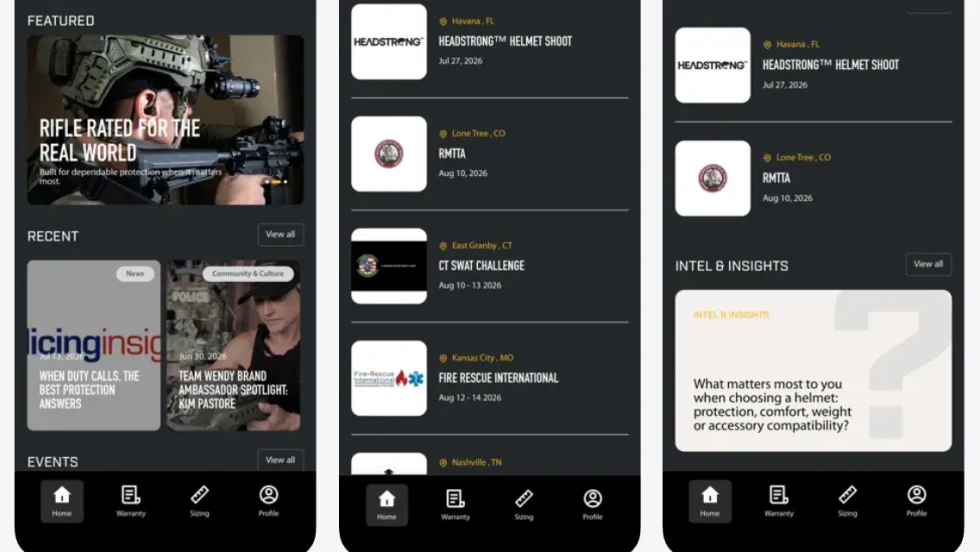
Team Wendy App Creates New Digital Hub for Helmet Owners
The Team Wendy Community App provides one location for warranty registration, size-fit tools, product updates, and community connection. For helmet owners, the new app creates a simpler path to the information and tools that matter most.
Read More →