



The "Good Faith" Doctrine
The U.S. Supreme Court has said that "Because many situations which confront officers in the course of executing their duties are more or less ambiguous, room must be allowed for some mistakes on their part. But the mistakes must be those of reasonable men, acting on facts leading sensibly to their conclusions of probability." (Brinegar v. U.S.)

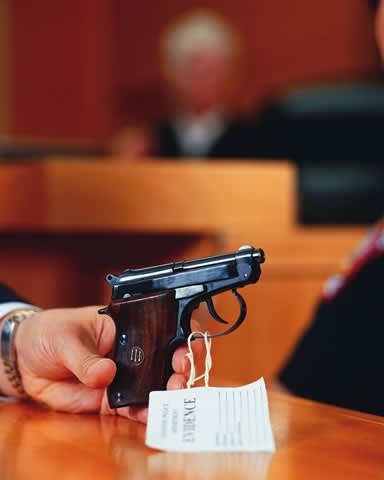
The U.S. Supreme Court has said that "Because many situations which confront officers in the course of executing their duties are more or less ambiguous, room must be allowed for some mistakes on their part. But the mistakes must be those of reasonable men, acting on facts leading sensibly to their conclusions of probability." (Brinegar v. U.S.)
And in another case, the court said, "The penalties visited upon the government, and in turn upon the public, because its officers have violated the law must bear some relation to the purposes which the law is to serve." (U.S. v. Ceccolini) What purpose is the exclusionary rule intended to serve?
The Exclusionary Rationale
Although the Fourth Amendment prohibits unreasonable searches and seizures, it says nothing about what happens if one occurs. The Supreme Court took it upon itself to remedy that situation in a 1914 case called Weeks v. U.S. To deter future repetition of Fourth Amendment violations by police, the court created an exclusionary rule, mandating that federal judges exclude evidence obtained from an unreasonable search or seizure from the prosecution case-in-chief. This rule was made binding on the states in Mapp v. Ohio, in 1961.
The court has repeatedly cautioned that evidence is not to be excluded automatically in all cases where a Fourth Amendment violation has occurred, but only where suppression will have the effect of deterring future misconduct. "In determining whether to apply the exclusionary rule, a court should examine whether such application will advance the deterrent objective of the rule." (Illinois v. Krull)
The "Good Faith" Doctrine
In a number of situations, the court has acknowledged that not all errors committed by police officers justify invoking the exclusionary rule, because the actions taken by officers were reasonable under the circumstances, and so there was no misconduct to deter. This is the good faith exception to the exclusionary rule, which rests on the reasoning that "Where official action was pursued in complete good faith, the deterrence rationale loses much of its force." (Michigan v. Tucker)
The good faith rule does not apply merely because an officer was unaware of a court ruling holding that particular conduct violates the Fourth Amendment. Rather, it must appear to the court not only that the officer had a subjective good-faith belief that his or her actions were lawful, but also that it was objectively reasonable for the officer to hold that belief. A mistaken belief based on inadequate training or a lack of awareness of legal requirements for valid searches and seizures does not qualify as "good faith." Just as a suspect's ignorance of the law is no excuse for violating a statute, an officer's ignorance of the law is no excuse for violating the Constitution.
In addition to saving evidence from exclusion, the good faith doctrine can also be applied to shield law enforcement officers and their agencies from civil liability. If the law has not been clearly established in prohibiting certain actions, police are entitled to "qualified immunity" from suit, and need not be forced to stand trial. (Saucier v. Katz)
Search Warrants
Courts have a "strong preference" that searches and seizures be conducted under the authority of judicial warrants. (U.S. v. Ventresca) If an officer obtains a warrant and searches within the limited scope of that warrant, the good faith doctrine will usually apply, even if there may be latent deficiencies in the statement of probable cause (unless the affiant-officer deliberately misled the magistrate as to the facts).
"When an officer acting with objective good faith has obtained a search warrant from a judge or magistrate and acted within its scope, there is no police illegality and thus nothing to deter." (U.S. v. Leon)
Arrest Warrants
To some extent, officers in the field must rely on automated warrant records to tell them whether or not a detainee has an outstanding arrest warrant. If through the error of a judge or judicial clerk the records are not purged of recalled warrants in a timely manner, an officer's good faith reliance on the results of a records check will not justify suppression of any resulting evidence. Since police officers cannot control judicial conduct, mistakes by court clerks cannot be deterred by sanctioning the police through exclusion of evidence.
"If court employees were responsible for the erroneous computer record, the exclusion of evidence at trial would not sufficiently deter future errors so as to warrant such a severe sanction. Application of the Leon framework supports a categorical exception to the exclusionary rule for clerical errors of court employees." (Arizona v. Evans)
Mistaken ID
Conscientious officers make every effort to be sure that a person who is being arrested is the person for whom they have probable cause. Since criminals lie about their identities and may try to alter their physical appearance, it is not always easy to ensure that the right person is being arrested.
In Hill v. California, for example, officers went to the last known address for Archie Hill, because they had PC to arrest him for a robbery. The door was opened by a man who fit the description of Hill, and though he insisted his name was Miller (which in fact was true), the officers declined to take his word. They arrested him thinking he was Hill and conducted an incidental search that resulted in evidence incriminating Hill in a robbery. When the real Hill was later arrested and sought to suppress the evidence based on an illegal arrest, the court applied the good faith exception and denied suppression:
"The police had probable cause to arrest Hill and they had a reasonable, good faith belief that the arrestee Miller was in fact Hill. When the police have probable cause to arrest one party, and when they reasonably mistake a second party for the first party, then the arrest of the second party is a valid arrest." (Hill v. California)
Mistaken Location
Officers with a search warrant for "the third floor apartment" at a particular Baltimore address served the warrant there without realizing that there were actually two separate apartments on the third floor, and they were in the wrong one. In the meantime, however, they saw and seized contraband implicating the tenant of that apartment. He moved to suppress it, but the Supreme Court ruled that the good faith exception applied:
"The officers' conduct was consistent with a reasonable effort to ascertain and identify the place intended to be searched. The Court has recognized the need to allow some latitude for honest mistakes that are made by officers in the dangerous and difficult process of making arrests and executing warrants." (Maryland v. Garrison)
More Good Faith Applications
In Illinois v. Rodriguez, the good faith exception was applied to uphold consent obtained from someone police reasonably (but incorrectly) believed to be a current occupant of premises. And in Michigan v. DeFillippi and Illinois v. Krull, suppression was denied where officers relied on statutes that were subsequently declared unconstitutional by the courts.
Devallis Rutledge, a former police officer and veteran prosecutor, currently serves as Special Counsel to the Los Angeles County District Attorney. His latest book is "Criminal Investigations and Evidence."
GOOD FAITH CIRCUMSTANCES
Objectively reasonable good faith may prevent suppression and liability in these kinds of cases:
Search Warrants
Arrest Warrants
Misidentification
Consent
Invalid Statutes
More Patrol
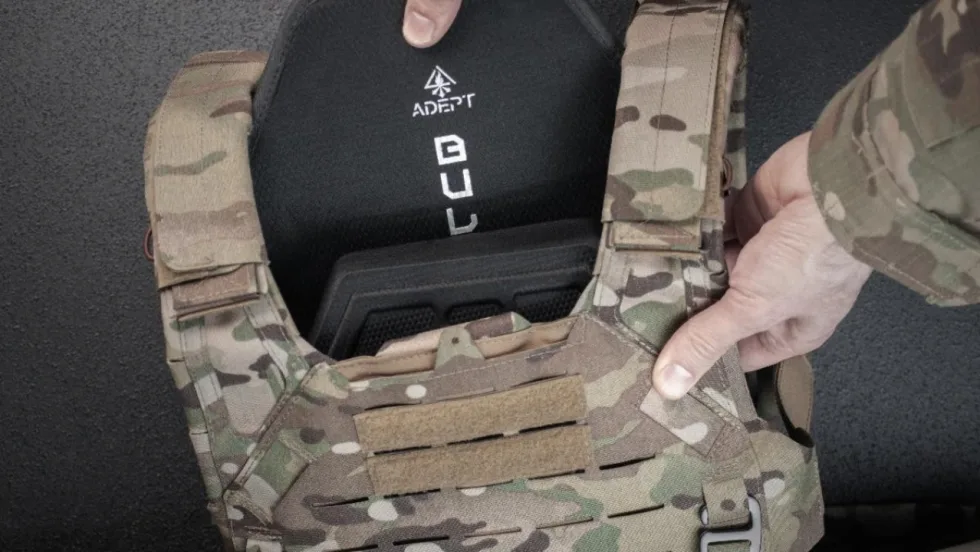
Adept Armor Introduces Two New Rifle Plates
Adept Armor has launched two new Level IV ballistic plates, the Emperor and the Archon Mark 2, which brings Adept Armor’s new Quatroid ceramic to the high-threat, performance-value center of the range at 5.2 pounds.
Read More →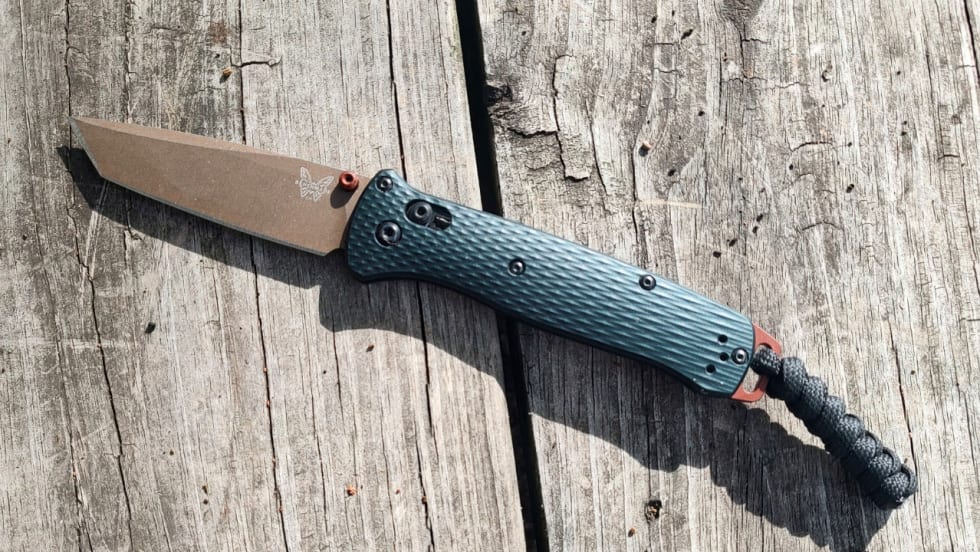
POLICE Product Test: Benchmade Bailout
The Benchmade Bailout is a slim, lightweight carry knife with a deep-ride pocket clip and comes in a variety of blade steels and scales. Here is a detailed review of the Taiga Green Bailout, released earlier this year.
Read More →
NLEOMF Announces July 2026 Officer of the Month
NLEOMF honored a Michigan deputy sheriff as the July 2026 Officer of the Month for rescuing a trapped driver from a burning vehicle following a Fourth of July crash.
Read More →
Streamlight to Showcase Newest Lighting Products at National Safety Council’s Safety Congress & Expo 2026
Streamlight will showcase its latest lights, including the Portable Scene Light III and the LiteBox 1Million, at the 2026 National Safety Council (NSC) Safety Congress & Expo.
Read More →
The 2027 World Police & Fire Games Set for Perth, Australia
The 2027 World Police & Fire Games (WPFG) will take place in Perth, Western Australia, from Friday, March 12 through Sunday, March 21, 2027.
Read More →
5.11 Partners with National Fallen Firefighters Foundation to Support #ForThe343
5.11 has joined the nationwide movement honoring the 343 New York City Fire Department firefighters lost on Sept. 11, 2001.
Read More →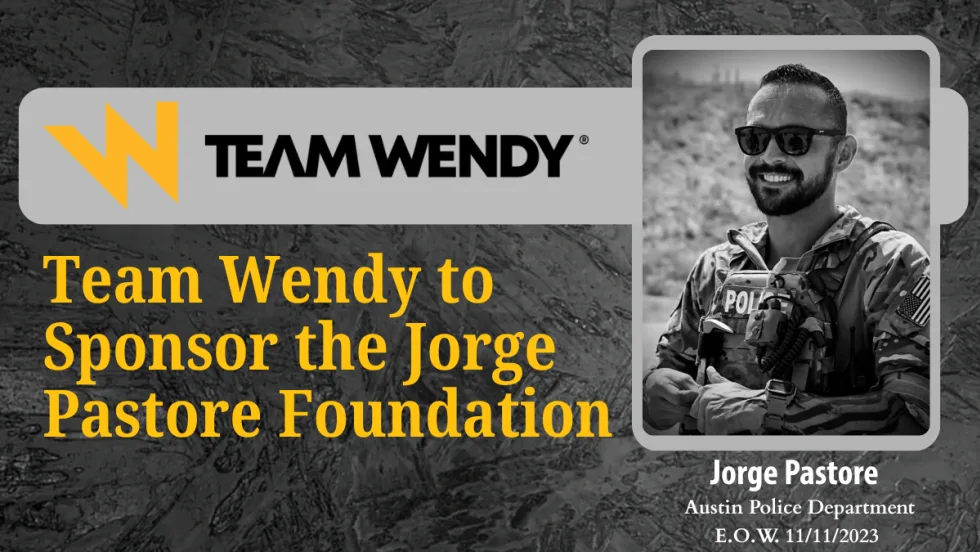
Team Wendy Announces Title Sponsorship of the Jorge Pastore Foundation
Team Wendy’s 3-year partnership with the Jorge Pastore Foundation expands access to programs that strengthen those who serve.
Read More →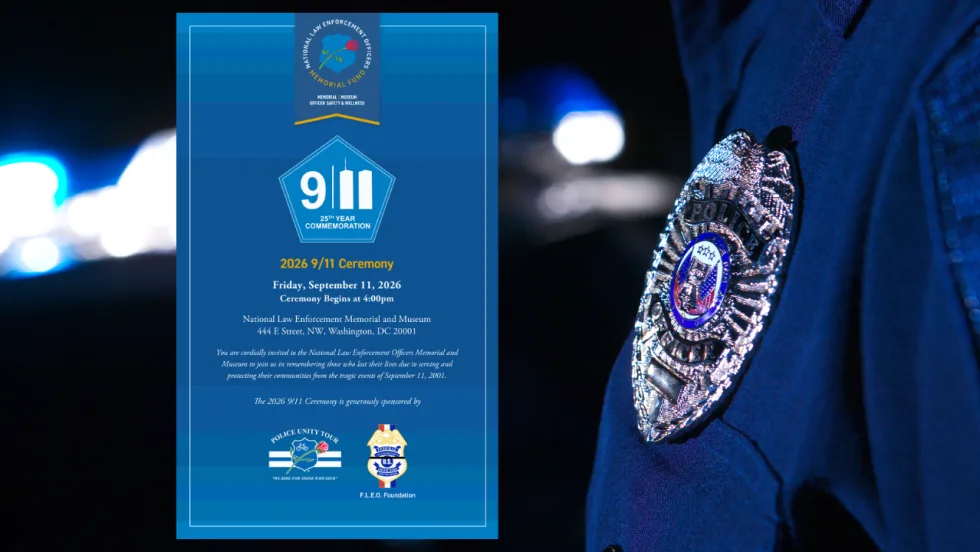
National Law Enforcement Memorial and Museum Hosting 9/11 25th-Year Commemoration Ceremony
The National Law Enforcement Memorial and Museum is hosting a 9/11 25th Year Commemoration Ceremony on Sept. 11 at 4 p.m.
Read More →
National Law Enforcement Officers Memorial Fund Announces June 2026 Officers of the Month
The National Law Enforcement Officers Memorial Fund (NLEOMF) named 15 officers of the Chico Police Department (California) as the Officers of the Month for June 2026 for their roles in responding to an active-shooter incident at a public library.
Read More →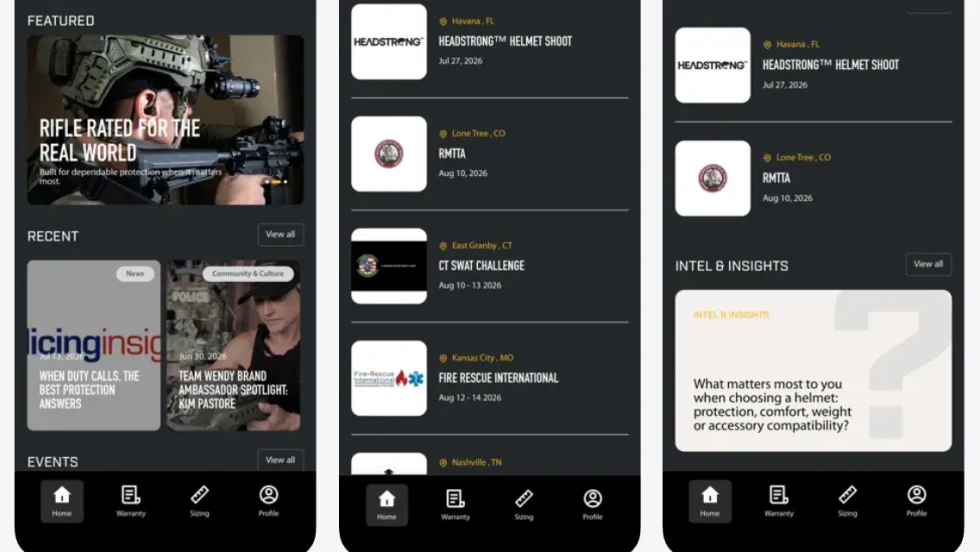
Team Wendy App Creates New Digital Hub for Helmet Owners
The Team Wendy Community App provides one location for warranty registration, size-fit tools, product updates, and community connection. For helmet owners, the new app creates a simpler path to the information and tools that matter most.
Read More →