



The Danger List
Over the years I have seen many variations on "deadly errors" officers make to get themselves hurt but the version that is still my favorite is the first one I learned, and I think it is time to do a quick review.

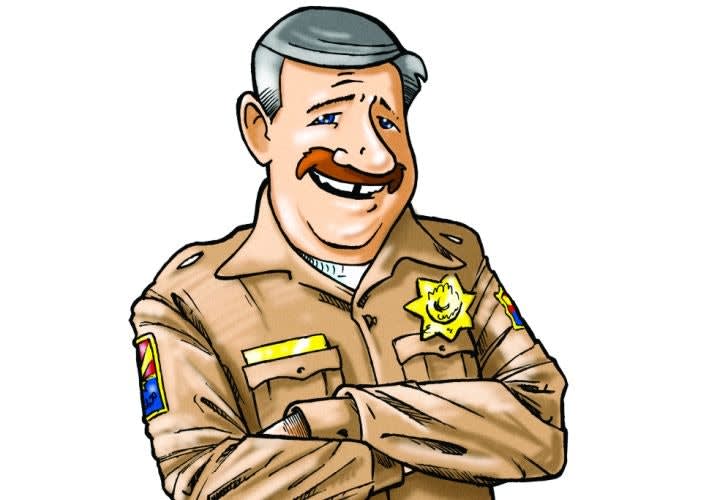
Illustration by Sequoia Blankenship.
One of the first lists I had in law enforcement is still one of the most important ones in my mind to this day and should still be on every crime fighter's refrigerator door and patrol car visor, and it should be posted on every department's roll call bulletin board.
Back in 1975 a buddy told me about a new book by the famous LAPD detective and Lakewood, Colo., police chief Pierce Brooks. It was called "Officer Down, Code Three," and I promptly managed to get my grimy rookie hands on it and read it like a pirate reads a treasure map.
And like a map, it was filled with directions backed by tragic examples of how officers go down a path to injury or death and how we should, and could, avoid that path. In fact, this book made such an impression on me I used its list and examples as a guideline for our officer safety training when I was assigned to the academy as well as an inspiration for several of my "JD Buck Savage" videos.
Over the years I have seen many variations on "deadly errors" officers make to get themselves hurt but the version that is still my favorite is the first one I learned, and I think it is time to do a quick review. I invite you to draw up this list in your own words and post it where you think it will do the most good. It isn't just a good reminder to you but to everyone who reads it and many of its points can make all occupations safer and more aware.
Enough said; let's get into the list with comments:
1. Failure to maintain proficiency and care of weapon, vehicle, and equipment. How many officers do you know who are trying to prove they can go several qualifications without cleaning their firearm? Ask almost any rangemaster in any agency. They'll tell you some incredible "dirty gun" stories.
2. Improper search, no search, and improper use of handcuffs. I was recently researching a young officer's death where he had been killed in a booking area by a hidden weapon that had been missed even though the suspect had been in the custody of numerous officers. Since that death the booking officers have reported that several hundred weapons have been recovered from arrestees not searched properly, in that same county.
3. Sleepy or asleep. In the era of 12-hour shifts and off-duty jobs taken to ease financial stress this is more important than ever. Tired cops are a danger to themselves, and to others. Get your rest.
4. Relaxing too soon. "Yes" people can become "no" people in an instant, and it is important to make sure the whole scene is safe before you kick back and savor another great arrest.
5. Missing the danger signs. Many people "leak" anxiety to us merely because they are stressed, but they could be planning to hurt us. Pay attention, know the difference, and listen to the verbal cues as well as the nonverbal hints.
6. Taking a bad position. Since when is a rose bush cover or a high-risk stop distance 10 feet? Tactically sound positions and real cover can make a huge difference in your ability to win.
7. Failure to watch their hands. When my alter ego Buck Savage told Rookie to "watch the hands," he was dead right and yet how many times do officers fail to do this simple task?
8. Tombstone courage. Many lists call this failure to wait for back-up or "The John Wayne Syndrome." I call it foolish and a good way to get others hurt as well as yourself.
9. Preoccupation. Science now confirms that if we are focused "inside our head" we have a very real chance of getting hurt, if we are doing anything more than sitting on the couch.
10. Apathy. This bad boy kills us like Raid kills bugs. It is caused by things like routine, familiarity with the suspect, years of getting away with bad habits, or simply losing the love of the job. Worse, this is a tough one to see when it's in the heart of someone you care about. Apathy is such a passive trait, and it often causes one or several of the other nine deadly errors on this list. Watch for it in yourself and in others.
Write this list using your terminology, your impressions, your own experiences and then post it wherever you think it matters. Challenge others to make their own lists. But whatever you do, don't make the mistakes on this list.
Dave Smith is an internationally recognized law enforcement trainer and is the creator of "JD Buck Savage." You can follow Buck on Twitter at @thebucksavage.
More Training
Registration Underway for Sixth Annual First Responders Relay
The California Police Athletic Federation’s annual First Responder Relay will welcome first responder teams from across the globe to compete along Ventura's scenic coastline on Oct. 11. Registration is underway.
Read More →
Vector Solutions Launches Comprehensive Online Dispatch Training Catalog for Emergency Communications Professionals
Vector Solutions’ new catalog of 35 expert-developed online courses can help emergency communication centers strengthen training, meet certification requirements, and simplify continuing education.
Read More →
Tools for Active Shooter Response Training
What technologies help prepare officers for active shooter response situations? This behind-the-scenes look at law enforcement training explores shot simulators, smart firearms, laser target systems, and the tools used to build safer, more effective training environments.
Read More →
Two-Officer Tactical Doorway Entry Techniques
Entering a room during active-threat situations requires communication, coordination, and disciplined tactical movement. In this video, trainers from the United States Deputy Sheriff’s Association demonstrate critical room entry concepts, including fatal funnel awareness, team coordination, and safe tactical movement.
Read More →
High Compressed Ready Explained | Muzzle Control For Room Entry
In this video, Mike Willis, law enforcement national training and program director for the United States Deputy Sheriffs’ Association, demonstrates the high compressed ready position and discusses muzzle control during room entry.
Read More →
Why Attend the DroneSense Innovation Summit by Versaterm?
Let’s hear from Ryan Bracken, head of product, about why your agency should send someone to the first annual DroneSense Innovation Summit by Versaterm in April.
Read More →
Caswell Live Fire Spins Off from InVeris
Caswell Live Fire has spun off from parent company InVeris, coinciding with the 100th anniversary of Caswell’s founding. Over the past 100 years, Caswell has developed pioneering solutions that support military, law enforcement, and commercial clients worldwide.
Read More →
When Do You Transport a Wounded Officer Instead of Waiting for EMS?
Thumbnail for video series POLICE Topics, Tactics & Tips with a yellow headline that reads When Do You Transport a Wounded Officer Instead of Waiting for EMS?
Read More →
How to Pick Your High-Risk Stop Location for Tactical Advantage
Hear veteran trainer Mike Willis, of the United States Deputy Sheriff’s Association, explain several considerations that can help you wisely pick your best spot to initiate high-risk or felony traffic stops.
Read More →
Coffee Break with Police Experts: Using Your Patrol Vehicle for Cover
In this video, hear from Dustin Mowery, a product specialist at Team Wendy, as he discusses how to best use a patrol vehicle for cover.
Read More →