



TASER: Navigating the Learning Curve
Editor’s Note: On Nov. 30, 2003, three officers of the Cincinnati Police Department were called to the parking lot of one of the city’s many White Castle restaurants. There they found an immense 41-year-old man named Nathaniel Jones who was scaring the restaurant’s employees with his bizarre behavior.

Editor's Note: On Nov. 30, 2003, three officers of the Cincinnati Police Department were called to the parking lot of one of the city’s many White Castle restaurants. There they found an immense 41-year-old man named Nathaniel Jones who was scaring the restaurant’s employees with his bizarre behavior.
Video footage from cameras in the police cars and cameras on surrounding buildings shows Cincinnati officers attempted to reason with Jones and talk him down. He called them “white boy” and “redneck” and then threw a punch at one of them.
The officers continued to try to verbally bring Jones to his senses, but they responded to his attack with the only less-lethal weapons that they carried: OC spray and PR-24 batons. In the ensuing melee, officers delivered 36 baton strikes to Jones’ torso and legs, bringing him under control. They then handcuffed the 350-pound Jones and lay him on his stomach while they took a moment (42 seconds to be exact) to recover.
Jones died. The Hamilton County Coroner ruled that the cause of his death was changes in heart rhythm caused by a combination of his obesity, his enlarged heart, his struggle with the officers, and the cocaine, PCP, and embalming fluid found in his system.
Regardless of the fact that the police acted appropriately in the Jones incident, footage of the officers striking the obese black man with their batons was broadcast. And it magnified tensions between the local African-American community and the Cincinnati PD. Just two years earlier, the city had been rocked by riots that stemmed from the fatal officer-involved shooting of a black man.
Police and political leaders had realized for months before the Jones incident that it was time to give more thorough consideration to an additional less-lethal option for patrol officers of the Cincinnati PD. They thought that the solution might be Tasers, but they weren’t sure. So the author of this article was given the assignment to research the effectiveness of Tasers and, once they were approved and acquired, to implement the department’s Taser training and Taser carry policies.
Last year my agency, the Cincinnati Police Department, decided to deploy the X26 Taser from Taser International. That sounds like a simple thing, but it’s not. You don’t just buy Tasers for 1,050 sworn officers, tell them to strap them on, and send them on their way. Implementing a Taser program requires you to institute a Taser training program and a Taser use policy.
Our Taser program began with nearly a year of research. Then when we submitted our findings, city government approved the technology, the federal government gave us a chunk of money, and we moved forward with the purchase of 1,100 X26 Tasers. That was, of course, just the beginning.
Putting Tasers on the belts of our officers required us to travel a very long and difficult road. I’m writing this article because maybe our experience can help you decide whether Tasers are for your department and give you some insight into how to establish your own Taser program.
Research and Deployment
A question that I’m often asked by other officers goes something like this, “Is the Taser really all that?”
Well, our research (and later on you will see our experience) has shown that, as less-lethal weapons go, Tasers are very effective. However, it should be stated that the research we conducted also led us to the following conclusion: No less-lethal weapon is 100-percent effective.
Chemical less-lethal weapons like OC and C/S are at best only going to work 86 percent of the time. Studies show that 14 percent of the population is not affected by pepper spray or tear gas. There are even criminals and anarchists who intentionally and repeatedly expose themselves to law enforcement chemical weapons to mitigate their effects in confrontations with police.
As for baton strikes, PR-24 strikes don’t work if you’re not feeling pain. Don’t believe me? I’d recommend that you watch the tape of my fellow Cincinnati PD officers struggling with 350-pound Nathaniel Jones. They hit him 36 times with PR-24s, delivering blows to his legs and torso, and still had trouble bringing him under control. Jones was later discovered to be under the influence of cocaine, PCP, and embalming fluid. People on PCP have been known to withstand immense amounts of pain.
That’s why we chose to deploy Tasers. The Taser X26 is specifically designed to incapacitate a subject who is trained in unarmed combat or who is capable of superhuman endurance and pain resistance because of the influence of drugs.
Yet, despite its power, the Taser’s electromuscular disruption (“Taser effect”) is designed to be non-lethal and leave no lasting effect. A study by the Los Angeles Police Department found that subjects have many more long-term injuries from officers using beanbag rounds, batons, pepper spray, or even punches and kicks than they do from Tasers.
The same study also found that officers have much less chance of being injured when deploying Tasers than with any other means of less-lethal force. This is only common sense; a Taser X26 now gives officers the ability to safely incapacitate a subject at a range of up to 25 feet (See “New Taser Products,” on page 44). This means that officers don’t have to go hands on with the subject until he or she is incapacitated by the Taser effect. Note: Officers can handcuff a Tasered subject while the weapon is active without any effect.
We were convinced and we made our purchase.
Trial and Training
Then we started training. Let me tell you flat out that one of the most time-consuming things you have to do before you deploy Tasers is educate your officers about the weapon and train them how to use it.
There are a couple of ways to accomplish this goal. You can try to train as many officers as possible at once or you can train your people in small groups.
We chose to keep our training sessions small, setting class limits at 15 to 20 officers per class. The reasoning behind this decision is obvious to anyone who has ever trained cops to use new equipment. We wanted to make sure that each officer had plenty of hands-on time with the Taser. That’s the advantage of a small class.
Of course, there are also some disadvantages. Primarily, it takes an awful lot of time to train more than 1,000 people at a rate of 20 at a time. In our case, we held three classes a week for six months.
The training department for Taser International recommends a four-hour block of instruction for the X26 user. Of course, that’s just a suggestion. Our training program lasted eight hours and incorporated such peripheral issues as lethal force, weapon retention, developing cross-draw skills (we carry our Tasers in a cross-draw position), as well as learning how to use the Taser. The morning portion was dedicated to explaining the technology and the afternoon was hands on.
One aspect of the Taser training that we thought was extremely important was the volunteer exposure portion. As most of you know, this involves wiring volunteers up to the weapon and jolting them for the same five-second duration that they may need to inflict on a subject. The idea is that by experiencing the Taser effect, you will know first-hand that the weapon works and you will be able to better communicate to a judge and jury why you chose to shoot the suspect with a Taser.
That’s the way Taser trainers and police administrators look at exposure training. Trainees have a different view; some dread it and some gung-ho types can’t wait to take the ride. Most fall somewhere in between.
To quell the fears of trainees, the training staff and Chief Thomas Streicher Jr. volunteered to take the hit on video. We showed the video at the beginning of each training session.
Immediately after the video, we went right into the volunteer exposure portion of the training. This is an important point. Taser International stresses that you cannot delay this portion of the training. Taser trainers have found that officers are unable to focus on the training until the exposure portion of the training is out of the way.
Our goal was to get as many officers to take the ride as possible without forcing them to do it. Each officer who took the five-second hit was rewarded with an X26 Taser pin, which, I might add, they wear proudly.
By the end of the Taser training 800 out of our 1,050 sworn officers had volunteered for the full five-second ride. That’s a very high percentage of volunteers, and I believe Chief Streicher deserves a lot of credit for that. I’m certain that when officers saw their chief—who has over 30 years experience as a police officer—take the five-second hit, it swayed their decision in favor of volunteering.
Labor-Intensive Program
As we created our Taser program, we discovered a variety of unforeseen problems. The first and most obvious problem was that the training sessions were manpower intensive.
The second thing we discovered was that the Exoskeleton holsters that come with the X26 are shipped right-handed and must be modified for left-handed officers. To make the right-handed holster suitable for lefties, you have to take it apart and switch all the parts around. On average, this process took us 15 minutes per holster.
While one officer was instructing the class another would make the necessary changes to the holsters. We also had to have instructors available to set up the training room for the day and to address any issues with officers who were experiencing problems with their Tasers. I mention this because we found that it took three officers full time, five days a week to implement the Taser in our department. Additionally, we dedicated an officer to supervise all of the daily Taser issues like tracking all deployments and issuing the necessary equipment for each officer, depending on his or her unit.
Working Partnership
I’d like to be able to tell you that the Taser was perfectly suited to the needs of the Cincinnati PD right out of the box and that every piece of equipment that we received from the manufacturer was perfect. I’d like to be able to say that, but I can’t.
We experienced some problems with the equipment. Holsters, batteries, air cartridges, and software were some of our biggest problems.
And when we discovered them, I was very concerned. Taser International had made its million-dollar sale, and I was worried that we were going to have trouble getting answers and assistance. I cringed at the thought of explaining this to our chief.
But I could not have been more wrong about the staff at Taser. They were more like our partners than an equipment vendor. We never had a problem getting equipment replaced or in some cases redesigned, and the technical assistance was superior to any I’ve ever experienced. Representatives from Taser International even flew to our city on several occasions to make sure our equipment was fully functional.
Yes, we had growing pains. But every step of the way Taser International was willing to do whatever it took to make our Taser program successful in Cincinnati.
Tasers on the Street
So the question that everyone wants to know is, “Did the Tasers work in Cincinnati?"
OK. I’ll get to that. But before I make statistical comparisons on use of force from 2003 to 2004, I should explain where we chose to put the Taser on the use-of-force continuum. Our chief decided to put the Taser right after verbal commands and equal to chemical irritant. He realized that if we were going to truly reap the benefits of Taser deployment, we needed to give the Taser a fair shot to succeed.
And the Taser has succeeded in Cincinnati. Even though it didn’t look that way at first.
In our first six months, we had 320 deployments of the Taser with a success rate of 86 percent. Now, I know that 86 percent may not sound all that great on the surface and we didn’t think so either. After all, we could have achieved the same effect with chemical irritants like OC with much less cost and no additional training.
We were disappointed. So we decided to dig deeper into the statistics and see why our Taser program was not as successful as we had hoped it would be.
What we discovered was that the officers carrying the Taser were still going through a learning curve. The majority of the time the Taser did not work, the reason was simple: officers were having a little trouble hitting subjects with both probes. Out of 320 field deployments we had 50 failures. Out of those 50 failures, 41 of them were operator error, misses. Of course, some of those were during foot pursuits, so don’t get the idea that our officers can’t shoot.
Fortunately, we also discovered that the vast majority of the misses occurred in the early phase of our program. Officers quickly recognized what they were doing wrong, and the next time they deployed their Tasers they scored hits with both probes.
At the time I’m writing this article, we have been at full deployment for two months. With that being said, I’d like to share a few statistics.
Comparing January through June 2003 to January through June 2004, we discovered that our department had experienced a 31-percent decrease in complaints of excessive use of force. We have also seen a 70-percent decline in the use of chemical irritant. And injury to prisoners has dropped by 30 percent. Most importantly, assaults on police officers have dropped by 70 percent.
So despite our initial disappointment, the Cincinnati PD is now very happy with the early results of Taser deployment. Although we had problems starting the program, it seems like it’s going to be well worth the effort.
The Big Question
It is difficult to discuss Taser technology without mentioning deaths purportedly caused by the Taser. This is an issue we had to face. So we went out and got all the facts before judging the weapon based on slanted news and investigations by activist groups. There are several medical studies available, some independent and some completed by Taser International. It also helped to discuss the issue with other police departments.
We haven’t had a death occur where the Taser was involved, but we realize it could happen. And we recognize that if it does occur it will not be the result of the energy produced by the Taser.
People do terrible things to their bodies. Unfortunately for us as police officers, it’s the nature of our job to meet these people before they expire. People died in police custody long before Taser technology was around, and they will continue to die in custody as long as police respond to persons who have overdosed on drugs.
That’s what the majority of the alleged 70 something deaths from the Taser were: drug overdoses. After reading the findings of the deaths associated with the Taser, we found that none of them listed the Taser as the cause of death.
Police critics will ignore proven science because they will disregard any evidence that would exonerate a police officer. It’s their job to bash police officers.
But we in the Cincinnati Police Department believe that the Taser is a safe and viable option. In the short time we have been at full deployment, it has lived up to its reputation. It’s even saved the lives of two subjects, one a bridge jumper and the other an emotionally disturbed person who was wielding a sword and who would have been shot by officers if the Taser hadn’t ended the threat.
I speak to our officers on a daily basis about the Taser, and they are tremendously happy with this new technology. Most of them just shake their heads and say, “Man, if we had only had these sooner.”
Police Specialist John Rose is a 16-year veteran of the Cincinnati Police Department and a 14-year veteran of the SWAT unit. Specialist Rose researched and developed the Taser program for the Cincinnati PD.
New Taser Products
At the recent International Association of Chiefs of Police Conference in Los Angeles, Taser International unveiled a number of new products to enhance the performance of its law enforcement weapons.
Extended Range
Since the advent of the M26 Advanced Taser, it’s been a given that the maximum range of the weapon is 21 feet. Not anymore. At IACP, Taser introduced a 25-foot extended-range cartridge, the XP Air Cartridge.
Taser claims that the new XP cartridge, which is compatible with both M26 and X26 Tasers, features probes that maintain a truer flight trajectory, making them as accurate at 25 feet as the earlier probes at 21 feet. The company adds that the power of the new cartridge’s 2,200-PSI nitrogen propulsion system can easily send the probes 25 feet downrange and through a subject’s clothing.
Weapon-Mounting System
Taser’s new X-Rail System allows a user to attach an X26 Taser to a long gun equipped with a Picatinny rail. Originally developed for military use, the X-Rail system could be attractive to police tactical teams that need to bring both lethal and less-lethal force into an operation. The advantage of the X-Rail system is that an operator can instantaneously switch from Taser to gun.
The X-Rail system works with GG&G, Knight’s Armament, LaRue Tactical, SureFire, and Falcon Industries rails.
Gun Camera
Taser is developing an audio-video system that will fit into the X26. The Video Digital Power Magazine (VDPM) is designed to integrate into the Taser X26 power supply. It incorporates a storage bay for a spare cartridge and a rechargeable battery system (a first on the X26). The data captured by the VDPM can be downloaded to any Windows PC via a USB connection.
VDPM units are expected to ship during the first quarter of this year.
Do Tasers Kill?
The Taser is now the less-lethal weapon of choice for American cops. Thousands of people have been stunned by them, and approximately 70 have died in police custody.
Which begs the question: Do Tasers kill?
Taser International has long contended that the energy level discharged and its duration make its Taser weapons absolutely safe. The Arizona-based company offers as evidence of its claim experiments by company medical director Dr. Robert Stratbucker, a noted electrocardiologist, and records of thousands of police officers who have been shot with Tasers in training.
Taser opponents say the anecdotal records of the effects of Tasers on healthy police officers do nothing to prove that the Taser effect is not lethal to crackheads. They also slam Stratbucker’s research because the doctor is compensated by Taser International, which they see as a conflict of interest.
Both the American Civil Liberties Union and Amnesty International are calling for a moratorium on Taser use by law enforcement officers until the conductive weapons are proven to be “non-lethal.”
Bill Lewinski, executive director of the Force Science Research Center at Minnesota State University-Mankato, says that’s a really bad idea. Even a temporary ban on the use of Tasers “would literally create a catastrophe for peace officers. Lawsuits would increase, officer injuries would increase, subject injuries would increase—all guaranteed.”
Both scientific and forensic evidence can be used to argue that a Taser moratorium is unnecessary.
A panel of physicians and scientists assembled by the Orange County (Fla.) Sheriff’s Office testified last summer that Tasers are in fact non-lethal. They also reported that the predominant cause of in-custody deaths involving Tasers is excited delirium, a condition in which all of the body’s systems become hyperexcited to the point that they start to fail. Excited delirium is most commonly triggered by cocaine overdose.
Dr. Daniel F. Brennan, an emergency physician at the Orlando Regional Medical Center, says that it takes a much more powerful electric discharge than that of a Taser to effect the rhythm of a person’s heart through the skin. “The energy of the Taser is about 1.6 joules, the exo-defibrillators we use in the EMS are a minimum of 50 joules.”
An article published in the peer-reviewed medical journal PACE (Pacing and Clinical Electrophysiology) details the results of an experiment that sought to determine what level of Taser energy would trigger ventricular fibrillation (a dangerous heart arrhythmia) in pigs weighing about 70 pounds to about 260 pounds.
In that experiment, a customized neuromuscular incapacitation (NMI) device with the same waveform as the Taser X26 was connected to the pigs’ chests. (An actual X26 could not be used because the researchers needed a device that could generate more power than a commercially available Taser.) The researchers concluded, “the minimum discharge that would cause fibrillation was approximately 15 times the charge of the standard [Taser] pulse when used on the smallest pig.”
The PACE study also tracked the circulatory stability of the animals after repeated shocks from the NMI device. It concluded that police Tasers could be used multiple times on subjects without affecting their circulation.
Taser opponents will likely dispute the findings of the PACE article because of the participation of Taser International Medical Director Dr. Robert Stratbucker. But it should be noted that Stratbucker worked with three other scientists on the PACE experiments.
It should also be noted that the same advocates and activists who now blame Tasers for in-custody deaths previously made similar arguments against OC spray. Ironically, they now say that OC spray should be used instead of Tasers.
Police and emergency medical personnel believe that Tasers have just become the latest convenient scapegoat for in-custody deaths. Dr. Jan Garavaglia, Orange-Osceola (Fla.) medical examiner, testified during the Orange County task force presentation that his jurisdiction has had four in-custody deaths involving Tasers since 2000 and that in all four cases the deaths were caused by drug intoxication and excited delirium. In comparison, according to Garavaglia, San Antonio had 15 in-custody deaths from 1997 to 2003, with 14 of them caused by drug intoxication and excited delirium.
“There was no Taser involvement in any of the [San Antonio] cases because they don’t use Tasers there,” Garavaglia explains. His conclusion: Drug users die in custody from excited delirium without Tasers at the same rate they do with Tasers. “They’re dying either way,” he says. —David Griffith
Would a Taser Have Saved Nathaniel Jones?
Nathaniel Jones was an obese, 41-year-old man who ingested cocaine, embalming fluid, and PCP to predictable result. He started acting crazy and the police were called.
Cincinnati officers dispatched to bring the man under control were faced with a 350-pound giant who was violently out of control. The only weapons they had to subdue Jones were pepper spray and batons and, as captured on an infamous video of the incident, batons and OC are largely ineffective against people freaking out on PCP, cocaine, and embalming fluid. The officers used their batons on Jones’ torso and legs, brought him under control, and cuffed him. He died shortly after.
The question is, if Cincinnati cops had been carrying Tasers at the time of the Jones incident, would it have saved Jones’ life?
Maybe. Maybe not. Coroner’s reports show that Jones really didn’t die from his struggle with police but from abusing his own body. He had heart trouble from his girth, poor diet, and drug use.
Jones’ blood chemistry, bizarre behavior, and paranoia also indicate that he may have died from a condition that doctors call “excited delirium.” Excited delirium is a sort of “perfect storm” in the body that is usually triggered by drug use (especially cocaine) and it is exacerbated by violent physical activity. Once a subject enters a state of excited delirium, it’s very unlikely that he or she will live even if treated immediately in an emergency room.
Excited delirium is one of the primary causes of in-custody deaths attributed to Tasers by civil liberties groups. So it’s unclear if a Taser in the hands of a Cincinnati officer who responded to the Jones incident would have saved Jones’ life. Nathaniel Jones entered a downward spiral before the officers arrived on the scene and, whether subdued with baton strikes or stunned by a Taser, he was already circling the drain when he attacked the officers. —David Griffith
Cincinnati PD Officer
Assault/Injury Prisoner
Injury Comparison
Jan. 1, 2003 to Sept. 30, 2003
(Before Taser Deployment)
Officers Assaulted 55
Prisoners Injured 235
Jan. 1, 2004 to Sept 30, 2004
(After Taser Deployment)
Officers Assaulted 15
Prisoners Injured 149
Cincinnati PD Less-Lethal Force Frequency
Comparison
Jan. 1, 2003 to Sept. 30, 2003
(Before Taser Deployment)
Chemical Irritant 440
Physical Force 238
PR-24 13
Beanbag 4
Pepper Gun 7
Taser 3
Jan. 1, 2004 to Sept 30, 2004
(After Taser Deployment)
Chemical Irritant 160
Physical Force 157
PR-24 1
Beanbag 1
Pepper Gun 0
Taser 447
More Weapons
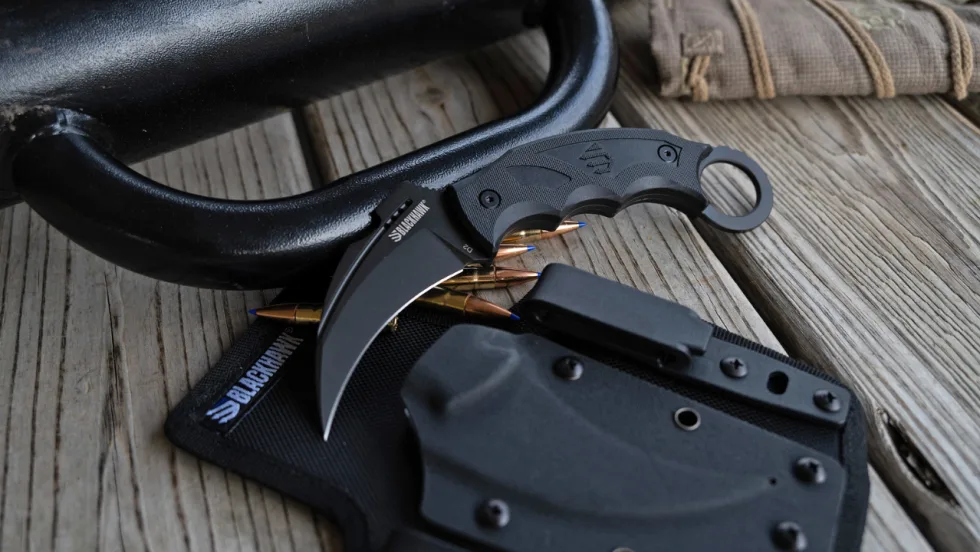
Blackhawk Introduces the Garra Fixed Karambit
The Blackhawk Garra Fixed Karambit is made from D2 steel and features a curved profile that enhances slicing efficiency, plus the full-tang construction ensures strength and durability from tip to handle.
Read More →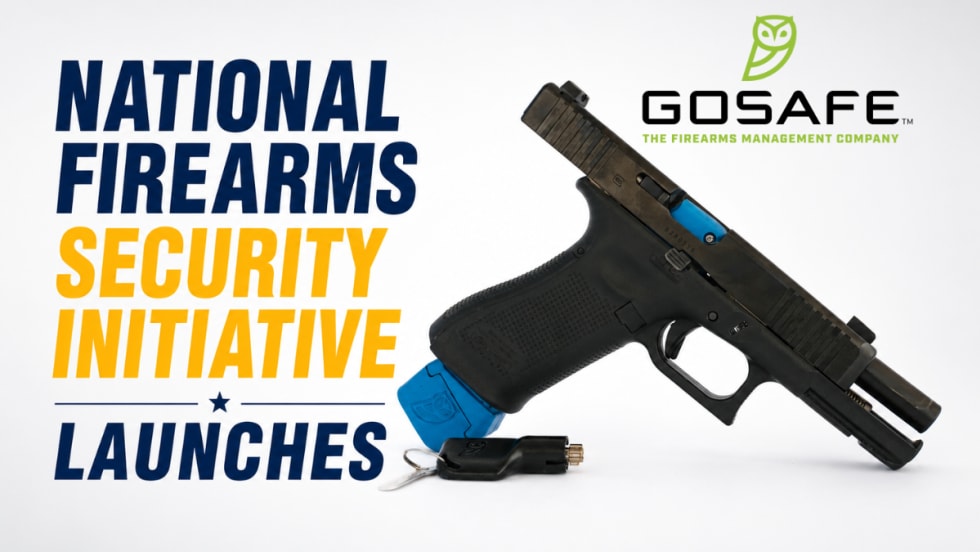
GOSAFE Technology Announces Public Safety Initiative Focused on Firearm Security and Risk Reduction
GOSAFE Technology’s new initiative provides support for agency-level solutions around secure firearm storage, vehicle-storage risks, off-duty firearm security, firearm accountability, and the public safety consequences that may result when firearms are stolen, lost, improperly secured, or diverted from lawful possession.
Read More →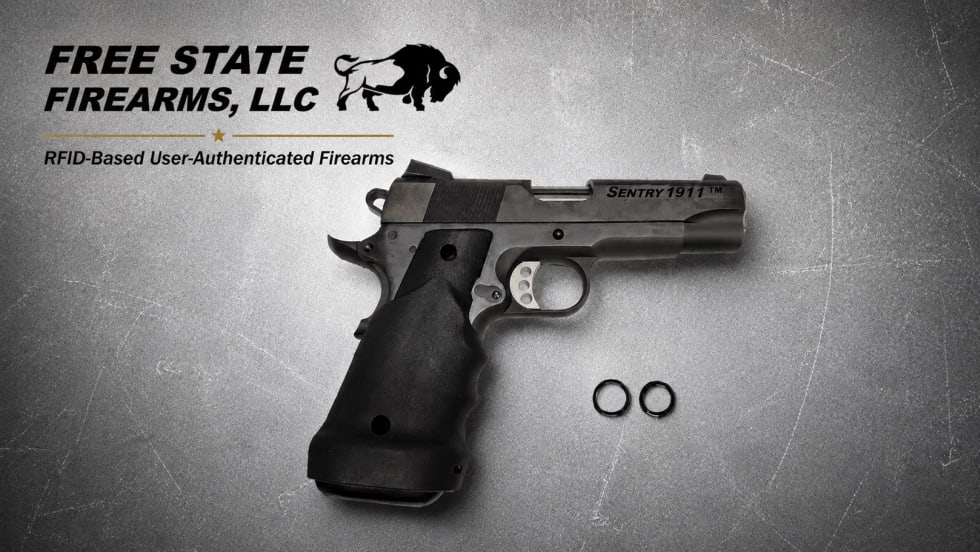
Texas Sheriff’s Office Deploys RFID-Based User-Authenticated Firearm for Prisoner Transport Operations
A sheriff’s office in Texas is now using RFID-based user-authenticated firearms, from Free State Firearms, for prisoner transfer and transport operations.
Read More →
Beretta Introduces the 80X Cheetah Tactical Bronze
Beretta has launched the 80X Cheetah Tactical Bronze, which features a fiber-optic front sight, a serrated rear sight, and a Picatinny rail for accessory mounting, and ships with three 15-round extended magazines.
Read More →
Wrap Raises $5 Million to Restart Domestic Manufacturing & Advance R&D
With new funding, Wrap Technologies will restart domestic manufacturing, advance validated R&D programs into commercialization, and responsibly accelerate early growth initiatives aligned with rising demand for non-lethal response capabilities.
Read More →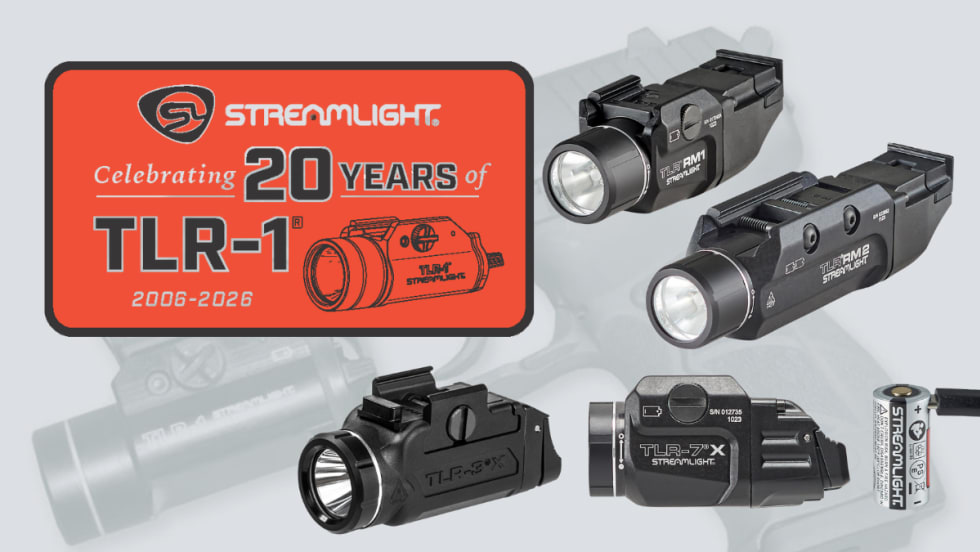
Streamlight Celebrates the 20-Year Anniversary of the TLR Series
This year, Streamlight marks two decades of weapon-mounted lighting innovation with the 20th anniversary of the TLR-1.
Read More →
Steiner’s T1Xi Selected as Top Performer in Texas DPS Optic Evaluation
Steiner Optics’ T1Xi was selected as the top-performing red dot in the recent Texas Department of Public Safety optic evaluation.
Read More →
Shadow Systems Selected as Exclusive Pistol Provider for West Virginia State Police
Shadow Systems will provide 700 XR920 crossover pistols for West Virginia State Police troopers and 80 CR920X high-capacity subcompact pistols for the Bureau of Criminal Investigation.
Read More →
Aimpoint Celebrates 50 Years of Innovation and Excellence in Sighting Technology
Aimpoint is marking its 50th anniversary in 2025, celebrating five decades of red dot innovation trusted by military, law enforcement, and tactical professionals worldwide.
Read More →
Streamlight Introduces Long-Range Handgun Light
“Our newest weapon light provides an industry-leading level of candela for handguns, giving users enhanced visibility under low light conditions, such as when searching a dark alley,” said Streamlight President Michael F. Dineen.
Read More →