



Tactical Medical Response to School Shootings
Officers trained in first aid responding to school shootings have to do what they can to help the victims who can be saved.

(Photo: Getty Images)
The foundation of a tactical medical response to a school shooting begins in the minds of those responding to the horrific event. We must act and be law enforcement officers first before we can transition into being medical responders.
Stop the Killer First
I have trained hundreds of officers on the application of tourniquets, hemostatic agents, and airway control techniques. Time and time again it's been observed that once the mindset of the officers transitions to dealing with the trauma-based situation they completely forget about the tactics of stopping the killing.
In the scenario-based training I have conducted, we have had the invaluable help of actual children and teens who played the role of the "injured," and I have seen countless times that officers will stop trying to search for and apprehend the bad guy and instead immediately render aid to the first child who reminds them of a loved one. This is caused by the nurturing instinct of the well-intentioned human behind the badge. But while there is an active murderer amongst the children, we must disregard the wounded and stop the killing. I do not like using the adjective never but officers responding to school shootings need to remember that they should never trade good medicine for bad tactics.
The reverse is also true. Once the active shooter or suspect has been neutralized, either killed or in custody, officers sometimes have difficulty transitioning from engaging the bad guy to rendering aid to his victims. If you have no information of a second shooter, you need to move toward your next plan of action.
There will always be variables to deal with in this situation, including whether the suspect is deceased, the suspect has surrendered or is otherwise in custody, and if communication has been made to other responding units over the radio in order to get them to your precise location. Once the valid points of contention have been addressed, then you must not get caught up in being "frozen" with the suspect. I have personally observed more times than I would like to admit that officers will handcuff a simulated "dead" suspect and sit there and wait for backup to arrive while continuously holding their guns on the dead suspect. What should be considered in this moment is how far away or how long it might be before backup does arrive. You need to be asking yourselves what kind of equipment needs to be requested, how many injuries can be estimated, what type of injuries were suffered by the victims, and what type of weapon—handgun or rifle—was used by the killer. These are all pertinent details that need to be relayed to the additional responders in order to prepare them to assist you and to treat the injured.
Triage
Treating the wounded begins with triage, which means to sort victims according to medical need. The first officers on scene may have to make the inconceivable decision of which victims receive attention and which ones don't.
Who do you help first and why? I'm going to keep it as simple as possible, take an immediate look at those who are unresponsive. I'm sure you have heard the phrase, "the squeaky wheel gets the grease," meaning attention. Well in this case it is the complete opposite; if you hear someone yelling and screaming, that is a good thing. They are alive and getting air into their lungs; they can wait. The thing you most want to know is why the unresponsive person is unresponsive because you might just have a few seconds to assess them and save their lives before they expire.
What type of injuries are you looking for in a multitude of traumatic gunshot victims? To start, take a split second, pause, assess the current situation, and then begin to make decisions. Before you go any further remember that if you lose your composure, more kids will die. As callous as it may sound, tell yourself, "This is NOT my emergency." By doing so you will keep yourself calm, which will allow you to make better assessments. Next, use your command presence and authority—your big boy/girl voice—to direct those who have minor or no injuries to exit the facility through the safest means possible.
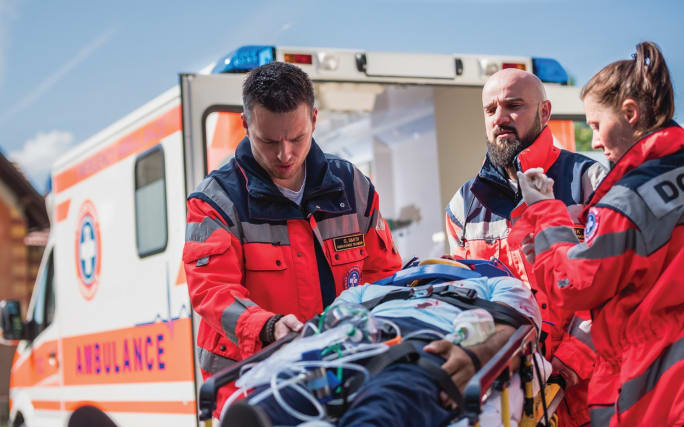
Medical litters like this one may not be available at the scene, and you may have to improvise to evacuate the wounded. (Photo: Getty Images)
Extraction
After you get the "walking wounded" out, take a quick look at the unresponsive. If you observe someone with a massive head or chest injury with copious blood loss, then you might have to move on. I would suggest rolling that person into the recovery position and then as quickly as possible move to the next victim and assess the trauma.
When giving aid to the victims you can help, you need to decide whether a quick tourniquet to an extremity will be applicable or will simply applying direct pressure as well as packing the wound suffice. These are all difficult choices because as officers, even officers with tactical medical training, we only can carry so much trauma equipment on our persons. If we use it all on a single individual, we may not have enough for someone else who could possibly need that one specific piece of trauma gear to save their life. So you must ration and only deploy what's absolutely needed. There will always be the lingering questions of "What if?" and "Could I have done more?" but those cannot be considered during the time of triage. Instead the mindset must be to help as many of those who can be helped as quickly as possible.
Once you have begun basic lifesaving interventions, your next thought should be how to get the injured to a higher level of care. Are the paramedics coming to your location or do you have to extract the victims?
Moving victims who should be moved to medical care can require quick thinking. Medical litters are a valuable piece of equipment, but if you do not have a litter, then you will have to improvise. Look around the room. A modified litter can be as simple as a chair with wheels for pushing the injured out. Or you can use a curtain, tablecloth, or even a folding table. Practice mindfully assessing your current surroundings and determining what could be helpful should the situation arise.
As officers who may be asked to respond to school shootings, we not only have to be ready to take the fight to the killer, we also have to be trained in tactical medicine and learn to work together with paramedics to save as many of the victims as we can. Proper training on the application and use of both traditional and makeshift tourniquets as well as hemostatic agents and packing materials is critical. And we have to be mentally prepared to deal with child/teen shooters, and then the injured and dying children.
Overall if I can just emphasize one major point to you, it's that you need to take action. Do something. You can't make the situation any worse by getting involved. A child bleeding out will die unless you do something. The least you can do is buy the victims some more time so they can receive further attention from medical professionals.
Officer Daniel Greene is a former U.S Army helicopter pilot and a seven-year veteran of the Scottsdale (AZ) Police Department.
More Patrol
The First Responders Children’s Foundation National First Responders Day Roll Call of Heroes Ceremony Returns to Times Square, NYC
First Responders Children’s Foundation (FRCF), in collaboration with T-Mobile, will host the Roll Call of Heroes ceremony in Times Square to commemorate National First Responders Day on Wednesday, Oct. 28. During the event, FRCF will present 18 Hero Awards.
Read More →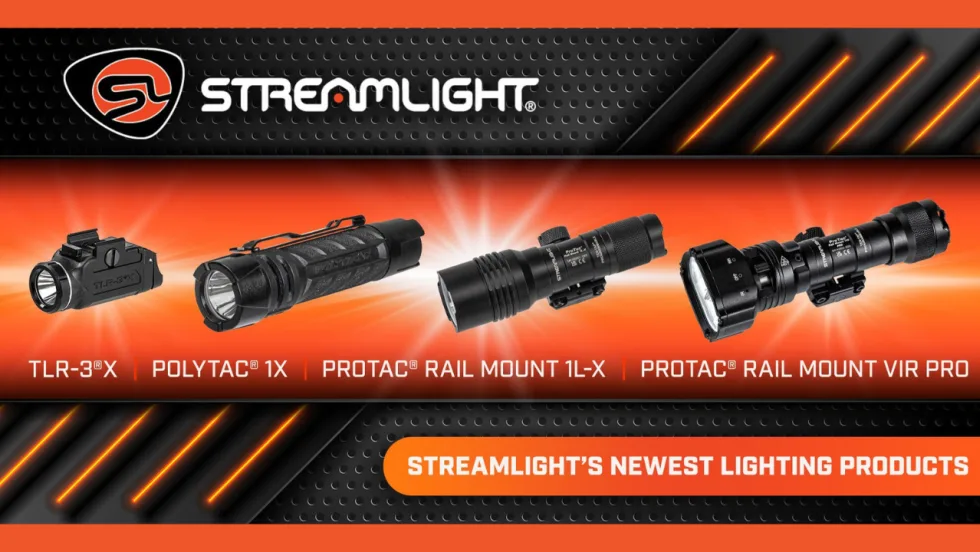
Streamlight to Showcase Newest Lighting Products for Law Enforcement Professionals at IACP 2026
Streamlight will showcase its newest lights for law enforcement at the International Association of Chiefs of Police Annual Conference & Expo. Featured lights will include the TLR-3 X, the PolyTac 1X, and more.
Read More →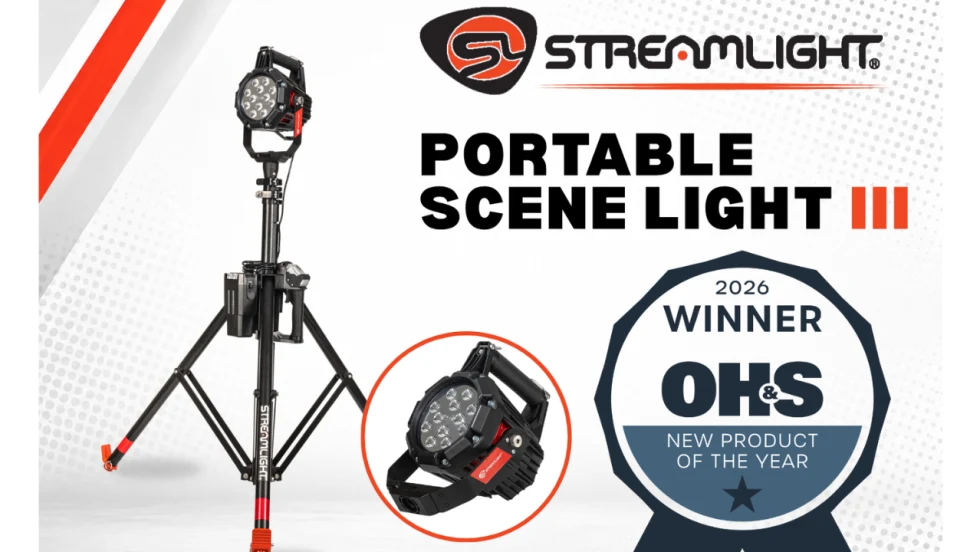
Streamlight Portable Scene Light III Wins 2026 OH&S New Product of the Year Award
Streamlight’s Portable Scene Light III has won the 2026 Occupational Health & Safety (OH&S) New Product of the Year Award in the Lighting category.
Read More →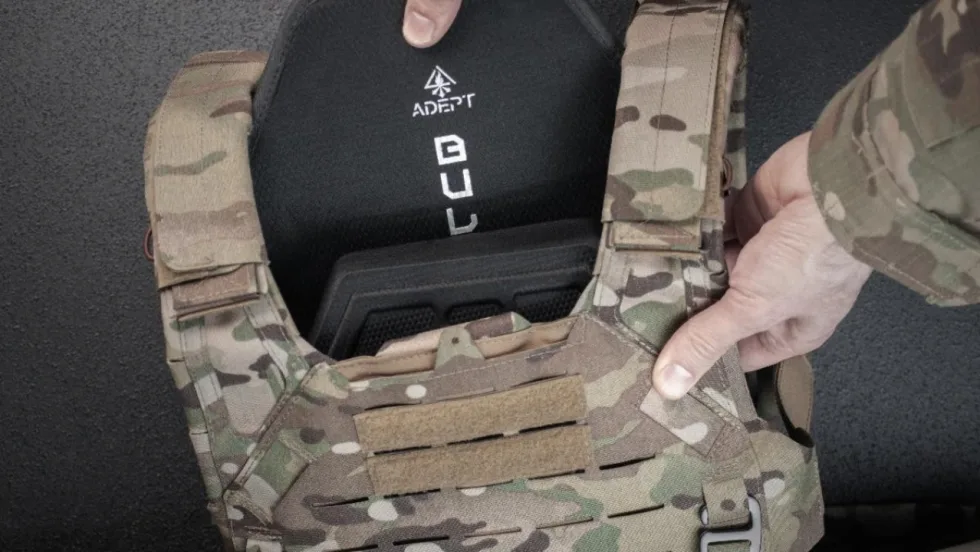
Adept Armor Introduces Two New Rifle Plates
Adept Armor has launched two new Level IV ballistic plates, the Emperor and the Archon Mark 2, which brings Adept Armor’s new Quatroid ceramic to the high-threat, performance-value center of the range at 5.2 pounds.
Read More →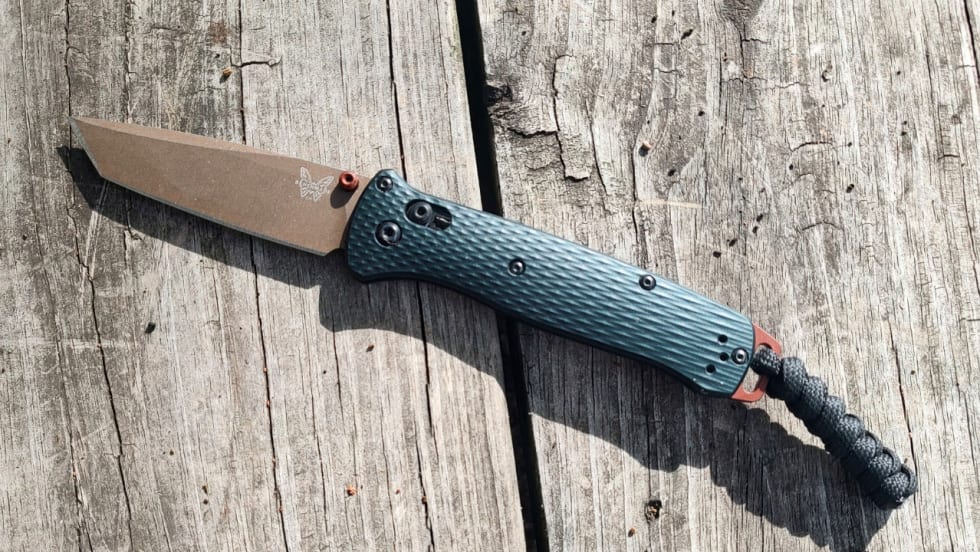
POLICE Product Test: Benchmade Bailout
The Benchmade Bailout is a slim, lightweight carry knife with a deep-ride pocket clip and comes in a variety of blade steels and scales. Here is a detailed review of the Taiga Green Bailout, released earlier this year.
Read More →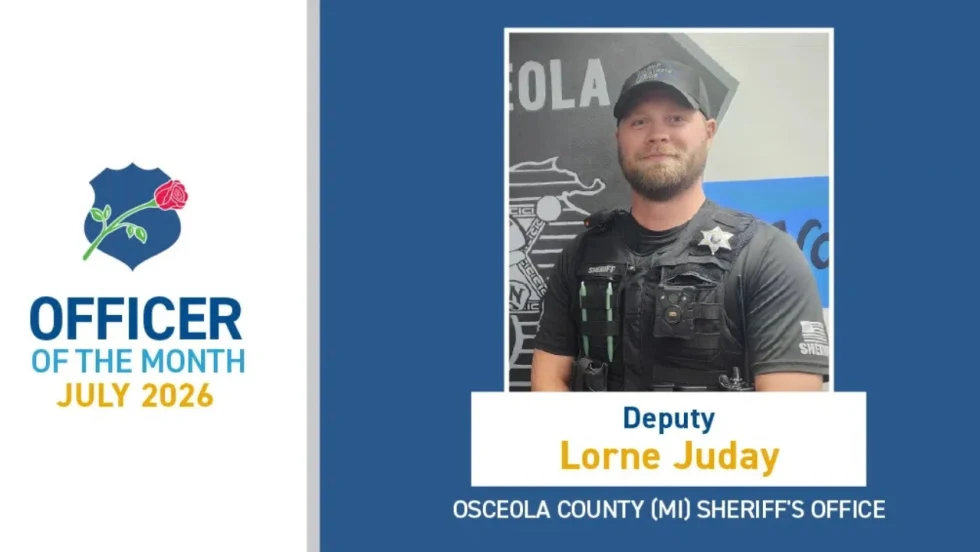
NLEOMF Announces July 2026 Officer of the Month
NLEOMF honored a Michigan deputy sheriff as the July 2026 Officer of the Month for rescuing a trapped driver from a burning vehicle following a Fourth of July crash.
Read More →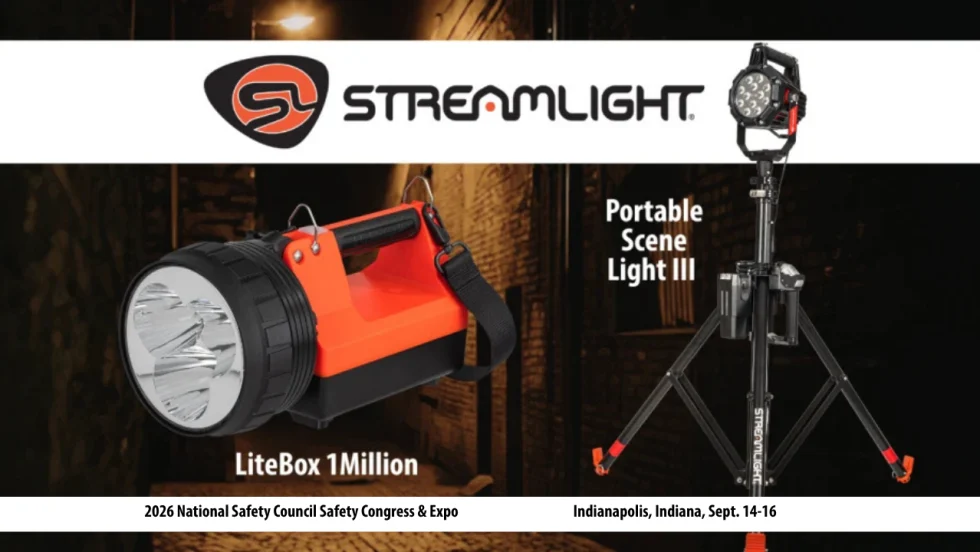
Streamlight to Showcase Newest Lighting Products at National Safety Council’s Safety Congress & Expo 2026
Streamlight will showcase its latest lights, including the Portable Scene Light III and the LiteBox 1Million, at the 2026 National Safety Council (NSC) Safety Congress & Expo.
Read More →
The 2027 World Police & Fire Games Set for Perth, Australia
The 2027 World Police & Fire Games (WPFG) will take place in Perth, Western Australia, from Friday, March 12 through Sunday, March 21, 2027.
Read More →
5.11 Partners with National Fallen Firefighters Foundation to Support #ForThe343
5.11 has joined the nationwide movement honoring the 343 New York City Fire Department firefighters lost on Sept. 11, 2001.
Read More →
Team Wendy Announces Title Sponsorship of the Jorge Pastore Foundation
Team Wendy’s 3-year partnership with the Jorge Pastore Foundation expands access to programs that strengthen those who serve.
Read More →