



Strengthening the Chain of Command
Unlike in the military, LEOs often need reminders to communicate with their supervisors and subordinates to work as a well-oiled team.

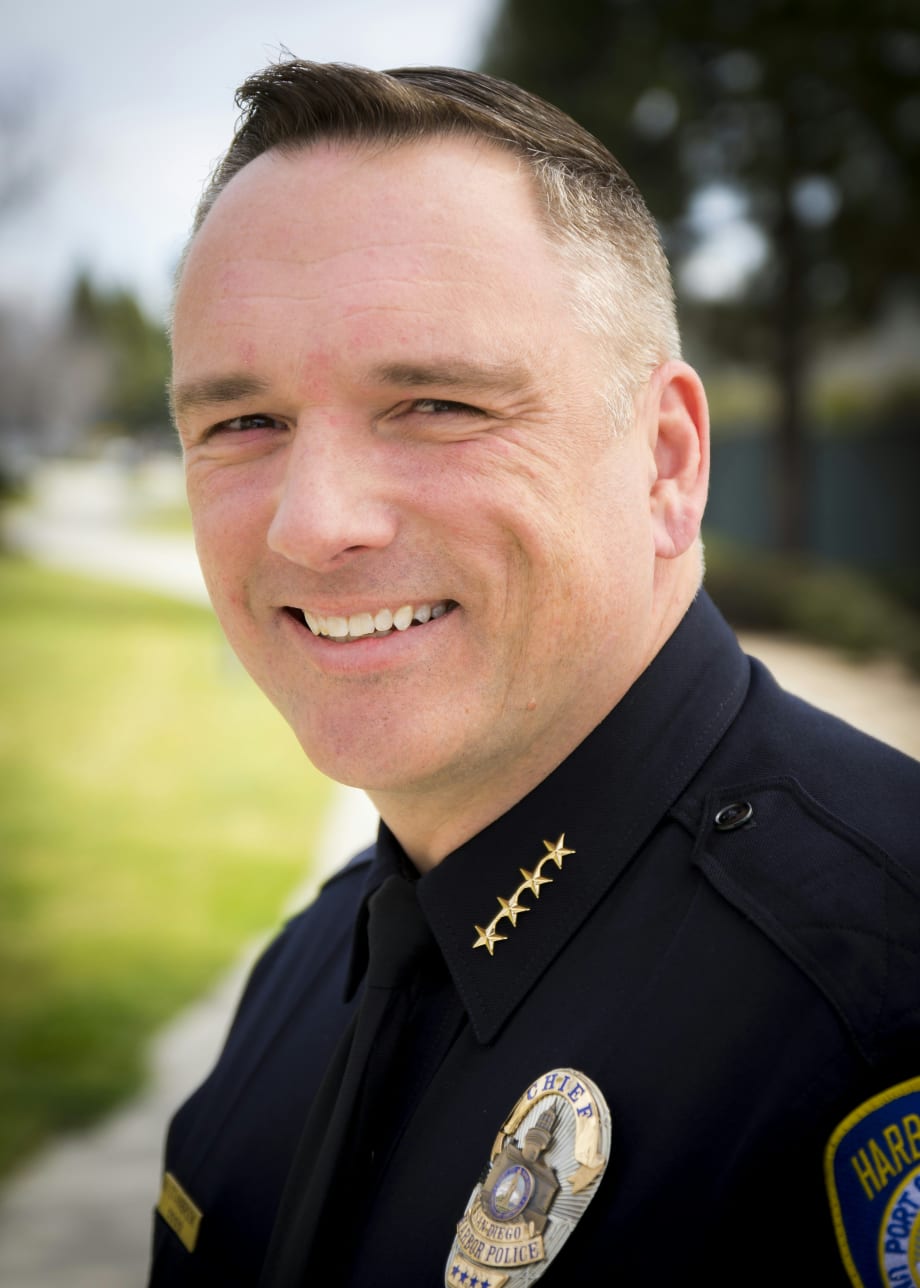
Chief Mark Stainbrook (Photo: San Diego Harbor Police)
After 31 years of military service from enlisted to officer, I have often considered that my military leadership training and experiences have served me well throughout my law enforcement career. There were pitfalls, but I also implemented lessons which continue to help me as a leader of police officers.
One obvious, but often overlooked, consideration is that at a police department I was no longer leading Marines (or service of your choice), who by training tend to immediately obey orders and abide by a strict chain of command. Not to say service personnel don't ask why, or give opinions or alternate choices, but generally (especially in tactical situations) they rely on their immediate leader and use them to convey their concerns up the chain.
Service members live, train, and sleep as units. They start to understand how each other thinks and moves, so over time, minor issues are shrugged off and major issues can be addressed through training, planning, and debriefings in quieter times.
As military leaders, we are close to our troops in the field through the company and captain level. The disconnect in law enforcement is that the first promotion to police sergeant means we see our troops in roll call or line-up, but then it is hit or miss as to how much time we will interact with them in the field. So while law enforcement personnel are initially trained as a unit in the police academy, they are taught to be patrol officers, often acting alone or in pairs for the most part.
Once out in the street, they are conditioned to think and act independently and they have time to consider many questions, situations, and possible scenarios, which they are happy to bring back to anyone who will listen in the locker room, lunch room, or coffee shop. Sometimes these people are not their immediate supervisors, who could maybe address their needs. Police officers are not generally trained to understand and use their "chain of command" the way military troops are conditioned. Civilian professional staff are even less chain-of-command oriented.
Strengthening the chain of command in the law enforcement units I have led has helped me to keep connected to issues the officers are facing in the street. I explain to my front-line supervisors, generally sergeants and lieutenants, that the chain of command works three ways: down, up and across. Giving orders down the chain and assuming they will be understood and carried out is perilous. Unless our employees are giving feedback up the chain of command and the front-line supervisors are comfortable telling truth to power, senior law enforcement leaders are living in a fantasy land. We are just too far from the realities of our officers' daily lives to think it is "just like when we were patrol officers."
No one leads alone; we lead in teams. Front-line supervisors must talk to each other across the chain of command to truly understand the complex, ever changing managerial and leadership environment that is 21st Century policing. We have every possible communication method at our disposal (memo, letter, cell phone, text, email, social media, Internet, in-person, etc.) and there are still knowledge gaps.
As a police chief at a medium sized department, I get to visit roll call/line-up a few times a months for about 10 to 15 minutes. I let my officers know that the command staff wants to help them with any issues, but we have to know about them. They can come to me or the command staff directly if they are not getting satisfaction from the immediate supervisors. While this is inefficient, it also puts the front-line supervisors on notice that I expect them to take the officers' requests, problems, and complaints seriously. We have implemented processes for employees to take common administrative or technical issues to Human Resources or the IT Help Desk.
In supervisor meetings, I stress that the command staff wants to know about current trends, needed training, or projects forwarded from the line level. Our job, I remind my leaders, is to get the police officers and civilian professionals the equipment, training, and resources they need to be successful. If they come up with a good idea, let's see how we can make it happen. If we cannot do it, due to funding or timing issues, we need to give feedback so employees know someone at least listened. I would much rather handle requests and complaints via the chain of command than from the union via grievances.
Organizational charts can be arranged in different configurations to facilitate communication flow for your agency so you can strengthen and use your chain of command!
Mark Stainbrook is the chief of the San Diego Harbor (CA) Police Department. He is also a lieutenant colonel in the U.S. Marine Corps Reserve.
More Patrol

Streamlight Portable Scene Light III Wins 2026 OH&S New Product of the Year Award
Streamlight’s Portable Scene Light III has won the 2026 Occupational Health & Safety (OH&S) New Product of the Year Award in the Lighting category.
Read More →
Adept Armor Introduces Two New Rifle Plates
Adept Armor has launched two new Level IV ballistic plates, the Emperor and the Archon Mark 2, which brings Adept Armor’s new Quatroid ceramic to the high-threat, performance-value center of the range at 5.2 pounds.
Read More →
POLICE Product Test: Benchmade Bailout
The Benchmade Bailout is a slim, lightweight carry knife with a deep-ride pocket clip and comes in a variety of blade steels and scales. Here is a detailed review of the Taiga Green Bailout, released earlier this year.
Read More →
NLEOMF Announces July 2026 Officer of the Month
NLEOMF honored a Michigan deputy sheriff as the July 2026 Officer of the Month for rescuing a trapped driver from a burning vehicle following a Fourth of July crash.
Read More →
Streamlight to Showcase Newest Lighting Products at National Safety Council’s Safety Congress & Expo 2026
Streamlight will showcase its latest lights, including the Portable Scene Light III and the LiteBox 1Million, at the 2026 National Safety Council (NSC) Safety Congress & Expo.
Read More →
The 2027 World Police & Fire Games Set for Perth, Australia
The 2027 World Police & Fire Games (WPFG) will take place in Perth, Western Australia, from Friday, March 12 through Sunday, March 21, 2027.
Read More →
5.11 Partners with National Fallen Firefighters Foundation to Support #ForThe343
5.11 has joined the nationwide movement honoring the 343 New York City Fire Department firefighters lost on Sept. 11, 2001.
Read More →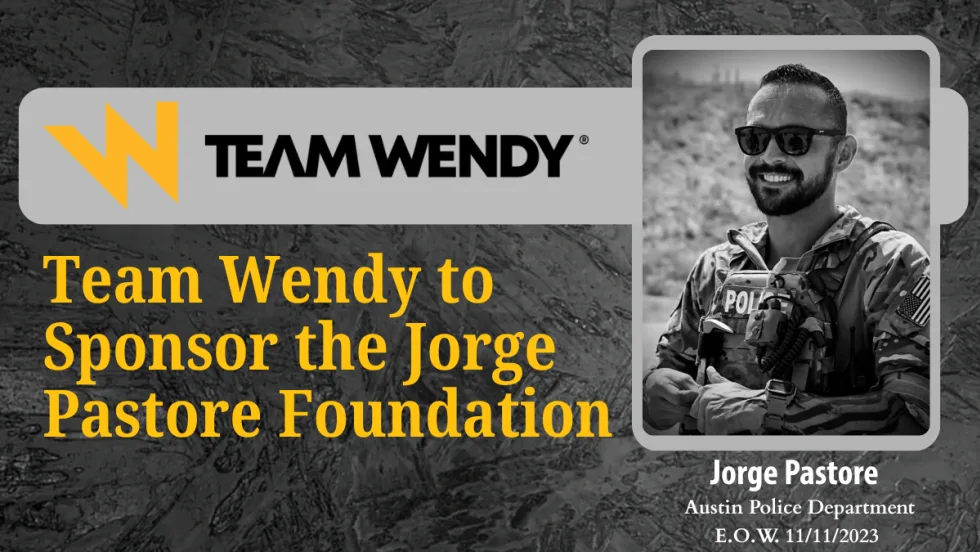
Team Wendy Announces Title Sponsorship of the Jorge Pastore Foundation
Team Wendy’s 3-year partnership with the Jorge Pastore Foundation expands access to programs that strengthen those who serve.
Read More →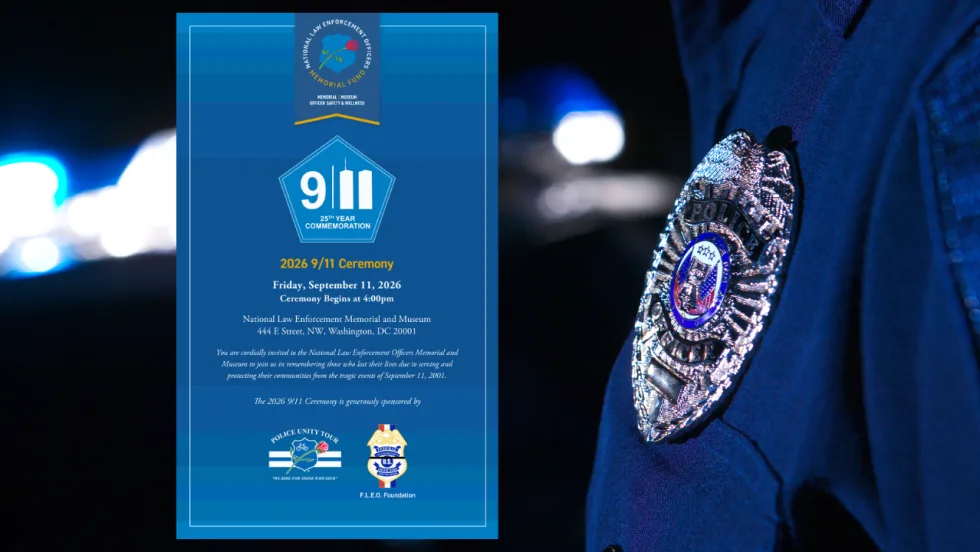
National Law Enforcement Memorial and Museum Hosting 9/11 25th-Year Commemoration Ceremony
The National Law Enforcement Memorial and Museum is hosting a 9/11 25th Year Commemoration Ceremony on Sept. 11 at 4 p.m.
Read More →
National Law Enforcement Officers Memorial Fund Announces June 2026 Officers of the Month
The National Law Enforcement Officers Memorial Fund (NLEOMF) named 15 officers of the Chico Police Department (California) as the Officers of the Month for June 2026 for their roles in responding to an active-shooter incident at a public library.
Read More →