



Speed Sign Success
Every driver speeds now and again, especially on heavily trafficked thoroughfares. A reminder in the form of a temporary radar sign displaying the driver's speed may be all that's needed to bring down vehicles' speedometer readings.

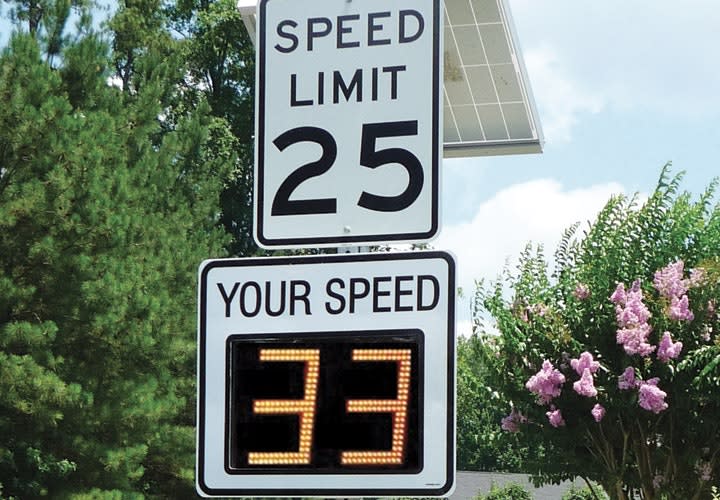
Photo courtesy of Radarsign.
Every driver speeds now and again, especially on heavily trafficked thoroughfares. A reminder in the form of a temporary radar sign displaying the driver's speed may be all that's needed to bring down vehicles' speedometer readings. In other cases, it can be determined that speeding isn't actually a problem.
Educating the public is often an agency's best weapon in the speed complaint game. Explaining what these signs can and can't do can help. But it's even better to provide concrete proof.
Sometimes the best use of speed display signs and speed data collection is quelling community members' fears. This often goes hand in hand with convincing them to stop bothering you about something that isn't really a problem. Then you and your agency can move on to spending time and resources on real issues.
Citizen Complaints
This isn't to say that speeding can't be a real safety issue. It's at least a contributing factor in most traffic fatalities, notes Motor Officer Stuart Scott, one of two Area Traffic Officers with the Torrance (Calif.) Police Department. But the reality is that most complaints about speeding in residential areas are due to mistaken perceptions.
Scott and his partner receive complaints from Torrance citizens both by phone and by e-mail via a link on the department's Website. Scott responds to complaints in the south half of the city, by phone, e-mail, and in-person visits. He discusses the perceived issue with the person and is sometimes able to prove on the spot that speeds in the area are not actually unusual or highly unsafe. He takes a lidar device with him to in-person visits just for this purpose.
"Often I'll ask a person how fast he thinks a car is driving by his house and he'll say 45 mph and it's really 30," says Scott. "In a 25 mph residential zone, that's 5 mph over. Is it over the speed limit? Yes. Is it super excessive? Probably not."
If it's not immediately clear if there is a speeding issue, a portable trailer equipped with software can collect traffic data in that spot over a period of time. The agency then determines the best way to alleviate the problem. And speed display signs aren't always the answer.
"When we receive complaints from citizens, we evaluate our resources to find the best tool—radar signs, staff, engineering, posted traffic signs, etc.—for that specific problem," says Lt. Renee Bush of the Ann Arbor (Mich.) Police Department.
Sometimes when it's determined there is a speeding problem and an agency decides to deploy staff to enforce posted speed limits the citizens who initially complained aren't happy with the results.
"I will caution them that after we gather data and begin the enforcement there are no free passes; often they or their neighborhood association membership are the violators cited," says Chief William L. Harvey of the Ephrata (Pa.) Police Department.
However, most people who come to a police department concerned about speeding are grateful to receive a response, whatever the result may be.
"We deploy the trailer for two weeks, collect the data, and sometimes if they want it, we'll give a summary to the citizen who called," says Officer Matt Klein of the Shawnee (Kan.) Police Department. "Oftentimes the data we collect shows there really is not a speed problem, but it does make the neighborhood feel better. It's actually a great way to conduct community policing."
Slowing Down Speeders
Klein notes that there is a difference between determining speeds and displaying speeds as vehicles drive by. You first want a true picture of how quickly people are driving in an area without the effect of a speed display sign. It's best to use covert monitoring devices to track dates, times, and speeds in a particular area at this point. This is because just seeing these signs tends to cause people to slow down.
Once it's determined people are driving too quickly in an area, slowing is of course the desired effect. In fact, the key is to convince drivers that they should slow down on their own, even if it requires a bit of trickery.
"The more the public sees us in a problem area, and at various times, the more likely they are to perceive the police as being 'always here or all over,' when in reality we are not," says Shawnee PD's Klein.
Torrance PD uses double reinforcement to accomplish this goal, says Scott. "A lot of times we'll put the radar trailer out to see if it helps to slow down drivers. Then we'll take it away and put enforcement there," he says. "So there's a double message that you should slow down because the police department has a presence in the area."
On the Move
For most situations it's most effective to move signs frequently. One reason is that people stop paying attention once the immediate effects of surprise and threat of punishment wear off.
"After the first two cycles of traffic (to work or school and back), they do notice them, even when they're not displaying speed," says Harvey. "So the date may take a dip after the first 36 to 48 hours."
Another issue is that speed signs can result in drivers increasing their speed as they pass by for the fun of it.
"If they are left too long in one spot, a small segment of the motoring public will drive by the location to see the sign flash a high speed," says Klein. "One feature we use on our signs is the 'speed cut out.' We will set the display to go blank once it reaches a preset speed so we are not accommodating those wanting to 'max out' the speed sign."
Remarkably, the desire to use speed signs for the unintended purpose of capturing a high rate of speed instead of promoting slowing is not always restricted to the drivers of vehicles.
"One night in Lebanon City, we had two drunks who were taking turns running in the road attempting to see who could run the swiftest," recalls Harvey. "The sensor does not track humans, therefore they did not get speed read-outs; only citations for public drunkenness."
It's not uncommon for agencies to reintroduce speed display signs in an area after speeds pick up again. Trailers and temporary signs that can be attached to fixed poles work well for this purpose.
"Moving the signs also allows us to provide this service to more neighborhoods," says Bush of the Ann Arbor PD. For optimal effectiveness, she recommends coordinating closely with your city or county public services or work unit to put up the signs in different neighborhoods as needed.
FOR MORE INFORMATION:
Decatur
Kustom Signals
MPH Industries
Radarsign
RU2
Stalker Radar
TrafficLogix
US Traffic Controls
Ver-Mac
Wanco
More Patrol
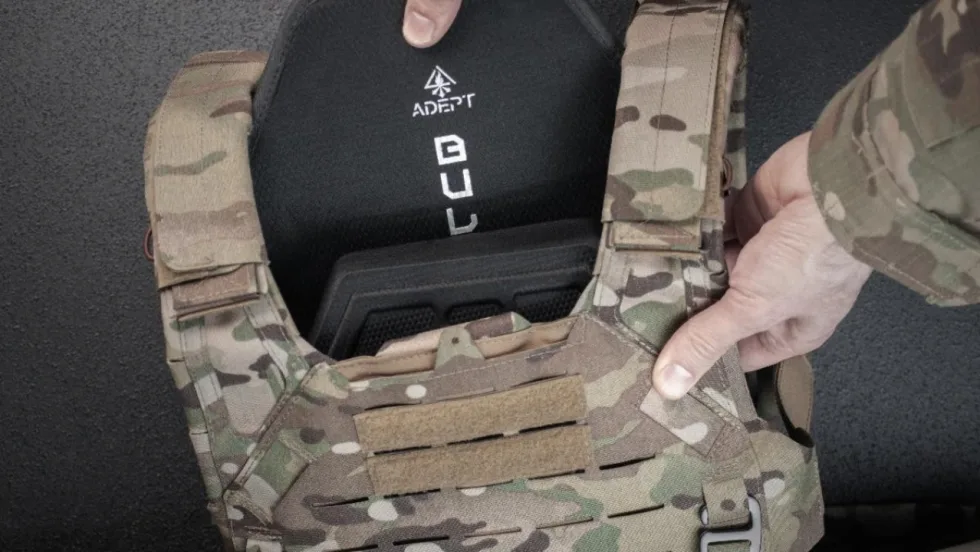
Adept Armor Introduces Two New Rifle Plates
Adept Armor has launched two new Level IV ballistic plates, the Emperor and the Archon Mark 2, which brings Adept Armor’s new Quatroid ceramic to the high-threat, performance-value center of the range at 5.2 pounds.
Read More →
POLICE Product Test: Benchmade Bailout
The Benchmade Bailout is a slim, lightweight carry knife with a deep-ride pocket clip and comes in a variety of blade steels and scales. Here is a detailed review of the Taiga Green Bailout, released earlier this year.
Read More →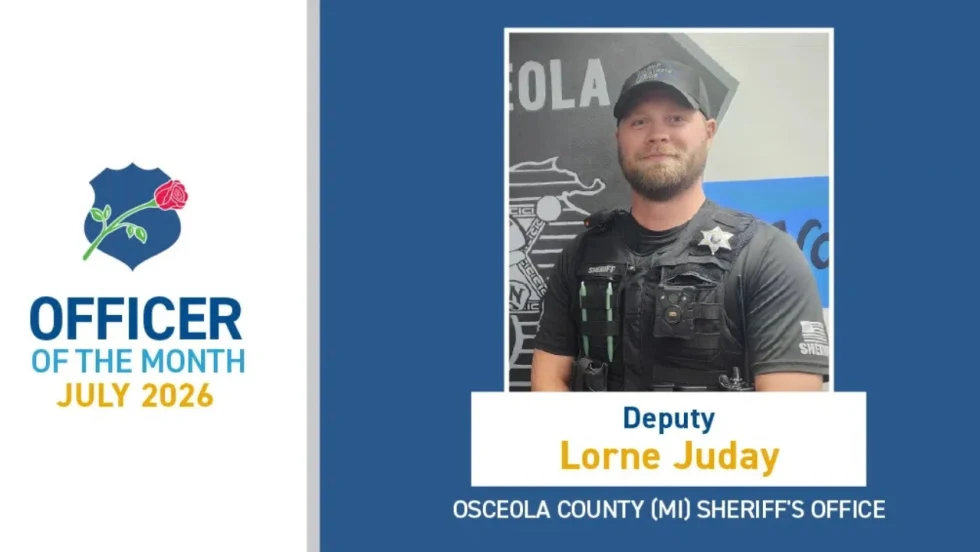
NLEOMF Announces July 2026 Officer of the Month
NLEOMF honored a Michigan deputy sheriff as the July 2026 Officer of the Month for rescuing a trapped driver from a burning vehicle following a Fourth of July crash.
Read More →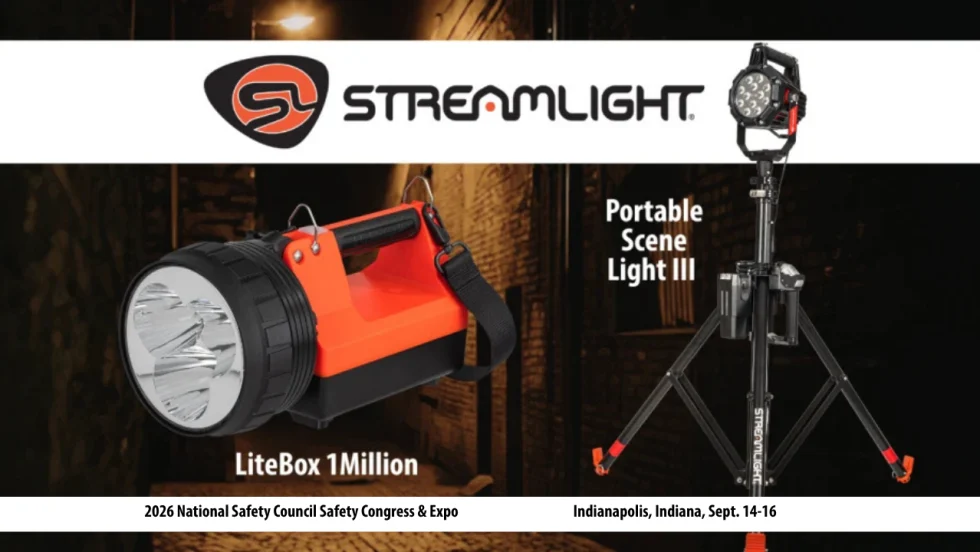
Streamlight to Showcase Newest Lighting Products at National Safety Council’s Safety Congress & Expo 2026
Streamlight will showcase its latest lights, including the Portable Scene Light III and the LiteBox 1Million, at the 2026 National Safety Council (NSC) Safety Congress & Expo.
Read More →
The 2027 World Police & Fire Games Set for Perth, Australia
The 2027 World Police & Fire Games (WPFG) will take place in Perth, Western Australia, from Friday, March 12 through Sunday, March 21, 2027.
Read More →
5.11 Partners with National Fallen Firefighters Foundation to Support #ForThe343
5.11 has joined the nationwide movement honoring the 343 New York City Fire Department firefighters lost on Sept. 11, 2001.
Read More →
Team Wendy Announces Title Sponsorship of the Jorge Pastore Foundation
Team Wendy’s 3-year partnership with the Jorge Pastore Foundation expands access to programs that strengthen those who serve.
Read More →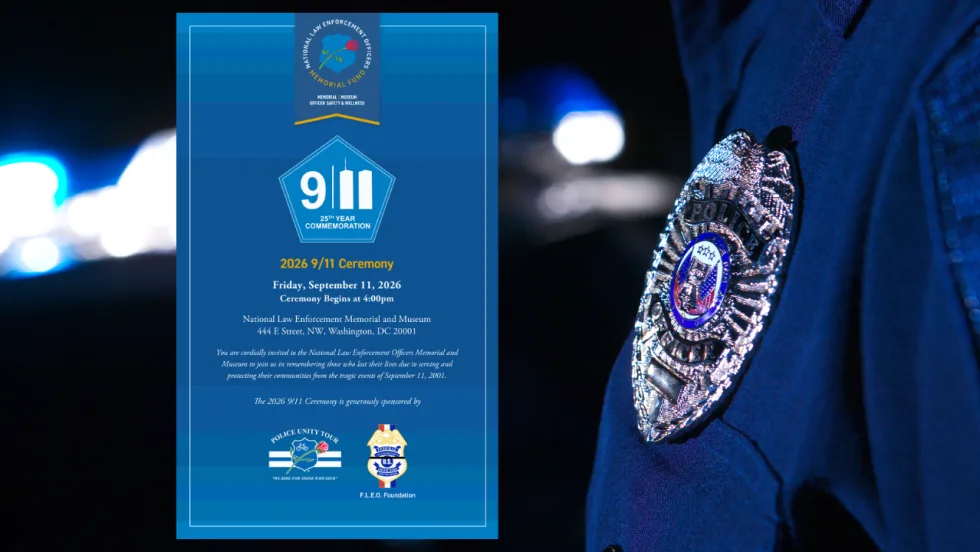
National Law Enforcement Memorial and Museum Hosting 9/11 25th-Year Commemoration Ceremony
The National Law Enforcement Memorial and Museum is hosting a 9/11 25th Year Commemoration Ceremony on Sept. 11 at 4 p.m.
Read More →
National Law Enforcement Officers Memorial Fund Announces June 2026 Officers of the Month
The National Law Enforcement Officers Memorial Fund (NLEOMF) named 15 officers of the Chico Police Department (California) as the Officers of the Month for June 2026 for their roles in responding to an active-shooter incident at a public library.
Read More →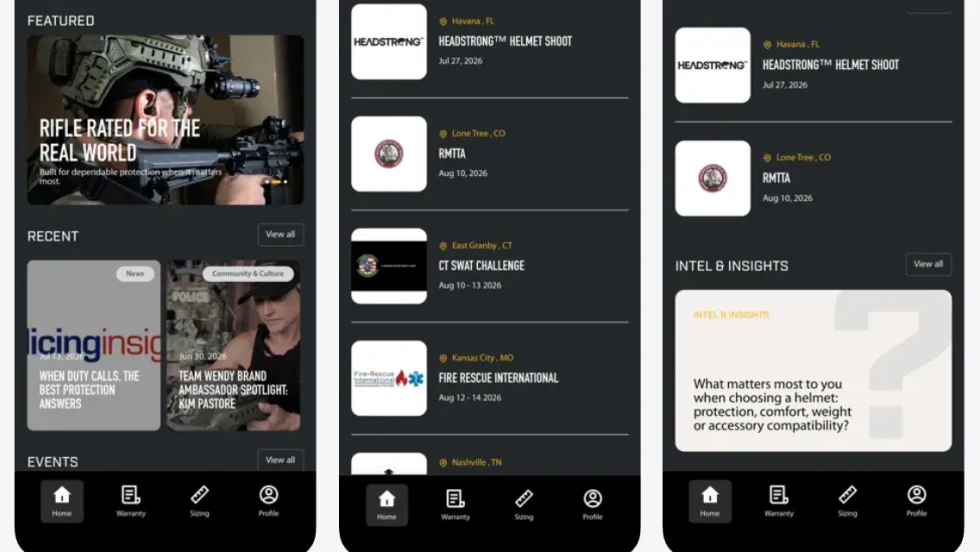
Team Wendy App Creates New Digital Hub for Helmet Owners
The Team Wendy Community App provides one location for warranty registration, size-fit tools, product updates, and community connection. For helmet owners, the new app creates a simpler path to the information and tools that matter most.
Read More →