



Special Handling
Those last four words, "evaluate a suspicious package," always make those little cop hairs on the back of your neck stand straight out like the quills on a porcupine being chased by a hungry dog.

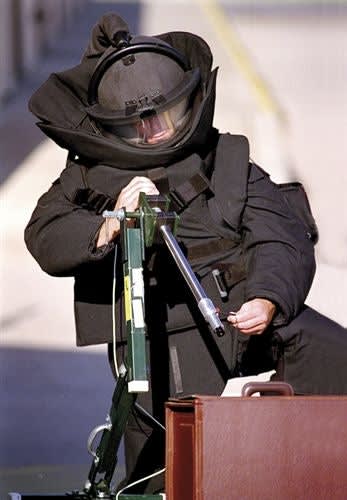
Most cops, yourself probably included, cringe when they get a radio call that goes something like this: "One Adam Whatever, respond to the Free Clinic and evaluate a 'suspicious package.'" Those last four words, "evaluate a suspicious package," always make those little cop hairs on the back of your neck stand straight out like the quills on a porcupine being chased by a hungry dog.
The scenario always goes something like this. After parking about a block away and upwind, like they taught you in your "Responding to Critical Incidents" classes, you coax the throngs of onlookers and bystanders a good distance away from the suspect package and start gathering information. Then the survey begins. You take note of the size of the item, the shape, any unusual markings, weird stains, strange noises, or addresses. Is there any articulated threat? Is anything written on the package like "Death to the Zionist Imperialist Lapdog Capitalist Pigs of Satan with Stinky Feet"? You ask why the package is suspicious and who reported it.
Finally, you have enough information to know that you have no idea at all what the heck is in this suspicious package. So, strictly adhering to rule number one of law enforcement work, which we all know is to return home alive and in one piece, you call for the Bomb Squad, Explosive Device Unit, Hazardous Devices Section, Things that go Bang Real Big Detachment, or whatever your agency calls it. And wait, and wait, and wait.
Those guys take forever, don't they? I know they do. I used to be one of them, before I got too old and brittle and went off to retirement's little waiting room, the In-Service Training Unit.
Contrary to popular police opinion, we did not stop for lunch and pick up the dry cleaning on the way to the scene. The reason it took so long for us to arrive is that we were looking at maps of the area, talking to the watch commander, getting the fire department lined up, summoning EMS, and generally going down a response protocol checklist.
Once everything was in place, perimeter set, EMS in a safe close-by hidey hole, fire department standing by, and everyone briefed on what to do if the package sends us on a real fast ride, we donned the 100-pound bomb suits and approached the suspected device. Back then, the approach usually included bringing a portable X-ray generator and film cassette. The cassette went on one side of the suspected device and the generator on the other. A timer functioned the X-ray, and a second approach was made to retrieve the film cassette. Then it was back to the vehicles to develop the film.
Usually the X-ray was "inconclusive" meaning that we, like the very first responding patrol officer, still had no idea what the heck we had. So our next step was to take a disrupter up to the suspected device and blast it open with a jet of water propelled out of a tube with a .50 caliber cartridge.
Sometimes, this "render safe procedure" revealed that the suspicious package was actually a bomb. Fortunately, most times, it was nothing. For example, we were called to the airport once, and it turned out that the suspected bomb was a canvas bag of adult entertainment devices that some 30-something publishing executive left, by accident, at the bottom of the aircraft stairs. I'm told that the look on her face was priceless when she figured out what the delay and all the hubbub was about. Of course, that was about the same instant that three of her battery-powered little buddies went skittering across the tarmac assisted by a jet of water moving at about 2,000 feet per second.
New devices have been introduced since the days I was a bomb tech, and there is astounding technology being introduced every day now to help bomb techs do their jobs more efficiently and more safely. But don't expect the squad to arrive minutes after they're called. The technicians still need to load up all their stuff and drive to your location while resisting the temptation to stop for a snow cone.
Metal Men
Probably the single most important advancements in bomb tech safety have come from the field of robotics. Robots are very expensive to purchase, but when compared with the cost of losing or maiming a bomb tech or patrol officer, many departments have decided it's money well spent. The emotional price paid by the department and especially the officer's family is incalculable.
Robots are fearless and they don't have families. And believe me, the more a bomb technician can do remotely, the better off everyone is. There's a reason we wear those shirts that read: "I am a bomb technician. If you see me running, catch up." If you can see the bomb, it can kill you. About 300 to 900 feet is a good distance, depending on the size of the device.
REMOTEC, a subsidiary of Northrop Grumman Corp., produces the Andros, Wolverine, and Wheelbarrow models of service robots for bomb squad duties and military explosive ordnance disposal (EOD) teams. The user list includes the British Ministry of Defense, U.S. Department of Defense, the FBI, and other international agencies and organizations. These systems were also used extensively during the Gulf War and are currently making little robot tracks in the sands of Afghanistan on mine clearing duties.
Explosive Fashions
When a bomb tech has to personally approach a suspect device, he or she must rely on protective clothing. The Med-Eng EOD 7B and Med-Eng EOD 8 suits are generally what the well-dressed bomb tech wears to the big dance.
The newer EOD 8 suit and helmet system offers improved flexibility, more blast induced head acceleration protection, and increased overpressure protection against ground-reflected blast waves. All of which are critical to your survival when dealing with things that can make various body parts detach and move in all compass directions.
It may be a strange concept for non-bomb tech's to grasp, but one of the greatest threats to our survival during a critical incident is body heat. Bomb suits are hot, very hot, and heat exhaustion, even heat stroke, are real dangers.
In the "olden days" of the 1990s, we would wear blue ice packs sewn into a vest and worn between our T-shirts and the bomb suit. Problem was, when the ice packs were fresh, they were so cold they would burn your skin, and when they warmed up, they became a bunch of water sloshing around and weighing you down. Either way it was really disconcerting when you were trying to figure out if you should cut the red wire or the blue wire. (Bomb tech joke, that stuff only happens in the movies.)
Med-Eng now produces the BCS-3A and BCS-3R Body Cooling Systems. The body cooling systems are actually suits that look a little like long underwear with a pump and temperature regulating system. They are worn under bomb suits and greatly extend the time that a tech can spend in the suit. The product line is already well established with a client base that includes hazardous industrial occupations, the U.S. Dept. of Energy, and the defense departments of several nations. The BCS system is even used by astronauts in the Space Shuttle and the International Space Station.[PAGEBREAK]
X-ray Vision
Before X-ray systems became small enough and portable enough for EOD work, technicians were faced with the dilemma of hand entering a closed suspicious package, blowing the package up in place, or moving the package either by hand or with a rope-and-pulley system to another location and blowing it up.
Portable X-ray systems were added to the bomb tech tool-kit in 1973 when Golden Engineering of Centerville, Ind., introduced the Inspector. Along with Polaroid self-developing X-ray film, the Inspector revolutionized the job of the bomb technician. The tech could don a bomb suit, approach a suspected package, and, in a few minutes, have a fairly high-resolution picture of what was inside.
The Inspector was retired by many agencies in 1998 and replaced with more powerful, lighter, and less power-hungry X-ray generators. Golden Engineering's latest systems, the XR200 and XR150, have assumed the role of the Inspector and are used worldwide.
Real-Time X-rays
Science Applications International Corp. (SAIC) developed and markets the RTR-4 system, a real-time X-ray viewing system. By itself, the RTR-4 eliminates the need for the technician to make multiple approaches on a suspected device. And when used with a robot, it can eliminate the need to approach a device at all.
The RTR-4 can be attached to the robot along with an X-ray generator such as the Golden XR200 and can send the picture back via hardwire or wireless systems to a ruggedized notebook computer screen. If you don't get a good picture the first time due to density, just reset the XR200 remotely and shoot again.
SAIC is working on making the systems smaller, more easily portable, using color for density visualization, and maybe even someday adding 3D capabilities like those of a CAT scan.
Blast Containment
For many years bomb squads used heavy steel containment tubes to transport suspected or known explosive devices away from populated or sensitive areas. They were made of several thick steel tubes mounted inside each other in decreasing sized concentric circles, and they were open on the top to give the blast wave a place to go.
Most times the trailer or truck-mounted tubes safely transported the suspected device to an explosives range or deserted field where it could be safely detonated. But in an urban environment this method of transport becomes problematic.
People have a tendency to stare at bomb disposal trucks when they roll through a city. And an upwardly directed blast-should something go really wrong during transport- endangers all the looky-loos on the 12th floor of a bank building who are standing there watching from behind what they think is a highly protective sheet of glass. If the bomb goes off while they are looking down at it, that glass will actually shred their inquisitive little bodies into something the consistency of meatloaf fixings.
To solve this problem, companies like NABCO Inc. of Pittsburgh produce containment, transport, and storage vessels that don't vent upward. The company says you can detonate as much as 10 pounds of C4 plastic explosive inside a NABCO containment vessel without incurring any damage.
In the NABCO system, the sphere first contains the blast pressure and then off gasses dissipate the pressure through tiny holes precisely drilled in the steel. It sometimes takes hours for the pressure to drop enough that you can safely open the access door. But you could be standing two feet away from it when it goes off and not suffer any injuries. Note: I have never found anyone willing to do this.
Footing the Bill
Integration of some of these new technologies into your bomb squad's bag of tricks may take a little while. Funding is always a problem, but work toward it. Grants, some progressive thinking, a post-9/11 awareness of how agency leadership, local government, and the public can work together may be enough to tip the scales in your favor.
And for you first responders waiting for the bomb squad to arrive. Realize that bomb squads have a motto of "initial success or total failure." The stakes are high. And sometimes bomb technicians just need to take their time. Recognize that and support their operations. Sure, you can gripe about it, but keep it in perspective. Maybe if you ask nicely they'll pick up a sandwich for you on the way.
Mind Over Machine
Chris Cherry is a scientist at Sandia National Labs in New Mexico and probably the nation's foremost scientific expert on explosive device mitigation. He was instrumental in the design of explosive ordnance disposal (EOD) robots as well as the percussion-actuated non-electric (PAN) disrupter used by most U.S. bomb squads and the FBI.
When asked what the future holds in the area of technology for bomb squads, Cherry said, "The field is experiencing exponential growth in technologies. X-ray technology is getting better and more precise everyday. Blast mitigation will become better with the introduction of new synthetic fibers and materials. But the greatest trend in the future for bomb work is the human factor.
"Bomb Technicians are more highly educated. The standards at the FBI's Hazardous Devices School at Redstone, Ala., are being raised. The academic standard is higher now than in the past five years, and it's going to get even higher than that in the future."
For More Information
Golden Engineering Inc.
www.goldenengineering.com
Med-Eng Systems Inc.
www.med-eng.com
NABCO Inc.
www.nabcoinc.com
REMOTEC Inc.
http://sensor.northgrum.com
SAIC
www.saic.com
Sandia National Labs
www.sandia.gov
Sgt. Dave Douglas of the San Diego Police Dept. is a frequent contributor to POLICE Magazine. He graduated from the FBI's Hazardous Devices School in 1994 as a Certified Bomb Technician and served with the joint Fire and Police Bomb Squad.
More Technology
Panasonic Connect Launches the Toughbook 34 and Toughbook G3, Fully Rugged 2-in-1 Mobile Computers
Panasonic Connect has launched the Toughbook 34 and Toughbook G3 to facilitate in-vehicle dispatch, records management, and mobile command operations from any location.
Read More →
A police agency's guide to data-driven fleet management
Costs are rising and the public expects more transparency into how their tax dollars are spent. This e-book shows how police agencies can use fleet data to take control of fleet expenses while improving officer safety and demonstrating fiscal responsibility to the communities they serve.
Read More →
AI and analytics for law enforcement: Turning data into insights
Law enforcement agencies are managing more video, sensor data and digital evidence than ever before. Discover how AI and analytics can help turn that data into actionable insights that strengthen situational awareness, accelerate investigations and support more informed decisions.
Read More →
Vasco Electronics Adds Automatic Language Detection to Vasco Translator Q1
Vasco Electronics’ software update introduces hands-free language switching and expanded offline translation across 45 language pairs, empowering law enforcement, healthcare, and front-office enterprise teams
Read More →
North Miami Police Department Deploys Mark43
The North Miami Police Department has deployed Mark43 as part of its Five-Year Strategic Plan that represents its collective vision and goals for a more proactive police department, anchored by a core commitment to leveraging modern technology to enhance efficiency and public safety.
Read More →
Cellebrite Genesis for Enterprise Now Generally Available
Made available to the public sector in June, Cellebrite Genesis is serving a growing mix of national, regional, and local agencies worldwide, including some of the largest regional and metropolitan police departments. It is now available for enterprise organizations.
Read More →
2026 Vision FirstNet Users Summit to Host Emerging Leaders Training on Grassroots Advocacy for Public Safety
“Emerging Leaders Training: Understanding the Importance of Grassroots Advocacy for Public Safety," a session during the 2026 Vision FirstNet Users Summit, will offer a roadmap for unified advocacy at the federal level.
Read More →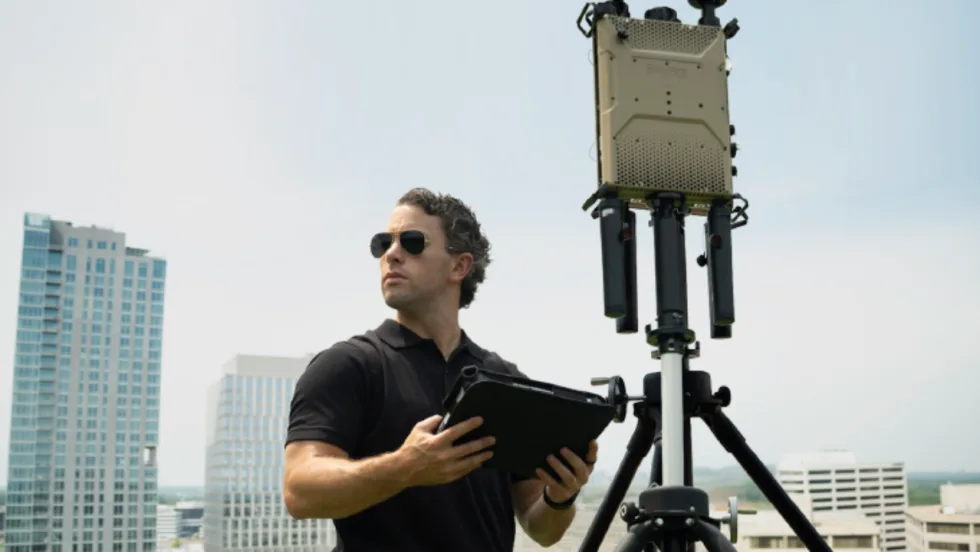
Motorola Solutions Completes Acquisition of D-Fend Solutions
Motorola Solutions has acquired D-Fend Solutions, an industry leader in counter-drone technology. This deal provides public safety and enterprise customers with access to advanced counter-unmanned aerial systems.
Read More →
ZeroEyes, Advantech & Camden Police Partner to Bring AI Gun Detection Technology to Delaware School District
ZeroEyes has partnered with Advantech and the Camden Police Department to deploy ZeroEyes’ AI gun detection and intelligent situational awareness platform at Delaware’s Caesar Rodney School District (CRSD).
Read More →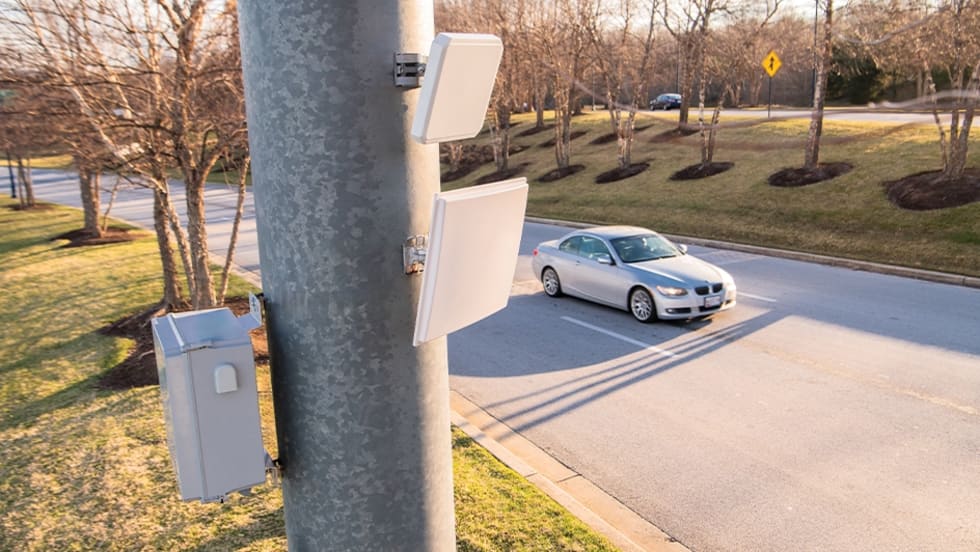
Leonardo U.S. Cyber & Security Solutions Introduces SignalTrace, the Next Evolution in Electronic Signature Detection Technology
SignalTrace reflects years of product refinement and a clearer expression of the technology’s purpose of recognizing and correlating electronic signatures in publicly broadcast wireless signals to reveal patterns, relationships, and trends that might otherwise go undetected.
Read More →