



Software: It's Nothing Without the Code
It's easy to forget the work that goes into making gadgets do what they do, those ones and zeroes that comprise their software. Here's a look at software that you can use right now on the job.

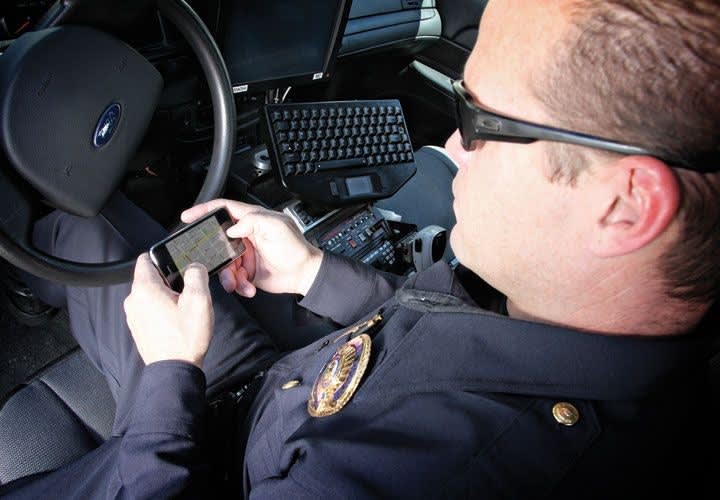
When new gadgets come on the market, I'm among the first to drool over them and contemplate how I'm going to justify my next purchase. It's easy to forget the work that goes into making those gadgets do what they do, those ones and zeroes that comprise their software. New software can be so complex that only the latest computers will run it, but it can also breathe new life into old metal and silicon.
So many of our tools are based on some kind of microprocessor, so it isn't just the devices immediately recognized as "computers" that benefit from these advances. Telephones, radios, and other gear also run on those lines of code we never see.
Communications hardware trends are moving away from dedicated, proprietary radios and data terminals toward consumer-grade devices. Consumer devices are often far more sophisticated than those developed for a much smaller market, taking advantage of the massive R&D that goes into a product that can produce millions in profit.
Your next portable radio might be an iPhone or a Droid. In the meantime, here's a look at software that you can use right now on the job.
Covia Labs DART Technology
Interoperability has been the name of the funding game for the last few years. Anti-terrorism preparation and natural disaster operations taught us that agencies have to be able to work together, talk to each other, and run off of the same game plan. Thus far, the answer to the communications problem has been to either junk the radios and networks in use in favor of new, cross-compatible models, or implement bridges between networks that can do the job, but also create a potential single point of failure.
Covia Labs is less than two years old as a company, but has a product with the potential to allow voice and data communications between any number of networks while everyone continues to use their existing hardware. Users and devices are added and removed from the operational network as needed, and when the operation is concluded, everyone goes back to working as they did before.
You've probably worked with platform-independent software like Java when viewing content over the Web. In order to play a game, view an animation, or otherwise interact with the host, you click on a link and a small application installs itself on your computer. When you're done, the application closes and is deleted.
Covia Labs' DART technology works similarly. A user of a laptop or smartphone might receive an e-mail containing a link to a Covia Labs server. Clicking on the link downloads and installs a small application allowing that device to communicate with others on the network, send and receive video, control other devices remotely, or perform any combination of these and other tasks.
A component called Covia Connector permits all peripherals attached to the connected device to also interact with the network, permitting the use of printers, cameras, repeaters, servers, and other resources by authorized users.
Voice communication across dissimilar networks is typically one of the most difficult services to implement with any satisfaction and reliability. Voice typically travels as a stream and in near-real time, so if there is a dropout or poor connection anywhere along the way, portions of the message are lost. Digital communications has done a lot to clear up these problems, but the result can still be an all-or-nothing proposition-you get a complete, clear message, or no message at all.
Covia's Push-to-Talk technology handles voice communications in a way similar to Multimedia Messaging Service, or MMS. You may have MMS capability on your cell phone. If you can take a picture or a video and then send it to another phone with a text message, that's MMS.
DART stores the voice message as a digital file, then transmits it to the intended recipient(s) to be played back on arrival. There is some latency (delay) in this process, but most users have found it tolerable, especially considering the reliability of the method. If a portion of the message is unclear, there's usually no need to ask for a repeat. The message is just played back again, like a voice mail.
This process also eliminates the problem of several people transmitting at once, "stepping on" other users. The messages are received in the order sent, even if the difference between transmission times was in microseconds. The digital files are transparent to the network, so voice, images, video, text, and other information is sent as quickly and reliably as any other.
"There's been an assumption in the industry that we need 4G networks to do mapping and command and control as well as reliable voice and data communications," says David Kahn, CEO of Covia Labs. "We've been able to get voice communications with acceptable latency over standard cellular networks like AT&T and Verizon."
Connected Applications have been developed for Windows and Mac computer platforms and most cellular phone devices and networks. Development is ongoing for Project 25-capable communications systems used by most public safety operations.[PAGEBREAK]
Spillman Technologies Touch Interface
Spillman Technologies takes advantage of mobile device applications with Spillman Touch. This is an interface for the company's computer-aided dispatch/records management system (CAD/RMS) that runs on a BlackBerry, Palm Pre, iPhone, or Android smartphone. Active and pending calls, for instance, appear in a color-coded list identifying those incidents that are pending dispatch, have an officer en route, have officers on scene, or have been in progress longer than expected and merit a welfare check of the people on scene.
Touching an address opens a Google Map of the location, and clicking on a telephone number connects a call to that phone. Calling up the information attached to a name provides everything that would have been available on a vehicle-mounted computer, including a mug shot, history, addresses, and known associates.
Data partitioning follows the same rules as for other users of the Spillman system, permitting access of the information authorized for that user and terminal, and only that information. Officers assigned to bike, walking, mounted, or marine patrols are no longer crippled by not having in-car computers. Every officer, including administrators, has a full partnership in operational data.
FMS Advanced Systems Group Sentinel Visualizer
Investigations used to be difficult because there wasn't enough information to work with. Now the problem is more likely to be there is too much information to work with. Each name, place, observation, or vehicle comes with its own assortment of related addresses, e-mail accounts, phone numbers, and so on. And when there is a relationship between two or more elements, it's hard to see.
Sentinel Visualizer takes all that data and displays it in a graphic format so that relationships are clearer. If a person of interest has some association with the registered address assigned to an otherwise unrelated vehicle license plate in your pile of leads, the software will point it out to you. Making these otherwise trivial connections between elements can make the difference between a closed case and a cold case.
The software uses familiar, Web-based utilities such as Google Earth to display geographic locations by clicking on an address. This makes for a shorter learning curve and encourages more investigators to make use of the program's tools. It's also data-friendly, using a non-proprietary Microsoft SQL database format and eliminating the hardware "dongle" some other packages use to restrict use to a fixed number of computers. There are three packages ranging in price from $1,999 to $3,499 each, and a trial downloadable version is available on the company's Website.
New World Systems Aegis Public Safety
A brief survey of the CAD/RMS market shows there are a lot of vendors out there. Most of their products don't talk to one another, which limits interoperability and information-sharing between public safety agencies. This is because there are no industry standards for CAD/RMS, and every vendor has their own unique software architecture.
New World Systems' flagship product, Aegis®, offers a potential solution to this limitation with Aegis Link, a web-based interoperability solution that offers agencies access to information from anywhere. Unlike many data sharing solutions on the market that only provide one-way information sharing, Aegis Link provides a two-way bridge between Aegis data and data stored in another vendor's database.
"Aegis Link is finally making it possible for agencies to communicate and share data like never before," said Mark Prevost of New World. "It's still a big continued effort for us to work with our public safety customers and invest in technologies to make this possible, but I think this is where our industry is going."
The next evolution is in the efforts of the Integrated Justice Information Systems (IJIS) Institute, which is seeking to create standards within the CAD/RMS and other public safety vendor communities to make information products more interactive. New World is an active member of IJIS.
Another new Aegis solution is Decision Support, which permits public safety command staff and supervisors to analyze and trend crime and incident data to make more informed decisions and deploy the most effective resources into the field to serve and protect their communities. Decision Support delivers information in the right format quickly through reports, analysis tools such as Microsoft Excel, interactive maps, and role-based configurable dashboards.
Prevost said that New World is moving toward provisions for what he called 'Next-Gen 911," where Public Safety Answering Points (PSAPs) will accept text messages, photos and video from citizens in the field to supplement the telephoned information that traditionally transmitted a call for service.
Accurint Real Time Phones and Case Connect
Law enforcement jealously protects its confidential databases of wanted persons and property and criminal histories, and sometimes discounts the value of public record data because, as the name implies, the information is available to anyone. While public records are public, the strategic value lies with having access to a lot of data all at once, which is what aggregators like LexisNexis produce with their Accurint service.
Real Time Phones is a new product enhancing the well-known reverse phone directory, where knowing a phone number gives you the name of the subscriber and his or her address. "Porting" of phone numbers from wireline to and between cellular carriers makes it ever more difficult to locate someone based on phone information. Real Time Phones updates every 15 minutes so that recent changes in subscriber information are immediately available.
Another new product is Case Connect, where inquiries of public records databases from other LexisNexis customers are available to users who have also opted in to the service. If a subscriber at Thistown PD performs a search for Joe Somebody, he gets a notice that a subscriber at Thatcounty Sheriff's Office is also interested. The two investigators then have an opportunity to compare notes and see if they're working the same case and don't know it yet.
Tom Joyce, the director of law enforcement market planning for Accurint, used the recent case of serial stabbing suspect Elias Abuelazam as an example of a situation where Case Connect would have been valuable. "If the investigators in Ohio had known that those in Virginia were also interested in that suspect, the arrest would probably have been made much more quickly."
Tim Dees is a retired police officer and the former editor of two major law enforcement Websites who writes and consults on technology applications in criminal justice. He can be reached via editor@PoliceMag.com.
More Technology

A police agency's guide to data-driven fleet management
Costs are rising and the public expects more transparency into how their tax dollars are spent. This e-book shows how police agencies can use fleet data to take control of fleet expenses while improving officer safety and demonstrating fiscal responsibility to the communities they serve.
Read More →
AI and analytics for law enforcement: Turning data into insights
Law enforcement agencies are managing more video, sensor data and digital evidence than ever before. Discover how AI and analytics can help turn that data into actionable insights that strengthen situational awareness, accelerate investigations and support more informed decisions.
Read More →
Vasco Electronics Adds Automatic Language Detection to Vasco Translator Q1
Vasco Electronics’ software update introduces hands-free language switching and expanded offline translation across 45 language pairs, empowering law enforcement, healthcare, and front-office enterprise teams
Read More →
North Miami Police Department Deploys Mark43
The North Miami Police Department has deployed Mark43 as part of its Five-Year Strategic Plan that represents its collective vision and goals for a more proactive police department, anchored by a core commitment to leveraging modern technology to enhance efficiency and public safety.
Read More →
Cellebrite Genesis for Enterprise Now Generally Available
Made available to the public sector in June, Cellebrite Genesis is serving a growing mix of national, regional, and local agencies worldwide, including some of the largest regional and metropolitan police departments. It is now available for enterprise organizations.
Read More →
2026 Vision FirstNet Users Summit to Host Emerging Leaders Training on Grassroots Advocacy for Public Safety
“Emerging Leaders Training: Understanding the Importance of Grassroots Advocacy for Public Safety," a session during the 2026 Vision FirstNet Users Summit, will offer a roadmap for unified advocacy at the federal level.
Read More →
Motorola Solutions Completes Acquisition of D-Fend Solutions
Motorola Solutions has acquired D-Fend Solutions, an industry leader in counter-drone technology. This deal provides public safety and enterprise customers with access to advanced counter-unmanned aerial systems.
Read More →
ZeroEyes, Advantech & Camden Police Partner to Bring AI Gun Detection Technology to Delaware School District
ZeroEyes has partnered with Advantech and the Camden Police Department to deploy ZeroEyes’ AI gun detection and intelligent situational awareness platform at Delaware’s Caesar Rodney School District (CRSD).
Read More →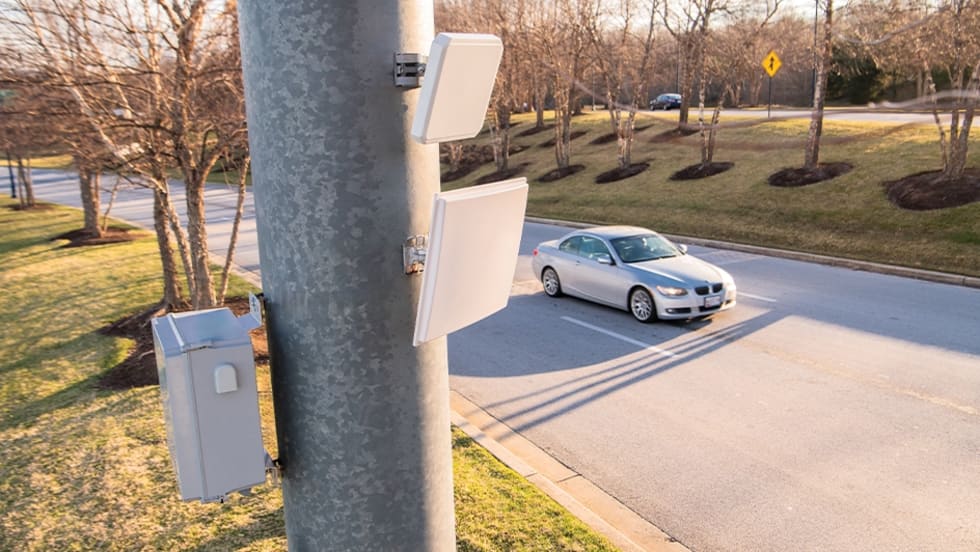
Leonardo U.S. Cyber & Security Solutions Introduces SignalTrace, the Next Evolution in Electronic Signature Detection Technology
SignalTrace reflects years of product refinement and a clearer expression of the technology’s purpose of recognizing and correlating electronic signatures in publicly broadcast wireless signals to reveal patterns, relationships, and trends that might otherwise go undetected.
Read More →
Pimloc Launches Secure File Sharing to Streamline Release of Redacted Video
Pimloc’s Secure File Sharing lets organizations deliver redacted video, audio, and documents through expiring, passcode-protected links, accelerating delivery while reducing security, compliance, and chain-of-custody risks.
Read More →