



Sixth Amendment Revisited
Plaintiffs’ attorneys may now seek to maintain lawsuits against officers and their agencies for eliciting incriminating statements from a defendant in certain situations.


Most interrogations occur before the suspect's Sixth Amendment right to counsel kicks in. During such interrogations, all you have to worry about are the familiar Miranda rules and the due process rules precluding improper treatment and tactics that make statements
involuntary.
Once the Sixth Amendment right to counsel attaches, however, you have an additional set of rules to follow, and these rules are different in significant respects from the Miranda and voluntariness rules. A recent U.S. Supreme Court decision reviews the Sixth Amendment rules and adds a troubling new element that law enforcement officers must take into account.
Massiah v. U.S.
The Miranda decision in 1966 was based on the Fifth Amendment privilege against compelled self-incrimination. Although the Miranda admonition talks about a "right" to an attorney, this is not the constitutional right provided by the Sixth Amendment. The separate Sixth Amendment right of an "accused" to the "assistance of counsel for his defense" only arises with the beginning of adversary judicial proceedings. (Rothgery v. Gillespie County, Texas) In most jurisdictions, this will be by either grand jury indictment or arraignment (or other first court appearance to answer a charge).
Once the Sixth Amendment right to counsel has attached and been asserted by the defendant (such as by his asking for an attorney, hiring one, or having one appointed by the court), police may no longer deliberately elicit incriminating statements from the defendant about that particular case unless the defendant's attorney is present, or a valid waiver is obtained.
Two years before Miranda, the Supreme Court had already created an exclusionary rule for the suppression of statements elicited after the Sixth Amendment became applicable. The court said, "We hold that Massiah was denied the basic protections of the Sixth Amendment guarantee when there was used against him at his trial evidence of his own incriminating words, which agents had deliberately elicited from him after he had been indicted and in the absence of counsel." (Massiah v. U.S.)
Henry and Kuhlmann
In subsequent cases, the court considered two situations in which jailhouse informants reported statements made by a defendant after he was covered by the Sixth Amendment. The first, U.S. v. Henry, involved a paid informant who was placed into defendant Henry's cell, after indictment and retention of counsel, with instructions to report anything Henry said. The informant, having been promised consideration for his help, had an incentive to try to elicit information from Henry, and he in fact did so by "stimulating discussions" from Henry about his case. The Supreme Court ruled these statements inadmissible under Massiah, saying that "By intentionally creating a situation likely to induce Henry to make incriminating statements without the assistance of counsel, the Government violated Henry's Sixth Amendment right to counsel." (U.S. v. Henry)
The second case, Kuhlmann v. Wilson, though similar to Henry, had two distinguishing facts: the informant was not given any incentive to stimulate discussions with his cellmate (Wilson) but was merely told to report any statements he might happen to overhear Wilson make; and the informant did not in fact say or do anything to provoke Wilson into talking about his case. This time, the Supreme Court found no reason to invoke the Massiah exclusionary rule. The court called the informant a "passive listening post" who did no more than listen and report, without encouraging discussions. The court said that "merely listening" does not violate the Sixth A mendment.
Limitations on Massiah
Other decisions of the Supreme Court have defined exceptions and limits to the Massiah exclusionary rule:
The Sixth Amendment does not apply simply because the suspect has hired an attorney, if he has not yet been indicted or appeared in court on the case. (Moran v. Burbine)
Statements inadmissible in the prosecution case-in-chief under Massiah may be admitted to impeach the defendant, if he gives inconsistent testimony at trial. (Michigan v. Harvey)
The Sixth Amendment right to counsel is "offense-specific," meaning that even though a suspect's right may have attached and been asserted as to Case A, this does not preclude police questioning as to uncharged Case B. (Texas v. Cobb)
Sometimes police may use a Miranda warning to obtain a valid waiver of the right to counsel and obtain an admissible statement. (Patterson v. Illinois)[PAGEBREAK]
Kansas v. Ventris
With all of the decisions cited above (and others) as backdrop, the court issued a ruling in 2009 in a case from Kansas. While awaiting trial for robbery and murder, defendant Donnie Ray Ventris was placed into a cell with a police informant who was told to keep his ears open and listen for anything Ventris might reveal. Going further than instructed, the informant nudged Ventris into talking by telling him "something serious must be weighing on your mind." Ventris admitted shooting the victim and taking his property, and the informant reported this to police.
At trial, the prosecutor did not offer Ventris's admission in the case-in-chief, believing that the informant was closer to Henry's "incentivized stimulator than to Kuhlmann's "passive listening post," and that Ventris's statement would therefore be inadmissible under Massiah. Feeling that the statement should nevertheless be admissible to impeach under Harvey, the prosecutor called the informant to impeach Ventris's contrary trial testimony.
Ventris was convicted on some of the charges and appealed to the Kansas Supreme Court, which reversed the convictions and held that a statement taken in violation of the Sixth Amendment right to counsel could not be used for impeachment. Since this ruling conflicted with Harvey, the state appealed to the U.S. Supreme Court, conceding for purposes of argument that the Sixth Amendment was violated by the informant's actions. The Supreme Court reversed. Said the court:
"Our precedents make clear that the game of excluding tainted evidence for impeachment purposes is not worth the candle. The interests safeguarded by such exclusion are outweighed by the need to prevent perjury and to assure the integrity of the trial process. We hold that the informant's testimony, concededly elicited in violation of the Sixth Amendment, was admissible to challenge Ventris's inconsistent testimony at trial." (Kansas v. Ventris)
Civil Liability Caution
In Ventris, the court acknowledged that its prior cases had been "equivocal" as to whether the Sixth Amendment is violated by the interrogation itself, or only when the resulting statement is used at trial (compare the quotations from Massiah and Henry, above). To clarify, the court has now said unequivocally, "The constitutional violation occurs when the uncounseled interrogation is conducted."
Because federal civil rights liability can be based on an officer's violation of a suspect's constitutional rights under color of authority (42 US Code § 1983), plaintiffs' attorneys may now seek to maintain lawsuits against officers and their agencies for eliciting incriminating statements from a defendant after attachment and assertion of the Sixth Amendment right to counsel, in the absence of the attorney.
To reduce civil liability risks, it is more important than ever that officers be adequately and properly trained as to the clearly established rules regarding Massiah and related case law. (Previous issues of POLICE have included "Point of Law" articles on various aspects of the Sixth Amendment rules and exceptions.)
Devallis Rutledge is a former police officer and veteran prosecutor who currently serves as Special Counsel to the Los Angeles County District Attorney. He is the author of 11 books, including "Courtroom Survival, The Officer's Guide to Better Testimony."
More Patrol

Adept Armor Introduces Two New Rifle Plates
Adept Armor has launched two new Level IV ballistic plates, the Emperor and the Archon Mark 2, which brings Adept Armor’s new Quatroid ceramic to the high-threat, performance-value center of the range at 5.2 pounds.
Read More →
POLICE Product Test: Benchmade Bailout
The Benchmade Bailout is a slim, lightweight carry knife with a deep-ride pocket clip and comes in a variety of blade steels and scales. Here is a detailed review of the Taiga Green Bailout, released earlier this year.
Read More →
NLEOMF Announces July 2026 Officer of the Month
NLEOMF honored a Michigan deputy sheriff as the July 2026 Officer of the Month for rescuing a trapped driver from a burning vehicle following a Fourth of July crash.
Read More →
Streamlight to Showcase Newest Lighting Products at National Safety Council’s Safety Congress & Expo 2026
Streamlight will showcase its latest lights, including the Portable Scene Light III and the LiteBox 1Million, at the 2026 National Safety Council (NSC) Safety Congress & Expo.
Read More →
The 2027 World Police & Fire Games Set for Perth, Australia
The 2027 World Police & Fire Games (WPFG) will take place in Perth, Western Australia, from Friday, March 12 through Sunday, March 21, 2027.
Read More →
5.11 Partners with National Fallen Firefighters Foundation to Support #ForThe343
5.11 has joined the nationwide movement honoring the 343 New York City Fire Department firefighters lost on Sept. 11, 2001.
Read More →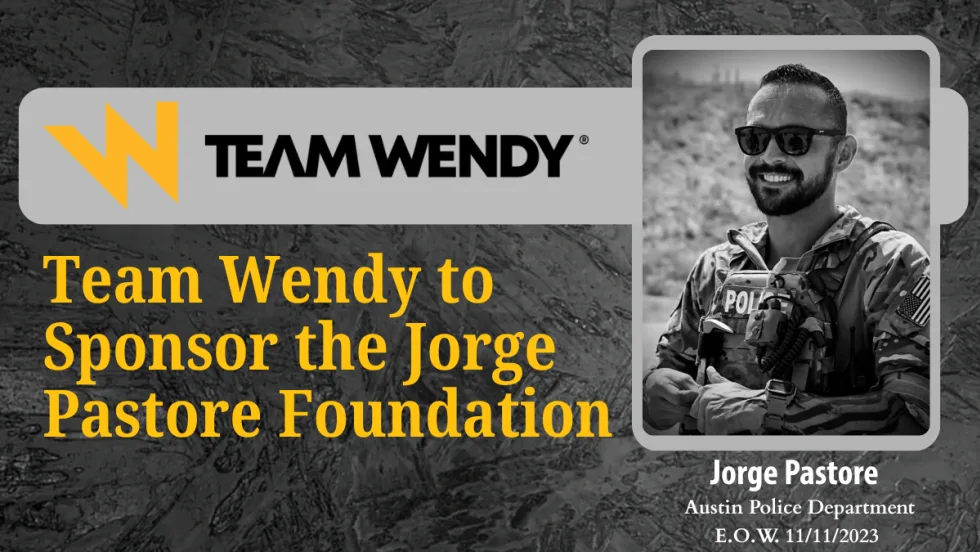
Team Wendy Announces Title Sponsorship of the Jorge Pastore Foundation
Team Wendy’s 3-year partnership with the Jorge Pastore Foundation expands access to programs that strengthen those who serve.
Read More →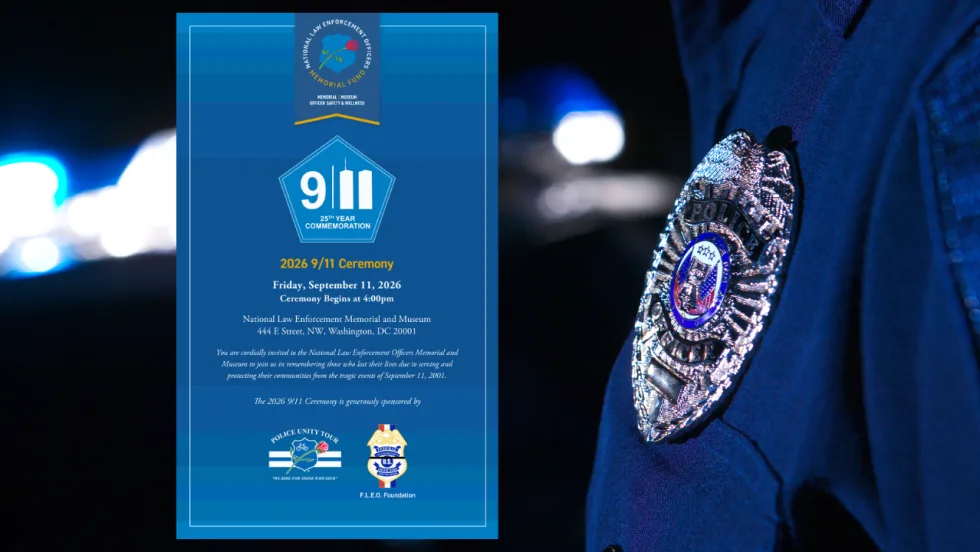
National Law Enforcement Memorial and Museum Hosting 9/11 25th-Year Commemoration Ceremony
The National Law Enforcement Memorial and Museum is hosting a 9/11 25th Year Commemoration Ceremony on Sept. 11 at 4 p.m.
Read More →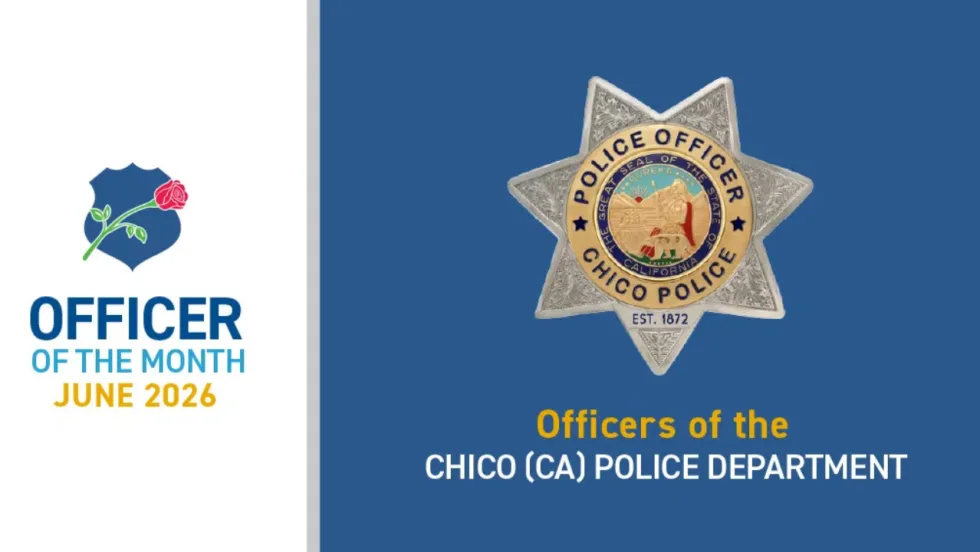
National Law Enforcement Officers Memorial Fund Announces June 2026 Officers of the Month
The National Law Enforcement Officers Memorial Fund (NLEOMF) named 15 officers of the Chico Police Department (California) as the Officers of the Month for June 2026 for their roles in responding to an active-shooter incident at a public library.
Read More →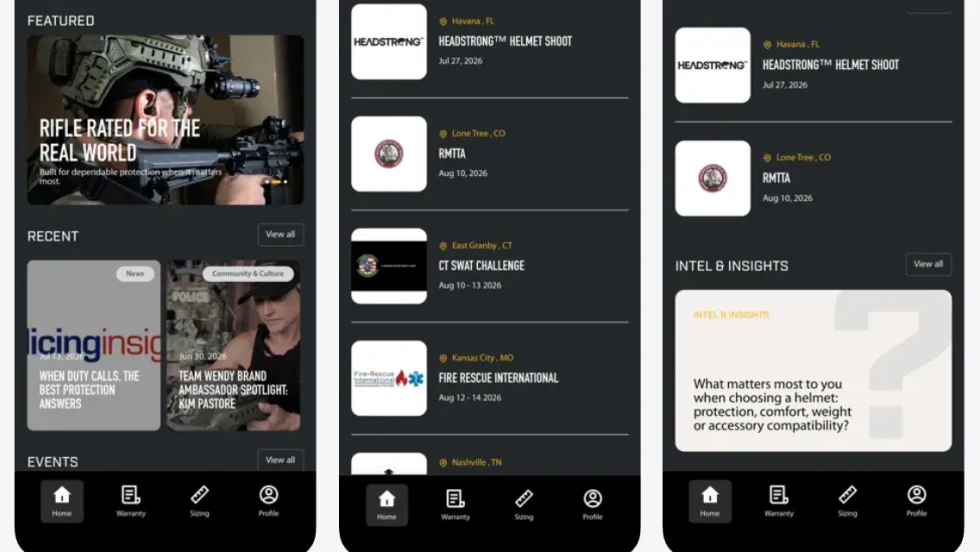
Team Wendy App Creates New Digital Hub for Helmet Owners
The Team Wendy Community App provides one location for warranty registration, size-fit tools, product updates, and community connection. For helmet owners, the new app creates a simpler path to the information and tools that matter most.
Read More →