



Serving the Search Warrant
Having a warrant does not guarantee that your actions will always be upheld. Every officer participating in the execution of a search warrant should be familiar with the following guidelines.

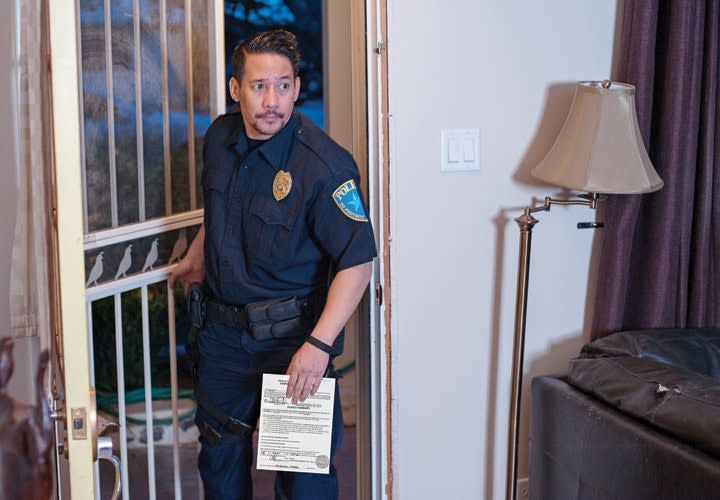
Photo: POLICE File
As you know, judges and prosecutors prefer that your searches and seizures be conducted under authority of a search warrant, whenever possible. The fact that there are only a limited number of exceptions to the general requirement of warrants "underscores the preference accorded police action taken under a warrant, as against searches and seizures without one." (U.S. v. Ventresca)
Not only do warrants reduce the risk of evidence suppression, they also reduce exposure to civil liability claims alleging Fourth Amendment violations. "Where the alleged Fourth Amendment violation involves a search or seizure pursuant to a warrant, the fact that a neutral magistrate has issued a warrant is the clearest indication that the officers acted in an objectively reasonable manner." (Messerschmidt v. Millender)
But having a warrant does not guarantee that your actions will always be upheld. There are rules regarding the manner in which the warrant is served that must also be observed. Every officer participating in the execution of a search warrant should be familiar with the following guidelines:
Securing the Premises
The fact that you've decided to apply for a search warrant does not necessarily mean you can make a warrantless entry to "freeze" the scene until you get the warrant. Warrantless entry to secure is only permissible where you can document reasons to believe that occupants will learn of your plans and remove or destroy the evidence if immediate entry is not made. "An entry in the absence of exigent circumstances is illegal." (Segura v. U.S.)
Likewise, securing an unoccupied residence from the outside by preventing anyone from entering while you await the warrant can be reasonably done on the same basis—reasons to believe evidence would be lost. "Securing a dwelling, on the basis of probable cause, to prevent the destruction or removal of evidence while a search warrant is being sought, is not itself an unreasonable seizure of either the dwelling or its contents." (Segura v. U.S.)
If you do make entry to secure before getting the warrant, observations made inside cannot be used as PC for the warrant. (Murray v. U.S.)
Familiarity with the Warrant
All officers who are taking part in serving a warrant must be familiar with the scope of the authorized search. Officers should either read the warrant, or be briefed on the places, vehicles, and persons authorized to be searched, and the property authorized to be seized. "It is incumbent on the officers executing a search warrant to ensure the search is lawfully authorized and lawfully conducted." (Groh v. Ramirez)
Knock-notice
Except where knock-notice compliance could endanger officers, permit escape, or cause the destruction of evidence, knocking and announcing before entering to serve a warrant is constitutionally required, according to the court: "We hold that in some circumstances an officer's unannounced entry into a home might be unreasonable under the Fourth Amendment." (Wilson v. Arkansas)
The court later said that although unexcused knock-notice remains a requirement of constitutional reasonableness, non-compliance does not trigger the exclusionary rule. (Hudson v. Michigan) Nevertheless, officers sworn to abide by the law (and wishing to avoid civil liability) should still comply with knock-notice, unless one of the identified risks makes unannounced entry permissible.
Exhibiting the Warrant
Statutes in some jurisdictions may require officers to show or furnish a copy of the warrant to an occupant upon entry; however, this is not constitutionally required. The Supreme Court has twice rejected imposing any such steps under the Fourth Amendment. "Neither the Fourth Amendment nor the Federal Rules of Criminal Procedure requires the executing officer to serve the warrant on the owner before commencing the search." (Groh v. Ramirez; U.S. v. Grubbs)
No "Looky-loo's"
Although computer technicians, theft victims, or others may accompany you to help identify evidence to be seized, curious onlookers cannot be allowed. As the Supreme Court said when permitting civil suit for unauthorized access, "It is a violation of the Fourth Amendment for police to bring members of the media or other third parties into a home during execution of a warrant when their presence is not in aid of execution of the warrant." (Wilson v. Layne)
Occupants Can be Detained
Everyone who is on the premises when service of the search warrant begins can lawfully be detained, as the court has repeatedly said: "The risk of harm to both the police and the occupants is minimized if the officers routinely exercise unquestioned command of the situation. Thus, we hold that a warrant to search founded on probable cause carries with it the limited authority to detain the occupants of the premises while a proper search is conducted." (Michigan v. Summers)
If the nature of the crimes under investigation raises a risk of officer safety, an occupant (even one who is not necessarily a suspect) can be handcuffed during the search. "Inherent in Summers' authorization to detain an occupant of the place to be searched is the authority to use reasonable force to effectuate the detention." (Muehler v. Mena)
A former occupant who has already left the premises before officers arrive to serve a search warrant cannot be detained at a remote location under the warrant. (Bailey v. U.S.)
Occupants Cannot be Searched
Although the search warrant includes authority to detain occupants during the search, it does not automatically authorize their search. Unless they are named in the warrant as persons to be searched, occupants may only be searched if some exception justifies a warrantless search. As the court said in disapproving the search of a bar patron during a warrant search, "A person's mere propinquity to others independently suspected of criminal activity does not, without more, give rise to probable cause to search that person." (Ybarra v. Illinois)
To justify searching detainees who are not authorized to be searched by the warrant, try to develop grounds for warrantless search, such as consent or probationary/parole search terms, where available.
"Plain View" Applies
Contraband or evidence not specifically listed in the search warrant can still be seized under the "plain view" exception if discovered within the lawful scope of the search and if the evidentiary or contraband nature is immediately apparent. "In this case, the [additional] items seized from defendant's home were discovered during a lawful search authorized by a valid warrant. When they were discovered, it was immediately apparent to the officer that they constituted incriminating evidence. The seizure was authorized by the plain view doctrine." (Horton v. California)
Notice of Search and Seizure
Statutes sometimes require officers to provide an itemized receipt or inventory of seized property. The Supreme Court has ruled that due process requires some notice be given to the owner of seized property (if absent from the search). Said the court, "When law enforcement agents seize property pursuant to warrant, due process requires them to take reasonable steps to give notice that the property has been taken so the owner can pursue available remedies for its return." (City of West Covina v. Perkins)
Local Statutes
Most jurisdictions have statutory directives about filing a "return" of the warrant with the court, booking the evidence seized, and other requirements. Check with local advisors on additional steps that may be necessary in your jurisdiction.
Devallis Rutledge is a former police officer and veteran prosecutor who currently serves as special counsel to the Los Angeles County district attorney. He is the author of 12 books, including "Investigative Constitutional Law."
More Patrol

Adept Armor Introduces Two New Rifle Plates
Adept Armor has launched two new Level IV ballistic plates, the Emperor and the Archon Mark 2, which brings Adept Armor’s new Quatroid ceramic to the high-threat, performance-value center of the range at 5.2 pounds.
Read More →
POLICE Product Test: Benchmade Bailout
The Benchmade Bailout is a slim, lightweight carry knife with a deep-ride pocket clip and comes in a variety of blade steels and scales. Here is a detailed review of the Taiga Green Bailout, released earlier this year.
Read More →
NLEOMF Announces July 2026 Officer of the Month
NLEOMF honored a Michigan deputy sheriff as the July 2026 Officer of the Month for rescuing a trapped driver from a burning vehicle following a Fourth of July crash.
Read More →
Streamlight to Showcase Newest Lighting Products at National Safety Council’s Safety Congress & Expo 2026
Streamlight will showcase its latest lights, including the Portable Scene Light III and the LiteBox 1Million, at the 2026 National Safety Council (NSC) Safety Congress & Expo.
Read More →
The 2027 World Police & Fire Games Set for Perth, Australia
The 2027 World Police & Fire Games (WPFG) will take place in Perth, Western Australia, from Friday, March 12 through Sunday, March 21, 2027.
Read More →
5.11 Partners with National Fallen Firefighters Foundation to Support #ForThe343
5.11 has joined the nationwide movement honoring the 343 New York City Fire Department firefighters lost on Sept. 11, 2001.
Read More →
Team Wendy Announces Title Sponsorship of the Jorge Pastore Foundation
Team Wendy’s 3-year partnership with the Jorge Pastore Foundation expands access to programs that strengthen those who serve.
Read More →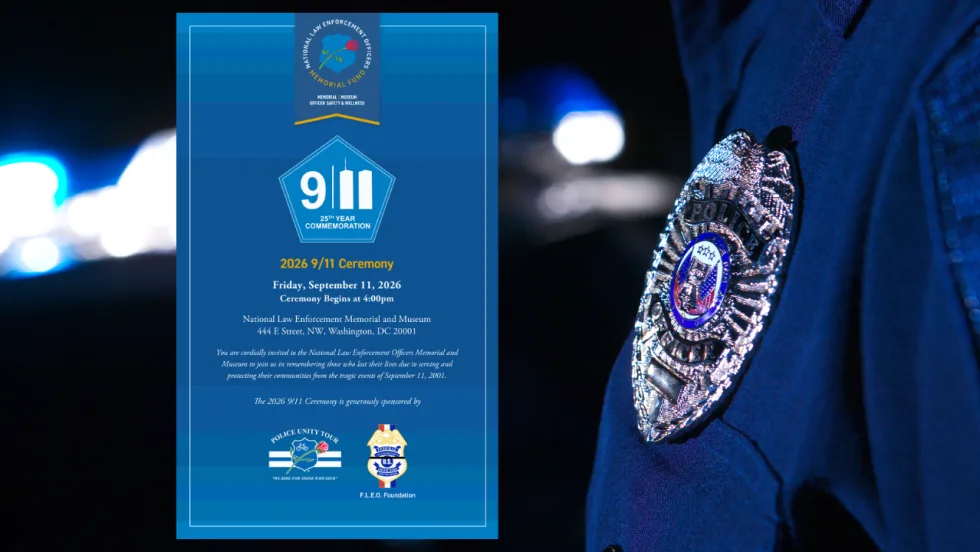
National Law Enforcement Memorial and Museum Hosting 9/11 25th-Year Commemoration Ceremony
The National Law Enforcement Memorial and Museum is hosting a 9/11 25th Year Commemoration Ceremony on Sept. 11 at 4 p.m.
Read More →
National Law Enforcement Officers Memorial Fund Announces June 2026 Officers of the Month
The National Law Enforcement Officers Memorial Fund (NLEOMF) named 15 officers of the Chico Police Department (California) as the Officers of the Month for June 2026 for their roles in responding to an active-shooter incident at a public library.
Read More →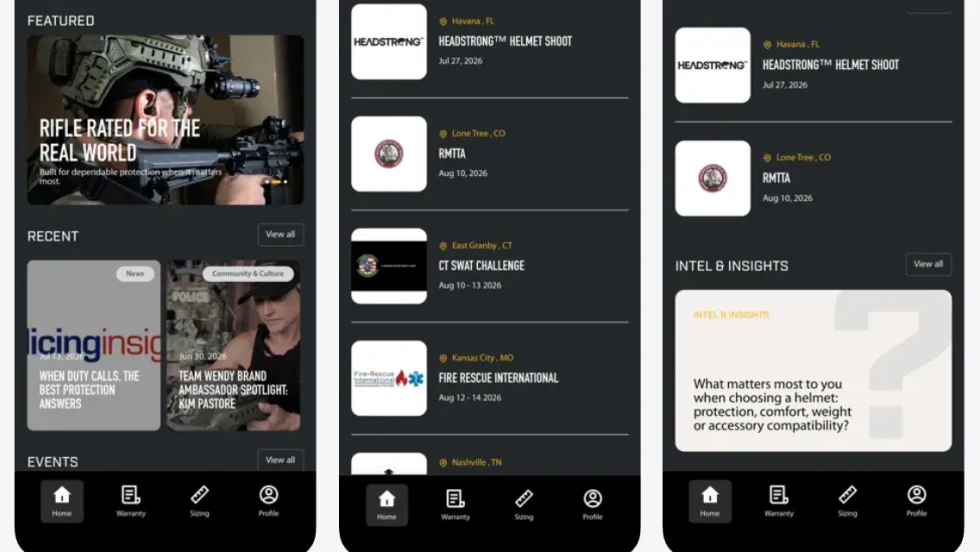
Team Wendy App Creates New Digital Hub for Helmet Owners
The Team Wendy Community App provides one location for warranty registration, size-fit tools, product updates, and community connection. For helmet owners, the new app creates a simpler path to the information and tools that matter most.
Read More →