



Self-Discipline
Not too long ago, I was asked to identify the one leadership characteristic that rises above all others as the most important. Though I was intrigued by the question and was prepared to give it a great deal of thought, I came up with an answer almost immediately. It was a trait instilled in me while serving in the military: self-discipline.

Not too long ago, I was asked to identify the one leadership characteristic that rises above all others as the most important. Though I was intrigued by the question and was prepared to give it a great deal of thought, I came up with an answer almost immediately. It was a trait instilled in me while serving in the military: self-discipline.
Self-discipline has been described as the ability to control one's emotions, overcome weakness, and have the ability to pursue what one thinks is right despite the cost. It's a form of selective training that moves you forward in order to reach your goals and objectives. It means staying on track and not letting anything derail you. Effective leaders must have self-discipline or face losing themselves in a sea of temptation, the abyss of laziness, and the expanse of political expediency.
On a more visceral level, you also have that voice in your head that challenges you to stop working so hard and take the easy way out. It's that voice that will talk you out of anything you're trying to accomplish when you feel the slightest bit uncomfortable. It's the side of you that fills you with regret when you reflect on your decision to quit later on. So how do we incorporate self-discipline into our daily lives and get control over that voice in our heads? It starts with making better choices that include making a commitment, staying focused, and prioritizing.
When you make a commitment, you are making a contract with yourself; only you can break that contract. Don't make the commitment unless you plan on keeping it. Get away from blaming others, finding fault in the situation, or making excuses for your poor choices. In other words, own it. If you can't go all in, then stay all out.
Let's look at dieting as an example. By now, everyone knows that diets don't work. It's a short-term fix that usually makes things worse. If you don't make healthy lifestyle changes, all your efforts were in vain. If you don't have enough self-discipline to stay the course, just eat what you want. At least that way you'll save the drama of lying to yourself and your friends.
Staying focused is the hardest part of self-discipline. There are so many distractions to contend with. The funny part is, it's only a distraction if you let it become one. Do you have to take that phone call? Do you have to check your email? Is that incoming text message so important you have to stop everything to read it? There's a powerful word that you must learn if you want to get a grip on staying focused; that word is "no."
No, I won't answer the phone; no, I won't check my email; no, I won't answer that text message. Staying focused gives you power. You are in control, not someone or something else. It gives you the time you need to finish what you started. Turn goals into smaller objectives and make them part of a routine. You'd be surprised at how quickly a routine becomes a habit. Let's face it, outside of an exigent circumstance, nothing should get in your way without a good reason.
Books on leadership often suggest that you prioritize as part of your daily routine. There can only be one number one priority followed by a second, third, and fourth. They can't all be number one, even though some supervisors will try to make you think so. In the past, I have communicated this reality to one of my supervisors by asking which number one priority he wanted me to work on first.
Having self-discipline is part of being a professional. You can immediately identify who possesses it and who doesn't. The ones that have it always look sharp in uniform. They look like they are in good shape. They go above and beyond in the performance of their duties. They are the ones who others often ask for advice.
To have self-discipline means you are always being tested. You might not get promoted, be allowed to attend a course, or be denied a transfer into a specialty unit. Pass these tests by coming to work with a smile on your face. Keep your high standards even though some people may snub you. Having self-discipline means not succumbing to the temptation to become part of the circus. I think we already have more clowns than we need. The Greek philosopher Aristotle said it best: "We are what we repeatedly do; excellence then is not an act, but a habit."
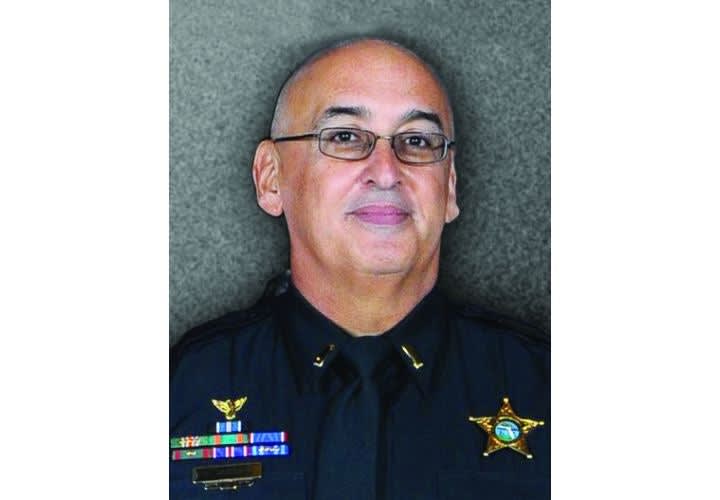
Amaury Murgado retired a senior lieutenant from the Osceola County Sheriff's Office (Florida) with over 29 years of experience. He also retired from the Army Reserve as a master sergeant. He holds a Master of Political Science degree from the University of Central Florida.
More Training

Registration Underway for Sixth Annual First Responders Relay
The California Police Athletic Federation’s annual First Responder Relay will welcome first responder teams from across the globe to compete along Ventura's scenic coastline on Oct. 11. Registration is underway.
Read More →
Vector Solutions Launches Comprehensive Online Dispatch Training Catalog for Emergency Communications Professionals
Vector Solutions’ new catalog of 35 expert-developed online courses can help emergency communication centers strengthen training, meet certification requirements, and simplify continuing education.
Read More →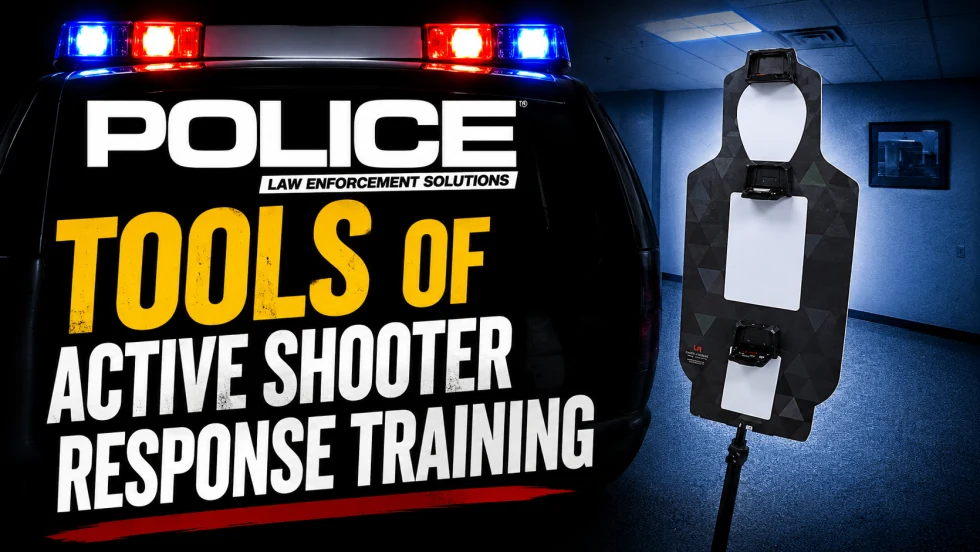
Tools for Active Shooter Response Training
What technologies help prepare officers for active shooter response situations? This behind-the-scenes look at law enforcement training explores shot simulators, smart firearms, laser target systems, and the tools used to build safer, more effective training environments.
Read More →
Two-Officer Tactical Doorway Entry Techniques
Entering a room during active-threat situations requires communication, coordination, and disciplined tactical movement. In this video, trainers from the United States Deputy Sheriff’s Association demonstrate critical room entry concepts, including fatal funnel awareness, team coordination, and safe tactical movement.
Read More →
High Compressed Ready Explained | Muzzle Control For Room Entry
In this video, Mike Willis, law enforcement national training and program director for the United States Deputy Sheriffs’ Association, demonstrates the high compressed ready position and discusses muzzle control during room entry.
Read More →
Why Attend the DroneSense Innovation Summit by Versaterm?
Let’s hear from Ryan Bracken, head of product, about why your agency should send someone to the first annual DroneSense Innovation Summit by Versaterm in April.
Read More →
Caswell Live Fire Spins Off from InVeris
Caswell Live Fire has spun off from parent company InVeris, coinciding with the 100th anniversary of Caswell’s founding. Over the past 100 years, Caswell has developed pioneering solutions that support military, law enforcement, and commercial clients worldwide.
Read More →
When Do You Transport a Wounded Officer Instead of Waiting for EMS?
Thumbnail for video series POLICE Topics, Tactics & Tips with a yellow headline that reads When Do You Transport a Wounded Officer Instead of Waiting for EMS?
Read More →
How to Pick Your High-Risk Stop Location for Tactical Advantage
Hear veteran trainer Mike Willis, of the United States Deputy Sheriff’s Association, explain several considerations that can help you wisely pick your best spot to initiate high-risk or felony traffic stops.
Read More →
Coffee Break with Police Experts: Using Your Patrol Vehicle for Cover
In this video, hear from Dustin Mowery, a product specialist at Team Wendy, as he discusses how to best use a patrol vehicle for cover.
Read More →