



Ruger SR9 Pistol
The SR9 is not just "another striker-fired, polymer frame, 9mm pistol," but a combination of many features that have proven their practicality over the years and new features that police officers and shooters have been asking for but have not yet been offered in a production handgun.

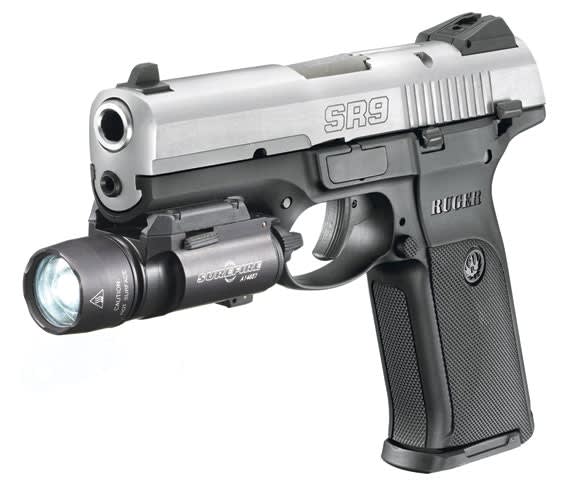
Trying to find a way to grab the interest of the readership at the beginning of this report was fraught with danger. Because—and let's be perfectly honest about it—most shooters will greet the announcement of a "new" striker-fired, polymer frame, 9mm pistol with a shrug of disinterest, if not a yawn of boredom. After all, just about every major handgun manufacturer in the world offers a variation of this type of pistol...every one, that is, except Ruger.
In the Beginning
Since the company introduced its first centerfire pistol in the late 1980s, Ruger pistols have earned an enviable reputation for ruggedness, accuracy, and reliability, all at extremely affordable prices. There was only one problem with them. They were rather bulky and lacked the slim lines of some of their contemporaries, which limited their appeal to the law enforcement market
Ruger first addressed this issue with its P345 series of .45 caliber pistols that featured slimmer slides and frames, enhanced ergonomics, and improved cosmetics. But, like Ruger's earlier pistols, the P345 featured a traditional double-action/single-action trigger mechanism with hammer drop/safety levers and an external hammer. While there is nothing wrong with this arrangement, one only has to examine the most popular police service handguns in today's market to see that most of them don't follow that model.
Ruger's design team began working on a new service-type pistol three years ago and, as is their wont, they kept quiet about it until they were able to present a completely finished and viable product to the market. In October 2007, the company announced the availability of the Ruger SR9.
The SR9 is not just "another striker-fired, polymer frame, 9mm pistol," but a combination of many features that have proven their practicality over the years and new features that police officers and shooters have been asking for but have not yet been offered in a production handgun.
Mechanical Details
Let's start our examination of the SR9 from the top and work our way down. While early Ruger pistols used investment castings to produce their slides, the SR9 is machined from solid stainless steel. This has enabled the company to reduce the width so that it is the narrowest of any of its contemporaries. The sights are mounted in dovetail cuts and prominent, easy to acquire, and fast to line up. The rear sight is adjustable for elevation so that the pistol can be zeroed in with a variety of loads.
When a round is chambered, a loaded chamber indicator rises above the slide, providing a visual and tactile indication of the pistol's condition while a massive extractor with a large claw ensures reliable functioning. Locking is via the barrel hood rising up into, and bearing against, the front of the ejection port. This holds the slide/barrel unit together until they recoil a short distance, whereupon the barrel is cammed down, allowing the slide to continue to the rear, extracting and ejecting the spent cartridge case. The captured recoil spring unit under the barrel then pulls the slide forward, feeding the next round from the magazine and pulling the slide/barrel unit into battery.
The frame is made of glass-filled polymer, and it is slimmer than the competition, with a grip frame angle that feels just like a 1911 pistol. The grip features impressed checkering on the side panels, front, and backstraps to improve recoil control. Not only does the SR9's frame feel like a 1911, but removing a single pin allows the shooter to reverse the backstrap, giving a choice of flat or arched styles (personally I prefer the latter). As is common on service-type pistols today, a Picatinny frame rail allows mounting of tactical lights and/or laser sights.
The slide reciprocates on rails on the steel camblock—which also acts to cam the barrel down during movement—and steel inserts at the rear of the frame. This camblock also serves to disperse recoil pulse through the frame, lessening felt recoil. The SR9 is a striker-fired pistol and as the slide goes forward into battery, the striker is held in a partially cocked position. Pulling the double-action trigger draws the striker back completely, disabling the firing pin safety plunger and then tripping the sear to release the striker to fire the pistol. The SR9 also features a magazine disconnect safety.
In addition to its passive safety devices, the SR9 has ambidextrous thumb safeties, something which I feel is sorely lacking on many of today's striker-fired service pistols. While they have a very flat profile, and are positioned close against the frame to reduce the chance of them hanging up, they are serrated for positive manipulation. The SR9's southpaw bonafides are further enhanced by its ambidextrous magazine release buttons.
Shooting the SR9
Ruger's Ken Jorgensen provided me with an SR9 to evaluate for this article. Compared to those early Ruger pistols that I have owned, this one felt so slim, well balanced and handy that I was suitably impressed. I was especially taken with the ergonomics of the grip and the long grip tang. While the trigger stroke displayed a bit of "new gun" stiffness, it was consistent and, according to my trigger pull scale, broke at a crisp six pounds, which is well within factory specs.
With the assistance of my friend, Rusty Rawsen, I ran the SR9 through its paces at Trigger Time Valley, a professional security firearms training facility in Carthage, N.C. Accuracy testing was conducted from a rest at a measured 50 feet, the results of which are displayed on the chart on page 20. The Ruger shot to point of aim with all four brands of ammunition and produced a number of groups in the sub 1.5 inch range. Both Rusty and I felt this was excellent performance for what is advertised as a pure service type pistol.
This striker-fired pistol is intended for the law enforcement market, but will, of course, be available for private use as well. As with all new pistols, I go over every inch of them to get an initial feel for them. I check the grip angle, sights, and point of aim. Ruger's factory sights have come a long way over the last several years, and the new SR9 is no exception. They were easy to see, and came to point of aim very easily from the draw. The manual safety is easy and positive to manipulate with your thumb after breaking leather, but requires a conscious effort to re-engage it. This may become easier once there is a little wearing in.
The magazines are metal and hold 17 rounds in a double stack. The first few rounds are easy to load, but after that it's a bit of an effort to get the rounds to go in, even with the supplied magazine loader.
For offhand exercises, Blackhawk provided one of its CQC Serpa retention holsters. Setting up a pair of D-1 targets, my friend and I each ran the Ruger through a series of offhand drills at distances ranging from five to 15 yards, firing the pistol both supported and unsupported (one-handed). Overall handling was excellent and the pistol displayed excellent recoil control, allowing us to make fast, accurate follow-up shots.
While I at first considered the trigger a bit heavy, it is shaped so that the shooter pulls it straight back, which greatly lessens the effect it has on holding sight alignment and allows the shooter to perform accurate, rapid fire strings of fire with ease. Every shot, except one, that Rusty and I fired ended up inside the targets' X and 10 rings. Considering neither of us had any experience with the SR9 before this shooting session, I felt such performance really demands comment. It's a clear indicator of how easy it is to shoot well with this gun.
During the accuracy test, my very first round went right into the 10 ring at 50 feet, as did 25 other rounds from different manufacturers. Usually a new pistol will favor one or two rounds for best accuracy, but the SR9 performed equally well with all of them. Subsequent drills from 5, 10, and 15 yards shooting freestyle, weak and strong hand showed the pistol to be equally fit for duty. The SR9 should do well for anyone who likes the Ruger line of firearms.
In conclusion, I found the SR9 to be a very practical, service-type pistol. It proved accurate, possessed above-average ergonomics that enhanced recoil control, and proved 100-percent reliable with several hundred rounds of ammunition run through it. I believe the SR9 will appeal to police officers looking for either a holster or concealed-carry service pistol.
Paul Scarlata has served as an auxiliary police officer. He is a widely published North Carolina-based gun writer and a frequent contributor to POLICE Magazine.
DRY FIRING
It should be noted that the SR9 pistol should not be dry fired without an empty magazine inserted into the magazine well. According to a Ruger communiqué, the SR9's magazine disconnect is a spring-loaded steel part mounted in the slide. When the magazine is inserted into the frame, it lifts the disconnect out of the path of the striker, allowing the striker to reach the cartridge primer during a normal firing cycle. The magazine disconnect does not affect the quality of the trigger pull during normal shooting. If the trigger is pulled without the magazine in place (not recommended), the striker will drag underneath the spring-loaded magazine disconnect. This may give the trigger pull a heavy, gritty feel while dry firing without the magazine in place. If the SR9 is repeatedly dry fired without the magazine in place, this may over time cause the trigger pull to feel rougher, even when the magazine is in place.
More Weapons
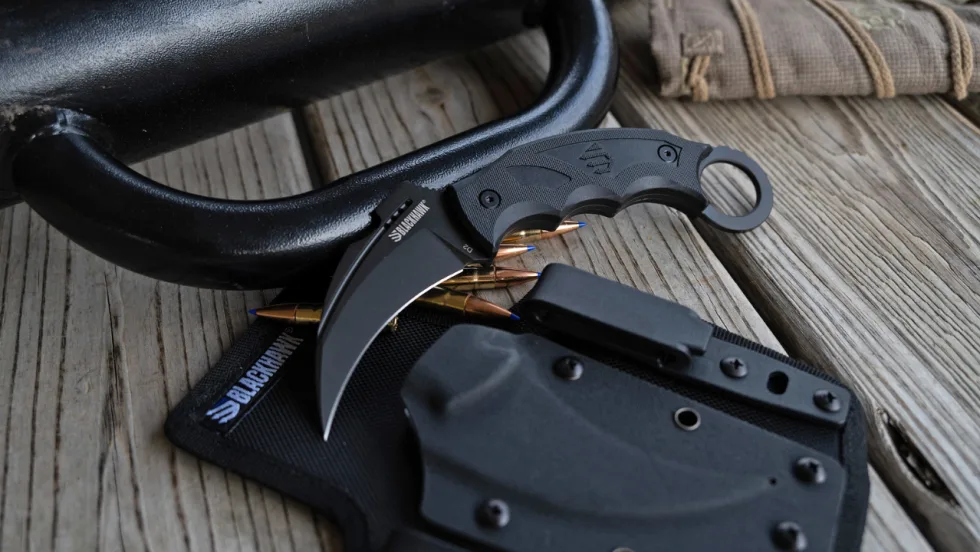
Blackhawk Introduces the Garra Fixed Karambit
The Blackhawk Garra Fixed Karambit is made from D2 steel and features a curved profile that enhances slicing efficiency, plus the full-tang construction ensures strength and durability from tip to handle.
Read More →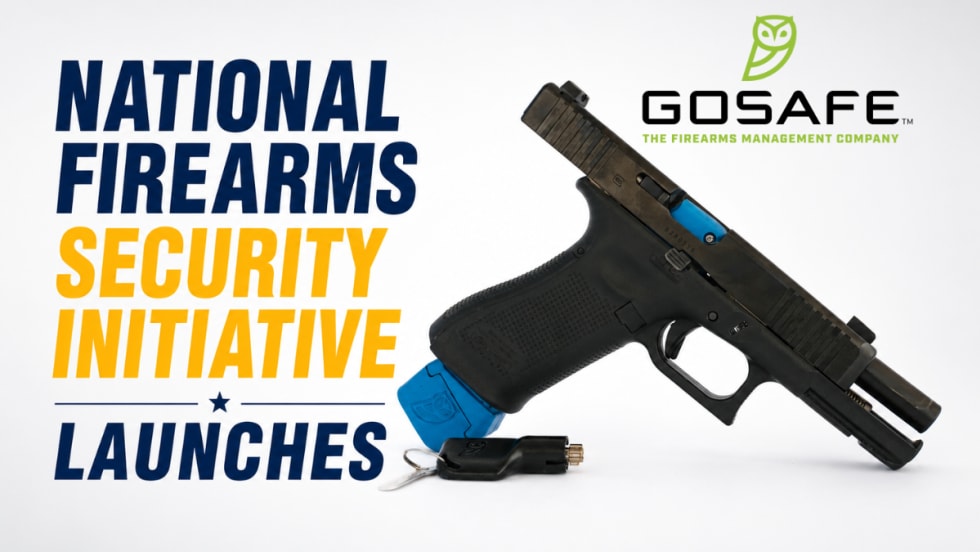
GOSAFE Technology Announces Public Safety Initiative Focused on Firearm Security and Risk Reduction
GOSAFE Technology’s new initiative provides support for agency-level solutions around secure firearm storage, vehicle-storage risks, off-duty firearm security, firearm accountability, and the public safety consequences that may result when firearms are stolen, lost, improperly secured, or diverted from lawful possession.
Read More →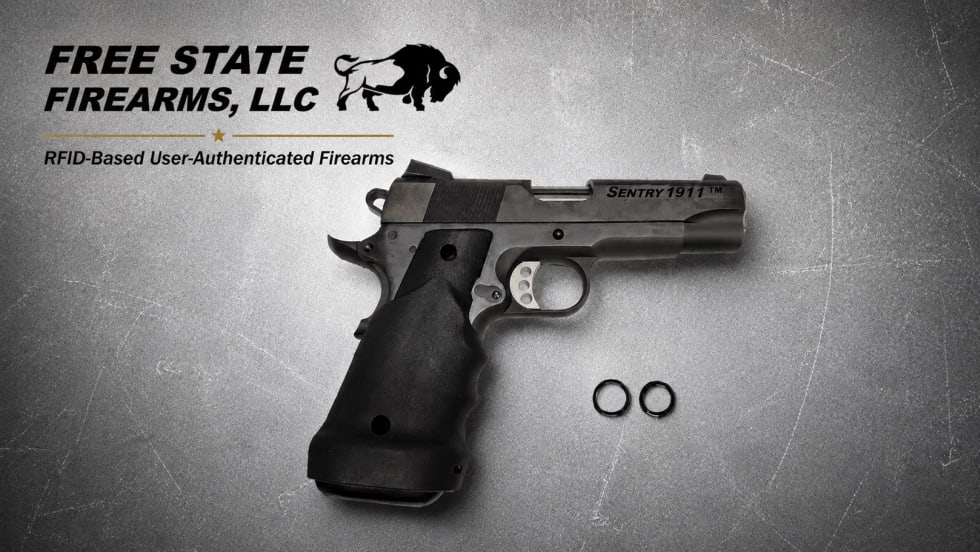
Texas Sheriff’s Office Deploys RFID-Based User-Authenticated Firearm for Prisoner Transport Operations
A sheriff’s office in Texas is now using RFID-based user-authenticated firearms, from Free State Firearms, for prisoner transfer and transport operations.
Read More →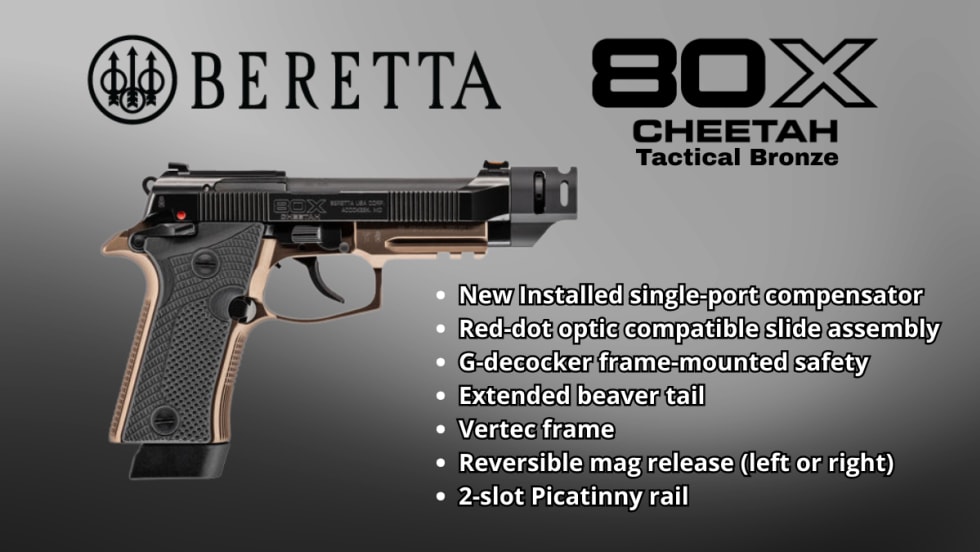
Beretta Introduces the 80X Cheetah Tactical Bronze
Beretta has launched the 80X Cheetah Tactical Bronze, which features a fiber-optic front sight, a serrated rear sight, and a Picatinny rail for accessory mounting, and ships with three 15-round extended magazines.
Read More →
Wrap Raises $5 Million to Restart Domestic Manufacturing & Advance R&D
With new funding, Wrap Technologies will restart domestic manufacturing, advance validated R&D programs into commercialization, and responsibly accelerate early growth initiatives aligned with rising demand for non-lethal response capabilities.
Read More →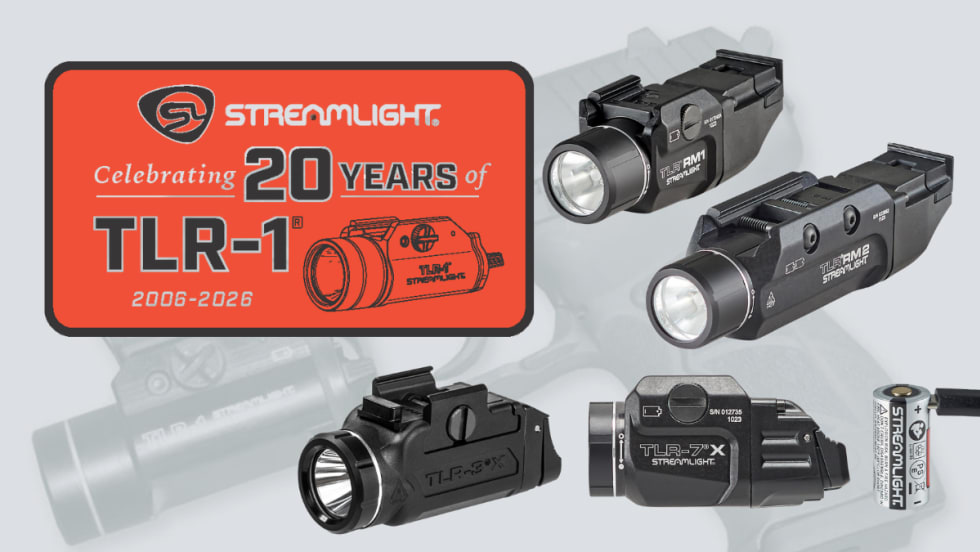
Streamlight Celebrates the 20-Year Anniversary of the TLR Series
This year, Streamlight marks two decades of weapon-mounted lighting innovation with the 20th anniversary of the TLR-1.
Read More →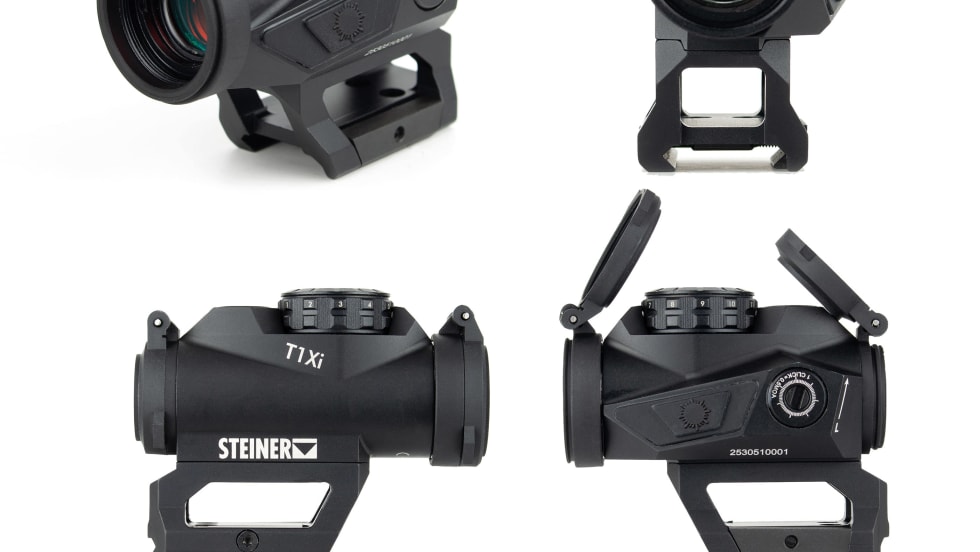
Steiner’s T1Xi Selected as Top Performer in Texas DPS Optic Evaluation
Steiner Optics’ T1Xi was selected as the top-performing red dot in the recent Texas Department of Public Safety optic evaluation.
Read More →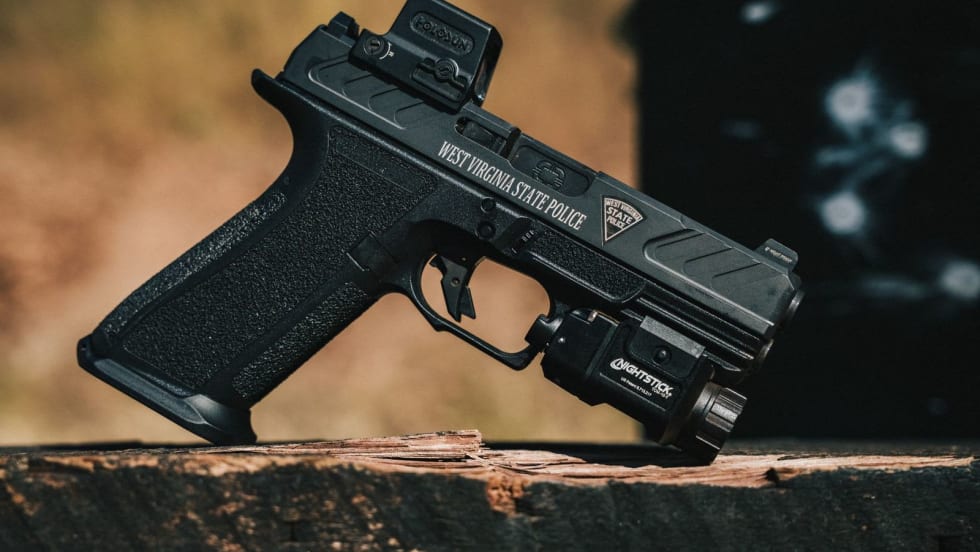
Shadow Systems Selected as Exclusive Pistol Provider for West Virginia State Police
Shadow Systems will provide 700 XR920 crossover pistols for West Virginia State Police troopers and 80 CR920X high-capacity subcompact pistols for the Bureau of Criminal Investigation.
Read More →
Aimpoint Celebrates 50 Years of Innovation and Excellence in Sighting Technology
Aimpoint is marking its 50th anniversary in 2025, celebrating five decades of red dot innovation trusted by military, law enforcement, and tactical professionals worldwide.
Read More →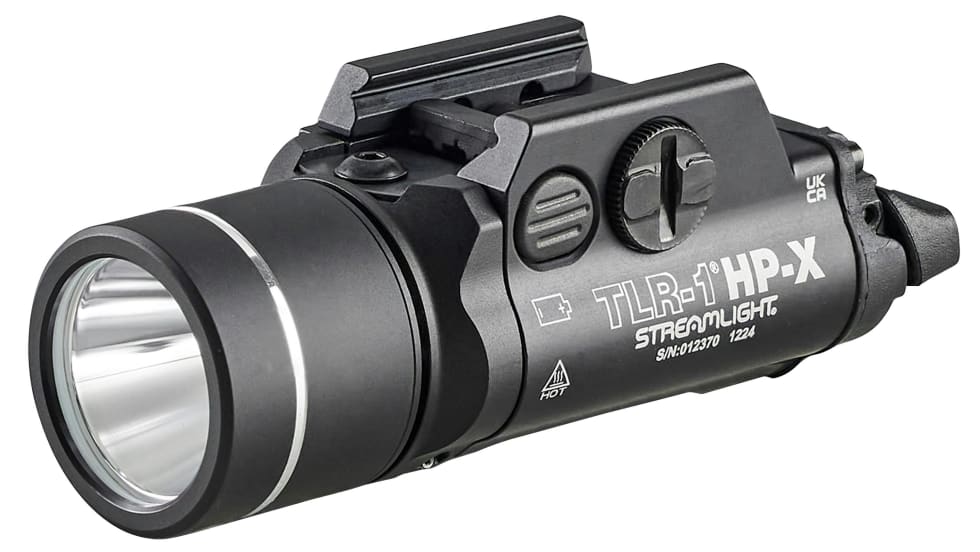
Streamlight Introduces Long-Range Handgun Light
“Our newest weapon light provides an industry-leading level of candela for handguns, giving users enhanced visibility under low light conditions, such as when searching a dark alley,” said Streamlight President Michael F. Dineen.
Read More →