



Rewriting the Ballistic Helmet Playbook
The U.S. Department of Defense ran a study in 2018 on 77 helmets that had been shot during combat. No manufacturer fluff. Just facts. If the bullet punched through, 74% of the time, the person died.
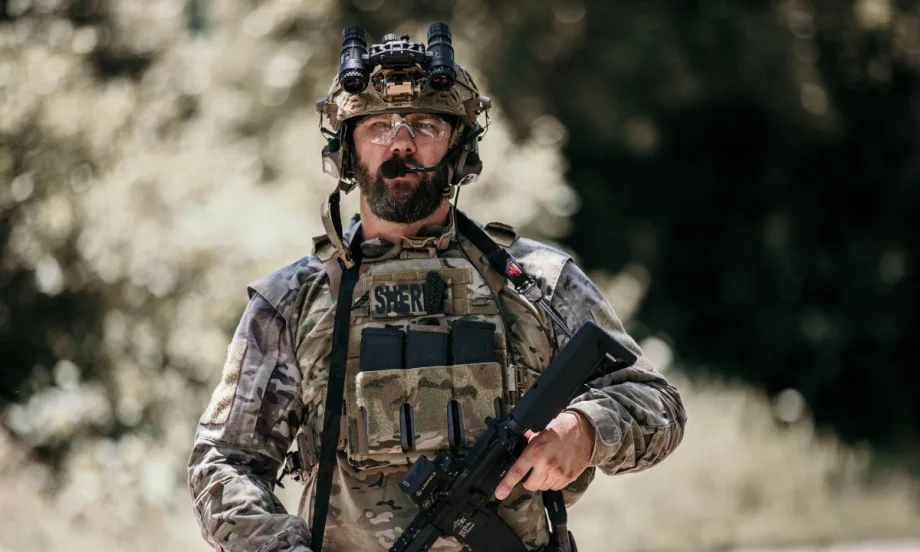
Is the best way to evaluate the protection of a ballistic helmet simply measuring backface deformations? Or, is there a better indicator of survivability?
Team Wendy
Let’s say it up front: We’ve gotten it wrong. For years, maybe decades.
If you’ve ever spent time around SWAT gear demos, procurement tables, or just locker room debates about new kit, you’ve heard about it—backface deformation (or BFD). Sounds technical, impressive, like something straight from a NASA checklist.
But in the real world? When the trigger gets pulled—when time compresses down to milliseconds—BFD is not the hero. In fact, it’s barely on the field.
Backface Deformation vs. Penetration
BFD measures how deeply the helmet deforms inward when struck. We’re talking dents, not holes. Just the blunt force it leaves behind. The industry line says anything over one inch (25.4mm) is a red flag, and that’s fair enough.
Except the data doesn’t back that up. Not where it matters most—on the street, in the field, in the places where you’re down to your last option and hoping your lid holds.
Here’s what I did. I asked big agencies—the New York Police Department, the Las Vegas Metropolitan Police Department, and the Dallas Police Department— “How many officers have you lost due to backface deformation?”
No hesitation. The answer: virtually none.
Not a vague maybe. Not an “I think.” Just … no.
Meanwhile, let’s look at the real killer, complete penetration.
The U.S. Department of Defense ran a study in 2018 on 77 helmets that had been shot during combat. No manufacturer fluff. Just facts. If the bullet punched through, 74% of the time, the person died.
And if the bullet did not? Survivable. Often with minor injuries. Many of those guys were back on duty soon after.
One soldier, in 2019, took a 7.62 mm round to the helmet in Afghanistan. The round didn’t get through. The guy walked away. The Army gave the helmet back to him with the dent still visible. That gear didn’t just save his life; it changed his life.
So again—what kills? Penetration. Not dent depth.
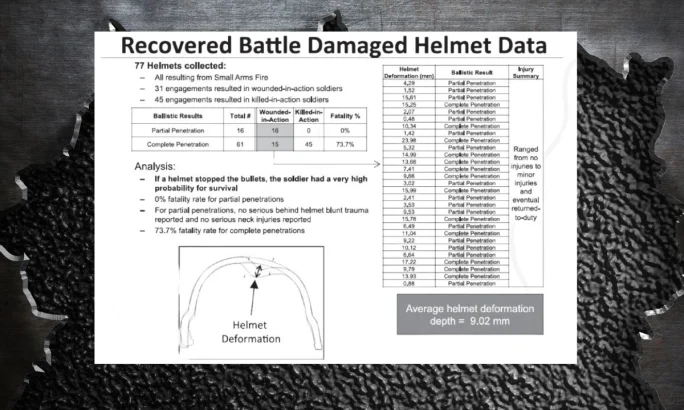
The Department of Defense has analyzed helmets damaged in battle.
Team Wendy/DOD
Ballistic Metrics vs. Reality
We’ve made a religion out of lab stats. BFD this, V50 that. The problem isn’t the numbers. It’s the worship of them.
So, let’s talk about V50. In simple terms, that’s the velocity at which a projectile has a 50/50 chance of either getting stopped or going straight through. As a metric, it’s pretty useful, but it’s often misunderstood.
Brush it off as just a “frag test”?
Nope. It’s foundational.
A high V50 means the helmet’s tougher across the board against handgun rounds, high-energy impacts, and rifle threats.
But the standards? Apples to oranges. NIJ, NATO, MIL-STD—they all measure V50 differently. Two helmets might look equally rated, but in reality, they can be miles apart.
Another thing—the materials.
Team Wendy Debuts Helmet that Offers Rifle Protection
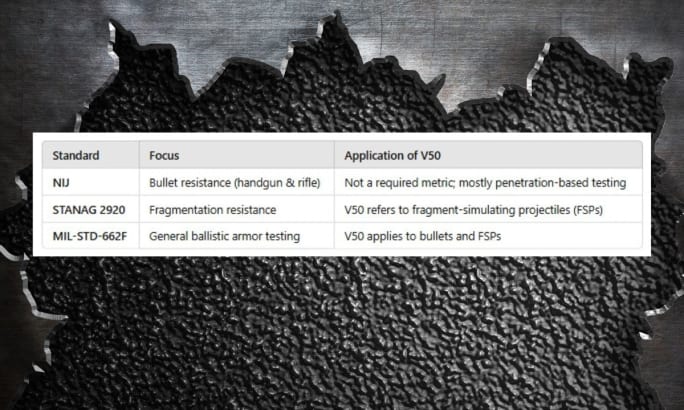
The different standards evaluate ballistic helmets based on different metrics.
Team Wendy
Kevlar was good stuff back in the day. I used it myself, and it did the job. But now it’s outclassed. Ultra-high molecular weight polyethylene—or UHMWPE—is where the smart money’s going. By weight, it’s stronger than steel. It’s also hydrophobic and UV-resistant. Not to mention, it’s been used in body armor, deep-sea gear, and surgical joints for some time, and now, ballistic helmets.
Here's why. Kevlar soaks up energy like a net, which sounds fine until you realize that at high speeds, it gets overwhelmed. It gives and tears. Picture your patio screen, and now picture your kids’ baseball punching straight through it.
UHMWPE, though, is like a crumple zone. It absorbs, spreads, and survives. You’ve seen automobile crash testing? Same concept.
Real Helmet Testing at the Range
At Team Wendy, we know that numbers alone aren’t enough. And it doesn’t get more authentic than putting gear through real hell. So, we coordinated a series of tests.
Various law enforcement teams and seasoned tactical shooters came out to help us. Some were veterans, and others had years on the street, meaning all of them know what real danger looks like. Our crew then proceeded to run UHMWPE helmets through an absolute gauntlet of gunfire.
They used 9 mm (135 gr), .38 Special (158 gr), .40 caliber (165 gr), .45 ACP (230 gr), and even .44 Magnum (320 gr). Sidenote: That last one will test your faith in materials science.
No tricks. No edits. The videos ran uncut. What happened?
The helmets held up over and over again. Minimal BFD of less than half an inch. No penetration even at close range, even when hit with .45 ACP. In one shot, the helmet took the hit and kept its shape with maybe a scratch or a bruise for the wearer. But alive? Absolutely.
Conversely, over years of testing aramid-based helmets, Team Wendy has seen some notable differences. These include pronounced deformation, occasional borderline performance, and, in general, the concern that such outcomes could translate to greater risk for the wearer in real-world scenarios.
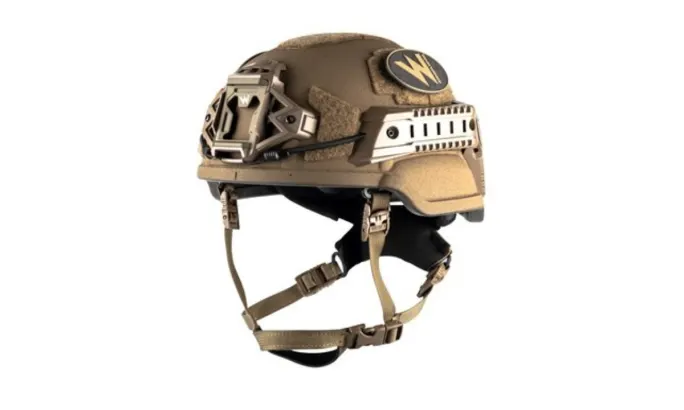
Built from UHMWPE, this helmet outperforms heavier aramid designs in both weight and ballistic protection.
Team Wendy
Real Heads Aren’t Made of Clay
Here’s the thing: most helmet tests use symmetrical, idealized head forms of soap and clay. Mannequin skulls, in other words.
But have you ever really looked at a human head? They’re weird.
You’ve got sloped foreheads. Asymmetrical bones. Fat layers. Hydration differences. Some are just perfect eggs. And one-size-fits-all testing ignores that.
Two officers. Same helmet. Same impact spot. One gets a headache. The other? A concussion or worse. Because “minor” deformation can mean no serious injuries for one person, but for another, that’s a vulnerable zone like the temple, the orbital socket, or the base of your skull.
So, what are we saying? That testing needs to evolve to respect human variability, because we’re not crash test dummies.
Protection from Blasts, Not Just Bullets
Here’s another layer: helmets were designed to stop bullets. But blasts? Not so much.
A 2020 study from Walter Reed and NJIT found something disturbing: some helmets may increase internal pressure from blast waves, especially around the eyes and forehead.3
Why? The shape of the shell, the padding system, the angles—all of it can focus the blast force instead of dispersing it. It’s like putting a funnel on your skull.
That should scare you. Because in a world of IEDs, breaching charges, and improvised explosives, we need helmets that handle more than just one type of threat.
Legacy Helmet Procurement Metrics
So why are we still buying helmets based on legacy metrics?
Partly it’s habit and paperwork. But mostly? People still assume “low or no BFD” means “safe.” It doesn’t. A helmet with a half-inch dent that lets a round through is a death sentence. One with a 0.7" dent that stops the bullet? That’s a win. That’s the keeper.
It’s time to demand more from suppliers, manufacturers, and standards agencies. Ask the tough questions:
What’s this helmet made of?
How does it handle rifle rounds, not just 9 mm?
Is it tested on real head forms or science fiction molds?
What’s the blast resistance? Any at all?
Has this model actually been field-tested by tactical teams?
To put it bluntly, you wouldn’t roll out with a sidearm you haven’t shot. Likewise, don’t wear a helmet you haven’t asked questions about.
What Matters is If You Survive
Ballistic helmets shouldn’t be optimized to pass a checklist. They should be built to save your life. Under fire. In chaos. At zero distance.
Penetration is the enemy, not cosmetic dents or metrics that feel reassuring in a spreadsheet.
We’ve stared at the wrong target long enough. It’s time to aim a little higher.
Because when that round comes, when it really comes, what matters isn’t the lab result. It’s whether you’re standing afterward.
And that decision starts with what’s on your head.
Shane Foster is a product specialist manager at Team Wendy
From the front lines of Law Enforcement Special Operations, Foster built his career in law enforcement starting in 2001. He was promoted to sergeant in 2012, but after three years, he pivoted to private training while keeping one foot in the field as a reserve deputy and advisor to elite tactical teams.
During his service as an NCO with the 164th Division of the United States Air Force, he led FAST missions in support of Operation Inherent Resolve and Operation Freedom’s Sentinel. Today, as Product Specialist Manager at Team Wendy, Foster applies that experience to improving protective helmet technology. He is also the founder of Guild Solutions Group, specializing in CQB and breaching training.
More Patrol
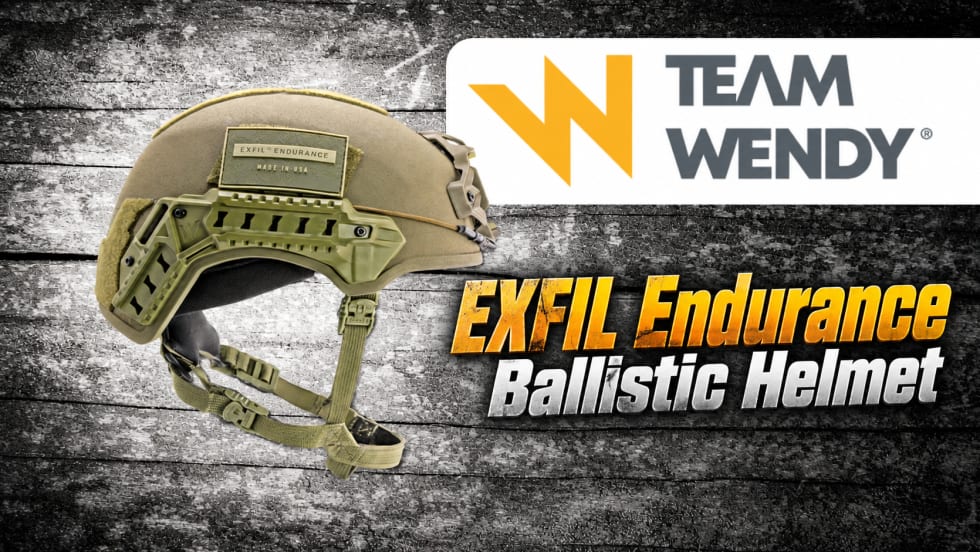
Team Wendy Introduces the EXFIL Endurance Ballistic Helmet, Engineered to Reduce the Burden of Extended Wear
Team Wendy has launched its EXFIL Endurance, a new lightweight ballistic helmet engineered to deliver protection, comfort, and fit during demanding, extended operations.
Read More →
The First Responders Children’s Foundation National First Responders Day Roll Call of Heroes Ceremony Returns to Times Square, NYC
First Responders Children’s Foundation (FRCF), in collaboration with T-Mobile, will host the Roll Call of Heroes ceremony in Times Square to commemorate National First Responders Day on Wednesday, Oct. 28. During the event, FRCF will present 18 Hero Awards.
Read More →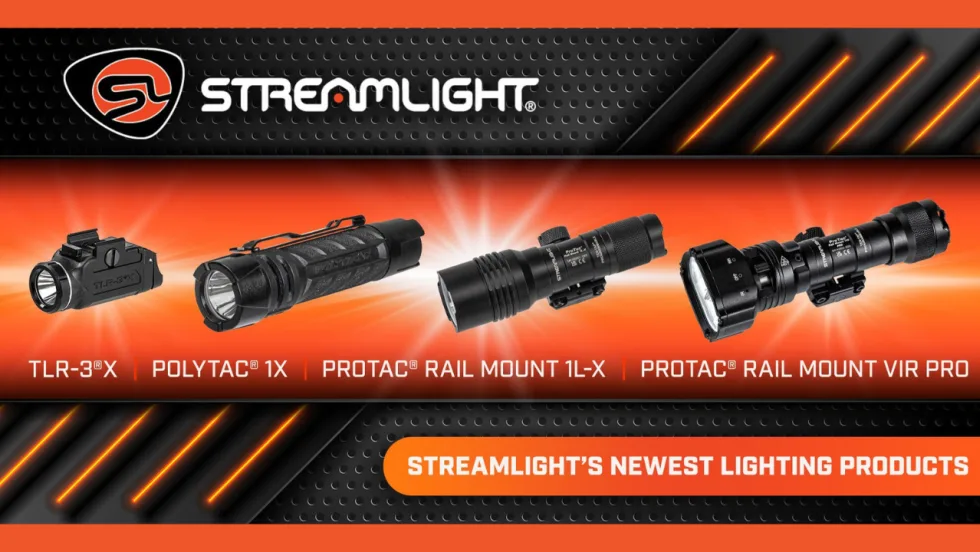
Streamlight to Showcase Newest Lighting Products for Law Enforcement Professionals at IACP 2026
Streamlight will showcase its newest lights for law enforcement at the International Association of Chiefs of Police Annual Conference & Expo. Featured lights will include the TLR-3 X, the PolyTac 1X, and more.
Read More →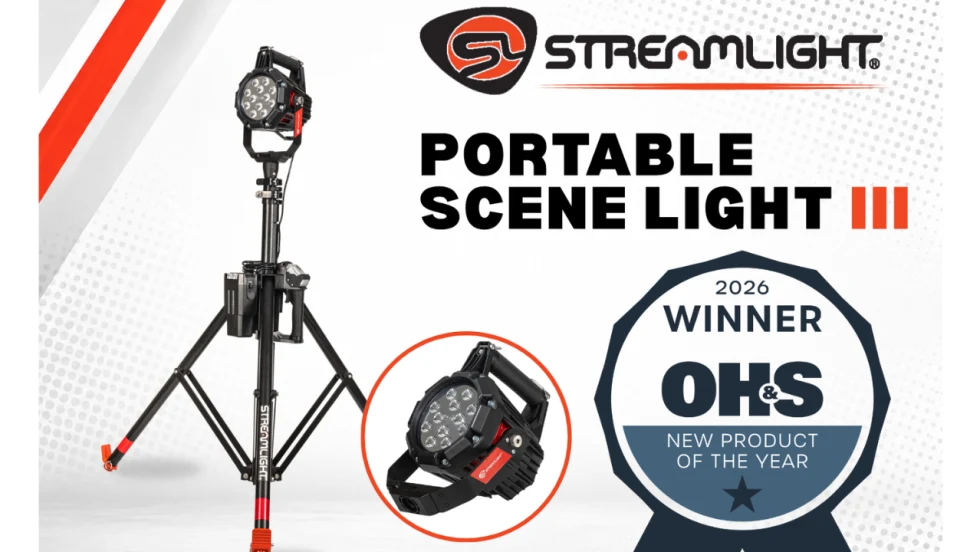
Streamlight Portable Scene Light III Wins 2026 OH&S New Product of the Year Award
Streamlight’s Portable Scene Light III has won the 2026 Occupational Health & Safety (OH&S) New Product of the Year Award in the Lighting category.
Read More →
Adept Armor Introduces Two New Rifle Plates
Adept Armor has launched two new Level IV ballistic plates, the Emperor and the Archon Mark 2, which brings Adept Armor’s new Quatroid ceramic to the high-threat, performance-value center of the range at 5.2 pounds.
Read More →
POLICE Product Test: Benchmade Bailout
The Benchmade Bailout is a slim, lightweight carry knife with a deep-ride pocket clip and comes in a variety of blade steels and scales. Here is a detailed review of the Taiga Green Bailout, released earlier this year.
Read More →
NLEOMF Announces July 2026 Officer of the Month
NLEOMF honored a Michigan deputy sheriff as the July 2026 Officer of the Month for rescuing a trapped driver from a burning vehicle following a Fourth of July crash.
Read More →
Streamlight to Showcase Newest Lighting Products at National Safety Council’s Safety Congress & Expo 2026
Streamlight will showcase its latest lights, including the Portable Scene Light III and the LiteBox 1Million, at the 2026 National Safety Council (NSC) Safety Congress & Expo.
Read More →
The 2027 World Police & Fire Games Set for Perth, Australia
The 2027 World Police & Fire Games (WPFG) will take place in Perth, Western Australia, from Friday, March 12 through Sunday, March 21, 2027.
Read More →
5.11 Partners with National Fallen Firefighters Foundation to Support #ForThe343
5.11 has joined the nationwide movement honoring the 343 New York City Fire Department firefighters lost on Sept. 11, 2001.
Read More →