



Rethinking SWAT Training
What SWAT fitness experts are discovering is that some of this wear and tear and incapacitation can be avoided with "smart" training instead of "hard" training. Smart training is real-world oriented and job applicable. It's not just training for the sake of training.

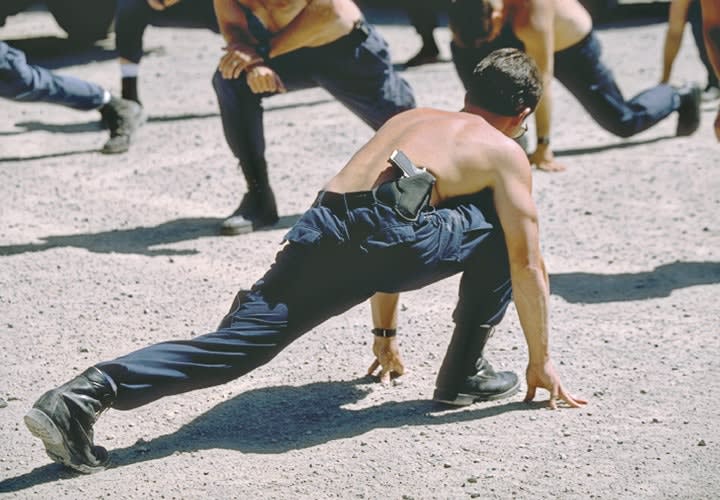
Photo: POLICE file
In recent years, there has been a paradigm shift in how the tactical community approaches its fitness training. The majority of this change has come from the individual operators looking to improve their general physical preparedness for the job via an emphasis on more functional training.
Functional fitness is all the rage these days in the civilian gyms, and it has recently found some acceptance by various branches of the military as well as law enforcement. Everyone and his mother has jumped on the functional fitness or "functional training" bandwagon, and that's not necessarily a bad thing.
In your 20s, you can beat the snot out of yourself in training and come back for more. By your 30s, however, there's a price to be paid for it. And by your 40s, you can have almost total incapacitation due to an accumulation of injuries from all your years of high-intensity training.
What SWAT fitness experts are discovering is that some of this wear and tear and incapacitation can be avoided with "smart" training instead of "hard" training. Smart training is real-world oriented and job applicable. It's not just training for the sake of training.
Functional SWAT Training
Functional SWAT training is training that prepares the operator to work as a tactical officer. It emphasizes an improved strength-to-body-weight ratio, carrying unbalanced loads, and performing a variety of tasks against the resistance an operator faces on duty such as carrying a wounded comrade who is wearing full tac gear, climbing over walls, or pushing stalled vehicles out of the way and then returning effective fire on target. It's one thing to be a crack shot on the range under no stress and another to shoot accurately under combat stress. When you have to push a car that won't start out of the line of fire or drag a wounded comrade or civilian out of the kill zone and then return effective fire on target, the musculature responsible for providing a steady shooting platform is much less stable due to the adrenaline dump that you are experiencing.
As a general rule, a correctly designed training program for tactical officers yields improved job-specific general physical preparedness. Specifically, such a program includes a balance of strength and endurance training and simulated job-specific movement patterns. Functional SWAT fitness programs are designed to achieve results without producing injuries or weakening the officers through overtraining.
There are two major benefits of functional SWAT training over traditional SWAT training:
An improvement in job-specific general physical preparedness and overall physical performance.
Reduced injury rates, which can lead to an increased operational longevity of the SWAT operator.
Following the Military
From the earliest days of SWAT, tactical law enforcement units have drawn the inspiration for their fitness regimens from the training conducted by elite military units such as the U.S. Army Special Forces and Navy SEALs. But today even Spec Ops units are starting to rethink their training.
A 2008 article titled "Clinical Diagnoses in a Special Forces Group: The Musculoskeletal Burden" published in the Journal of Special Operations Medicine by James H. Lynch and Mark P. Pallis examined the training-related injury patterns in the 5th Special Forces Group and came to some useful conclusions. The study revealed that physical training caused 50% of all injuries experienced by the members of this elite military unit. Such injuries resulted in 10 times the number of lost work days as illnesses. Further, the leading reason for outpatient visits to the base hospital by the members of this unit was musculoskeletal disorders caused by overtraining.
Lynch and Pallis argue that Special Forces training is out of date and needs to change to a more functional model. "To focus more on prevention, Special Forces Groups should modify unit physical training programs to incorporate the fitness and performance fundamentals used in today's top athletic programs. Military researchers have shown that modified physical training programs can result in lower injury rates with improvements in physical fitness. Training regimens that emphasize core strength and cross-training would likely increase physical readiness while decreasing the incidence of spine and lower extremity injuries," they wrote.
In short, training hard and training smart are not always interchangeable concepts. Smart training leads to superior performance and reduced injury rates, with improved operational readiness and greater operational longevity for the SWAT operator or Spec Ops commando. The alternative results in days off and trips to the hospital.
Lynch and Pallis conclude, "By making these changes to training and resourcing, Special Forces Groups will be investing in our most lethal weapon—the individual Special Forces Soldier."
The Marine Corps was one of the first branches of the military to recognize the need for a more functional fitness model. It has since developed and implemented the Combat Fitness Test, an exercise that all Marines must pass in addition to the standard Marine Corps Physical Fitness Test. The Marine Corps Combat Fitness Test assesses the physical strength, endurance, and agility of the Marine in battle.
The P.A.S.T Program
A general discussion of functional SWAT training brings us to a discussion of Practical Applied Stress Training (P.A.S.T) concepts. P.A.S.T is not specifically a general physical preparedness program for tactical law enforcement, but more an adjunct to it.
It's common practice for SWAT teams to train diligently in their firearms skills and tactics, while hitting the gym or the road as a separate training rotation. P.A.S.T attempts to bridge that reality and parallel what a real incident may demand, which is a combination of shooting proficiency, as well as anaerobic and aerobic fitness. The only way to perform in such a situation is to have experienced the effects of physical and mental stress on marksmanship skills and test whether or not your job-specific fitness and shooting skills are up to the task.
Even the most advanced shooter in great physical condition will find his or her marksmanship severely degraded when forced to shoot under intense physical stress. As expected, the operator who is not in adequate physical condition to begin with can expect to see his or her marksmanship go completely to hell when put under physical and mental stress.
P.A.S.T focuses on functional strength, improving body-weight-to-strength ratios, dealing with unbalanced loads, and overall fitness and conditioning combined with shooting rotations. P.A.S.T prepares SWAT operators to perform efficiently under worst case scenarios.
Unfortunately, it's often the case that PT-related training and marksmanship don't come together until the officer is in the middle of a life-and-death situation, where his or her ability to perform is tested as never before and the outcome is unsure. Thus the trend toward more functional style training in the tactical community should be encouraged, and P.A.S.T adds a dimension to the training of tactical law enforcement not duplicated by other programs.
Training in Stages
Functional SWAT training programs should have a logical progression. The training day is usually split into two stages:
Stage One is individual testing where a single operator is run through the stage and scored. This gives feedback on both the individual's fitness levels and shooting abilities under physical stress.
Stage Two is basically the same as Stage One except it is run in two-officer teams in parallel, making for a highly competitive environment. The stage may contain sections that require two people to complete. Examples of Stage Two drills include a fireman's carry of a partner 100 yards up a hill, getting over an 8- to 10-foot wall, scaling mock buildings, or flipping 800-pound tires. Shooting drills within the stage may require an individual to complete the shooting stage before the other can move on. Trainers can be committed to the stage to add additional physical essentials training within the stage such as hands-on weapons retention training.
Shooting drills within the stages are always based on essential shooting skills required by the SWAT operator such as shooting on the move, shooting from cover, engaging multiple targets, and shoot/no-shoot scenarios.
You can think of this functional training as job-specific cross-training with guns that yields improvement in physical conditioning and enhances firearms proficiency under real-world stress conditions.
Additional benefits include whole body conditioning, team building, and the ability to employ this type of training on your own range with a variety of tools. The system is dynamic and flexible, so it is not limited to high-tech, specialized equipment.
Sample Drills
A sample drill in the Stage One category of functional SWAT training may be a half-mile run to a barrier, from which a target at 60 yards is engaged using an M4 carbine. From there, the operator must scale a 9-foot wall, climb a 40-foot rope, then transport a comrade 50 yards fireman carry style. Once the transport is completed the operator must engage targets with his or her secondary weapon.
Common target drills immediately following the physical stress exercises could include a popper at 20 yards standing freestyle, a popper that activates a swinger at 12 yards, and a classic Mozambique Drill from 7 yards on a graded scoring target such as an IDPA target that allows graded scoring for head shots, center mass shots, and anything outside those two desired points of impact.
Stages usually include shoot/no-shoot scenarios and shooting drills from different positions—including standing, prone, and kneeling using cover—that challenges the shooters' skills. These drills are made even more difficult because the operators' muscles are tired and heart rates are up. Add full tac gear and a gas mask, and you have a real challenging day.
The benefits of functional SWAT training when implemented correctly to meet the specific requirements of the community will be improvements in physical preparedness and job-specific general physical preparedness combined with reduced injury rates. Adopting such methods vs. the current methods may lead to an increased operational longevity of the SWAT operator.
Will Brink has been an adjunct trainer for Smith & Wesson Training Academy, and runs the Website OptimalSWAT.com. He is the designer of the Practical Applied Stress Training (P.A.S.T) program.
More Special Units
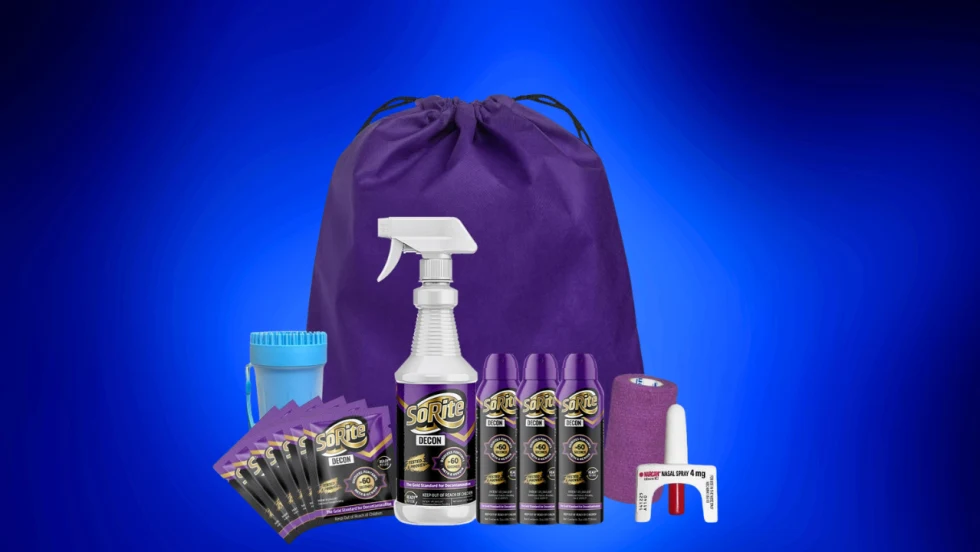
New K9 Decontamination Protocol Launched
A new K-9 protocol from the SoRite Company gives law enforcement agencies a standardized rapid-response framework to decontaminate K-9s, their handlers, and police vehicles, from dangerous narcotics.
Read More →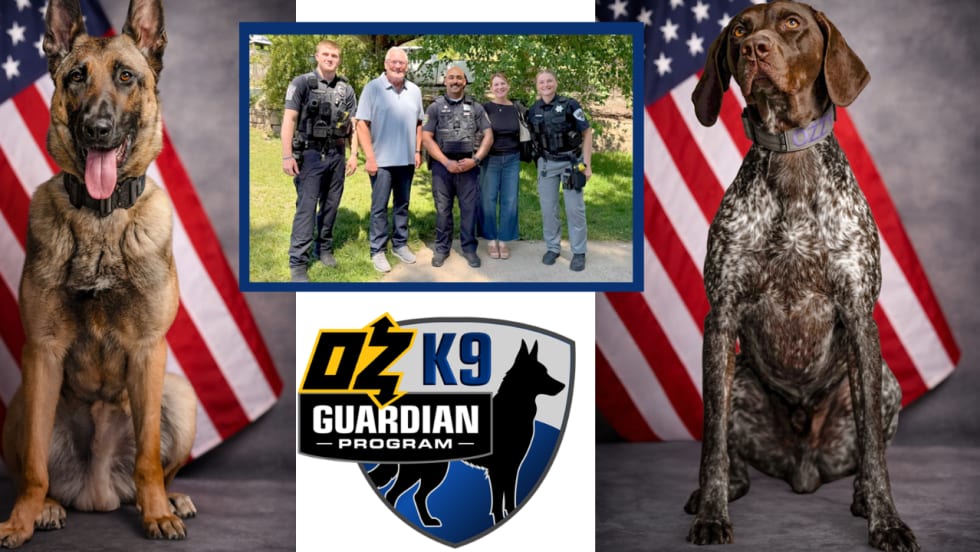
OZ Lifting Doubles Impact of K9 Guardian Program
In response to the positive impact the program has had on local communities. OZ Lifting Products has expanded its K9 Guardian Program by committing to fund a second police dog each year.
Read More →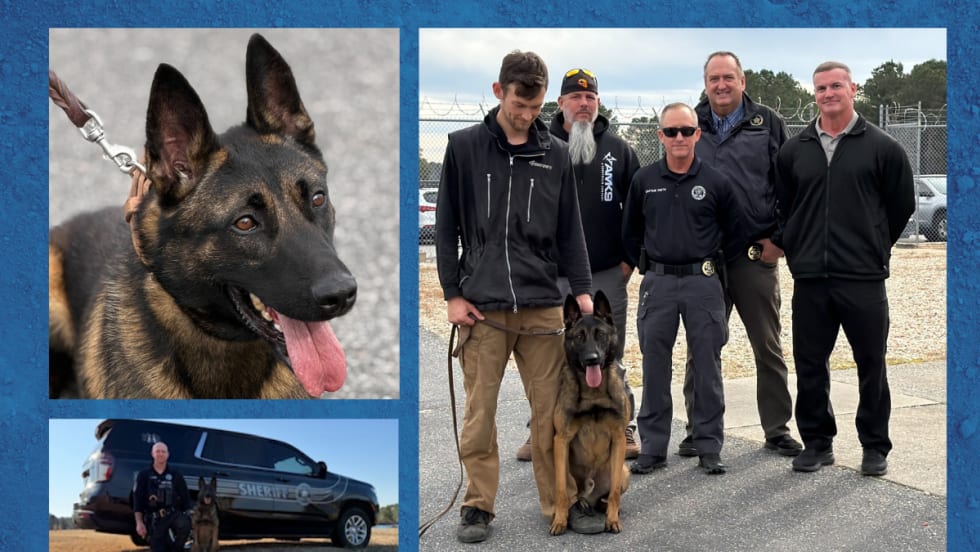
Constellis’ AMK9 to Donate K9 Officer to Currituck County Sheriff’s Office
AMK9 will donate a fully trained K9 officer to the Currituck County Sheriff’s Office K9 Unit. DAX, a 20-month-old Belgian Malinois, joined his new handler and has begun training at the Constellis Training Center.
Read More →
Ohio’s Statewide Drone First Responder Program to Take Flight
Over the next two years, the Ohio DFR Pilot Program will equip municipalities with advanced drone systems, deliver comprehensive training for first responders, and enable FAA-approved Beyond Visual Line of Sight operations.
Read More →
Louisiana Motor Sergeant Dies from Injuries Suffered in June “Intentional” Crash
A motor officer, Sgt. Caleb Eisworth was on his way to participate in a funeral escort when he was struck by another vehicle.
Read More →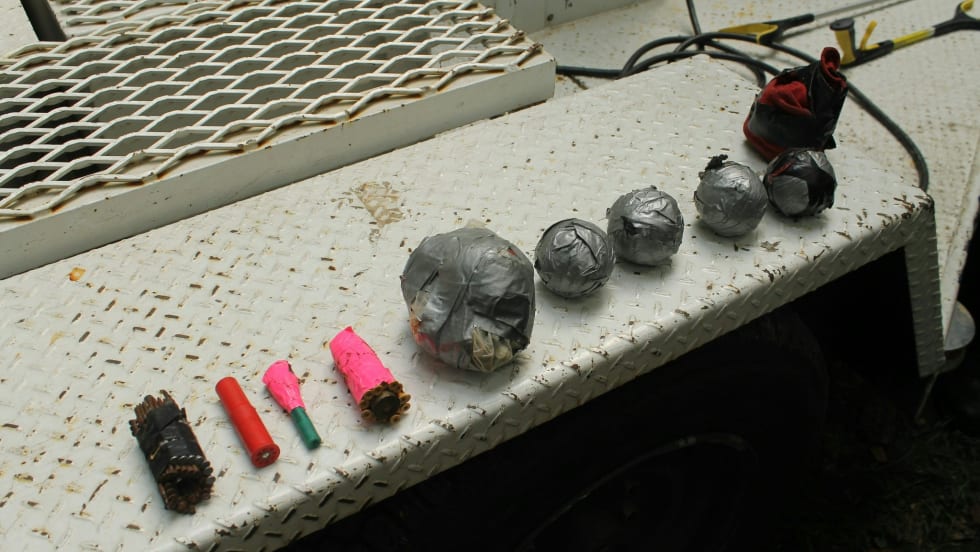
Tennessee Officers Say Man Tried to Detonate IED During Arrest
Inside the bedroom officers found what they believed to be an IED. The officers evacuated the house and called for the Chattanooga Police Bomb Squad and ATF agents.
Read More →
Florida School Officer Dies After On-Duty Medical Emergency
Sergeant Greg Graff was “preparing school leaders for the upcoming year during a safety training program at Clearwater High School,” the school district said.
Read More →
Grenade is Missing from Explosion That Killed 3 LASD Deputies
ATF Special Agent in Charge Kenny Cooper said definitively that only one grenade detonated at the facility on July 18.
Read More →
Los Angeles County Sheriff's Department Names Deputies Lost in Friday Explosion
LASD said Detective Joshua Kelley-Eklund, Detective Victor Lemus, and Detective William Osborn who were all assigned to Special Enforcement Bureau’s Arson Explosives Detail were killed in the incident.
Read More →
Maryland State Police Helicopter Rescues Victim from Overturned Boat in Chesapeake Bay
The Maryland State Police Aviation Command Trooper 7 crew, the MSP helicopter based in California, Maryland, were monitoring the county dispatch radio, overheard the dispatch, and self-launched.
Read More →