



Releasing the Lions
How does President Obama show his respect for the risks you face while investigating and apprehending drug traffickers? He commutes the sentences of 46 drug traffickers.

How does President Obama show his respect for the risks you face while investigating and apprehending drug traffickers? He commutes the sentences of 46 drug traffickers.
The president says these poor misguided souls received unfair sentences, are nonviolent, and cost the government too much to incarcerate in overcrowded prisons. So on
July 13, he used his presidential powers to free 46 of them.
The answer to prison overcrowding is not to let these peddlers of death roam free. As Steve Cook, president of the National Association of Assistant U.S. Attorneys notes, "More than 15,000 convicted drug traffickers will be released from federal prison over the next two years due to recent amendments to the federal sentencing guidelines." So why the urgent need for the president to commute the sentences of these 46? What was so extraordinary about these prisoners? Perhaps the insight and perspective of the arresting law enforcement officer for each of the 46 should have been considered before the president made his decision.
In a July 13 Wall Street Journal article titled, "Obama Cuts Sentences of 46 Drug Offenders," White House Counsel Neil Eggleston asserts too many "nonviolent" drug offenders have been incarcerated too long. He wrote, "These unduly harsh sentences are one of the reasons the president is committed to using all the tools at his disposal to remedy unfairness in our criminal justice system." In pursuit of making the criminal justice system more fair, the president has opted to ignore the real risks and danger presented by drug traffickers. Instead, he chooses to perpetuate a narrative that these felons are harmless hippies.
Did the president's staff perform the due diligence to conclude that these 46 convicted peddlers of death are nonviolent and unfairly sentenced? It doesn't look like it. To date, we haven't seen a credible risk assessment for each of the 46.
Did the president or his staff consider why the vast majority of drug arrests are not done via voluntary surrender? Drug traffickers are by necessity violent. Their crimes yield death in the form of overdoses, street crimes by users who need money to buy drugs, and bullets sprayed in turf battles.
In reading the scorecards for each of the 46, we see either conspiracy or actual distribution charges. In some instances, a firearm was involved. What's missing from these scorecards are the drugs involved and the weight. We also don't see anything to substantiate that each of the 46 had no gang or organized crime affiliation. In a House Judiciary Committee press release dated July 14, Chairman Bob Goodlatte (R-Va.) and 18 other representatives raised important questions regarding the president's actions and asserted the "President's pardon power has been used to benefit specific classes of offenders, or for political purposes." The committee members also directed nine questions to the attorney general, asking for information that should be used to assess the severity of the 46 felons' prior acts and their propensity for violence. These questions represent the due diligence that should have been done prior to the president commuting these sentences.
Did the president have options other than simply letting 46 convicted felons free? How about reducing their sentences? How about electronic monitoring and home confinement? And why were only four of the 46 drug traffickers freed women?
If you want to be fair as well as consider risk, women are often coerced into drug trafficking and generally are not as violent as men. Yet only four women made the president's cut? If the president's decisions were truly risk-based and fair, the list should have included more women. Instead, we're left with the sense that whichever trafficker's attorney got the clemency paperwork submitted the quickest won the sentence commuting lottery.
So how would the president resolve an over-crowding problem at a zoo? With limited space, rising labor, and lodging costs, which animals would the president let go? Using the president's methodology, the lions would likely be set free. Why? They eat the most food and therefore cost the most to maintain. During the 10 years of their captivity, they haven't eaten anyone or attacked their handlers. They have no known affiliation to any violent lion groups. They are totally safe to release into the public.
The president's rationale for release of these federal prisoners does not benefit the American public, nor keep it safe. We may not have a perfect justice system, but I think cops, prosecutors, and judges overall tend to get it right. Releasing these peddlers of death and turning America into a buzzed "udopia" is a slap in law enforcement's face.
More Patrol

Streamlight Portable Scene Light III Wins 2026 OH&S New Product of the Year Award
Streamlight’s Portable Scene Light III has won the 2026 Occupational Health & Safety (OH&S) New Product of the Year Award in the Lighting category.
Read More →
Adept Armor Introduces Two New Rifle Plates
Adept Armor has launched two new Level IV ballistic plates, the Emperor and the Archon Mark 2, which brings Adept Armor’s new Quatroid ceramic to the high-threat, performance-value center of the range at 5.2 pounds.
Read More →
POLICE Product Test: Benchmade Bailout
The Benchmade Bailout is a slim, lightweight carry knife with a deep-ride pocket clip and comes in a variety of blade steels and scales. Here is a detailed review of the Taiga Green Bailout, released earlier this year.
Read More →
NLEOMF Announces July 2026 Officer of the Month
NLEOMF honored a Michigan deputy sheriff as the July 2026 Officer of the Month for rescuing a trapped driver from a burning vehicle following a Fourth of July crash.
Read More →
Streamlight to Showcase Newest Lighting Products at National Safety Council’s Safety Congress & Expo 2026
Streamlight will showcase its latest lights, including the Portable Scene Light III and the LiteBox 1Million, at the 2026 National Safety Council (NSC) Safety Congress & Expo.
Read More →
The 2027 World Police & Fire Games Set for Perth, Australia
The 2027 World Police & Fire Games (WPFG) will take place in Perth, Western Australia, from Friday, March 12 through Sunday, March 21, 2027.
Read More →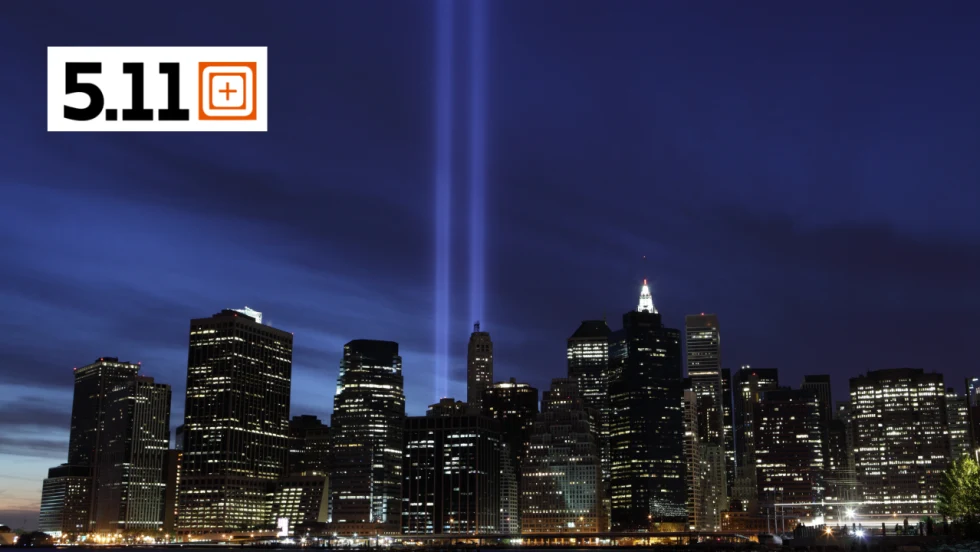
5.11 Partners with National Fallen Firefighters Foundation to Support #ForThe343
5.11 has joined the nationwide movement honoring the 343 New York City Fire Department firefighters lost on Sept. 11, 2001.
Read More →
Team Wendy Announces Title Sponsorship of the Jorge Pastore Foundation
Team Wendy’s 3-year partnership with the Jorge Pastore Foundation expands access to programs that strengthen those who serve.
Read More →
National Law Enforcement Memorial and Museum Hosting 9/11 25th-Year Commemoration Ceremony
The National Law Enforcement Memorial and Museum is hosting a 9/11 25th Year Commemoration Ceremony on Sept. 11 at 4 p.m.
Read More →
National Law Enforcement Officers Memorial Fund Announces June 2026 Officers of the Month
The National Law Enforcement Officers Memorial Fund (NLEOMF) named 15 officers of the Chico Police Department (California) as the Officers of the Month for June 2026 for their roles in responding to an active-shooter incident at a public library.
Read More →