



Reducing Police Pursuit Liabilities
It is not uncommon to hear or read a news broadcast reporting a critical injury or untimely death to an innocent bystander as a result of a police pursuit. The innocent victim may have been struck by the fleeing suspect, but it is the police department that eventually comes under fire for allowing the pursuit to continue.

Police pursuits in motor vehicles have been the target of numerous research studies over the past two decades. It is not uncommon to hear or read a news broadcast reporting a critical injury or untimely death to an innocent bystander as a result of a police pursuit. The innocent victim may have been struck by the fleeing suspect, but it is the police department that eventually comes under fire for allowing the pursuit to continue. In order to limit needless deaths, injuries and property damage, police agencies should set strict and uniform standards for starting, and continuing, a police pursuit.
Residual Effects of the Chase
A police pursuit is defined as "...an active attempt by a law enforcement officer on duty in a patrol car to apprehend one or more occupants of a moving vehicle, providing the driver of such a vehicle is aware of the attempt and is resisting apprehension by maintaining or increasing his speed or ignoring the law enforcement officer's attempt to stop him," (Nugent, Connors, McEwen and Mayo, 1990:1). However, assumptions that a violator flees from an officer because of a serious criminal act are not necessarily correct (Alpert, 1987).
Police pursuits have left an unacceptable number of property damages as well as personal injury and fatal accidents. In their 1995 study of pursuits in Minnesota, Robert E. Crew, Jr., Lorie A. Fridell and Karen Pursell reported that of the 4,349 police pursuits studied, there was nearly a 44 percent chance of some sort of property damage occurring as a result of the pursuit.
In research involving Metro-Dade Police Department pursuits, it was found that of the 398 police pursuits studied in one year, 132 of those pursuits ended in a collision, which is 33 percent of the total pursuits. Within those 132 collisions, 67 were pursuits that were initiated for nothing more than a traffic violation (Geoffrey P. Alpert, "Questioning Police Pursuits in Urban Areas," Journal of Police Science and Administration, 12/87, page 302).
This study broke down the data from those accidents and who was involved as followed: "...41 pursuits ended with injuries to the defendant or his passenger, seven pursuits ended injuring police officers, and four pursuits ended with injuries to bystanders only. Six pursuits ended with injuries to an officer and a defendant, and the impact of one pursuit injured an officer and a bystander."
According to the study, there were 57 pursuits ending with personal injuries, and four deaths were caused from police pursuits during that year.
High Speed Limits
Police pursuits have become a major liability for police departments, cities and individual officers. A study was done by Homant, Kennedy and Howton (1994), in which participants were 47 state police departments and 24 of the largest 25 police departments in the country. They found that 94 percent of these departments have, as part of their written policies, directives that the officers are responsible to terminate a pursuit if it becomes too dangerous to proceed.
Types of Pursuit Policies
The three general types of police pursuit policies, cited by Geoffrey P. Alpert and Roger G. Dunham in "Policing Hot Pursuits: The Discovery of Aleatory Elements" (Journal of Criminal Law and Criminology, 1989: 525), are:
1. Judgemental: A policy where the pursuing officer makes all the decisions relating to the pursuit, including whether or not to terminate the pursuit. This type of policy is very vague and opens the police department up for potential civil liability in the case of a collision.
2. Restrictive: A policy that places certain restrictions on the officers and dictates whether they may or may not engage in a pursuit. The restrictive policy may dictate that officers may not pursue juveniles or suspects fleeing for traffic offenses. This policy gives the individual officer limited discretion as to whether or not to continue the pursuit or terminate it.[PAGEBREAK]
3. Discouragement: A policy severely cautioning or discouraging any officer form engaging in a pursuit except in the most extreme circumstances. The discouragement policy gives the individual officer no discretion. This policy only allows an officer to pursue a suspect if that suspect is known to be a violent offender. This policy is very specific and officers may not vary from it in the least.
The "discouragement" policy is the one police departments around the country should consider and adopt. This policy will assist in protecting police departments and individual officers form liability due to traffic accidents caused by pursuits that never should have continued. "If administrators do not prohibit certain behavior, the officers might perceive the behavior as inappropriate," (Alpert and Dunham, 1989: 525).
When a discouragement policy is put into effect, administrators must clearly outline that compliance to this policy will be adhered to by all officers and discipline will be administered to those who violate this policy. Accountability is a key component in maintaining this policy.
Conclusion
When police departments have well-defined policies in place, that are adhered to, liability is reduced drastically. Documentation of these policies is also crucial to this process. By providing uniform training, the policy will be clear and enforced correctly and uniformly. Following these guidelines will help ensure safer streets for citizens, and potentially lessen liability for police departments.
Sources:
Alpert, Geoffrey P., "Questioning Police Pursuits in Urban Areas," Journal of Police Science and Administration, 12/87, pp. 302-304.
Alpert Geoffrey P. and Roger G. Dunham, "Policing Hot Pursuits: The Discovery of Aleatory Elements," The Journal of Criminal Law and Criminology, 1989, p. 525
Crew, Robert E. Jr., Lorie A. Fridell and Karen Pursell, "Probabilities and Odds in Hot Pursuit: A Benefit-Cost Analysis," Journal of Criminal Justice, 1995, pp. 418-422.
Crew, Robert E. Jr., David Kessler and Lorie A. Fridell, "Changing Hot Pursuit Policy,: Evaluation Review, 12/94, pp. 680-686.
Homant, Robert J., Daniel B. Kennedy and Jimmy D. Howton, "Risk Taking and Police Pursuit," Journal of Social Psychology, 4/94, pp. 213-214.
Nugent, Connors, McEwen and Mayo, "Restrictive Policies for High Speed Police Pursuits," The National Institute of Justice, 69/90, p.1
Nerbonne, Terry, Seminar in Liability Issues in Emergency Driving, Training Seminar, Kalamazoo, Mich., 3/99.
Ostrander, David and Karriane Epkey, "Police Pursuit: A Change in Policy." Ferris State University, 4/99.
Charles W. Dahlinger is completing his master's degree in criminal justice administration from Ferris State University. He is also currently the coordinator for in-service training at the Kalamazoo Law Enforcement Training Center.
More Patrol
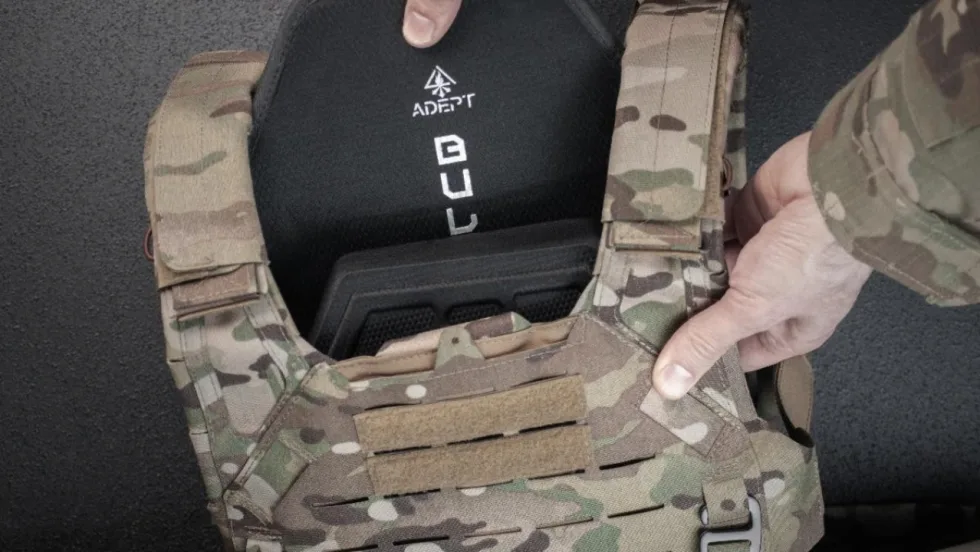
Adept Armor Introduces Two New Rifle Plates
Adept Armor has launched two new Level IV ballistic plates, the Emperor and the Archon Mark 2, which brings Adept Armor’s new Quatroid ceramic to the high-threat, performance-value center of the range at 5.2 pounds.
Read More →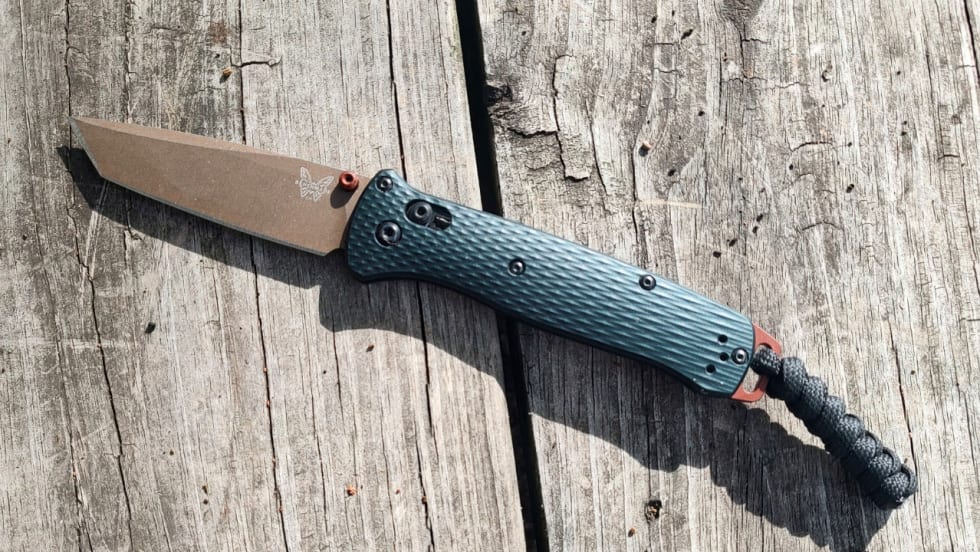
POLICE Product Test: Benchmade Bailout
The Benchmade Bailout is a slim, lightweight carry knife with a deep-ride pocket clip and comes in a variety of blade steels and scales. Here is a detailed review of the Taiga Green Bailout, released earlier this year.
Read More →
NLEOMF Announces July 2026 Officer of the Month
NLEOMF honored a Michigan deputy sheriff as the July 2026 Officer of the Month for rescuing a trapped driver from a burning vehicle following a Fourth of July crash.
Read More →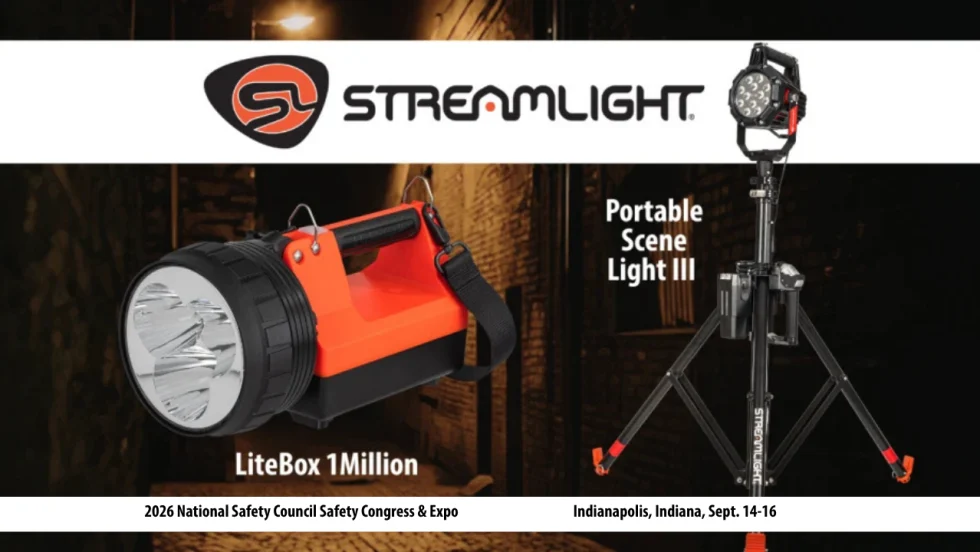
Streamlight to Showcase Newest Lighting Products at National Safety Council’s Safety Congress & Expo 2026
Streamlight will showcase its latest lights, including the Portable Scene Light III and the LiteBox 1Million, at the 2026 National Safety Council (NSC) Safety Congress & Expo.
Read More →
The 2027 World Police & Fire Games Set for Perth, Australia
The 2027 World Police & Fire Games (WPFG) will take place in Perth, Western Australia, from Friday, March 12 through Sunday, March 21, 2027.
Read More →
5.11 Partners with National Fallen Firefighters Foundation to Support #ForThe343
5.11 has joined the nationwide movement honoring the 343 New York City Fire Department firefighters lost on Sept. 11, 2001.
Read More →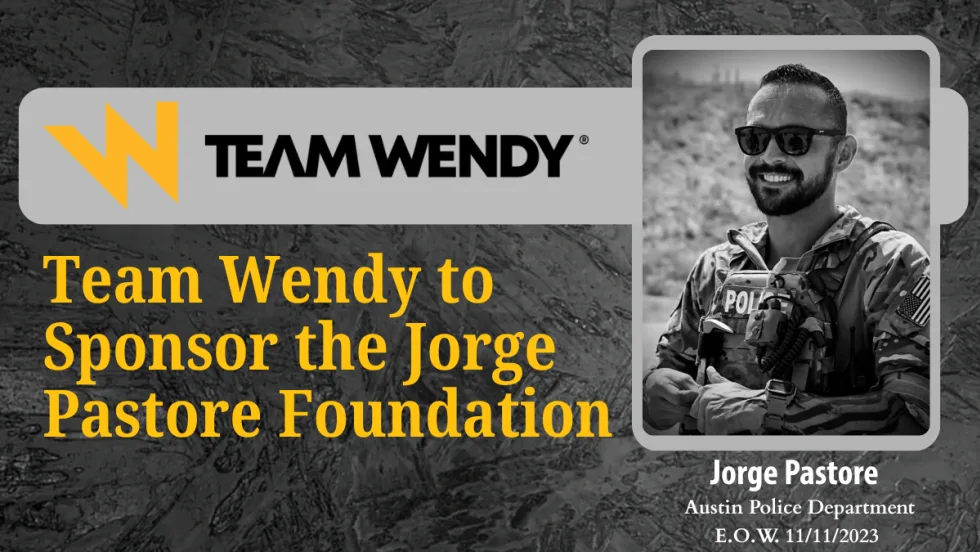
Team Wendy Announces Title Sponsorship of the Jorge Pastore Foundation
Team Wendy’s 3-year partnership with the Jorge Pastore Foundation expands access to programs that strengthen those who serve.
Read More →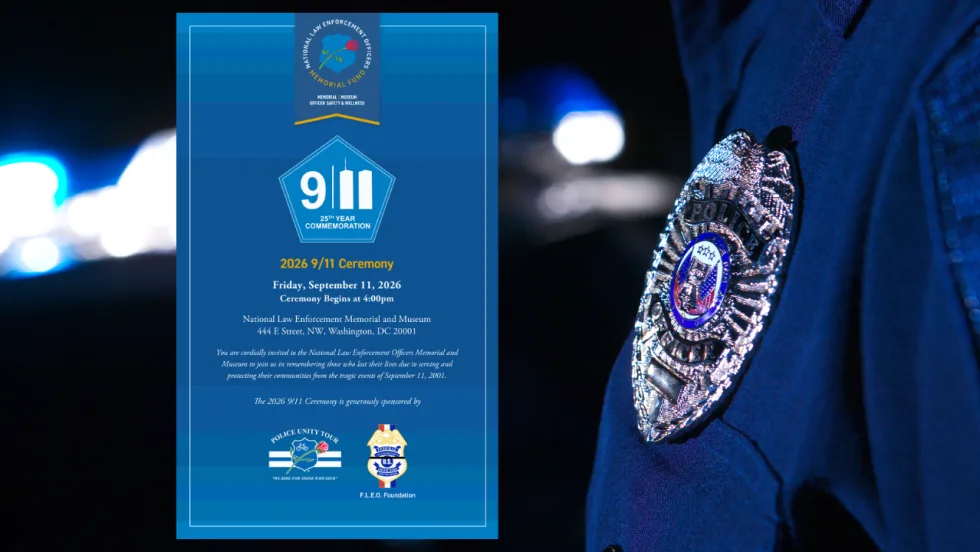
National Law Enforcement Memorial and Museum Hosting 9/11 25th-Year Commemoration Ceremony
The National Law Enforcement Memorial and Museum is hosting a 9/11 25th Year Commemoration Ceremony on Sept. 11 at 4 p.m.
Read More →
National Law Enforcement Officers Memorial Fund Announces June 2026 Officers of the Month
The National Law Enforcement Officers Memorial Fund (NLEOMF) named 15 officers of the Chico Police Department (California) as the Officers of the Month for June 2026 for their roles in responding to an active-shooter incident at a public library.
Read More →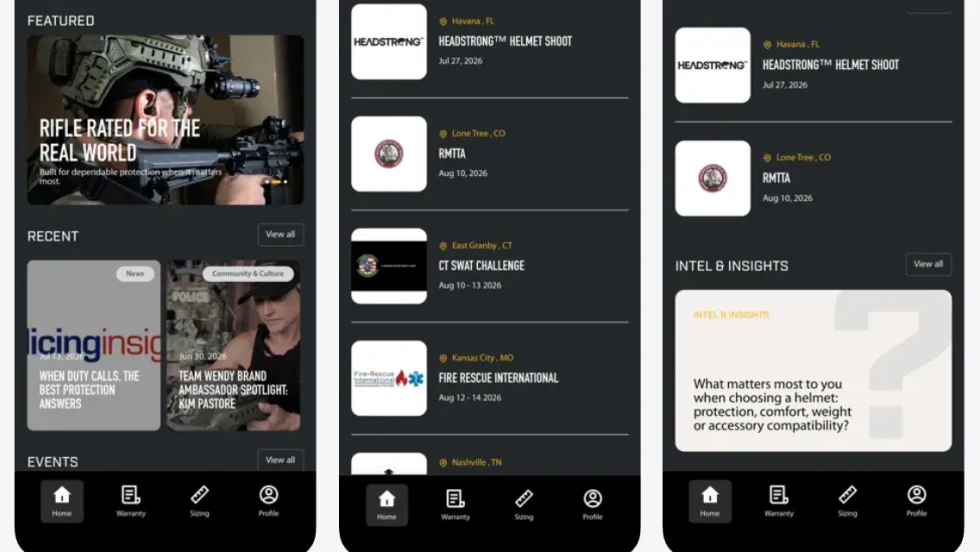
Team Wendy App Creates New Digital Hub for Helmet Owners
The Team Wendy Community App provides one location for warranty registration, size-fit tools, product updates, and community connection. For helmet owners, the new app creates a simpler path to the information and tools that matter most.
Read More →