



Reaction Time
Things are getting more dangerous out there. Whether you are functioning as a member of a SWAT Team or conducting routine patrol duties, you are responding to more and more calls with firearms drawn.

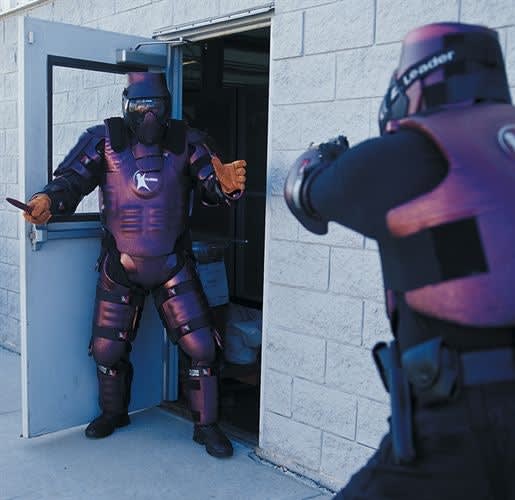
Things are getting more dangerous out there. Whether you are functioning as a member of a SWAT Team or conducting routine patrol duties, you are responding to more and more calls with firearms drawn.
But having your sidearm drawn or carrying a long gun doesn't mean that you will need to shoot-you just have to be ready to. Close-quarter situations bring you into areas of special threats and require special tactics and firearm deployment to quickly stabilize events.
Threat assessment becomes even more important when dealing with situations where a firearm is drawn and aimed at possible targets. Even if you have your weapon ready to fire, you can still lose the gunfight, especially if you aren't ready to react immediately to a lethal threat or to prevent an assailant from attempting to disarm you. This is why you need to train for hazardous situation and learn to think tactically, regardless of duty assignment.
Lunch is Served
Proper training will program you to win the fight. I like to use the following example to illustrate this point. I ask officers in my training classes, "What does a victim expect to see when he or she turns a blind corner?" The answer is "Nothing, because life is good." Then I ask the same officers, "What does a Predator expect to see around the same blind corner?" The answer is, "Lunch."
Proper awareness and sound tactical thinking will prevent you from becoming "lunch." You have to be ready for the predator who may be lurking around the corner. Remember, when you are ready and no one is there "it's a good day." But when the Predator is there, and you are ready to take action, you will win the fight.
When/Then Thinking
The best way to prepare for split-second deadly force decision-making situations is to practice "when/then" thinking. This is a term that I learned from Bob "Coach" Lindsey, a nationally known officer survival Instructor. It replaces the old concept of "if/then" thinking.
"If/then" thinking doesn't make the threat immediate enough. It places the threat at a distance, in the future, and in the realm of things that may not happen at all. If/then thinking leads to a state of unpreparedness.
"When/then" thinking on the other hand makes the threat immediate and certain. When you practice "when/then" thinking, you say, "When the subject with the gun appears, then I will be able to take immediate action without hesitation." This doesn't mean that on high-risk calls you will always fire your gun, but you should always be ready to do so.
Have a Plan
Being prepared to fight is just one aspect of learning to think tactically. Another important step is to plan your reaction to specific threats and actions. Analyze the types of responses you are likely to face from subjects in the field and you will find that there are five basic things that people can do when you try to arrest them. They can comply with all verbal commands, flee, respond slowly or not at all, resist and assault you, or assault and try to kill you.
Let's look at each of these in detail and discuss the appropriate actions that you should take in response to each.
Compliance - When a subject complies, conduct the "surrender ritual" and order her to the ground with her hands out to the side, palms up. Order her not to move until told to do so and handcuff them.
Flight - You have two choices when a subject flees, follow or don't. And both can be right, depending on the circumstances.
The criteria for chasing a fleeing subject during a tactical operation was taught to me by John Meyer, Jr., vice president in charge of training for the H&K International Training Division. Meyer says you should make your decision based on whether the subject is armed.
Further, the decision to pursue is based on the time vs. distance concept. In other words, the closer a fleeing subject is to you, the greater the chance that you will catch him before he can escape and/or gain access to hidden weapons.
Finally, Meyer says another factor in deciding whether you should give chase is the nature of the terrain. Don't run past or into an unknown area without considering the possibility that you are being set up for an ambush.
Remember that in all cases a quick snatch is preferable to a long, drawn out chase through unknown territory whether that territory is outdoors or inside a building.
Nonresponse or Slow Response - The important thing to remember here is that even if the subject has a deer-in-the-headlights vacant gaze that doesn't make him any less dangerous. And you especially need to be wary of an attempt to grab your sidearm.
To prevent a slow responding subject from taking your gun, practice weapon (disarming) avoidance tactics like the ones taught at the H&K International Training Division.
If you move in on a subject, don't leave your gun extended in a position that "begs" the subject to try to disarm you. Instead, transition it to your reaction hand and side. This allows you to defend yourself with strong side, empty hand control tactics or to take the subject to the ground.[PAGEBREAK]
Follow these steps:
Move in toward the subject with your weapon aimed at him and order him to get down on the ground.
Transition the weapon to your reaction side while moving into a high guard position with your strong hand.
Hook the subject's neck with your strong hand and pull him in close to your body.
Begin pushing the subject to the ground while pivoting to increase your power and to clear the subject out of the way so other officers can get by to engage other threats.
Continue to direct the subject to the ground while commanding, "Down!"
Move back into a defensive stance with your weapon back on target and finish the stabilization commands: "Stay Down! Put your hands out to your Sides! Palms Up! Don't Move!"
Call for an arrest team officer to complete the handcuffing or do it yourself while a backup officer covers the subject.
Resistance or Assault - When dealing with a resisting or assaultive subject, you need to assess the officer vs. subject factors before approaching. Obviously you won't move in to take down "Godzilla's Big Brother" by yourself.
But when faced with assault or resistance, one option is to perform an active countermeasure such as an empty hand striking technique.
Follow these steps:
Move in toward the subject, aim your gun at him, and order him to "Get down on the ground."
Transition the weapon to your reaction side while moving into a high guard position with your strong hand.
"Load up" your strong side forearm for a forearm strike, perform a strong side knee strike or angle kick, or stun the subject into a nearby wall in order to establish control.
Hook up the subject, direct him to the ground, and stabilize.
Potentially Lethal Assault/Threat -Respond with deadly force. Once the subject is down, cover him with your gun until he can be handcuffed.
Practice, Practice, Practice
The third way that you can hone your tactical edge is to take advantage of all opportunities for "real world" training.
The importance of preparing for high stress, life-threatening situations cannot be overemphasized. Lt. Col. David Grossman, the author of "On Killing," says the best way to prepare for these types of experiences:
Practice combat breathing by taking slow, deep, and rhythmic breaths before, during, and after stressful situations. An officer who practices autogenic breathing has the best chance of staying relatively calm in these oftentimes chaotic situations.
Receive a Stress Inoculation by participating in high-stress training sessions that reproduce the types of pressure that you will experience in real-life events. By participating in high-stress training simulations with tools like Simunition FX marking cartridges and/or RedMan weapon defense suits, you will become better inoculated to the stress involved in actual duty encounters. You will actually get "used to" these chaotic simulations and you will respond better in the field.
Develop conditioned responses to the behaviors you are likely to experience in your duty environment. By practicing the tactics associated with the levels of resistance that you expect to experience, you will build up a "conditioned response" that will translate from the training room to the duty environment. And you will develop a muscle memory for survival skills.
Officers who remain alert, who practice "when/then" thinking, and who have been trained to respond to the different subject responses that they are likely to experience in the field have the greatest likelihood of successfully dealing with the threats presented during either a tactical or first-responder operation.
Gary T. Klugiewicz retired from the Milwaukee County Sheriff's Department in 2001 with the rank of captain. He is a nationally recognized expert on the use of force and tactical police operations.
More Patrol

Adept Armor Introduces Two New Rifle Plates
Adept Armor has launched two new Level IV ballistic plates, the Emperor and the Archon Mark 2, which brings Adept Armor’s new Quatroid ceramic to the high-threat, performance-value center of the range at 5.2 pounds.
Read More →
POLICE Product Test: Benchmade Bailout
The Benchmade Bailout is a slim, lightweight carry knife with a deep-ride pocket clip and comes in a variety of blade steels and scales. Here is a detailed review of the Taiga Green Bailout, released earlier this year.
Read More →
NLEOMF Announces July 2026 Officer of the Month
NLEOMF honored a Michigan deputy sheriff as the July 2026 Officer of the Month for rescuing a trapped driver from a burning vehicle following a Fourth of July crash.
Read More →
Streamlight to Showcase Newest Lighting Products at National Safety Council’s Safety Congress & Expo 2026
Streamlight will showcase its latest lights, including the Portable Scene Light III and the LiteBox 1Million, at the 2026 National Safety Council (NSC) Safety Congress & Expo.
Read More →
The 2027 World Police & Fire Games Set for Perth, Australia
The 2027 World Police & Fire Games (WPFG) will take place in Perth, Western Australia, from Friday, March 12 through Sunday, March 21, 2027.
Read More →
5.11 Partners with National Fallen Firefighters Foundation to Support #ForThe343
5.11 has joined the nationwide movement honoring the 343 New York City Fire Department firefighters lost on Sept. 11, 2001.
Read More →
Team Wendy Announces Title Sponsorship of the Jorge Pastore Foundation
Team Wendy’s 3-year partnership with the Jorge Pastore Foundation expands access to programs that strengthen those who serve.
Read More →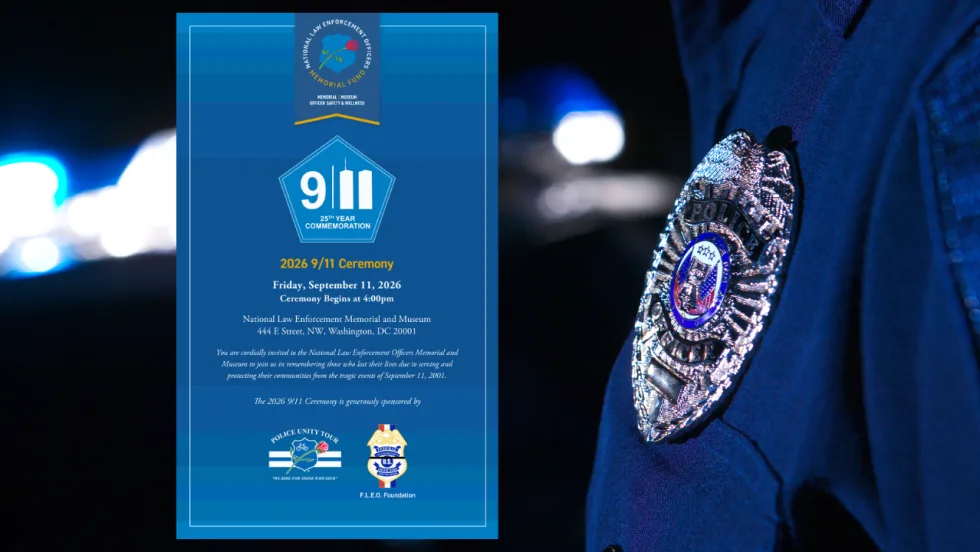
National Law Enforcement Memorial and Museum Hosting 9/11 25th-Year Commemoration Ceremony
The National Law Enforcement Memorial and Museum is hosting a 9/11 25th Year Commemoration Ceremony on Sept. 11 at 4 p.m.
Read More →
National Law Enforcement Officers Memorial Fund Announces June 2026 Officers of the Month
The National Law Enforcement Officers Memorial Fund (NLEOMF) named 15 officers of the Chico Police Department (California) as the Officers of the Month for June 2026 for their roles in responding to an active-shooter incident at a public library.
Read More →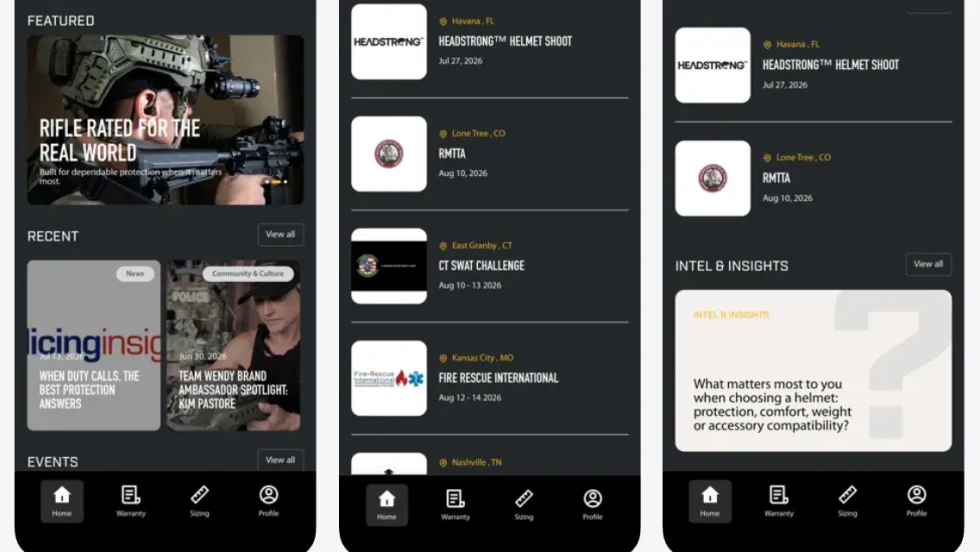
Team Wendy App Creates New Digital Hub for Helmet Owners
The Team Wendy Community App provides one location for warranty registration, size-fit tools, product updates, and community connection. For helmet owners, the new app creates a simpler path to the information and tools that matter most.
Read More →