



Range Designers Step Up To Today’s Challenges
Increased urbanization has created new conflicts with shooting ranges used by law enforcement agencies, defense installations, as well as civilian gun clubs across the United States and Canada.


An aerial shot of the LeMoore Naval Air Station shooting range in California, which covers 420 acres, gives some idea of the amount of land needed to ensure safety.
Increased urbanization has created new conflicts with shooting ranges used by law enforcement agencies, defense installations, as well as civilian gun clubs across the United States and Canada. Ranges have been closed, relocated or reconstructed because of increasing concerns and incidents related to safety, noise and lead pollution. News about problems at shooting ranges is abundant.
Many organizations using shooting ranges, especially police departments, wrestle with finding enough land to maintain surface danger zones - the area of land in which a bullet may land - as well as protecting people inside and outside the facility from misguided rounds and excessive noise. There is a point at which the cost of additional property and resources necessary to build a new range must be weighed against the likelihood of an accident or noise intrusion.
Shooting ranges, as we all are aware, imply risk by their very nature. Ricocheting bullets, misfires and missed targets can all lead to injury, death and property damage. But in the case of outdoor ranges, with adequate property and proper design, these risks can be nearly eliminated. Ensuring the safety of the shooters - as well as those who live, work and play nearby - should be the number-one concern of range operators.
The Design
Most organizations building new shooting ranges prefer they be built outdoors because an open-air facility can be healthier for range users, more conducive to practical, real-world training, and is usually less expensive to build and maintain.
However, property can be costly and not having enough land can lead to fatal mishaps or injuries. According to a Seattle Times story in 1997, a stray bullet from a shooting range in Everett, Wash., struck a teacher a mile away. Two years later, a newly constructed police training range in King County, Wash., was closed down for the first of several times because of numerous ricocheting bullets leaving the protection of earthen berms. And as recently as two months ago, the Times reported that a 50-year-old range in Seattle was closed after numerous instances of stray bullets knocking out windows in cars and businesses.
This range is a prime example of growing urban areas encroaching on pre-existing outdoor shooting ranges.
King County Sheriff's Department spokesman John Urquhart told the Seattle Times, "The basic, inherent danger of an urban, outdoor gun range is that you run the risk of losing rounds and injuring someone. It's like a pig farmer who one day finds himself right in the middle of an urban area. It is only a matter of time, probably, before they're going to have to move."
Many instances similar to these occur around the country because of improper range design, property planning and municipal land zoning. To ensure safety, outdoor ranges must have access to a large expanse of property, and range design specialists should be consulted on the project as soon as possible to develop a safe design.
The architectural firm of Brown Reynolds Watford follows recommendations published by the military that include guidelines for various types of ranges. Depending on the caliber of small-arms ammunition intended for use on the range and the number of stations, different range distances are recommended.
With more than 18,000 active military small-arms ranges and decades of experience, the military concludes that safety is the primary issue and should not be sacrificed for land usage. According to Military Handbook 1027/3b, "The range design must promote safe, efficient operation and yet be affordable to construct and maintain." This Department of Defense manual includes various charts, graphs and illustrations that emphasize the desire for safety and adequate land usage.
For example, a range allowing a .45-caliber pistol as the highest caliber weapon would be required to have a surface danger zone (SDZ) of 1,500 meters or 1,650 yards, the equivalent of 161/2 football fields. A 9 mm pistol range requires an SDZ of 1,740 meters (1,914 yards), and a .38-caliber revolver needs a SDZ of between 1,600 and 1,900 meters (1,760 and 2,090 yards), depending on the type of cartridge.
While certain safety precautions - such as the use of berms, baffling and concrete barriers - can be taken in design and construction, nothing can take the place of sufficient land.[PAGEBREAK]
In the Line of Duty
Two Brown Reynolds Watford outdoor shooting range projects, LeMoore Naval Air Station in California and the Lubbock Police Academy in Texas, offer good examples of how land requirements impact the range design considerations.
In the case of LeMoore NAS, planners were aware of property requirements upfront and, given the nature of the facility, had adequate available space for the range. The $1 million Navy facility accommodates 12 shooting lanes at a maximum range of 1,000 inches and includes an open-air, overhead steel truss system, which dramatically reduces misdirected rounds. This state-of-the-art range covers 420 acres of land.
In Lubbock, however, space was an issue. The city planned on building the $880,000 training facility on a portion of land at the former Reese Air Force Base, but additional land was required to build the range and maintain safety. Planners believed berms would be enough to minimize needed land, but while berms do assist in containing the tiny projectiles, the chance of the bullets traveling beyond the mounds of soil was still considerably high.
The decision on the side of safety was to relocate the 15-handgun-lane and six-rifle-lane range to a place with more available space. The new facility has earth berms that surround the handgun and rifle ranges, along with a system of overhead baffles for the rifle range, effectively neutralizing the chances of an accidental discharge leaving the SDZ.
The Lubbock Police Department chose to be cautious and go the extra mile to protect those they serve. And these thorough safeguards will serve the department well when it hosts the Texas Police Games next summer.
Last Shot
Adequate firearms training facilities are critical to the operation of law enforcement agencies, and well-trained police officers are integral to public safety. As cities grow, however, there will be more pressure on departments to develop better-designed facilities, using the latest safety features to make sure weapons training does not pose a threat to the well-being of those whom the officers are training to protect.
Law enforcement agencies should plan now for future needs and seek early support for the acquisition of tracts of land that can later be used to buffer training ranges from the growing population. Agencies should consider cooperating and, where practical, develop regional firearms training facilities. This could prove more cost-effective in areas where adequate buffer land may be hard to locate or would be cost-prohibitive for a single jurisdiction.
Indoor ranges, popular with departments where outdoor ranges are not practical, present their own, unique design challenges, including safety and environmental requirements. Plenty of help, however, is available to law enforcement from federal agencies, professional organizations and consulting firms.
Whether they are indoors or outdoors, shooting ranges can be made compatible with surrounding communities while providing the vital training today's law enforcement professionals need. Agencies simply must know and plan for the special needs these facilities require. The majority of ranges are outdoors and they require plenty of one thing - land, lots of land.
For more information visit www.brwarch.com
Mark Watford is a principal at Dallas-based Brown Reynolds Watford Architects, Inc. The 60-person firm specializes in solving complex and challenging planning assessment and design projects, including those for governmental and institutional clients and shooting ranges. BRW has three regional offices located in Dallas, Bryan/College Station, Texas and Kansas City, Mo.
More Weapons
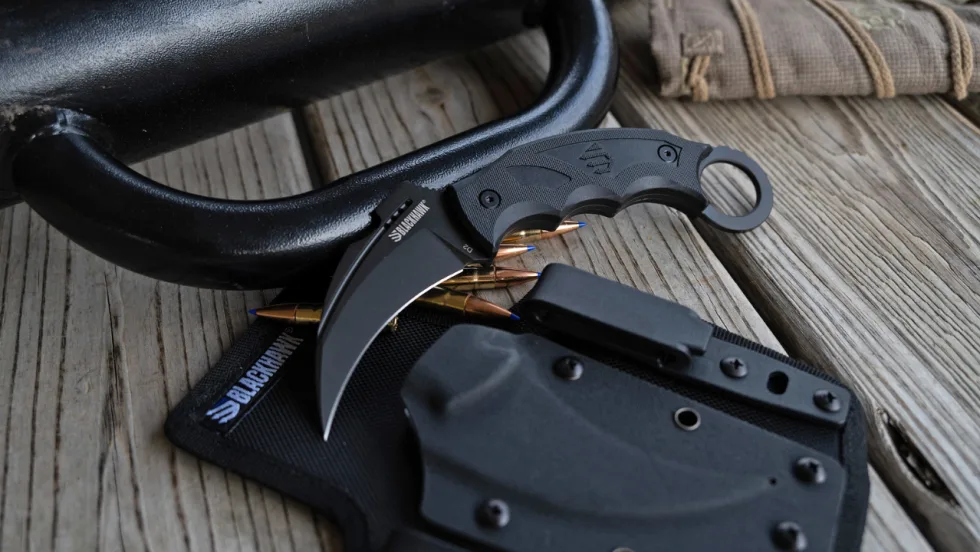
Blackhawk Introduces the Garra Fixed Karambit
The Blackhawk Garra Fixed Karambit is made from D2 steel and features a curved profile that enhances slicing efficiency, plus the full-tang construction ensures strength and durability from tip to handle.
Read More →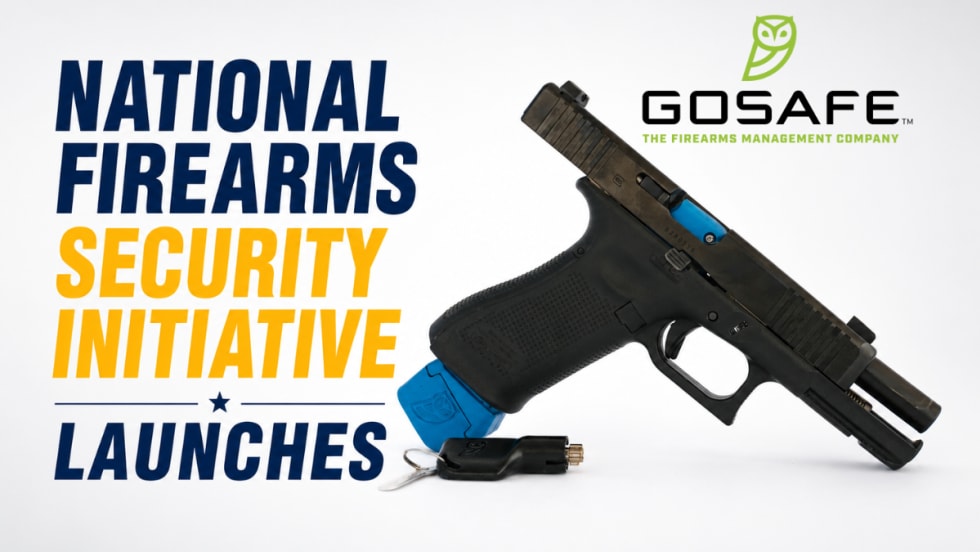
GOSAFE Technology Announces Public Safety Initiative Focused on Firearm Security and Risk Reduction
GOSAFE Technology’s new initiative provides support for agency-level solutions around secure firearm storage, vehicle-storage risks, off-duty firearm security, firearm accountability, and the public safety consequences that may result when firearms are stolen, lost, improperly secured, or diverted from lawful possession.
Read More →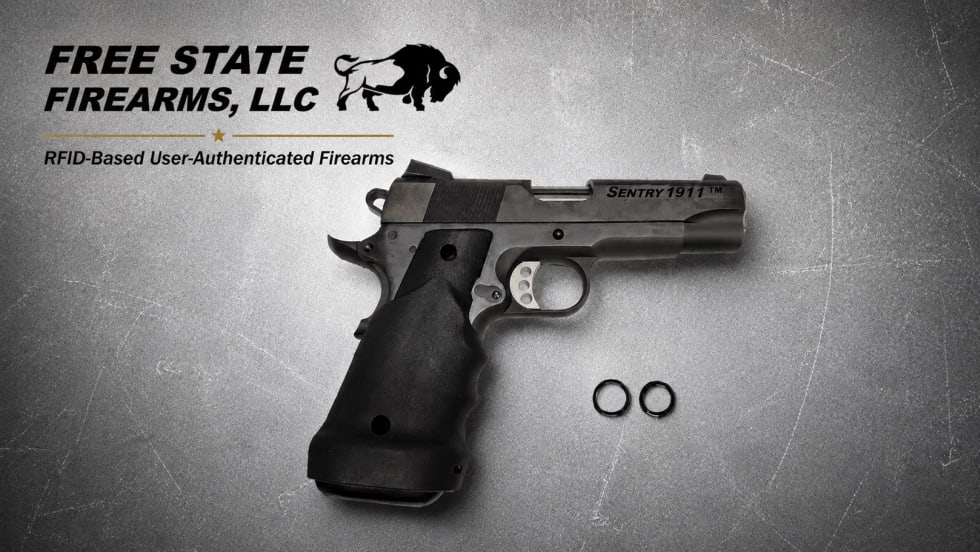
Texas Sheriff’s Office Deploys RFID-Based User-Authenticated Firearm for Prisoner Transport Operations
A sheriff’s office in Texas is now using RFID-based user-authenticated firearms, from Free State Firearms, for prisoner transfer and transport operations.
Read More →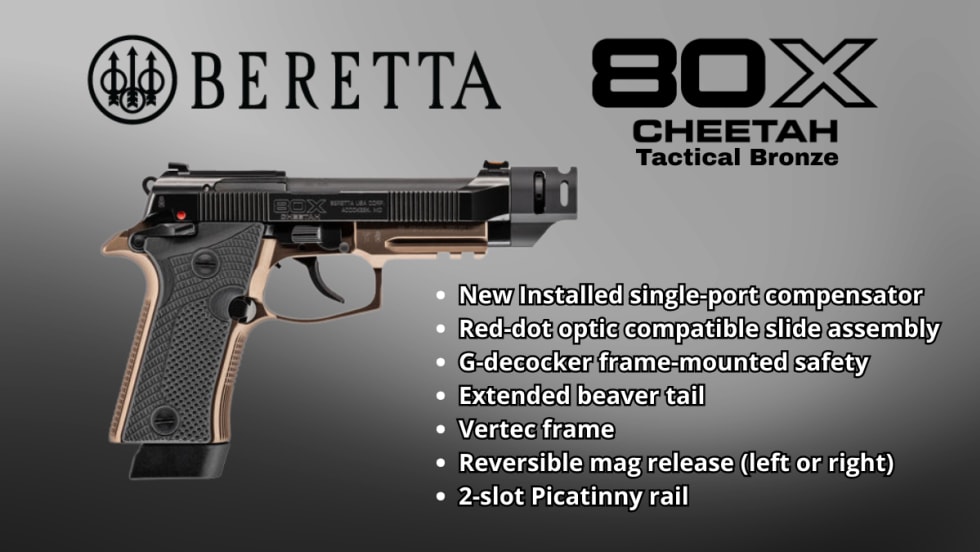
Beretta Introduces the 80X Cheetah Tactical Bronze
Beretta has launched the 80X Cheetah Tactical Bronze, which features a fiber-optic front sight, a serrated rear sight, and a Picatinny rail for accessory mounting, and ships with three 15-round extended magazines.
Read More →
Wrap Raises $5 Million to Restart Domestic Manufacturing & Advance R&D
With new funding, Wrap Technologies will restart domestic manufacturing, advance validated R&D programs into commercialization, and responsibly accelerate early growth initiatives aligned with rising demand for non-lethal response capabilities.
Read More →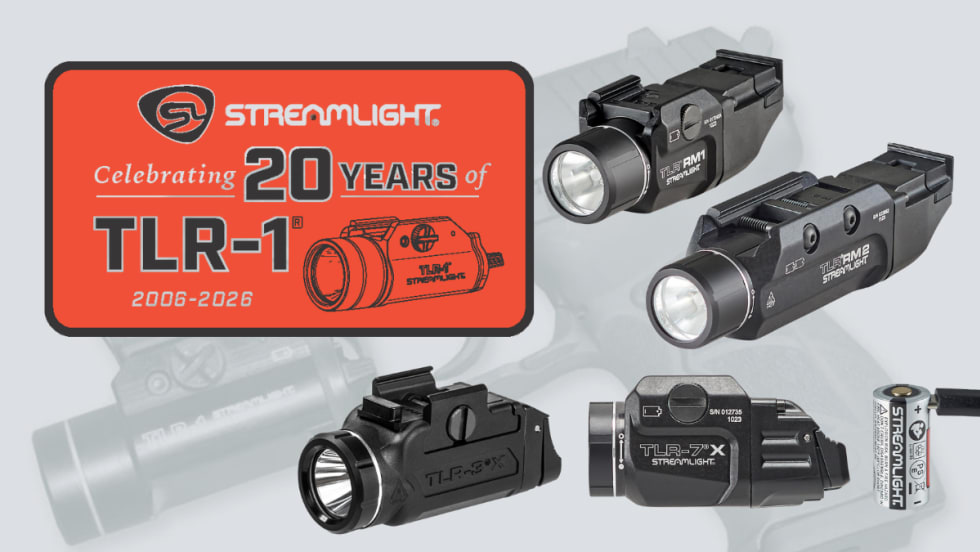
Streamlight Celebrates the 20-Year Anniversary of the TLR Series
This year, Streamlight marks two decades of weapon-mounted lighting innovation with the 20th anniversary of the TLR-1.
Read More →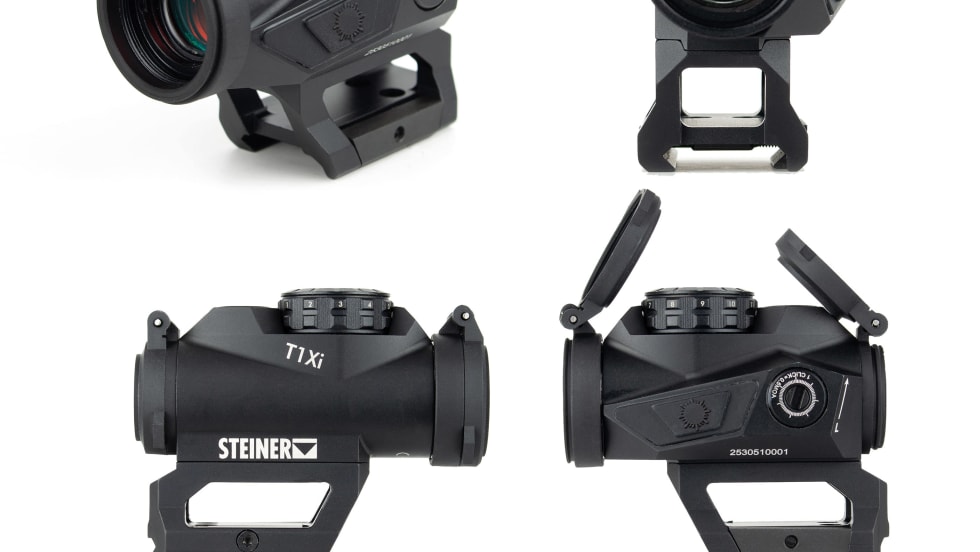
Steiner’s T1Xi Selected as Top Performer in Texas DPS Optic Evaluation
Steiner Optics’ T1Xi was selected as the top-performing red dot in the recent Texas Department of Public Safety optic evaluation.
Read More →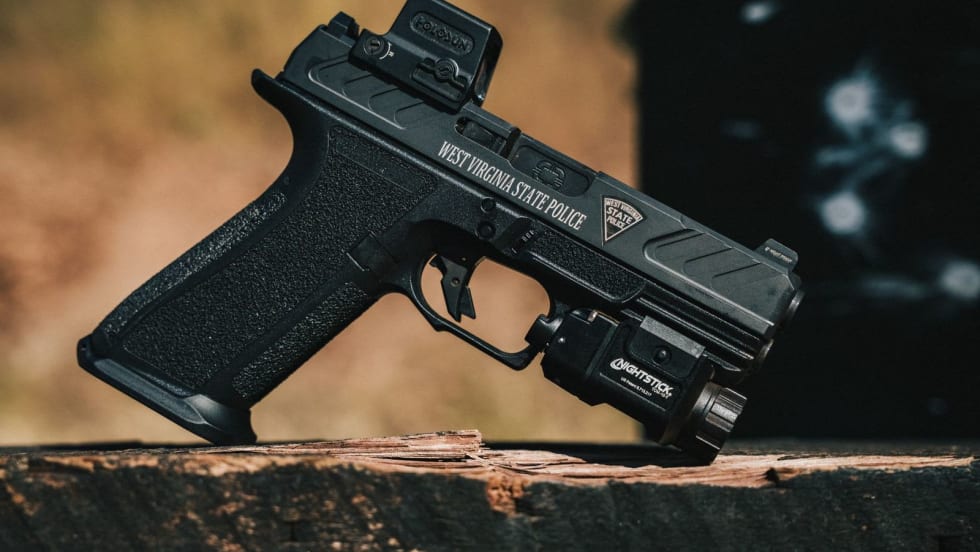
Shadow Systems Selected as Exclusive Pistol Provider for West Virginia State Police
Shadow Systems will provide 700 XR920 crossover pistols for West Virginia State Police troopers and 80 CR920X high-capacity subcompact pistols for the Bureau of Criminal Investigation.
Read More →
Aimpoint Celebrates 50 Years of Innovation and Excellence in Sighting Technology
Aimpoint is marking its 50th anniversary in 2025, celebrating five decades of red dot innovation trusted by military, law enforcement, and tactical professionals worldwide.
Read More →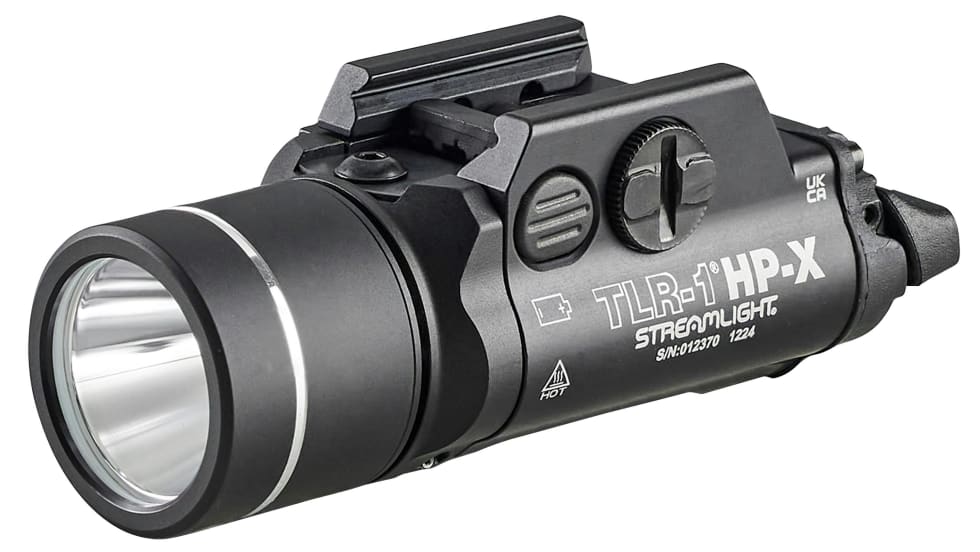
Streamlight Introduces Long-Range Handgun Light
“Our newest weapon light provides an industry-leading level of candela for handguns, giving users enhanced visibility under low light conditions, such as when searching a dark alley,” said Streamlight President Michael F. Dineen.
Read More →