



Product Test: Vievu LE3 On-Body Video System
Vievu's LE3 is the company's latest small, lightweight, self-contained video recorder system. About the size and weight of a pager, this on-body video system can easily be worn on an officer's uniform.

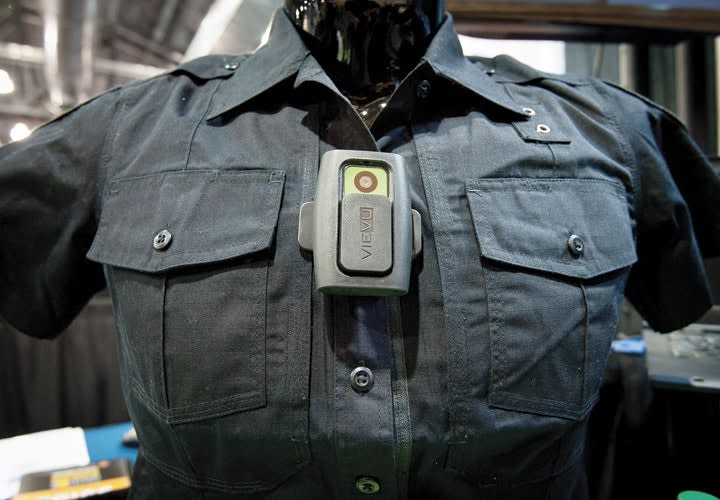
Photo: Mark Clark
Vievu's LE3 is the company's latest small, lightweight, self-contained video recorder system. About the size and weight of a pager, this on-body video system can easily be worn on an officer's uniform.
The LE3 has better battery life and it can be fitted with an optional external battery pack for even more additional onboard storage and more memory (16GB) than previous Vievu models. It captures video in either high definition (1280x720) or standard definition (848x480) through a 68-degree field-of-view lens. Some experts say this field of view is best for forensic video.
One of the strong points of the LE3 is its simplicity and ease of use. Like previous Vievu systems, it's self-contained with the battery, camera, and memory in one neat little package. This can be seen as an advantage over other body-worn cameras because there are no wires to manage and it takes up no room on the gun belt. The 68-degree field of view isn't ultra wide, but it does a nice job of capturing what's in front of you.
Quality expectations must be tempered when using such small camera systems, but the LE3 captures quite good quality video and audio. The digital files far exceed the quality needed to document the actions and sounds of a police contact.
Another thing I like about the Vievu LE3 is its ease of use. To turn it on, all you have to do is slide open the lens cover. This slide-to-open "on switch" provides the user with a no-look way of ensuring that the camera is on, which is an advantage over the units that require you to press an on button and then look to see the recording light to determine if they are operating.
The LE3—like all Vievu body cameras—clips onto the front of a uniform shirt or vest carrier, making mounting easy. With ease, however, comes some challenges. You have to clip it so it is oriented correctly or it may not capture the action in front of you. If you have a vest carrier over the shirt, then the rigid panels may cause the camera to cant to one side. There's no display on this unit (or any other body-worn camera at this point), so you have to eyeball it to make sure it is oriented properly.
Batteries in any body-worn video system used in law enforcement have to be able to handle about a 10-hour shift of recording contacts and standing by. The LE3 has improved battery life over the LE2, offering about five hours of recording time with the internal battery. If you get the optional high-capacity battery pack, it can record up to 12 hours of video. Standby time is never an issue with any system, unless you go for many days without charging it.
One of the biggest concerns for any agency that is evaluating an officer-worn video system is the back-end software for managing the field videos. Vievu's Veripatrol software is easy to install and use with an intuitive interface that doesn't require much orientation to get up and running. The video is recorded in MPEG-4, H.264 AVI files that are easy to manage in the software. They are recorded with an embedded date/time stamp. The software is designed to securely manage files until they are uploaded into secure storage. In addition, a recent partnership between Vievu and Net Transcripts lets Vievu users quickly upload encrypted crime scene footage or interviews and request transcription for files stored in the database.
Body-worn video cameras are still being refined, with each generation better than the last. And it's important to remember that no one company offers the best product for all situations. Like anything else, there are compromises that have to be considered.
The strengths of the Vievu LE3 are its solid performance and simplicity of use. That's important when you are talking about a system that is with an officer 40 hours or more a week.
There are also some weaknesses as well. The mounting system isn't the best available, and the officer has to monitor where the camera is pointing to ensure it is capturing the right scene. But the mounting system isn't all bad. Unlike some other officer-worn video units, it clips on your shirt and is ready to go in seconds. Other systems may have better mounts, but they have wires and separate battery packs that have to be managed and can get in the way.
With the LE3, Vievu has made solid improvements to its video and audio quality, addressing a common complaint for these small cameras. Low-light performance is also very good, as the hardware and software work well together to limit noise in low-light situations.
The Vievu LE3 lists for $899. Veripatrol is free for all Vievu customers. Vievu also offers what it calls the Straight Shooter 25 plan, which allows agencies to pay $25 per month per camera. The Straight Shooter 25 plan includes—in addition to the camera—Veripatrol secure file management software with in-car mobile viewing and free cloud storage access.
Vievu LE3 On-Body Video System Specs:
Selectable HD (1280×720p) or widescreen SD (848×480p) resolution
Enhanced image quality and low-light capability
5-hour record time with internal battery, 12 hours with optional battery pack
16GB of internal memory
Mute functionality
Local time or GMT date-and-time stamp
Digital signature security
68-degree field of view
Waterproof (IPX5)
Compatible with Windows XP, Vista, 7, and 8
Dimensions: 3x2.1x.85 inches
Weight: 2.8 ounces
Price: $899
More Technology
What Qualifies a Laptop as Rugged or Fully Rugged?
Police officers face a wide range of working conditions that can damage or even destroy a regular consumer laptop. Learn what qualifies a computer as rugged or fully rugged and why those devices are vital for law enforcement.
Read More →
Panasonic Connect Launches the Toughbook 34 and Toughbook G3, Fully Rugged 2-in-1 Mobile Computers
Panasonic Connect has launched the Toughbook 34 and Toughbook G3 to facilitate in-vehicle dispatch, records management, and mobile command operations from any location.
Read More →
A police agency's guide to data-driven fleet management
Costs are rising and the public expects more transparency into how their tax dollars are spent. This e-book shows how police agencies can use fleet data to take control of fleet expenses while improving officer safety and demonstrating fiscal responsibility to the communities they serve.
Read More →
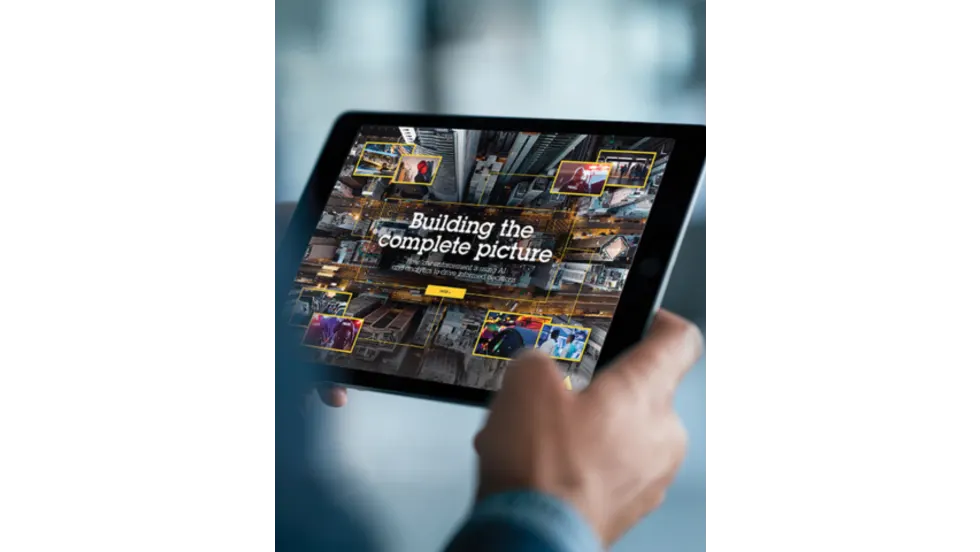
AI and analytics for law enforcement: Turning data into insights
Law enforcement agencies are managing more video, sensor data and digital evidence than ever before. Discover how AI and analytics can help turn that data into actionable insights that strengthen situational awareness, accelerate investigations and support more informed decisions.
Read More →
Vasco Electronics Adds Automatic Language Detection to Vasco Translator Q1
Vasco Electronics’ software update introduces hands-free language switching and expanded offline translation across 45 language pairs, empowering law enforcement, healthcare, and front-office enterprise teams
Read More →
North Miami Police Department Deploys Mark43
The North Miami Police Department has deployed Mark43 as part of its Five-Year Strategic Plan that represents its collective vision and goals for a more proactive police department, anchored by a core commitment to leveraging modern technology to enhance efficiency and public safety.
Read More →
Cellebrite Genesis for Enterprise Now Generally Available
Made available to the public sector in June, Cellebrite Genesis is serving a growing mix of national, regional, and local agencies worldwide, including some of the largest regional and metropolitan police departments. It is now available for enterprise organizations.
Read More →
2026 Vision FirstNet Users Summit to Host Emerging Leaders Training on Grassroots Advocacy for Public Safety
“Emerging Leaders Training: Understanding the Importance of Grassroots Advocacy for Public Safety," a session during the 2026 Vision FirstNet Users Summit, will offer a roadmap for unified advocacy at the federal level.
Read More →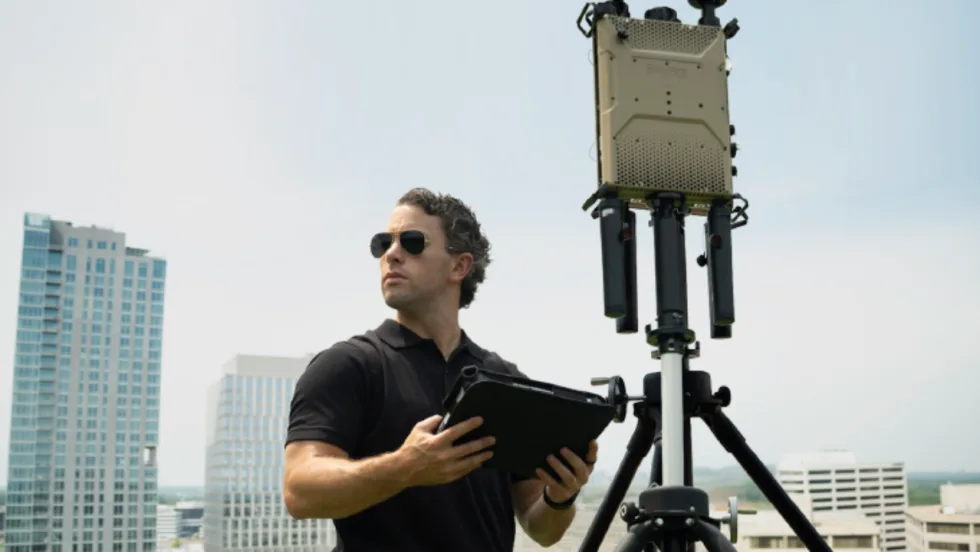
Motorola Solutions Completes Acquisition of D-Fend Solutions
Motorola Solutions has acquired D-Fend Solutions, an industry leader in counter-drone technology. This deal provides public safety and enterprise customers with access to advanced counter-unmanned aerial systems.
Read More →
ZeroEyes, Advantech & Camden Police Partner to Bring AI Gun Detection Technology to Delaware School District
ZeroEyes has partnered with Advantech and the Camden Police Department to deploy ZeroEyes’ AI gun detection and intelligent situational awareness platform at Delaware’s Caesar Rodney School District (CRSD).
Read More →