



Problem Solving
Though there are many decision-making formats, there is one common component that is more important than any other: defining the problem you are trying to solve. One of the key ways to do so is by framing.


Decision-making is a basic skill common to all law enforcement officers regardless of position or rank. It might be time to take another look at how we perform this essential task. Though there are many decision-making formats, there is one common component that is more important than any other: defining the problem you are trying to solve. One of the key ways to do so is by framing.
Carpenters are judged by the product of their work. They use framing to come up with correct angles. This ensures the best possible outcome by lining up their project correctly. If the carpenter's framing is off, even by just a small amount, the entire project will be skewed and could collapse.
As decision makers we can learn from the carpenter's example. As carpenters use framing to create the best angles and therefore create a strong structure, we can use framing to get the best answers. In other words, if we ask the wrong question, we get the wrong answer. In realigning our thinking by focusing on framing, the question becomes more important than the answer.
Poor Framing
There are many decision-making models that have been tailored to law enforcement. All involve identifying and defining the problem; this is the framing phase. This is also where you need to spend the most time because the end depends on the beginning. By staying in line with our carpentry analogy, if all of your problems are defined as nails then all of your answers will use hammers.
Years ago a friend of mine worked for a mid-sized agency that wanted to take a closer look at its entry level pay scales. By improving pay, they hoped to draw in better applicants and stop being used as a stepping-stone agency. Agency leadership was tired of hiring and training officers only to lose them to higher paying agencies a short time later. So how did this agency frame the issue to maximize its results? Those involved acted much like sixth-graders doing basic math.
They looked at several departments throughout their state and documented starting salaries. They picked some top salaries, combined them with some low ones, and then averaged them out to arrive at a new starting salary. Averaging was a methodology the agency frequently used. But they failed to realize that it didn't make any sense for their intended purpose. The process didn't take into account all the variables unique to their agency.
Agency decision makers never brought up these additional factors during their conversations among themselves or with those that controlled the funding. Averaging was a simple approach, but the resulting salary did not account for pay indicative of their organization as a whole, the level of service they provided, and what they had in contrast to other organizations.
Had they framed the issue in that light they would have realized that their new starting salary was still too low for what they wanted to achieve. Working twice as hard for half the salary is never a winning formula. Those that controlled the funding may have won the battle but it was the agency that lost the war.
It would be years before the agency addressed its needs properly and stopped its high turnover rate. The department eventually became a place people wanted to stay over the long term. In the beginning, however, their salary issue was just another nail and by using averaging the answer became their hammer.
Your Earlier Decisions
While doing some homework for another project, I came across a research method called "process tracing." It's the CSI of qualitative research. It requires that you look at decisions, important decision-making junctures, and timelines. You don't just ask what happened and where, but more importantly you ask when and why.
Every critical incident has a beginning, a middle, and an end. Process tracing concentrates on the beginning and middle to help explain the end. One thing I learned early in my research is that as you start making decisions, you set up a powerful cycle of self-reinforcing activity. This almost takes on a life of its own as it creates path dependence. The longer you are on the same path, the harder it becomes to stray from it. You lock yourself in because it becomes too expensive and time consuming to shift gears after a certain point.
To put it plainly, earlier decisions matter much more than later ones. These early decisions set you down a path as you build upon each former decision. This path creates your direction and commits you to taking a certain line of action that negates others, possibly preventing you from finding the best solution. The premise that your initial decisions are the most important can be illustrated further with two examples.
The first is at an operator level and involves setting up a perimeter to contain a suspect. Conventional wisdom dictates that when making a perimeter during an in-progress call, you make the perimeter larger rather than smaller. The reason behind this is to maximize your chances of keeping the suspect within your containment area. If you make this area too small, your suspect may already be outside your perimeter.
For this particular example let's say the supervisor has decided to make a smaller more localized perimeter. He bases this decision on some information he gets from an eyewitness. The decision to go smaller then creates the basis for subsequent decisions that limits the resources he puts in place. The supervisor has created his own path dependence as every decision he makes from that point on is based on his initial decision of making a smaller perimeter. Once he commits to that direction, all other options are lost unless he starts to redefine his situation and in essence starts over. But by then the suspect is long gone.
The second example involves local government and demonstrates why such organizations appear to make poor decisions. Let's take a typical road expansion project. In the initial stages of the project an area is deemed to need a better roadway. The project is drawn up, studies are done, monies are allocated, and after a few years, the project begins. It's taken multiple layers of decision-making, several committee actions, and a host of funding options to get to the actual project start date.
As decisions were being made however, the area was changing and population centers were shifting. Early decisions were acted upon, time and money spent, and path dependence was created. The question of stopping the project and starting over in a better location becomes too costly and never considered. People drive down the new road and wonder why they didn't build it in a better place.
Reverse Engineering
Sometimes a better way to frame an issue is to use reverse engineering. It's a technique commonly used in the electronics industry. Companies will wait for their competition's new line to come out. They then buy the products, take them apart, and figure out how they work. They then make them work better and offer upgraded options.
You can apply the same concept to decision-making. Instead of identifying the problem, identify what you want to accomplish instead. The goal then becomes the frame and you break down the problem into steps that help you accomplish your goal. A simple change in framing makes your situation a destination and your goals the way you get there.
This variation can help you with the people who always seem to point out why something can't be done. These naysayers tend to become boat anchors that drag your projects down. Though they have their place in pointing out possible obstacles to overcome, you can now cut the anchor that comes from the negativity of their attitude.
Instead of focusing on why things can't be done, you focus on how they can. Since you have clear goals to guide you, obstacles can be negotiated much like going through an obstacle course. You start with the first one and keep going until you finish with the last. It becomes something you have to deal with instead of something that stops you.
Final Thoughts
A detective I respect taught me that perception is reality. It was shortly thereafter that I realized that framing was more than just a buzz word. By focusing on how I framed the question, it forever changed the way I looked at problems and issues. My experience has taught me that how you frame a problem is critical to finding your best solution. If your question is off then your answer will be off too.
Amaury Murgado is a road patrol lieutenant with the Osceola County (Fla.) Sheriff's Office. He is a retired Master Sergeant from the Army Reserve, has 23 years of law enforcement experience, and has been involved with martial arts for 37 years.
More Patrol

Adept Armor Introduces Two New Rifle Plates
Adept Armor has launched two new Level IV ballistic plates, the Emperor and the Archon Mark 2, which brings Adept Armor’s new Quatroid ceramic to the high-threat, performance-value center of the range at 5.2 pounds.
Read More →
POLICE Product Test: Benchmade Bailout
The Benchmade Bailout is a slim, lightweight carry knife with a deep-ride pocket clip and comes in a variety of blade steels and scales. Here is a detailed review of the Taiga Green Bailout, released earlier this year.
Read More →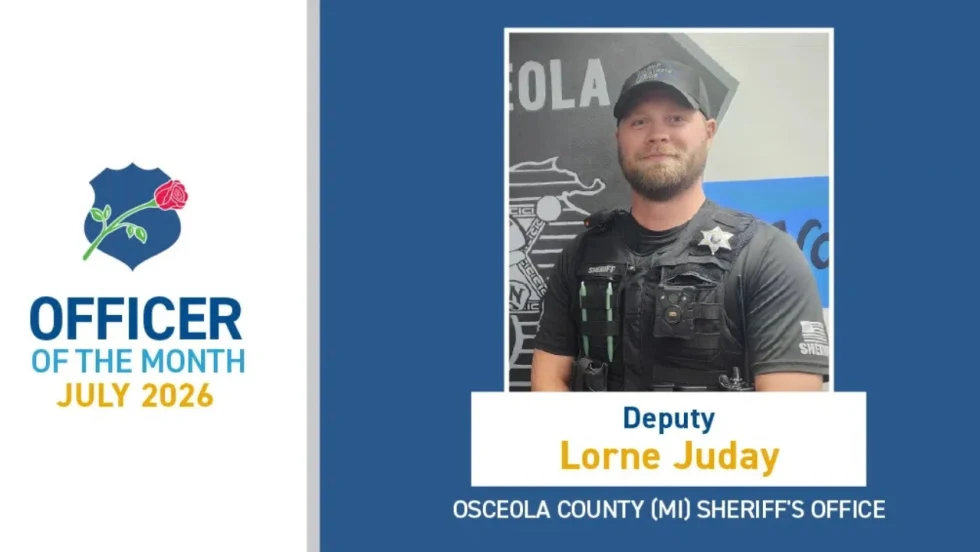
NLEOMF Announces July 2026 Officer of the Month
NLEOMF honored a Michigan deputy sheriff as the July 2026 Officer of the Month for rescuing a trapped driver from a burning vehicle following a Fourth of July crash.
Read More →
Streamlight to Showcase Newest Lighting Products at National Safety Council’s Safety Congress & Expo 2026
Streamlight will showcase its latest lights, including the Portable Scene Light III and the LiteBox 1Million, at the 2026 National Safety Council (NSC) Safety Congress & Expo.
Read More →
The 2027 World Police & Fire Games Set for Perth, Australia
The 2027 World Police & Fire Games (WPFG) will take place in Perth, Western Australia, from Friday, March 12 through Sunday, March 21, 2027.
Read More →
5.11 Partners with National Fallen Firefighters Foundation to Support #ForThe343
5.11 has joined the nationwide movement honoring the 343 New York City Fire Department firefighters lost on Sept. 11, 2001.
Read More →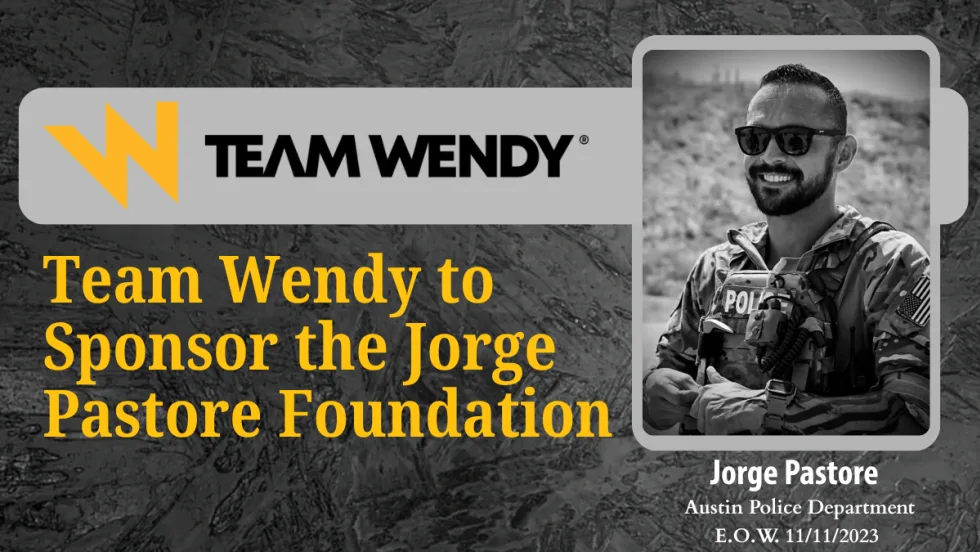
Team Wendy Announces Title Sponsorship of the Jorge Pastore Foundation
Team Wendy’s 3-year partnership with the Jorge Pastore Foundation expands access to programs that strengthen those who serve.
Read More →
National Law Enforcement Memorial and Museum Hosting 9/11 25th-Year Commemoration Ceremony
The National Law Enforcement Memorial and Museum is hosting a 9/11 25th Year Commemoration Ceremony on Sept. 11 at 4 p.m.
Read More →
National Law Enforcement Officers Memorial Fund Announces June 2026 Officers of the Month
The National Law Enforcement Officers Memorial Fund (NLEOMF) named 15 officers of the Chico Police Department (California) as the Officers of the Month for June 2026 for their roles in responding to an active-shooter incident at a public library.
Read More →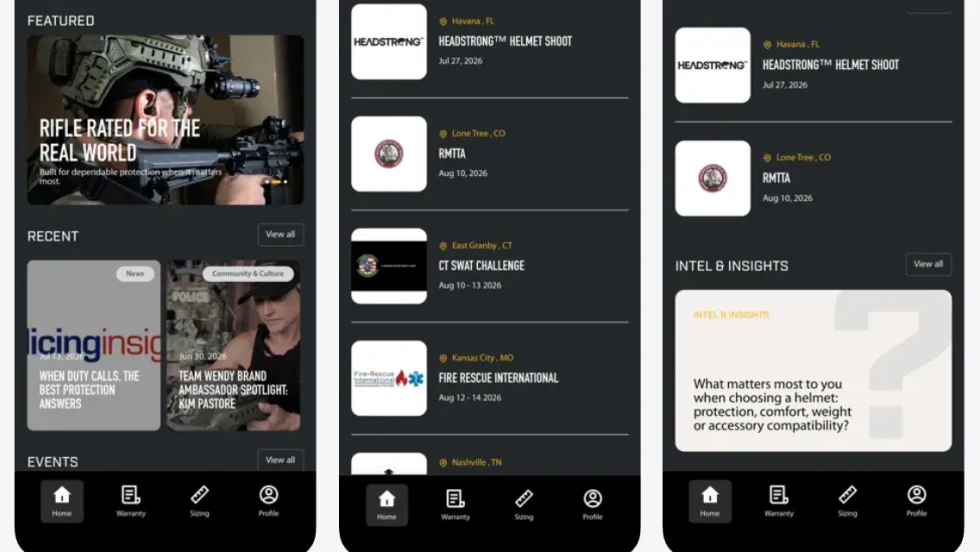
Team Wendy App Creates New Digital Hub for Helmet Owners
The Team Wendy Community App provides one location for warranty registration, size-fit tools, product updates, and community connection. For helmet owners, the new app creates a simpler path to the information and tools that matter most.
Read More →