



Preventing the Domino Effect
"How do you train an officer to prepare for Sympathetic Reaction Shooting?" That was the question that Sheriff Bill Masters of San Miguel County, Colo., and I were discussing in the wake of the most recent media circus surrounding a New York City police shooting.

"How do you train an officer to prepare for Sympathetic Reaction Shooting?" That was the question that Sheriff Bill Masters of San Miguel County, Colo., and I were discussing in the wake of the most recent media circus surrounding a New York City police shooting. Masters has been involved in law enforcement in San Miguel County, Colo., for more than 30 years. He asked me to design a half-day program that he could send all of his deputies through to address this training problem in a realistic way.
"Failing to teach, and test the ability of each deputy to react to their own observations puts our citizens at risk and employees in legal jeopardy," said Masters. "Every police leader must accept the reality of sympathetic police shootings."
The crux of the problem with sympathetic reaction shootings is that legally one officer cannot utilize the perception of another officer to justify the use of lethal force.
If each officer does perceive a threat, then he or she is justified in shooting. This is an important legal point. In the infamous Amadou Diallo shooting, each officer did perceive a threat independently. Whether this was due to a "furtive movement," the misperception of muzzle blast reflections from a glass door, not seeing the difference between a wallet and gun, or any other reason wasn't relevant... What mattered was that each officer had reason for believing that he or she was under attack.
A reasonable belief that you are facing a deadly threat justifies the use of deadly force. But each officer must come to this belief through his or her own perceptions. Therein lies the problem with sympathetic fire; officers shoot not because they perceive a threat but because another officer opened fire.
Designing the Program
My approach to reality-based training has always been to try to raise the students' awareness during the training so that they can recognize a situation in the real world faster and respond more efficiently. So creating a training program to make students aware of the situations that lead to sympathetic fire incidents was a real challenge. A sympathetic reaction training scenario would have to create a situation where an officer would be able to experience a stimulus that may or may not cause him or her to shoot a suspect that was, in fact, not articulably threatening that officer or anyone else at the moment that the officer decided to shoot.
The first thing that became clear as we developed the program was that we could not invite students to participate in "Sympathetic Reaction Training" and expect to get much value out of it. A significant part of the phenomenon is the reaction to an unexpected and dynamic critical situation involving multiple officers. Telling students that they were being "tested" in this way would instantly ruin the value of the training.
In training, I stress the creation of learning opportunities. Some people see failure in training as a blow to their egos. Most students, however, recognize these opportunities to learn, which is what training is all about. Instructors must be looking for these opportunities and ways to exploit them. So in order to create significant learning opportunities during our Sympathetic Reaction Training program, we told the students that they were going to be working on Multiple Shooter training.
The Warm-Up
First, the students were taken to the square range for some shooting practice. Then the Valhalla Training Center staff and myself began running pairs through the 360-degree live fire "mazes." The mazes were set up with reactive and interactive targets in addition to several mannequins and paper targets. There was a good mix of shoot, no-shoot, and bystander targets. I differentiate between a mannequin standing in the park with no weapon and a motion-activated pop-out target with a flashlight in its hand, the former being a bystander and the latter being a no-shoot. No-shoot targets should challenge students, not simply be part of the scenery.
These runs were the first part of the Sympathetic Reaction Training. Since the officers were running the scenario in pairs, one officer shooting a no-shoot target could cause a sympathetic response from his or her partner.
The majority of the deputies, both corrections and road, went through this block of training over the course of two days. During these two sessions, less than 15 percent of the deputies engaged any of the no-shoots and at no time did a sympathetic reaction occur during these runs. Now it was time to up the ante and really create a valuable learning opportunity.
Scenario One
Sgt. Mike Westcott, an adjunct instructor at Valhalla and also a training officer for the San Miguel County Sheriff's Office, was recruited to help with this the most important session during the training.
The deputies were brought one at a time into the "street scene" inside Valhalla's shoot house. This scene features a full-size replica car and street sound effects. It was set to nighttime lighting.
The students were told that we were going to conduct a multiple deputy traffic stop scenario, that Sgt. Westcott would be the contact officer, and each student would serve as a cover officer. The basic responsibilities of the two positions were reviewed quickly and the scenario began. Inside the car were two mannequins. The passenger's arms and hands were visible up and to the front, toward the dash. One of the driver's arms was visible, but neither hand could be seen by the cover officer.
As Sgt. Westcott reached the B-pillar of the car, he yelled, "Gun! Driver has a gun!" and began moving back and firing into the vehicle. At this point, the reactions of the deputies varied, but more than 90 percent of them ended up firing into the vehicle. Some moved forward toward the car; some moved back; some gave verbal commands; some even shot the passenger.
Contrasting the results during the typical "shoot/no-shoot" training and the results during the specifically designed sympathetic reaction training was very revealing.
As expected, most of the deputies responded to the reaction of his or her partner (and, in this case, a supervisor) by trying to "help." Which meant the use of lethal force.
This was the learning opportunity. All of the deputies were asked immediately after the shooting stopped to give me a verbal debrief of the incident. After they got to some version of "I fired my weapon," I immediately asked them, "Why?"
At this point, their reactions varied. Some of the deputies immediately realized that they were wrong to have shot, just by confronting the question. Others stated clearly some version of "because the driver had a gun." Some stated directly that they fired because of the actions of the other deputy. In all cases, of course, the deputies eventually looked into the vehicle and realized that they had shot the target without proper justification.
In training, we are always balancing risk and effort vs. benefit. The benefit of any training must significantly outweigh the risks, or safety concerns will make the training untenable. With budget and schedule concerns always being considered, the effort that we go through to conduct and experience any training must also be outweighed by the benefits.
Running multiple students through multiple shooter live fire scenarios with reactive targets, video documentation, role-player shooters, instructors, and safety officers is not always an easy task. But the benefit to the first scenario described above was huge. It clearly made the efforts worthwhile.
Scenario Two
However, such a training scenario really can't be duplicated with any benefit for students who have experienced it. Therefore, the next scenario's learning point was changed.
After the debrief of the first scenario, the students were told that not only should they have not fired into the car, they should've done something to get control of the situation. As law enforcement officers, they cannot stand by while another officer fires multiple rounds and not do anything. Verbal commands, moving to get a better view, and physically or verbally controlling the other deputy were all discussed as options. In the case of the mannequins in the car, yelling, "He's not moving! Cease fire!" would have been a viable option. In the second training scenario, two deputies were positioned outside of an apartment in another part of the mazes and told that they were responding to a noise complaint from a neighbor. (Corrections deputies, who perform court security, were told that a shot was heard from the area of the judge's chambers.)
Again, one of the deputies was a role-player and the other was a student. As each of the students knocked, he or she was told that there was a gunshot and screams from inside the room. Upon making entry, the students were confronted with several mannequins inside a living room scene. One of them had a gun and was in the back of the room.
This time, none of the deputies shot any of the no-shoot targets positioned around the room with various other objects in their hands, but the role-player deputy began firing at a mannequin that was seated on the couch, yelling, "Gun! He's got a gun!" and giving other descriptive clues for which mannequin he was shooting. Of course, the target in question did not have a gun.
Surprisingly, even after having completed the traffic stop scenario, several of the students shot the target. Ultimately, however, whether they shot or not, all of the deputies eventually attempted to gain control of the situation.
The Debriefing
After the scenarios, a group debrief was conducted and the observations and responses of all students during the sympathetic reaction scenarios were discussed. It was clear that this training was incredibly valuable. Although some of the students had been through training on this topic before, none had experienced it at this level of realism. The two deputies who did not shoot during the street scene specifically cited previous training as the reason that they did not decide to fire.
Among the important points during the debrief was that, in the event of a justified use of lethal force, the evidence of a threat should be readily apparent and reasonable. Muzzle flashes, the presence of a weapon, the body positions of an attacker, the sounds of gunshots, and other indicators of an attack are necessary to justify a shooting, not the actions of another deputy.
It was important to note the huge difference between the students' readiness to shoot a target when they could not see the hands in contrast to when they could see that the hands contained something that was not a weapon, regardless of the actions of their partner.
During the multiple shooter maze runs, no officer shot a no-shoot target when his or her partner was shooting. It was only when the officers could not see the hands of the supposed threat that they shot. The absence of evidence is not evidence to the contrary. Anyone who is using lethal force must have specific evidence that they are justified. After the first session, which Sheriff Masters participated in and observed, he noted that it "brought to light dangerous deficiencies in standard police firearms training."
To round out San Miguel County's approach to this training, a DVD was created using the taped scenarios and debriefs that will be used in the future as part of the department's field training program for new deputies and be shared with the few members of the department who could not attend the training sessions.
The goal of this training was to raise the awareness level of each student as to what it feels like to be in a situation that could lead to a sympathetic fire incident. It was designed to help them recognize the onset of a sympathetic reaction during a real incident before they shoot without justification.
Your agency may not have the resources of the Valhalla Training Center. But using Simunitions, Airsoft, or other training aids, you can develop a program to teach officers not to shoot just because another officer is shooting. The time you spend on this project could prevent a tragedy for both the officers involved and the innocent civilian(s). It's a challenge to conduct realistic sympathetic reaction training, but it is well worth the effort.
More Patrol
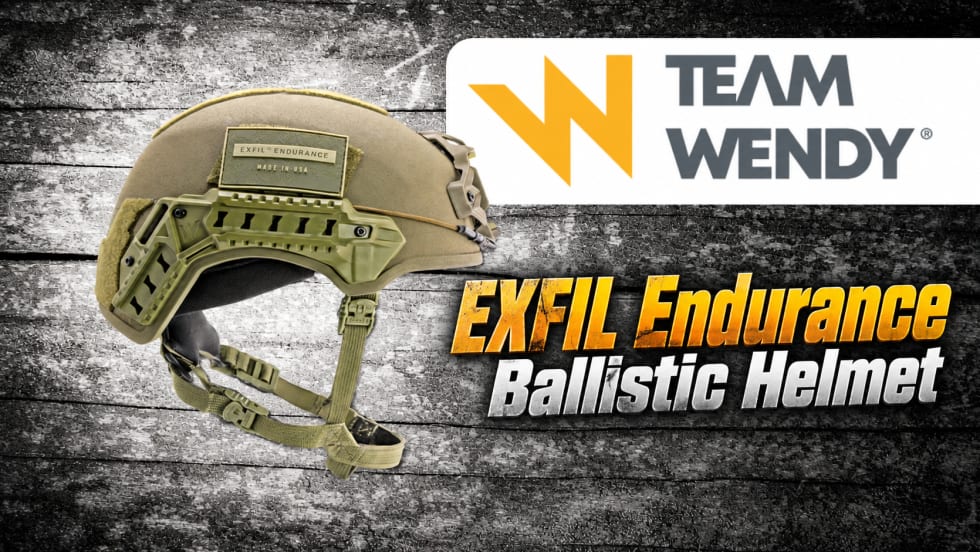
Team Wendy Introduces the EXFIL Endurance Ballistic Helmet, Engineered to Reduce the Burden of Extended Wear
Team Wendy has launched its EXFIL Endurance, a new lightweight ballistic helmet engineered to deliver protection, comfort, and fit during demanding, extended operations.
Read More →
The First Responders Children’s Foundation National First Responders Day Roll Call of Heroes Ceremony Returns to Times Square, NYC
First Responders Children’s Foundation (FRCF), in collaboration with T-Mobile, will host the Roll Call of Heroes ceremony in Times Square to commemorate National First Responders Day on Wednesday, Oct. 28. During the event, FRCF will present 18 Hero Awards.
Read More →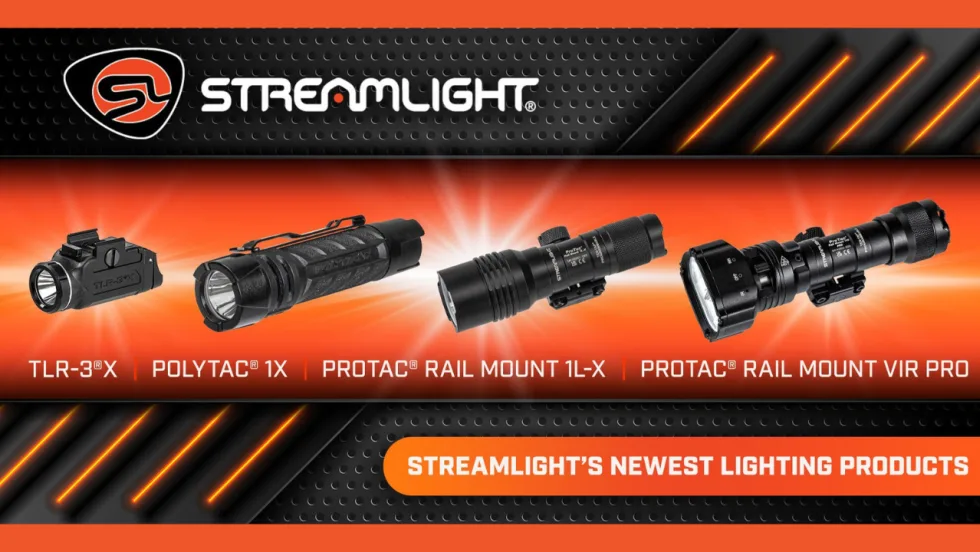
Streamlight to Showcase Newest Lighting Products for Law Enforcement Professionals at IACP 2026
Streamlight will showcase its newest lights for law enforcement at the International Association of Chiefs of Police Annual Conference & Expo. Featured lights will include the TLR-3 X, the PolyTac 1X, and more.
Read More →
Streamlight Portable Scene Light III Wins 2026 OH&S New Product of the Year Award
Streamlight’s Portable Scene Light III has won the 2026 Occupational Health & Safety (OH&S) New Product of the Year Award in the Lighting category.
Read More →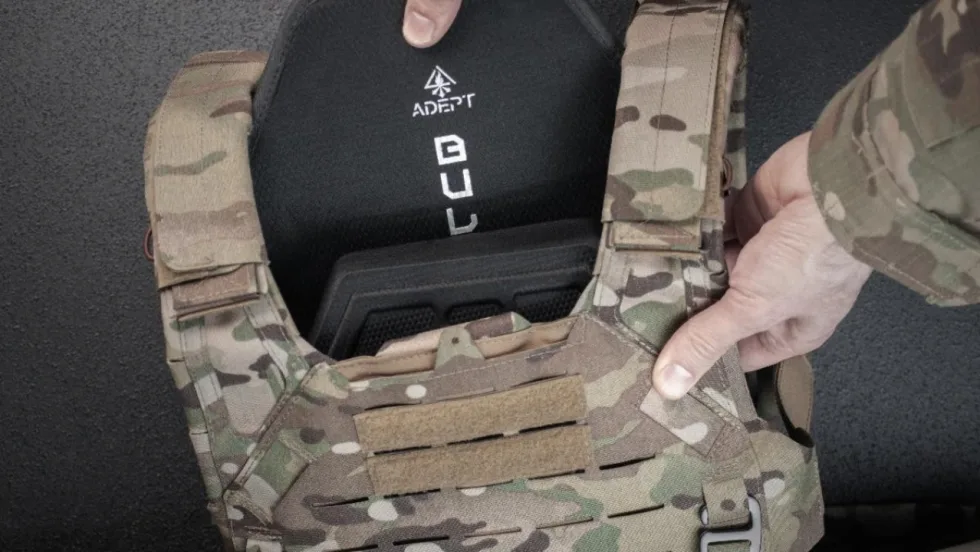
Adept Armor Introduces Two New Rifle Plates
Adept Armor has launched two new Level IV ballistic plates, the Emperor and the Archon Mark 2, which brings Adept Armor’s new Quatroid ceramic to the high-threat, performance-value center of the range at 5.2 pounds.
Read More →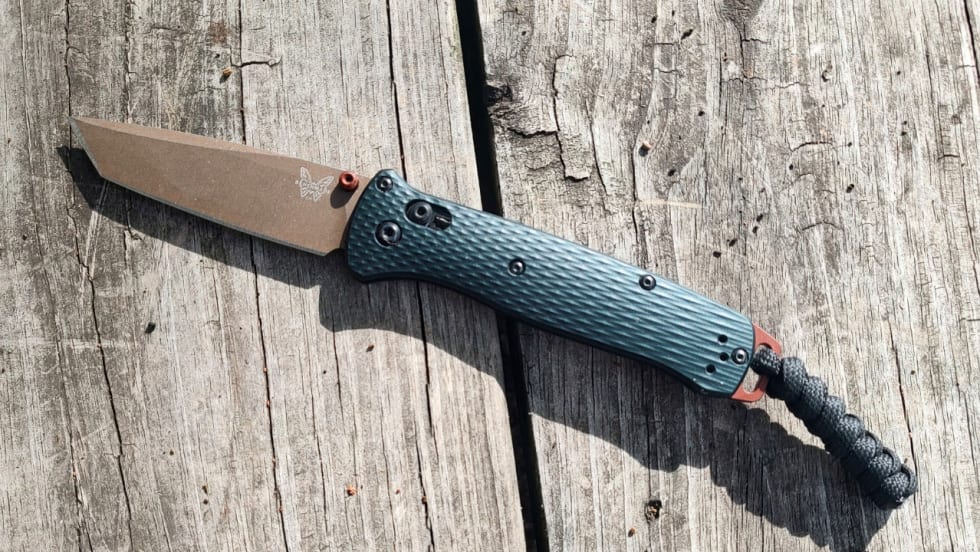
POLICE Product Test: Benchmade Bailout
The Benchmade Bailout is a slim, lightweight carry knife with a deep-ride pocket clip and comes in a variety of blade steels and scales. Here is a detailed review of the Taiga Green Bailout, released earlier this year.
Read More →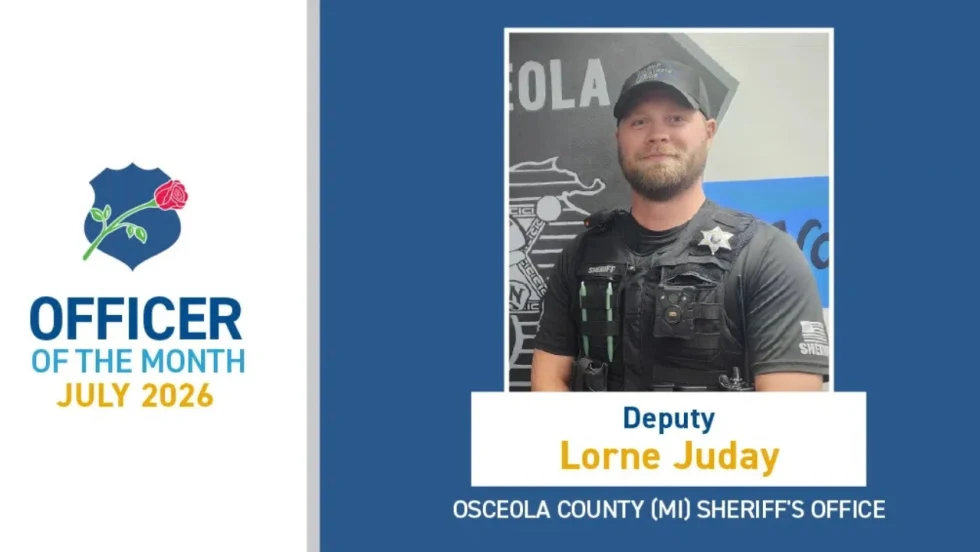
NLEOMF Announces July 2026 Officer of the Month
NLEOMF honored a Michigan deputy sheriff as the July 2026 Officer of the Month for rescuing a trapped driver from a burning vehicle following a Fourth of July crash.
Read More →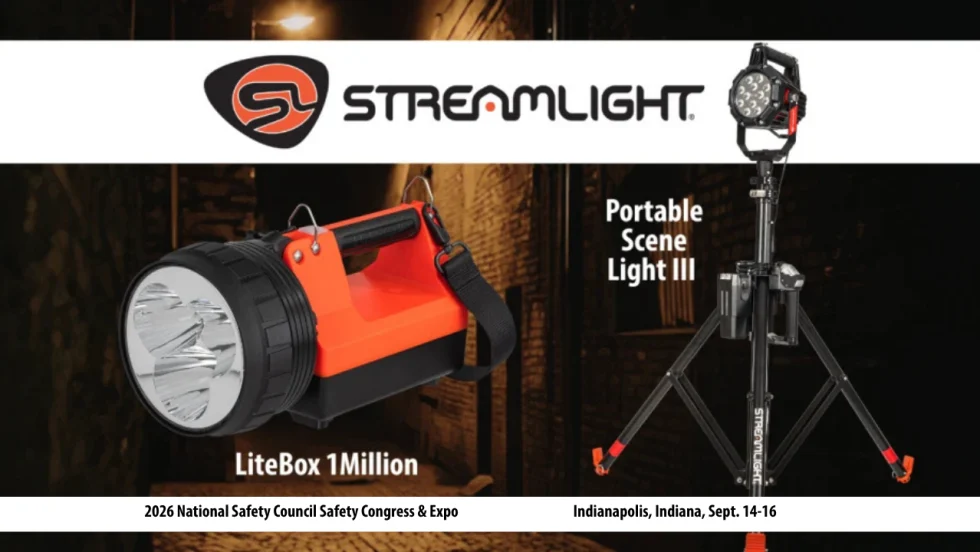
Streamlight to Showcase Newest Lighting Products at National Safety Council’s Safety Congress & Expo 2026
Streamlight will showcase its latest lights, including the Portable Scene Light III and the LiteBox 1Million, at the 2026 National Safety Council (NSC) Safety Congress & Expo.
Read More →
The 2027 World Police & Fire Games Set for Perth, Australia
The 2027 World Police & Fire Games (WPFG) will take place in Perth, Western Australia, from Friday, March 12 through Sunday, March 21, 2027.
Read More →
5.11 Partners with National Fallen Firefighters Foundation to Support #ForThe343
5.11 has joined the nationwide movement honoring the 343 New York City Fire Department firefighters lost on Sept. 11, 2001.
Read More →