



Preparing For the Oral Interview
There is nothing more important or critical to an officer's success in a promotional oral interview than his or her ability to communicate. Even preparation and overall experience are of less importance.

There is nothing more important or critical to an officer's success in a promotional oral interview than his or her ability to communicate. Even preparation and overall experience are of less importance. How can promotional candidates express their ability to lead-or the important aspects of their experience, education and training-if they can't eloquently articulate their thoughts and speak with confidence, technique and energy?
Words alone fall short in adequately providing the listener (oral board) with a clear picture of who the officer is and what he or she has done. The better an officer's understanding of this disadvantage, the better the officer can compensate for it. The interview performance will be noticeably more effective.
If an officer were asked to describe what beer tastes like to someone who has never tasted beer, how would he describe it? If he said it was cold, would it taste like ice water? If he said it's carbonated, would it taste like soda? If he said it was bitter, might it taste like lemon juice? The fact is, beer tastes like beer and to describe using only words falls far short of what it really tastes like.
In fact, beer is literally indescribable, even for the most talented wordsmith. The only way to really find out what beer tastes like is to simply taste it. Now apply this principle to officers describing themselves to an oral board panel. The key to defeating this limitation of language lies in getting back to and understanding the basics, and then surpassing them.
Advanced Articulation: Beyond the Basics
Understanding the basics of interpersonal and nonverbal communications while formally speaking is critical. In fact, success in developing most skills comes only when there is a full understanding of the basics. In the police oral interview, however, officers strive for excellence because excellence equals competitive scores.
Officers need to understand that excellence is simply the byproduct of the basics perfected. The basics of communication that must be understood and practiced consists of tonality, diction, enunciation, verbal pace, inflection, resonance, verbal pauses and word emphasis. Understanding these basics-and more importantly, having the ability to use them with skill-can give life to an officer's words and verbal pictures. This will add effectiveness to any interview performance.
To illustrate how the basics can affect our communication, consider the old adage, "It's not what you say, but how you say it." The following six sentences are identical. However, if they are read aloud with inflection and emphasis placed on the bolded words, each has a very different meaning:
I never said you stole the jewelry.
I never said you stole the jewelry.
I never said you stole the jewelry.
I never said you stole the jewelry.
I never said you stole the jewelry.
I never said you stole the jewelry.
Entering a competitive process against dozens or even hundreds of other skilled and talented officers who want the promotion should be treated like an Olympic event. The goal in this process is very simple-to get the highest score. To achieve this goal, officers must understand and utilize advanced articulation and go beyond the basics.
Some of the most important communication is delivered without a single word being spoken or simply in the way in which the words are spoken. Three valuable areas that are seldom considered by officers or utilized for a formal interview include pretext justification, physical communication, and rapport.
Pretext Justification
Pretext justifications are verbal excuses for what is about to be said. They prepare the listener to hear what the speaker has to say and provide a safety net for officers during an oral interview, allowing them to find a pre-answer comfort zone. Unfortunately, officers often use pretext justification without realizing it. The listener may find this distracting, especially when probing for information during an interview. As speakers, we use pretext justification to prepare the way for an answer and to justify the answer before it is spoken.
Communications expert Kare Anderson explains this tactic in her article. "Speak English Like It Tastes Good." She writes: "Unlike most children under the age of 12 or so, we adults offer qualifiers and chronology before we finally get to the delicious details that are most involving, credible and evocative. By then, well-intentioned listeners have taken several mental vacations."
Examples of Pretext Justification include:
"You probably won't believe this but..."
"The last time we were in that situation, I..."
"Keeping in mind I haven't had any training in this area, I would..."
"The way we usually do that is..."
"Well, I'm not sure if this is correct, but..."
"I think that I would have to say..."
Statements like those above tend to create an image of weakness or uncertainty. These statements have the potential to diminish the panel's opinion of an officer's qualities such as decision-making, assertiveness, confidence and leadership potential.[PAGEBREAK]
Physical Communication
Physical communication, often called body language or nonverbal communication, is the demeanor of the body. It is a mixture of physicality, physiognomy, gesticulation and the way your body moves and looks as well as the impression that it gives.
This physical demeanor can be controlled. In fact, it can be finely tuned and used to one's advantage. This advantage can be used in a number of ways, such as attracting the opposite sex, avoiding getting mugged, delivering a message without the use of words-or in improving performance during an oral interview. Observing and modeling the dynamic or positive physical qualities of others who are successful or powerful can help officers produce the same successful results.
Physical communication is:
Influence through presence and physical movement
Transmitted through the attitude of the face, hand gestures and body
Powerful and should be made a pattern or a habit
Something in which everyone is an expert, both consciously and subconsciously
At the foundation of a police officer's command presence
What makes or breaks first impressions.
As an officer walks through the door and greets the interview panel, interviewers see how he or she walks, moves, shakes their hands and gets seated. Does the officer's posture reflect confidence?
Is he or she stiff and nervous? Is his or her handshake solid or like a wet fish? Is the officer's face lacking emotion, with shoulders slumped downward? Does the officer appear to be a winner-one who can assume the role of a leader? As the officer speaks, is there any eye contact? Does he or she seem to have physical energy, representing confidence and a willingness to perform?
Does the officer ever smile or display facial expressions showing him or her to have a personality? Are the officer's hands unnaturally trapped in his of her lap, or can he or she comfortably and effectively use gestures to support and add emphasis to words and ideas? This is physical communication at work, and it is very powerful in making or breaking impressions. Controlling physical characteristics is controlling one's image.
Watch any Bruce Lee movie and study his physical demeanor during a nonfighting sequence. Notice the way he moves, walks and gestures. There is little doubt that his mental confidence, physical balance and athleticism are second to none.
Watch an old John Wayne western and notice that nobody swaggers or saunters like John Wayne. His physicality set the standard for being macho-a rough and tough cowboy persona. Pay close attention to those who are highly successful, well polished and noticeably confident. They seem to walk differently and carry themselves in a more prominent manner. This is physical demeanor in action, and it is a potent form of communication that anyone can use to his or her advantage.
Rapport
One of the techniques of performing well in the oral interview-as well as in relationships, friendships or business partnerships-lies in understanding and establishing rapport. Rapport occurs when two or more people find compatibility between themselves. Rapport is mutuality and commonality. People like those who are like themselves.
This similarity translates into higher comfort levels. People like others who share core values and similarities with them because they can relate to the same ideals at the same levels. This commonality cultivates conversation that facilitates the back-and-forth flow of information.
You can establish rapport with an oral board panel on a number of levels, and enhance these levels through all the forms of communication. You can also establish rapport using the language of supervision and management, since this is common to the panel members. This type of rapport is achieved through answering questions using a technique called associative parallelism, which officers affectionately know as, "walking the walk, and talking the talk."
Build Rapport with Interviewers Instead of: "Under those circumstances, I would advise my officers to handle that situation."
Try: "Under those circumstances, I would (direct, empower, delegate authority to) my team."
Instead of: "I led a number of search warrants and was responsible for the gang enforcement detail."
Try: "I was responsible for the planning and execution of field operations, including warrant service as well as gang intelligence and enforcement efforts."
Rapport can occur when an officer takes a strong position in support of management and the department through the use of language that displays loyalty. Officers should learn as much as they can about rapport, since this concept parallels influence and persuasion. There are powerful skills to possess during a competitive police oral interview.
Conclusion
In the police oral interview, communication skills are only a small portion of an officer's overall preparatory process. However, they are second to none in importance. Along with the communication methods identified in this article, officers should educate themselves about persuasion and influence as well as how to build rapport. There are many important personal and professional benefits that can be gained from understanding nonverbal physical communications.
Officers should be mindful that their experience, training, education and talent are only half the battle. Oral interviews are scored on presentation as well as content. In this type of interview, impressions can be as important as intellect, influence as significant as experience, and verbal proficiency as vital as one's character. Most officers only promote once or twice in their entire career. If the oral interview is the key to successful promotion, then attack it and go after it. Be more prepared than anyone else.
Mock oral interviews can come in handy when practicing for the real thing.
More Training
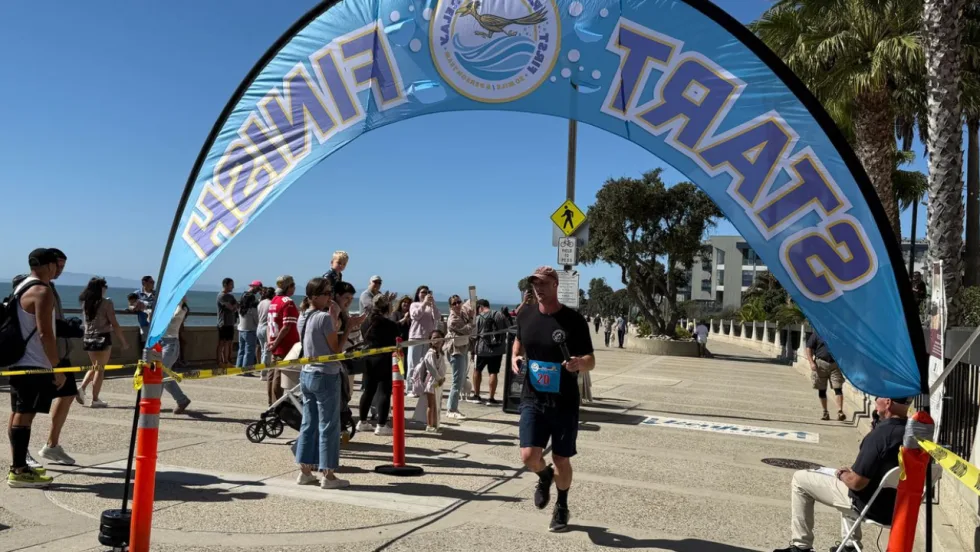
Registration Underway for Sixth Annual First Responders Relay
The California Police Athletic Federation’s annual First Responder Relay will welcome first responder teams from across the globe to compete along Ventura's scenic coastline on Oct. 11. Registration is underway.
Read More →
Vector Solutions Launches Comprehensive Online Dispatch Training Catalog for Emergency Communications Professionals
Vector Solutions’ new catalog of 35 expert-developed online courses can help emergency communication centers strengthen training, meet certification requirements, and simplify continuing education.
Read More →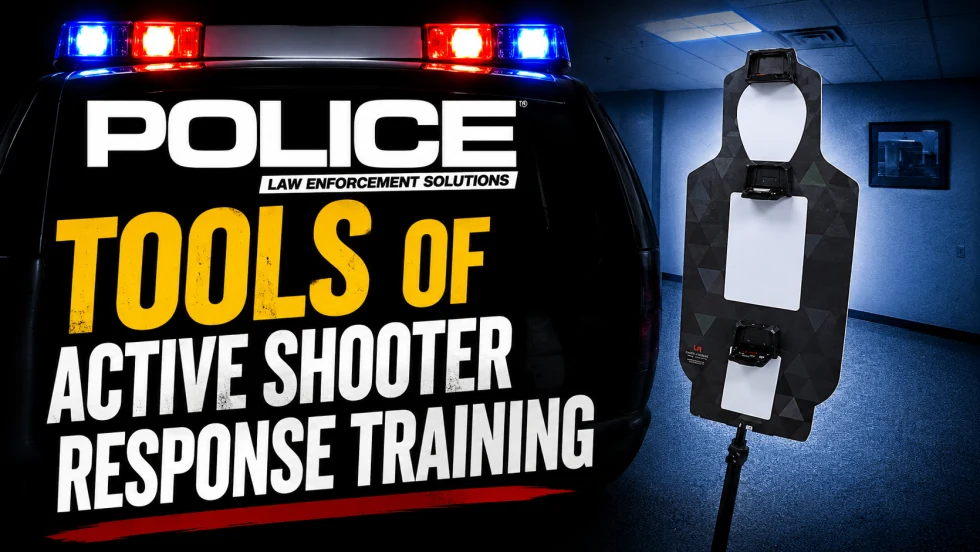
Tools for Active Shooter Response Training
What technologies help prepare officers for active shooter response situations? This behind-the-scenes look at law enforcement training explores shot simulators, smart firearms, laser target systems, and the tools used to build safer, more effective training environments.
Read More →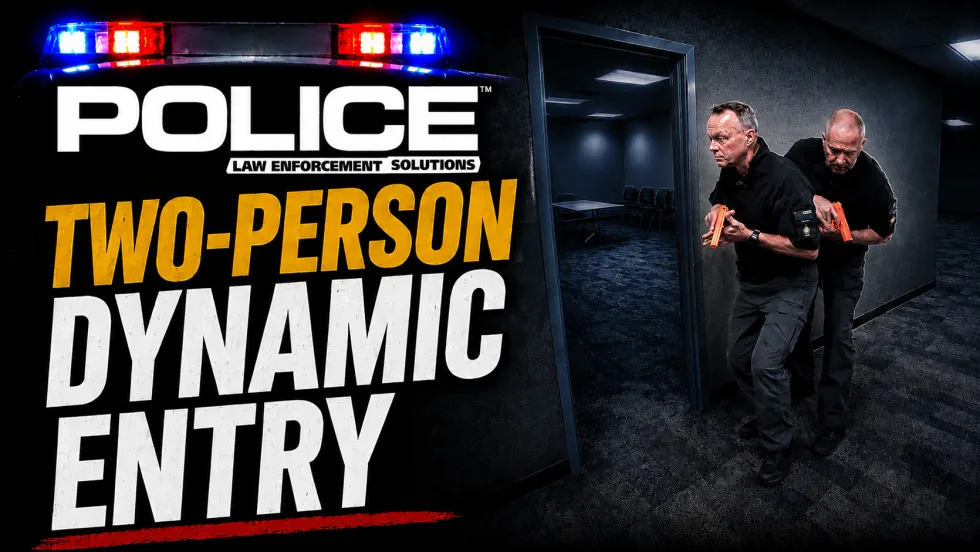
Two-Officer Tactical Doorway Entry Techniques
Entering a room during active-threat situations requires communication, coordination, and disciplined tactical movement. In this video, trainers from the United States Deputy Sheriff’s Association demonstrate critical room entry concepts, including fatal funnel awareness, team coordination, and safe tactical movement.
Read More →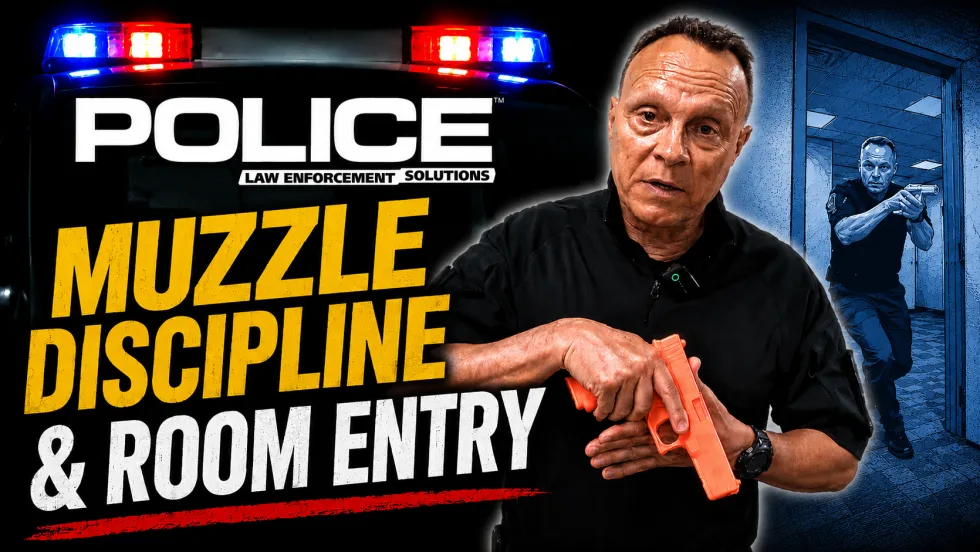
High Compressed Ready Explained | Muzzle Control For Room Entry
In this video, Mike Willis, law enforcement national training and program director for the United States Deputy Sheriffs’ Association, demonstrates the high compressed ready position and discusses muzzle control during room entry.
Read More →
Why Attend the DroneSense Innovation Summit by Versaterm?
Let’s hear from Ryan Bracken, head of product, about why your agency should send someone to the first annual DroneSense Innovation Summit by Versaterm in April.
Read More →
Caswell Live Fire Spins Off from InVeris
Caswell Live Fire has spun off from parent company InVeris, coinciding with the 100th anniversary of Caswell’s founding. Over the past 100 years, Caswell has developed pioneering solutions that support military, law enforcement, and commercial clients worldwide.
Read More →
When Do You Transport a Wounded Officer Instead of Waiting for EMS?
Thumbnail for video series POLICE Topics, Tactics & Tips with a yellow headline that reads When Do You Transport a Wounded Officer Instead of Waiting for EMS?
Read More →
How to Pick Your High-Risk Stop Location for Tactical Advantage
Hear veteran trainer Mike Willis, of the United States Deputy Sheriff’s Association, explain several considerations that can help you wisely pick your best spot to initiate high-risk or felony traffic stops.
Read More →
Coffee Break with Police Experts: Using Your Patrol Vehicle for Cover
In this video, hear from Dustin Mowery, a product specialist at Team Wendy, as he discusses how to best use a patrol vehicle for cover.
Read More →