



Police Suicide: Survivor Stories
Judith Gentry’s husband Tom killed himself six years ago in their bedroom. A trained ICU nurse, Gentry’s no stranger to the stress and trauma of emergencies, but when she heard a gunshot and found her husband dead from a self-inflicted gunshot wound to the head, she called a girlfriend instead of dialing 911.

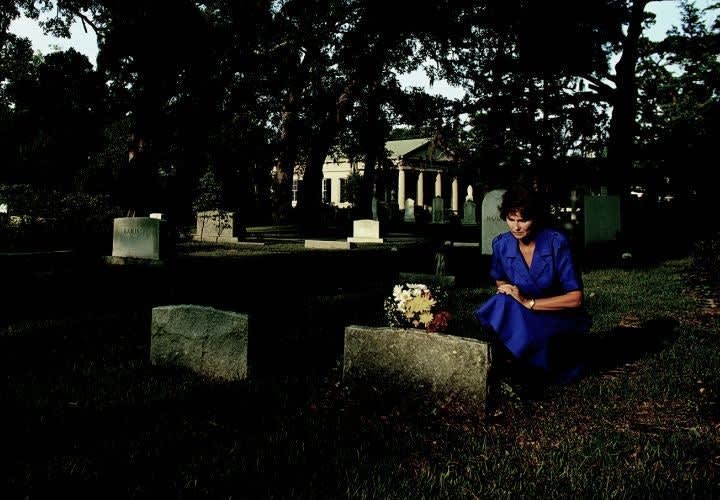
Judith Gentry's husband Tom killed himself six years ago in their bedroom. A trained ICU nurse, Gentry's no stranger to the stress and trauma of emergencies, but when she heard a gunshot and found her husband dead from a self-inflicted gunshot wound to the head, she called a girlfriend instead of dialing 911.
"It's really a horrible shock," says Gentry. "It feels like this just can't be real, that this is just a horrible nightmare and it'll end."
But her husband's death was a reality that she had to deal with. It's a reality that many police families have to deal with. And it's not easy.
Dying at Home
Families often have a hard time getting on with their lives after a suicide because they have so many reminders of what happened around them all the time.
"A line-of-duty death usually occurs in the field, whereas, unfortunately, a lot of our suicides occur at home. So a family member is often the one who finds the person," says Dr. Elizabeth K. White, psychologist with the Los Angeles County Sheriff's Department.
After finding her husband's body in their bedroom after he shot himself, Judith Gentry suffered from post-traumatic stress disorder herself. So this was another obstacle for her to face in dealing with her husband's suicide.
"If anybody would come up behind me and speak too loudly, I'd just jump," she says. "And that was bad. I live in the country so I had to hear guns going off during hunting season. It would just be a flashback, and that was real hard. You never really get over it."
White says that if an officer has killed himself in the home, a family often feels like their house is "violated." In fact, the homes are so "tainted" that some people end up selling them to avoid the memory of the event.
It took Maria Holcomb a year to be able to sleep in the bedroom she had shared with her husband, which was where he died. She preferred to sleep on the couch.
"The cleanup involved in something like this is nasty," says White. "I hate to be graphic, but blood is very hard to get out of things."
It's been more than six years since her husband died, and Gentry can now talk about him and the event of his death, but it took her a long time to get to that point.
"I think I've learned to live with it," Gentry says. "I think that it probably takes about three years to go all the way to the bottom and come back up. Your grief is just so multiplied when it's a suicide. It's just so much more difficult."
Sorrow and Pity
One of the most difficult things that the families of suicide must deal with is the attitudes and ignorance of others. People often view officers' surviving family members with pity if not outright disgust. In either case, it is not helpful to the survivors.
Holcomb received a call from her children's school telling her that other kids had been making fun of her son and daughter because their father had committed suicide. In fact, she says people still stop and point when they see her on the street, especially because she lives in a small town.
Sometimes even well-meaning people can be the most hurtful. One woman actually told the surviving spouse of a police suicide that she was praying for her husband because he was burning in hell for having committed the sin of suicide.
More often than not, people choose to avoid survivors of suicide and say nothing to them at all.
Losing Friends
Gentry kept in contact with a representative from the U.S. Marshal service, where her husband worked, for more than a year. But when it came to friends, after the funeral they stopped coming.
"People tend not to call you after the initial funeral. I understand they don't know what to say," Gentry says, "but it was very painful." She believes her husband's friends don't want to see her because she reminds them of Tom and brings back their pain.
Maria Holcomb lost friends after her husband's death, as did her children. "Suicide is such a stigma," she says, "that even friends we knew don't know what to say to me and my kids so they say nothing. You're still real normal people and you need to have friends and you know life is going to go on. Just because this happened doesn't mean every time they call you you're going to sit there crying. People need to be educated."
Eileen Bowery had a hard time dealing with her husband Charlie's suicide, especially because his friends wouldn't speak with her. But one sergeant came by her house to express his sadness at Charlie's death and his concern for Bowery and her family. "That really helped," she remembers.
Bowery, whose husband was a Chicago cop who committed suicide in 2000, feels people might not be so afraid to talk to her if they were more educated about suicide and its aftermath.
"It's important to get the word out about police suicide because it is a fact of life, and it's such a stigma that even friends that we had don't know what to say to us so they say nothing. I've got family that just don't know what to do with us so they just ignore us."
Left Behind
The widows contacted for this story say they appreciate the time they got to spend with their husbands, but they feel cheated of the years they could have spent together had the officers' lives not ended.
And these women are not alone. A suicide affects everyone that person knew. That includes family, friends, and colleagues.
Gentry wants officers to understand the devastation to those they would leave behind by committing suicide, whatever the circumstances. "I think if police officers realized just how horrible it is for the survivors, maybe they would stop and get help rather than pull that trigger."
Death and Dishonor
Suicide is now the seventh-leading cause of death in the United States. That's for the general population. For police officers, the numbers are much more startling. More officers die by their own hand than in the line of duty.
But despite this terrible fact, many agencies don't have policies for how to handle the aftermath of a suicide. It's a complicated issue because in the eyes of many cops, suicide is a coward's way out and it invalidates an officer's years of service.
Nowhere is this more evident than in the difference between the treatment of the families of officers who commit suicide and those who die in the line of duty.
A line-of-duty death is seen as honorable, and the survivors receive support-both emotional and financial. Their loved one is buried as a hero and is remembered every year on a memorial wall.
But because suicide violates the unspoken code of honor that is sacred to many cops, there is often a battle over whether to grant a police suicide a police funeral. Such an intra-agency debate can cause irrevocable damage to the survivors and to the agency's morale.
Rev. Robert Douglas of the National Police Suicide Foundation believes that attending a funeral is important for all involved. "Having the other officers there to grieve and go through this hurt and this pain with the family makes the healing process much better for the family and much better for the officers," he says.
Resources for Survivors of Suicide:
SOLES (Survivors of Law Enforcement Suicides)
(941) 541-1150
AskT8@aol.com
SOLOS (Survivors of Loved Ones' Suicides)
www.solos.org
(703) 426-1320
SPAN USA (Suicide Prevention Advocacy Network)
www.spanusa.org
1-888-649-1366
Tears of a Cop
www.tearsofacop.com
More Patrol

Team Wendy Introduces the EXFIL Endurance Ballistic Helmet, Engineered to Reduce the Burden of Extended Wear
Team Wendy has launched its EXFIL Endurance, a new lightweight ballistic helmet engineered to deliver protection, comfort, and fit during demanding, extended operations.
Read More →
The First Responders Children’s Foundation National First Responders Day Roll Call of Heroes Ceremony Returns to Times Square, NYC
First Responders Children’s Foundation (FRCF), in collaboration with T-Mobile, will host the Roll Call of Heroes ceremony in Times Square to commemorate National First Responders Day on Wednesday, Oct. 28. During the event, FRCF will present 18 Hero Awards.
Read More →
Streamlight to Showcase Newest Lighting Products for Law Enforcement Professionals at IACP 2026
Streamlight will showcase its newest lights for law enforcement at the International Association of Chiefs of Police Annual Conference & Expo. Featured lights will include the TLR-3 X, the PolyTac 1X, and more.
Read More →
Streamlight Portable Scene Light III Wins 2026 OH&S New Product of the Year Award
Streamlight’s Portable Scene Light III has won the 2026 Occupational Health & Safety (OH&S) New Product of the Year Award in the Lighting category.
Read More →
Adept Armor Introduces Two New Rifle Plates
Adept Armor has launched two new Level IV ballistic plates, the Emperor and the Archon Mark 2, which brings Adept Armor’s new Quatroid ceramic to the high-threat, performance-value center of the range at 5.2 pounds.
Read More →
POLICE Product Test: Benchmade Bailout
The Benchmade Bailout is a slim, lightweight carry knife with a deep-ride pocket clip and comes in a variety of blade steels and scales. Here is a detailed review of the Taiga Green Bailout, released earlier this year.
Read More →
NLEOMF Announces July 2026 Officer of the Month
NLEOMF honored a Michigan deputy sheriff as the July 2026 Officer of the Month for rescuing a trapped driver from a burning vehicle following a Fourth of July crash.
Read More →
Streamlight to Showcase Newest Lighting Products at National Safety Council’s Safety Congress & Expo 2026
Streamlight will showcase its latest lights, including the Portable Scene Light III and the LiteBox 1Million, at the 2026 National Safety Council (NSC) Safety Congress & Expo.
Read More →
The 2027 World Police & Fire Games Set for Perth, Australia
The 2027 World Police & Fire Games (WPFG) will take place in Perth, Western Australia, from Friday, March 12 through Sunday, March 21, 2027.
Read More →
5.11 Partners with National Fallen Firefighters Foundation to Support #ForThe343
5.11 has joined the nationwide movement honoring the 343 New York City Fire Department firefighters lost on Sept. 11, 2001.
Read More →