



Police Radios Transition into a New Era
Although they aren't as sexy as the other contemporary tools of law enforcement that make more headlines like body-worn cameras and high-tech forensics equipment, no technology is more vital to your mission than your communications equipment.


Although they aren't as sexy as the other contemporary tools of law enforcement that make more headlines like body-worn cameras and high-tech forensics equipment, no technology is more vital to your mission than your communications equipment.
Since the late 1990s law enforcement communications tools have been transitioning, first from analog to digital signals, then to advanced digital processing and narrow banding to meet the Project 25 (P25) standard, and now from land mobile radio portables into hybrid radio and cellular wireless portables.
In 2015 the revolution in law enforcement communications tools continues on a variety of fronts. Here's what's happening to make your mission-critical voice communication tools more capable and more useful.
Improving the Portables
Portable radios are some of the most rapidly evolving tools used in law enforcement. Harris, Kenwood, Motorola, Tait, and other players are all competing in this market to provide the most innovative and useful features and clearest sound for law enforcement operations.
Harris released its new XL-200P in August. The XL-200P is a full-spectrum radio that offers single- and multi-band capability. Bands can be added with a simple software upgrade. Mark Tesh, Harris' product manager for advanced development says the new portable "performs seamlessly across all bands." The XL-200P is lighter than the company's previous law enforcement portables, but offers excellent audio quality, extended battery life of more than 10 hours, Bluetooth and Wi-Fi connectivity, and GPS tracking. Tesh says despite its compact size and light weight, the XL-200P is "brilliantly loud and brilliantly clear in the loudest environments." He explains that Harris achieved the sound quality through an innovative design of a woofer and tweeter with tuned cavities. Should a user miss a message or not understand part of a message, the XL-200P stores the last five messages for replay. "It's a simple solution to a really common problem," Tesh says.
Kenwood's latest P25 Phase II portable is the TK-5410D. It offers enhanced microprocessing for coverage of the entire 700 MHz and 800 MHz voice bands and MIL-STD-810 toughness and IP-54/55 moisture and dust protection. Some of the features include: 100 zones with 1,024 channels, a backlit dot matrix LCD, 16-character alphanumeric aliases, a three-digit sub-display, and several encryption keys.
Motorola added the APX 8000 to its product line of public safety portables in March at the International Wireless Communications Expo. The all-band, WiFi-enabled P-25 radio features an adaptive audio engine and a 1-watt speaker for sound quality and vocal clarity.
Tait's latest public safety portable is the TP9400, which offers multiple operating modes. The TP9400 can operate in analog mode and in 12.5 KHz P25 Phase 1 FDMA conventional/trunked, upgradeable to 6.25 KHz (equivalent) P25 Phase 2 TDMA trunked and LSM (CQPSK). Tait says having all of this decode capability in a single device allows users to transition into upgrades according to their needs. Features include GPS positioning, Bluetooth connectivity, and officer down functionality. The TP9400 meets MIL-STD-810G standards for ruggedness and IP67 for water and dust resistance.
Wireless Mics
There was a time when very few law enforcement agencies would even think of allowing their officers to use Bluetooth to pair a headset to their portable radios. That's changing now as more portable radios offer reliable Bluetooth signals and a variety of companies make Bluetooth mics suitable for law enforcement operations.
Motorola's Mission Critical Bluetooth Earpiece consists of a PTT module that clips onto the officer's shirt or vest and connects via a 9-inch or 12-inch coiled cord to the earpiece. The PTT Module houses the technology and a lithium battery pack. The mic is designed for use with Bluetooth-enabled portables radios but an adapter is available if agencies want to add Bluetooth to older portables. Maximum range is 33 feet.
Pryme Radio Products is one of the leaders in adding Bluetooth functionality to law enforcement public safety radios. The company is developing both new products for Bluetooth connectivity and modifying some of its existing products for wireless use. For example, one of Pryme's most popular mics is the SPM-100, which has now been modified for Bluetooth as the BTH-SPM100. The mic has a 10-meter range and a 10-hour battery life.
LTE Radios
Law enforcement communications experts have been talking about the convergence of portable radios with smartphone and handheld devices for more than a decade. Today we are seeing some of this prophecy coming true.
Harris and Motorola are two of the industry leaders who are driving the convergence between portable radios and cellular devices. Their two latest public safety handsets feature LTE connectivity so officers can communicate via radio or via cellular data transmission on commercial or dedicated public safety spectrum (FirstNet).
No officer in the field is going to use the tiny display on a portable radio for viewing video or even a detailed map, but there are some solid benefits of having LTE on a portable radio. LTE radios can be used to send texts from the field. This could be mission-critical in situations where the radio signal is too weak to communicate information to dispatch or to fellow officers.
Texting from a radio could be very useful for an officer in the field, but the most likely use for the LTE connectivity on the latest generation of portable radios will be radio management. Radios equipped with LTE connectivity can be programmed and configured in the field with no interruption in voice communications. This can save agencies time and money, and it can even make the radio network more secure. With non-LTE radios, communications managers have to take the radios out of the field to change the security keys, which makes changing the security keys on a frequent basis time-consuming and expensive. Because the cellular signal on LTE radios can run in the background while the officer still uses the radio, communications managers can change security keys on radios while they are in use.
For More Information
Comtronics
Discount Two-Way Radio
Earphone Connection
Easy to Get Wireless
Push-to-Talk Apps
The convergence of portable land mobile radios and Smartphones works both ways. There are apps that add PTT capabilities to smartphones, essentially converting the cellular devices into land mobile radio handsets. These apps can be used in a pinch when radios fail or to listen to your agency's radio traffic or contact fellow officers when you are outside of the radio network. Some have compared apps such as Harris' BeOn and Motorola's Wave Broadband Push-to-Talk to Skype.
Harris sells a ruggedized Android phone specifically for use with BeOn. The InTouch RPC-200 sports a 23mm thick display. The standard glass on an Android phone like the Samsung Galaxy is about 10mm thick. The InTouch also has a more powerful battery than a commercial cellphone, which gives it longer use time.
Motorola's Wave Broadband PTT is a cellular PTT solution for iPhones, Android phones, and Blackberry phones. It also works with tablets, and even laptop and desktop PCs. Motorola says its solution is the most widely deployed broadband PTT software because of its military and government customers. Wave Broadband PTT integrates with Astro 25 systems via Motobridge radio gateways.
Pryme Radio Products' new BT-PTT-Mini is a low-cost wireless PTT all-in-one package that turns a smartphone or tablet into a PTT device when used with walkie-talkie mobile apps like Zello.
Cross Talk
Since before 9/11 and certainly after, public safety experts have been well aware that a multi-jurisdictional, multi-agency critical incident can lead to communication breakdowns as responders who operate on different frequencies or spectrum try to share information.
In the past, solutions to this problem have been less than elegant. Worst of all, they often involved dispatchers relaying information back and forth between responders. Special, and often very expensive, equipment has also been used to bridge the frequencies.
Now the equipment and software needed for interoperability has become much less complex and expensive. One of the more innovative and interesting interoperability tools is Mutualink, which is produced by a company of the same name. Mutualink is a combination software and hardware solution for interoperable communications. It's relatively easy to use and was designed with the street cop in mind.
The hardware side of Mutualink is a box about the size of a digital video recorder. The software is reportedly very user friendly and the company even makes an app for handheld devices that officers can use in the field.
This combination of equipment and software comprises a solution that allows an agency, when granted permission, to patch directly into a predetermined channel on the network of another agency. Both agencies have to have Mutualink, which requires an $8,000 investment by each agency.
Many communication experts believe worries about interoperability may soon be a thing of the past as more agencies adopt LTE-equipped radios. As previously discussed, communications managers can use the cellular data capabilities of multi-band LTE radios to reprogram the radios. This can be used to set up the portables for interoperability with another agency while they are in use in the field. "Reprogramming radios on the fly means you don't have to pick up a loaner or take a radio to a service center for multi-agency response or response outside your normal jurisdiction," Chuck Phillips, Motorola's VP for product planning said last year in an interview about the company's APX 7000L portable. "Your radio can be reconfigured while you travel. When you get there, there's no delay and you will be capable of instantly responding with the resources that are already on the scene.
More Technology
A police agency's guide to data-driven fleet management
Costs are rising and the public expects more transparency into how their tax dollars are spent. This e-book shows how police agencies can use fleet data to take control of fleet expenses while improving officer safety and demonstrating fiscal responsibility to the communities they serve.
Read More →
AI and analytics for law enforcement: Turning data into insights
Law enforcement agencies are managing more video, sensor data and digital evidence than ever before. Discover how AI and analytics can help turn that data into actionable insights that strengthen situational awareness, accelerate investigations and support more informed decisions.
Read More →
Vasco Electronics Adds Automatic Language Detection to Vasco Translator Q1
Vasco Electronics’ software update introduces hands-free language switching and expanded offline translation across 45 language pairs, empowering law enforcement, healthcare, and front-office enterprise teams
Read More →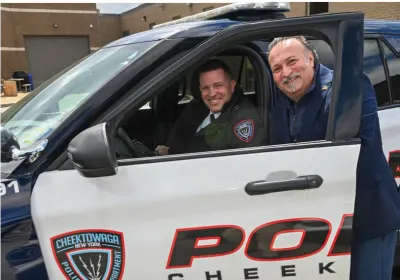

North Miami Police Department Deploys Mark43
The North Miami Police Department has deployed Mark43 as part of its Five-Year Strategic Plan that represents its collective vision and goals for a more proactive police department, anchored by a core commitment to leveraging modern technology to enhance efficiency and public safety.
Read More →
Cellebrite Genesis for Enterprise Now Generally Available
Made available to the public sector in June, Cellebrite Genesis is serving a growing mix of national, regional, and local agencies worldwide, including some of the largest regional and metropolitan police departments. It is now available for enterprise organizations.
Read More →
2026 Vision FirstNet Users Summit to Host Emerging Leaders Training on Grassroots Advocacy for Public Safety
“Emerging Leaders Training: Understanding the Importance of Grassroots Advocacy for Public Safety," a session during the 2026 Vision FirstNet Users Summit, will offer a roadmap for unified advocacy at the federal level.
Read More →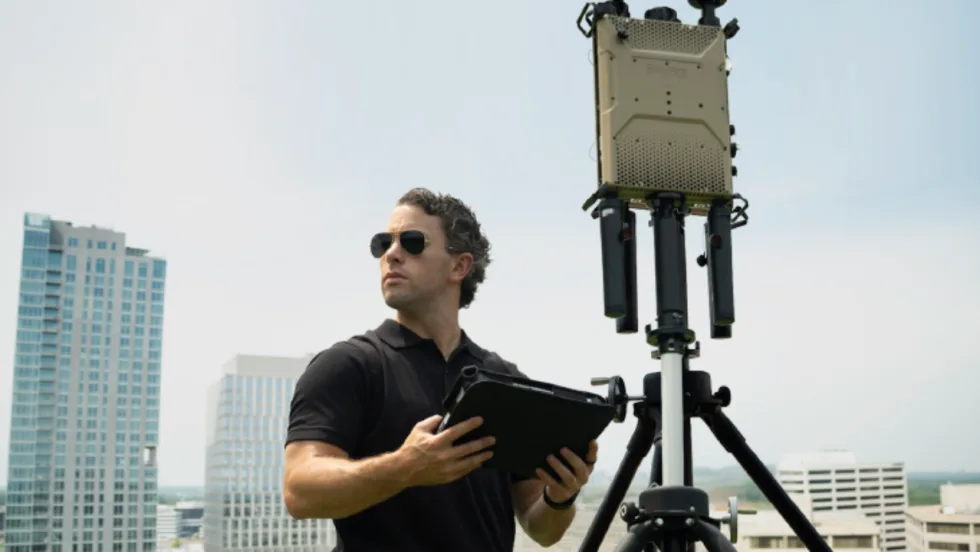
Motorola Solutions Completes Acquisition of D-Fend Solutions
Motorola Solutions has acquired D-Fend Solutions, an industry leader in counter-drone technology. This deal provides public safety and enterprise customers with access to advanced counter-unmanned aerial systems.
Read More →
ZeroEyes, Advantech & Camden Police Partner to Bring AI Gun Detection Technology to Delaware School District
ZeroEyes has partnered with Advantech and the Camden Police Department to deploy ZeroEyes’ AI gun detection and intelligent situational awareness platform at Delaware’s Caesar Rodney School District (CRSD).
Read More →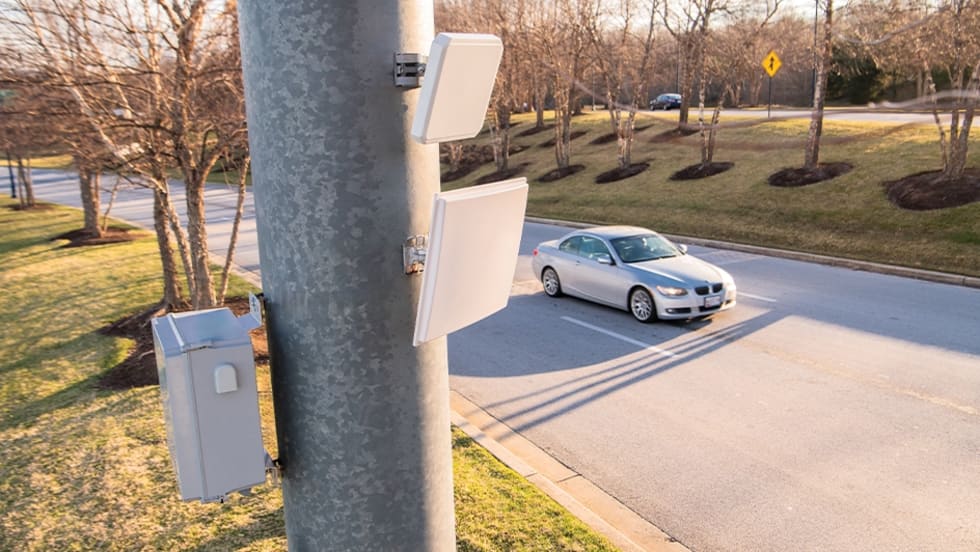
Leonardo U.S. Cyber & Security Solutions Introduces SignalTrace, the Next Evolution in Electronic Signature Detection Technology
SignalTrace reflects years of product refinement and a clearer expression of the technology’s purpose of recognizing and correlating electronic signatures in publicly broadcast wireless signals to reveal patterns, relationships, and trends that might otherwise go undetected.
Read More →
Pimloc Launches Secure File Sharing to Streamline Release of Redacted Video
Pimloc’s Secure File Sharing lets organizations deliver redacted video, audio, and documents through expiring, passcode-protected links, accelerating delivery while reducing security, compliance, and chain-of-custody risks.
Read More →