



Police Domestic Violence
In our society, it's doctrine that education is the key to success. Police domestic violence activist Renae Griggs also believes that education is the key to helping officers learn ways to constructively cope with job-related stress.

In our society, it's doctrine that education is the key to success. Police domestic violence activist Renae Griggs also believes that education is the key to helping officers learn ways to constructively cope with job-related stress.
"If we hope to reduce and eventually eliminate the incidence of domestic vio-lence within police families, we need to recognize the elements that contribute to this behavior," says Griggs, a former Florida Major Crimes detective. "The critical issue here is job-related stress. Our officers traverse what is virtually an emotional minefield on a daily basis, dealing with stressors that can reduce our coping mechanisms to critical levels."
Griggs, founder of the National Police Family Violence Prevention Project is currently directing a multi-faceted pilot program designed to help officers of the Hollywood (Fla.) Police Department learn ways to manage their stress.
Psychologists have discovered that job-related stress is one of the primary reasons why officers lash out at their loved ones and engage in other destruc-tive and dysfunctional behaviors. "Ele-vated stress creates a deadly continuum that begins by undermining our emotional stability and paves the way to a variety of inappropriate coping mechanisms. An officer's abuse of alcohol, drugs, or his own family members is part of this deadly and dangerous cycle," Griggs explains.
Griggs argues that teaching officers how to cope with the stress of the job is as important as teaching them defensive tactics and providing them with armor and tools. "Since we wouldn't expect our law enforcement personnel to carry out their policing duties without protective equipment and weapons, I believe police agencies should also arm them in the best way possible to battle the dangerous ef-fects of stress."
The Pilot Program
The National Police Family Violence Prevention Project program now under way in Hollywood, Fla., consists of three primary components: policy develop-ment, training, and services. Griggs says she developed the pilot program after reviewing the Hollywood PD's existing department policies.
"We had to know what, if any, services were available to the officers, how practical they were, and whether there'd been satisfactory results for those officers who chose to utilize them," she explains. "From the very beginning of our program, we asked for [the Hollywood PD's] hands-on participation and input. I requested that the police chief construct an advisory panel of personnel that represented a cross-section of the department."
The panel that was established inside the Hollywood PD consisted of one union representative, one domestic violence detective, one victim advocate, a representative from Internal Affairs, and one person from the Officer Training Unit.
Griggs says she asked for individuals with these specific backgrounds because they had the skills and experience to create new department policies for the educational program. "By working together, we were able to identify the specific needs of their department personnel and craft the new policies accordingly," she says. "After several months of research, consultation, and brainstorming, we were able to implement important and pivotal changes."
Proactive Approach
The pivotal changes at the Hollywood PD included a revision of the chaplain policy and a rewrite of the policy regarding domestic violence in police families. In addition, a peer support program policy was instituted, a new Law Enforcement Personnel Injury/Death protocol was established, and a Family and Career Resource Program was introduced.
The Family and Career Resource Program was a very comprehensive addition to the department protocol, which was defined by the following program introduction: "The Hollywood Police Department is taking a proactive approach to providing support for its members and their families from the onset of employment, throughout their career, and during their retirement years." It includes a family orientation program that follows police academy graduation and addresses the need for systemic support across the span of an officer's career.
Griggs says that, in addition to these new policies and officer training, the pilot program also offered Hollywood PD officers new services and a list of approved mental health professionals.
After reviewing the department's list of mental health treatment providers, Griggs embarked on a systematic screening process of surveys, interviews, and site visits. In doing so, she reduced the provider roster to 50 therapists, listed according to specialty, so that the officers can make educated treatment choices.
Each therapist who was included in the final list indicated a desire to work with law enforcement families and agreed to attend training sessions in order to hone his or her skill set for working with cops. Along with the department chaplains, these therapists were invited to attend Griggs' training session and were encouraged to participate in her mental health practitioner's Law Enforcement Certifica-tion Program.
Bringing It Home
So far, the educational component of Griggs' program has gotten positive reviews from participating Hollywood officers.
The program curriculum is called "Bringing It Home: Coping Strategies for Police Employees and Their Families." It incorporates a series of lectures and workshops conducted by various experts on the topic of police-related stress disorders, including former police personnel.
The roster of the programs speakers includes Louisiana State Trouper Bobby Smith who was shot in the face and permanently blinded during a traffic stop. Smith is the author of "Visions of Courage" an account of the incident and his own struggle to overcome the tragic results. "His story is an inspiration to all our officers, and we provide a copy of his book for all those who attend our program," Griggs says.
Another popular speaker is Dr. Kevin Gilmartin, a behavioral scientist who specializes in law enforcement-related issues. "Our officers recognize his 'street creds' immediately since Dr. Gilmartin is not only a veteran of the U.S. Marine Corps but also supervised the Hostage Negotiation Team during his 20-year police career with the Tucson Police Department," says Griggs. She also praises Gilmartin's book, "Emotional Survival for Law Enforcement: A Guide For Officers and Their Families." "It was written from the heart of a survivor as well as the mind of a scientist, and I believe it is the most valuable kind of information re-source for our officers."
Participating officers receive a comprehensive collection of other resource materials as well. "I'm proud to say that the workshops are like the fulfillment of a wish list for any cop who has stress issues," Griggs says. "The complimentary books we provide our officers cover a broad spectrum of topics, ranging from how to bolster the coping mechanisms of police family members to police suicides to post-traumatic stress disorder as our deadliest "silent killer."
Killing the Stigma
The biggest hurdle that the Hollywood pilot program must overcome is the atti-tude of its intended audience. Some offi-cers just won't ask for help. Others would participate in the program or seek out a therapist, but they are afraid of being ridiculed by other officers or that their careers will suffer.
Griggs says the best way to fight such attitudes is through a supportive depart-ment that will help kill the stigma. And of course, today's officers benefit from much more departmental understanding of the emotional toll of police work than their predecessors.
After a recent workshop, a retired cop whose son had just completed his Academy training came up to Griggs. He told her that he had attended the workshop on the advice of his son, but also to satisfy his own curiousity. Griggs can recite what the retired officer said to her: "'Back in my day, we never had anything like this. Something happened on the street, we were supposed to handle it, get over it, and get on with it. That was part of the code back then. You handled your business. Nobody ever talked about what a big price that kind of pride carried. When one of our own ate his gun or wrapped his car around a lamp post because he'd come to work drunk, again, it was just one of those things we accepted as part of a cop's life.'"
Perhaps the reason Griggs remembers every word of this conversation is that it validated what has become her life's work. Before the retired officer walked away, he thanked Griggs for working to change police attitudes and make life better for young officers like his son.
The National Police Family Violence Prevention Project is a publicly supported non-profit organization. If you'd like more information about the project, or how it can be implemented in your agency, contact Renae Griggs at NPFVP Project, 320 NW 87th Road #114, Plantation, FL 3324, (954) 475-3972.
More Patrol

Adept Armor Introduces Two New Rifle Plates
Adept Armor has launched two new Level IV ballistic plates, the Emperor and the Archon Mark 2, which brings Adept Armor’s new Quatroid ceramic to the high-threat, performance-value center of the range at 5.2 pounds.
Read More →
POLICE Product Test: Benchmade Bailout
The Benchmade Bailout is a slim, lightweight carry knife with a deep-ride pocket clip and comes in a variety of blade steels and scales. Here is a detailed review of the Taiga Green Bailout, released earlier this year.
Read More →
NLEOMF Announces July 2026 Officer of the Month
NLEOMF honored a Michigan deputy sheriff as the July 2026 Officer of the Month for rescuing a trapped driver from a burning vehicle following a Fourth of July crash.
Read More →
Streamlight to Showcase Newest Lighting Products at National Safety Council’s Safety Congress & Expo 2026
Streamlight will showcase its latest lights, including the Portable Scene Light III and the LiteBox 1Million, at the 2026 National Safety Council (NSC) Safety Congress & Expo.
Read More →
The 2027 World Police & Fire Games Set for Perth, Australia
The 2027 World Police & Fire Games (WPFG) will take place in Perth, Western Australia, from Friday, March 12 through Sunday, March 21, 2027.
Read More →
5.11 Partners with National Fallen Firefighters Foundation to Support #ForThe343
5.11 has joined the nationwide movement honoring the 343 New York City Fire Department firefighters lost on Sept. 11, 2001.
Read More →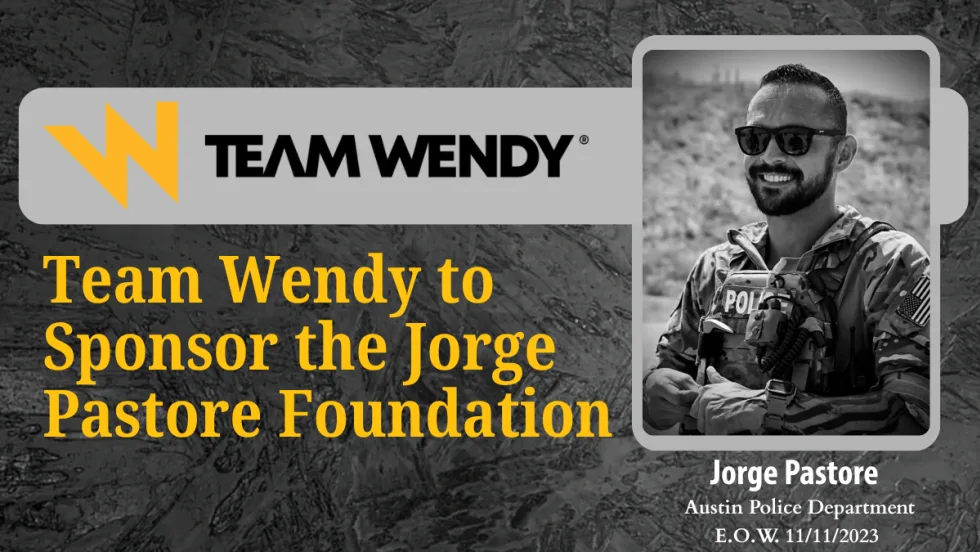
Team Wendy Announces Title Sponsorship of the Jorge Pastore Foundation
Team Wendy’s 3-year partnership with the Jorge Pastore Foundation expands access to programs that strengthen those who serve.
Read More →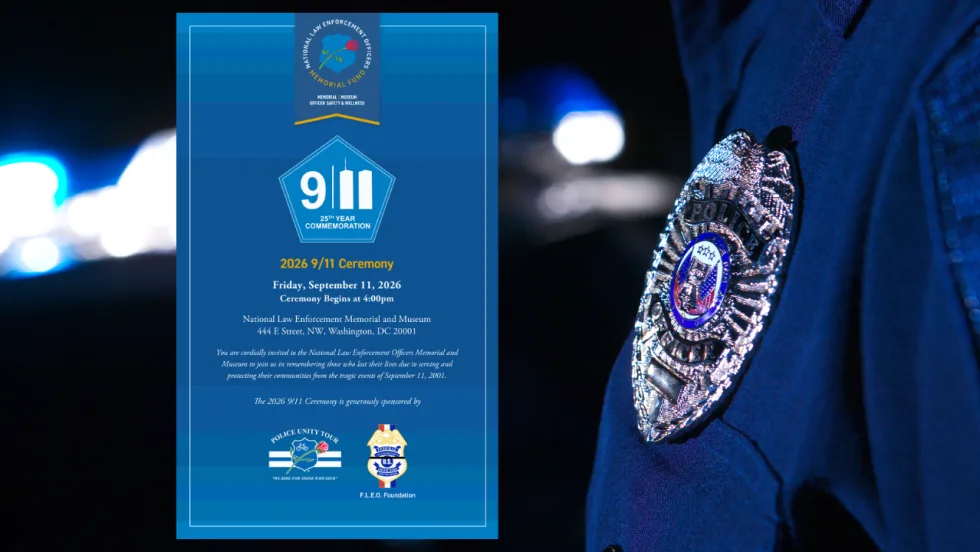
National Law Enforcement Memorial and Museum Hosting 9/11 25th-Year Commemoration Ceremony
The National Law Enforcement Memorial and Museum is hosting a 9/11 25th Year Commemoration Ceremony on Sept. 11 at 4 p.m.
Read More →
National Law Enforcement Officers Memorial Fund Announces June 2026 Officers of the Month
The National Law Enforcement Officers Memorial Fund (NLEOMF) named 15 officers of the Chico Police Department (California) as the Officers of the Month for June 2026 for their roles in responding to an active-shooter incident at a public library.
Read More →
Team Wendy App Creates New Digital Hub for Helmet Owners
The Team Wendy Community App provides one location for warranty registration, size-fit tools, product updates, and community connection. For helmet owners, the new app creates a simpler path to the information and tools that matter most.
Read More →