



People of Probity
Modern law enforcement officers uphold a longheld tradition of protecting citizens and preserving freedom.

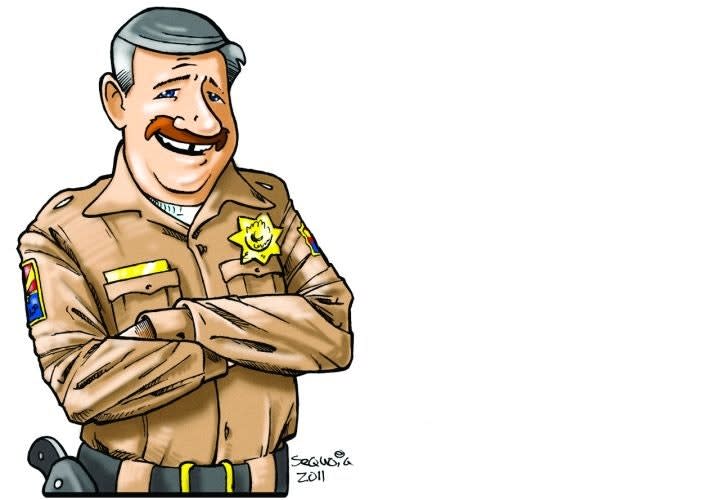
Illustration: Sequoia Blankenship
The king was in a bind. His long war, and almost pyrrhic victory, against the invaders left him with a devastated country of destroyed towns, and a multitude of prisoners. The seven kingdoms that had ruled his island country were long destroyed, and he had had to fight his way from a hideaway in the swamps with a handful of warriors to become the sole ruler of his ravaged nation.
The idea of using his captives to rebuild and repopulate his towns and villages seemed like a good one; except the nobles throughout his nation were not too enthusiastic about granting the invaders the rights and privileges of citizenship, enjoyed through long traditions by the people of the island. And the captives would never accept second-class citizenship in their new land. To further aggravate the situation, the western side of his island had joined with the invaders, so to have a land of unity and prosperity he'd need to make sure they received a just peace, too.
In this king's traditional belief system, individuals had remarkable rights such as trial by jury, property rights, the right to keep and bear arms, and the sincere belief and practice that God did not choose rulers, the people did. These traditions sound basic to modern ears, but they seemed oddly quirky and even innovative in the 800s.
Extending the full spectrum of rights to the conquered Vikings, and their Welsh allies, was going to be a tough row to hoe, and the only solution Alfred could come up with was to develop a sort of referee who would have the power of the Crown to protect the rights of the individual against unequal justice or oppression. These officers would also collect taxes, giving them the power of the purse and further ensuring that the nobles would respect their authority and obligation to protect the people, and not the nobles.
Finally, this new position could raise an army, something the king had learned was essential to keep his people's freedom alive. Relatively small, ad hoc armies had allowed him to fight his way from defeat to final victory over the invading Vikings and the Welsh; the very people he now intended to make solid citizens in his unified kingdom; the land of the Angles … England.
This new position, created to protect the rights of the individual in the Anglo-Saxon tradition, he called "Sheriff," and according to the great historian David Hume, Alfred the Great chose only men with the most probity to hold this office. Probity is an antiquated word that means adherence to the highest principles and ideals; that gives you an idea how important the new office was in the king's plan to create a new society of remarkably free citizens.
We call him Alfred the Great because not only did he save his island nation from invasion, but he also created the very concept of a United Kingdom; a realm with unique concepts of justice and freedom that continue to this very day.
When William the Conqueror brought his Norman army from France to England and conquered King Harold he made many changes, but he didn't change the office of sheriff, the custodian of rights, in his transition to power.
Later, King John would show little respect for the Common Law established by Alfred, and therefore the nobles and sheriffs ultimately forced him to sign the Magna Carta — usually misrepresented in our history books as a novel step in human rights, but actually merely a reaffirmation of rights long held in the Anglo-Saxon tradition. A tradition so important that Thomas Jefferson would propose that the original Angles to conquer Britain, Horsa and Hengist, should be placed on our Great Seal in appreciation for the their bringing the traditions of individual liberty to England.
And so when someone asks me why we swear allegiance to a Constitution and not a person, city, or other entity, I tell them it's because American law enforcement is the custodian of the rights of individuals. The Constitution and Declaration of Independence were like the Magna Carta in that they merely rearticulated the ideas about liberty that created the most free society in human history. And the men and women who wear the badge today with probity continue a tradition that has long stood for those ideals, and will ever vanquish those who would rob their fellow citizens of freedom and security. Thank you for your service.
Dave Smith is an internationally recognized law enforcement trainer and is the creator of "JD Buck Savage." You can follow Buck on Twitter at @thebucksavage.
More Patrol

Streamlight Portable Scene Light III Wins 2026 OH&S New Product of the Year Award
Streamlight’s Portable Scene Light III has won the 2026 Occupational Health & Safety (OH&S) New Product of the Year Award in the Lighting category.
Read More →
Adept Armor Introduces Two New Rifle Plates
Adept Armor has launched two new Level IV ballistic plates, the Emperor and the Archon Mark 2, which brings Adept Armor’s new Quatroid ceramic to the high-threat, performance-value center of the range at 5.2 pounds.
Read More →
POLICE Product Test: Benchmade Bailout
The Benchmade Bailout is a slim, lightweight carry knife with a deep-ride pocket clip and comes in a variety of blade steels and scales. Here is a detailed review of the Taiga Green Bailout, released earlier this year.
Read More →
NLEOMF Announces July 2026 Officer of the Month
NLEOMF honored a Michigan deputy sheriff as the July 2026 Officer of the Month for rescuing a trapped driver from a burning vehicle following a Fourth of July crash.
Read More →
Streamlight to Showcase Newest Lighting Products at National Safety Council’s Safety Congress & Expo 2026
Streamlight will showcase its latest lights, including the Portable Scene Light III and the LiteBox 1Million, at the 2026 National Safety Council (NSC) Safety Congress & Expo.
Read More →
The 2027 World Police & Fire Games Set for Perth, Australia
The 2027 World Police & Fire Games (WPFG) will take place in Perth, Western Australia, from Friday, March 12 through Sunday, March 21, 2027.
Read More →
5.11 Partners with National Fallen Firefighters Foundation to Support #ForThe343
5.11 has joined the nationwide movement honoring the 343 New York City Fire Department firefighters lost on Sept. 11, 2001.
Read More →
Team Wendy Announces Title Sponsorship of the Jorge Pastore Foundation
Team Wendy’s 3-year partnership with the Jorge Pastore Foundation expands access to programs that strengthen those who serve.
Read More →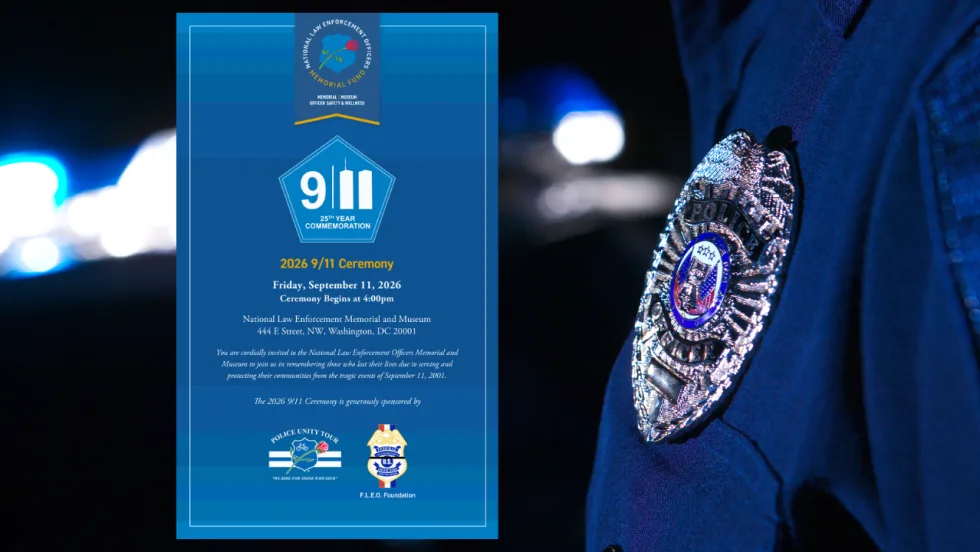
National Law Enforcement Memorial and Museum Hosting 9/11 25th-Year Commemoration Ceremony
The National Law Enforcement Memorial and Museum is hosting a 9/11 25th Year Commemoration Ceremony on Sept. 11 at 4 p.m.
Read More →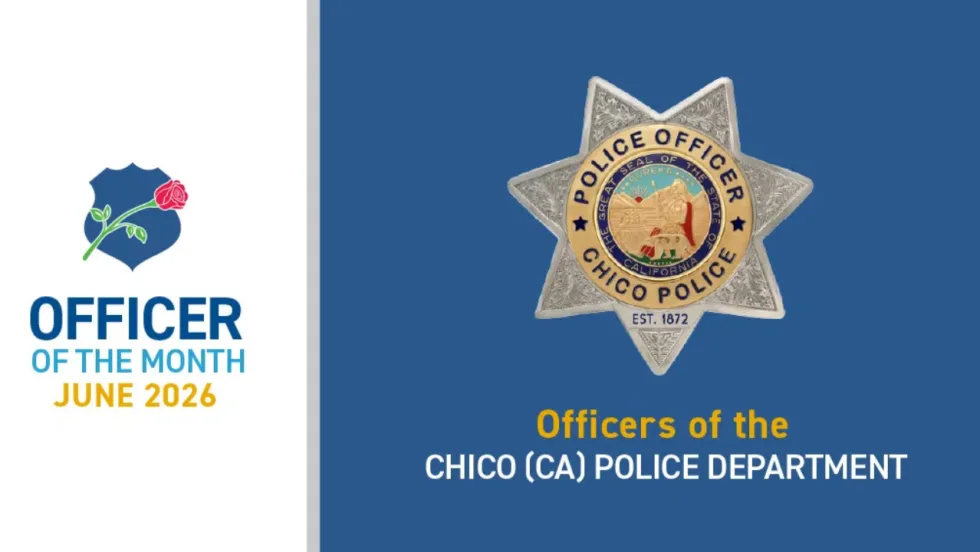
National Law Enforcement Officers Memorial Fund Announces June 2026 Officers of the Month
The National Law Enforcement Officers Memorial Fund (NLEOMF) named 15 officers of the Chico Police Department (California) as the Officers of the Month for June 2026 for their roles in responding to an active-shooter incident at a public library.
Read More →