



New Uses for ALPR Systems
Some agencies are even assigning volunteer units to perform regular grid-based sweeps of their towns with ALPRs and then they just sit on the information. At least they sit on it until a detective needs to blow some jerk's alibi.

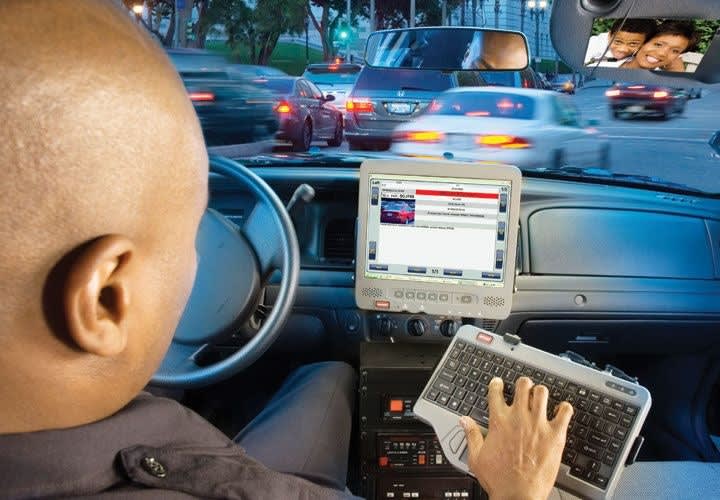
Following the 9/11 attacks, I worked a detail supporting U.S. Customs at the international border between Detroit and Windsor, Ontario. At each primary inspection lane there was a large rectangular mirror that allowed us to view the rear license plate of each vehicle. After we read each tag, the agent would key in the plate's number and state into the Custom Service's computer system and get the history on that tag.
In 2002, we saw the installation of cameras on newly erected concrete posts. This was Customs' first run at an Automatic License Plate Reader (ALPR) system. It fed into the Customs database system automatically, and the accuracy rate was solid, about 95 percent.
About five years later, someone got the notion to mount multiple cameras on a moving patrol car and include an on-board computer processor. Thus the modern-day ALPR was born.
New Applications
ALPR-equipped patrol cars were first used to hunt down stolen cars. But now many agencies are finding a wide variety of applications for this technology.
For example, detective bureaus are using ALPR systems to find wanted felons. Narcotics guys have also found this technology to be useful for tracking the "who and when" of activity around known drug houses.
Some agencies are even assigning volunteer units to perform regular grid-based sweeps of their towns with ALPRs and then they just sit on the information. At least they sit on it until a detective needs to blow some jerk's alibi.
Neighborhood Watch
Another possible application for an ALPR system involves neighborhood security. Here's the scenario: Your community has an upscale, gated neighborhood with no attendant or guard. Residents use pass cards and codes to open the gates.
Your agency could make a pact with that neighborhood's homeowner's association (HOA). You will install a fixed-mount ALPR camera at their gate. It will be connected to the processor back at dispatch and will use a "hot-list" that you maintain.
Based on an agreement made up front, your agency contracts with the HOA to:
Automatically dispatch a unit if the vehicle of a "serious offender" enters.
Record date, time, and vehicle information of each entrant. Maybe even snap a picture of the driver.
Within the confines of the law, provide reports to the HOA board of directors.
Such a setup would cost about $11,000 per camera and about $7,000 for the processor.
Making Money
In this scenario, the neighborhood obviously benefits from proactive police response and crime prevention. But why would any law enforcement agency be willing to provide such a service?
One benefit that an agency will gain in this scenario is intelligence. The information gained through operation of such an ALPR system could be an invaluable asset for you when trying to ferret out a B&E crew that's working an area.
Another benefit is money. If local politics permit you to do so, you can charge for the service. Obviously, you're not doing this to make a profit. Your goal is to cover some of the costs of your ALPR system.
You only need one ALPR database for your entire agency. So if you are being paid to maintain it for your ALPR subscribers, you can put it in your patrol cars with no added costs. Your patrol bureau essentially gets its ALPR database for free. That is a huge benefit for your agency.
Using ALPR, your patrol guys can write more tickets. And they can also make more warrant arrests. It is also reasonable to expect that your agency's percentage of successful case closures will rise.[PAGEBREAK]
Who Pays?
The exact numbers that you plug into the formula are yours alone. For the few agencies that have begun offering the kind of "neighborhood watch" service that we are discussing (or those who are very close), I'm hearing talk along these lines:
The subscribers pay all capital costs of installation and setup at their locations. They are also charged a pro-rated portion of the costs of the processor (akin to your city's sewer-tap fees). Subscribers also pay the cost of maintenance of the gear at their locations. This can be a third-party, fixed-fee service contract.
In addition to these charges, subscribers pay a subscription fee. I have heard that some agencies plan on charging $100 per week, per camera. That covers operating costs (like database management and monthly reports). Some agencies are planning to include a set number of proactive dispatches within the $100 fee. If additional dispatches are required, they are charged on a per-call basis.
Before you sign up the first subscriber and before you even start running the idea around town, tie down where the new revenue will go and who will control it. I cannot overemphasize the importance of this step.
In years gone by, I have worked with agencies to create new user fee revenue. Too often, the cops fail to get an "ironclad" commitment from the community leaders about how the new money will be controlled and spent.
In one instance, there was a verbal agreement with the city manager. He told the cops that the money would be theirs for new equipment. But local politicians had no understanding of the huge new dollars that were at stake.
The agency started bringing in about $500,000 a year with its ALPR services. So the cops were expecting new lasers, new radar, new computers, etc. However, when the city council saw the fund balance, it decided after a couple of years to remodel city hall with the new-found money.
The Key to Success
Many agencies make a fatal mistake with ALPR and it becomes a huge disappointment.
Buying and installing the technology is only half of the process. And it's the easy part.
The key to success is the underlying database. An ALPR system depends on a solid underlying database. And, no: NCIC will not do the job for you. Forget that one. You must do this on your own.
Database management is a time-consuming responsibility that is critical to the success of any ALPR program. Your officers are taking stolen car reports as they occur. There are the recoveries, as well. You cannot afford to put other tasks above this on the priority list. Stopping-or worse, arresting-the driver of a stolen vehicle that was recovered yesterday and returned to its owner will not make you any friends.
Just the Beginning
ALPR systems can help officers prevent crime, catch criminals, and recover stolen vehicles. These applications are well documented. But there are many additional uses for this technology, and we are just beginning to exploit it.
The scenarios that I have discussed in this article can generate new income for your agency and cover a major part of the cost of having ALPR systems in your patrol units.
The value of having ALPR in your patrol vehicles is hard to overestimate. They can help you solve crimes and keep an array of communications lines open. They can even reduce the chance that one of your own will get surprised by unexpectedly running into a bad guy while on patrol late one night.
Jim Donahue is a veteran police trainer and officer who makes his home in Florida. His training focuses on using in-car computers and other emerging mobile technologies to enhance officer safety. Jim also serves as an ambassador for the National Law Enforcement Officers Memorial Fund in Washington, D.C.
For More Information:
ELSAG North America
EZTag
Federal Signal PIPS
Genetec
Hub-Data911
INEX/ZAMIR
Laser Technology
NDI
Robovu
Transport Data Systems
Vigilant Video
More Technology
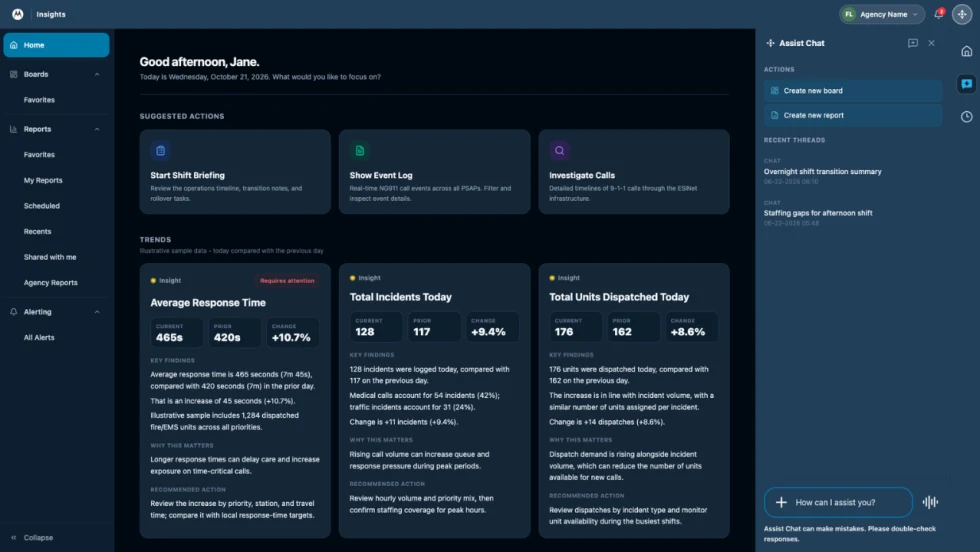
How Motorola Solutions’ New “Insights” Platform Helps Public Safety Agencies Identify Trends to Improve Their Operations
Motorola Solutions has introduced Insights, which leverages Assist, its mission-critical artificial intelligence (AI), to address these challenges and shape what’s next for public safety analytics and reporting technology.
Read More →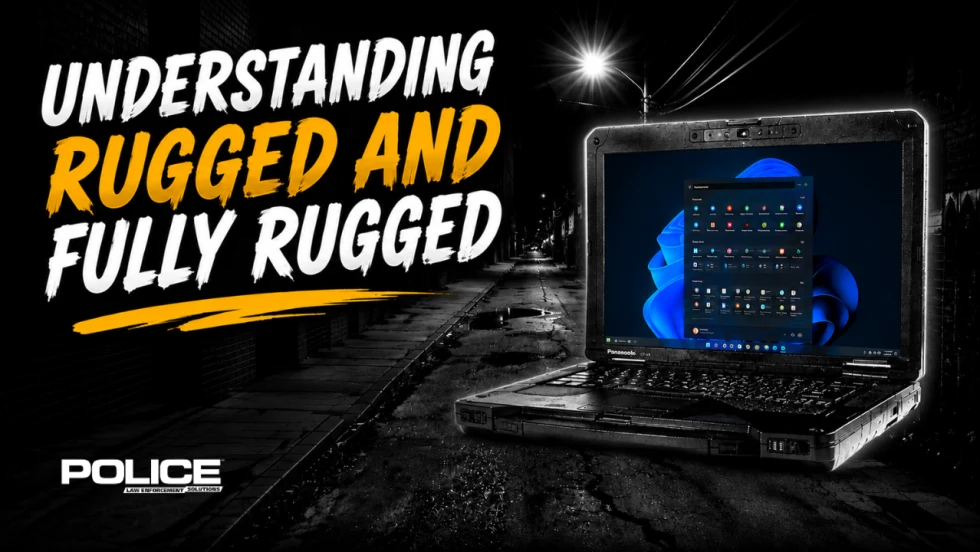
What Qualifies a Laptop as Rugged or Fully Rugged?
Police officers face a wide range of working conditions that can damage or even destroy a regular consumer laptop. Learn what qualifies a computer as rugged or fully rugged and why those devices are vital for law enforcement.
Read More →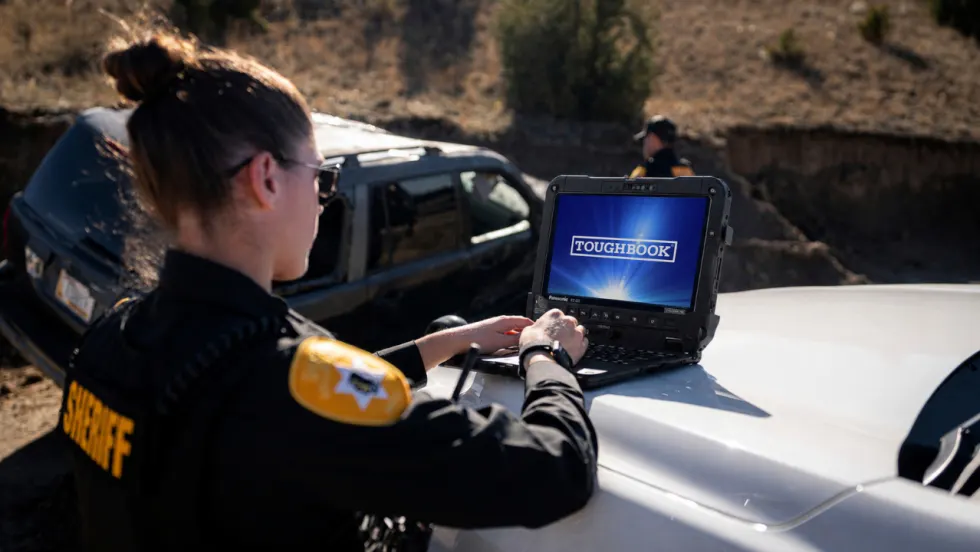
Panasonic Connect Launches the Toughbook 34 and Toughbook G3, Fully Rugged 2-in-1 Mobile Computers
Panasonic Connect has launched the Toughbook 34 and Toughbook G3 to facilitate in-vehicle dispatch, records management, and mobile command operations from any location.
Read More →
A police agency's guide to data-driven fleet management
Costs are rising and the public expects more transparency into how their tax dollars are spent. This e-book shows how police agencies can use fleet data to take control of fleet expenses while improving officer safety and demonstrating fiscal responsibility to the communities they serve.
Read More →
AI and analytics for law enforcement: Turning data into insights
Law enforcement agencies are managing more video, sensor data and digital evidence than ever before. Discover how AI and analytics can help turn that data into actionable insights that strengthen situational awareness, accelerate investigations and support more informed decisions.
Read More →
Vasco Electronics Adds Automatic Language Detection to Vasco Translator Q1
Vasco Electronics’ software update introduces hands-free language switching and expanded offline translation across 45 language pairs, empowering law enforcement, healthcare, and front-office enterprise teams
Read More →
North Miami Police Department Deploys Mark43
The North Miami Police Department has deployed Mark43 as part of its Five-Year Strategic Plan that represents its collective vision and goals for a more proactive police department, anchored by a core commitment to leveraging modern technology to enhance efficiency and public safety.
Read More →
Cellebrite Genesis for Enterprise Now Generally Available
Made available to the public sector in June, Cellebrite Genesis is serving a growing mix of national, regional, and local agencies worldwide, including some of the largest regional and metropolitan police departments. It is now available for enterprise organizations.
Read More →
2026 Vision FirstNet Users Summit to Host Emerging Leaders Training on Grassroots Advocacy for Public Safety
“Emerging Leaders Training: Understanding the Importance of Grassroots Advocacy for Public Safety," a session during the 2026 Vision FirstNet Users Summit, will offer a roadmap for unified advocacy at the federal level.
Read More →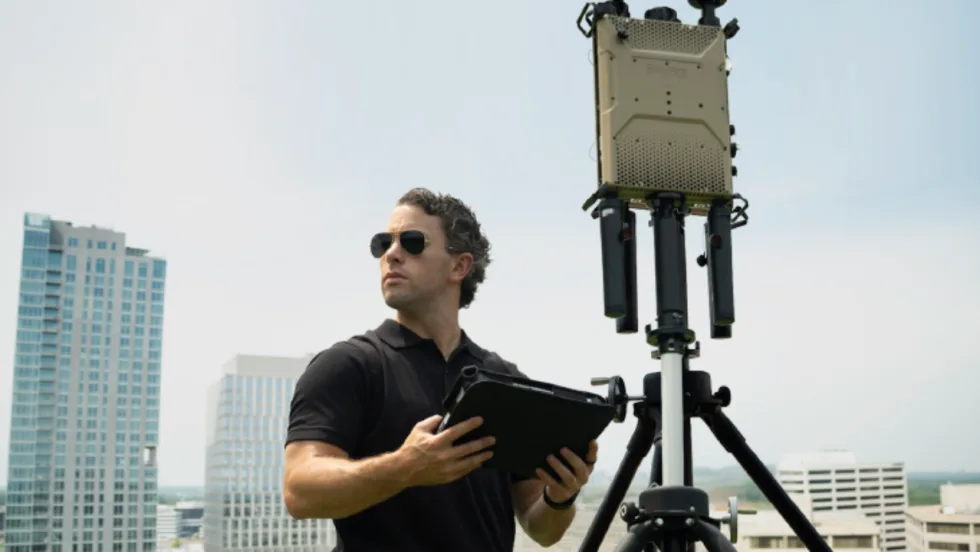
Motorola Solutions Completes Acquisition of D-Fend Solutions
Motorola Solutions has acquired D-Fend Solutions, an industry leader in counter-drone technology. This deal provides public safety and enterprise customers with access to advanced counter-unmanned aerial systems.
Read More →