



New Challenges in Cyber Forensics
Today's digital investigator must learn how to extract evidence from drones, encrypted portable devices, cryptocurrency trades, and a growing range of appliances and products defined as the Internet of Things (IoT).

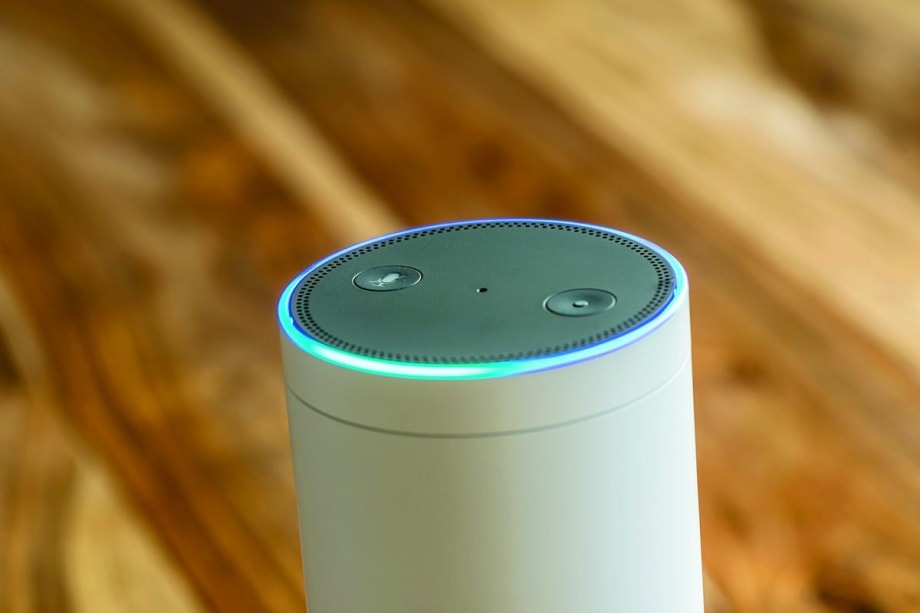
Don't say the wake word to a Smart Speaker at a crime scene. If you do and the system hears it, you will destroy evidence. (Photo: Getty Images)
A little more than a decade ago the work of a digital forensic specialist was pretty much about computers. Then along came the iPhone and Android and the challenge of the spread of portable devices. Now new challenges are arising from technologies that few people even imagined before they burst upon the market. Today's digital investigator must learn how to extract evidence from drones, encrypted portable devices, cryptocurrency trades, and a growing range of appliances and products defined as the Internet of Things (IoT).
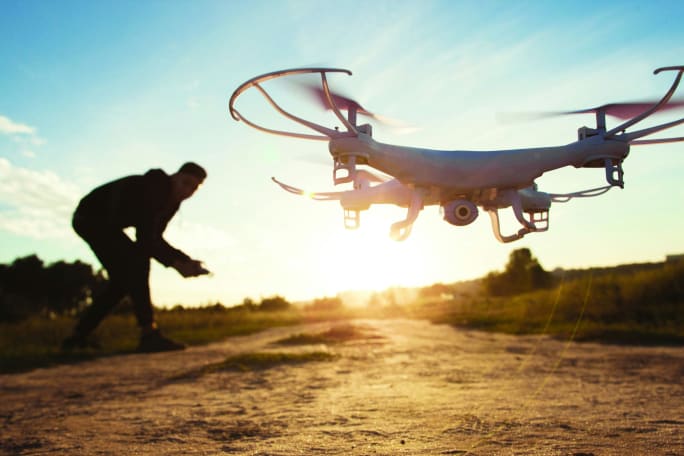
Drone piloting is one of the most popular hobbies in the United States, and these aircraft are now being used in crime. (Photo: Getty Images)
Flying Things
One of the most popular gifts found under the Christmas trees of average Americans the last two years were hobby drones. These small remote-controlled aircraft look like toys, but they are actually extremely sophisticated devices capable of capturing 4K-quality video, carrying payloads, and flying programmed routes well beyond line of sight. So it's little wonder that drones have caught the eyes of enterprising criminals, miscreants, and even terrorists.
The most common criminal activity involving drones is smuggling. These little birds can carry a few pounds of drugs or cellphones or other contraband into prisons. And they have been discovered doing so in the United States and in numerous foreign countries.
Drones can also carry drugs across the border. At least one such failed attempt was discovered south of the California border town of San Ysidro in 2015. Since then more crashed drones have been discovered. And only the unsuccessful ones make the news or fall into law enforcement hands.
The second most common category of drone crimes falls under the heading of harassment and surveillance. Drones are being used by stalkers and sex offenders to monitor their prey. They have also been used to spy on and even disrupt law enforcement operations. Drone pilots have even accidentally or intentionally buzzed and even struck police aircraft.
Weaponized hobby and commercial drones are also common in war zones. In Iraq terrorists have used drone swarms to carry out IED attacks. Last year in one of the most devastating drone attacks ever, pro-Russian separatists hit a huge Ukrainian military munitions storage facility with a single drone carrying a thermite grenade. The attack reportedly destroyed more than $1 billion in arms and ammunition. The size of the drone has not been reported, but the grenade did not have to be large, and there are numerous commercial and even hobby drones that could have done the job.
The growing use of drones in criminal activity means that law enforcement is recovering them at crime scenes. Some have crashed; some were intentionally brought down by officers.
Regardless of how a drone that was used in a crime falls into law enforcement hands, pulling evidence off of it will involve digital forensic analysis. But even officers and detectives at the scene need to know how to handle the device. No matter what the drone looks like, it is not a toy. Don't handle it without proper crime scene protocol because you might contaminate physical evidence left on the device by the perps. And don't turn it on because doing so might alter the digital evidence. Also, don't do what some agencies have done and auction off a drone as seized property without having it analyzed for evidence.
Drones are becoming such a concern for forensic investigators that three of the largest makers of cyber evidence analysis software, Cellebrite (www.cellebrite.com), MSAB (www.msab.com), and Oxygen Forensics (www.oxygen-forensic.com), recently demonstrated their new drone analytics tools at the Techno Security & Digital Forensics Conference held last month in Myrtle Beach, SC.
These new drone tools are being incorporated into the companies' flagship cyber forensics software products and can interpret data captured by drones, including flight path, altitude, and speed. They can also help analysts recover video and photos captured by the drone and metadata from any photos or video recovered.
Experts say the amount of evidence that can be pulled off of a drone is limited by what is actually captured by law enforcement. Most of the time, the drone is recovered but not the controller or the smart device used to operate it. And as for data stored in the cloud, that's a non-starter because the servers are in China or controlled by Chinese companies.
But there are at least two depositories of cyber evidence on the typical hobby drone: the camera memory and the internal memory. Cellebrite, MSAB, and Oxygen offer training to teach digital forensic specialists how to properly access and analyze this data.
Encoded Cash
One of the greatest challenges now facing law enforcement is the development of cryptocurrencies such as Bitcoin. It's estimated that 25% of all Bitcoin users are involved in some kind of criminal activity. This means that cryptocurrency evidence is becoming more common at crime scenes.

Example of a Bitcoin wallet. (Photo: Aaron Strain)
A cryptocurrency is an encrypted piece of code that can only be read by someone with the keys. It was recently estimated that there are 1,600 of these financial devices available. Only about four of them are really common: Bitcoin, Litecoin, Ethereum, and Monero. There's a reason why these coded currencies are so popular with crooks: They are pretty much untraceable unless you have the public and private keys. Which should be target number one of any investigation of criminal activity involving computers these days.
Let's say you are investigating a scene where someone perpetrated a ransomware attack. Don't think this unlikely. You don't have to be a computer genius to hit an organization or individual with ransomware. Kits for launching such attacks are available on the Dark Web and the bad guys can even hire someone to do it for them and just take a cut.
So back to our scenario; you are investigating the home or office of someone suspected of launching a ransomware attack. One of the primary targets of your search is the suspect's cryptocurrency "wallet." This wallet could be a piece of software on a device, it could be a thumb drive-looking piece of hardware, or it could be paper with a series of words or numbers on it, often as many as 16 different sequences or words.
Treat this scene as extremely fragile. Whatever you do, do not turn off any devices or disconnect the drives. Get the experts on scene to capture RAM memory (the memory that erases when the device is shut down).
Alexa, Record My Murder
WiFi technology in our homes and offices has enabled the development of a wide variety of appliances and devices that are connected to the Internet, including smart TVs, refrigerators that track consumption of foods and create shopping lists, and the smart speaker.
The smart speaker, most commonly the Amazon Echo with Alexa software or the Google Home, is by far the most popular device in the Internet of Things (IoT), which is the fastest growing category of digital devices on the market. It is estimated that by 2020, there will be more IoT devices in America than people.
Some homes and offices have more than one of these Amazon or Google devices. (The author has three.) These devices listen for their wake words and execute spoken commands such as telling time, setting alarms, playing online radio stations, and answering simple questions. With additional accessories, they can also manipulate thermostats, lighting, and other controls.
Smart speakers are showing up at more and more crime scenes. During a presentation at last month's Techno Security & Digital Forensics Conference four out of approximately 50 digital forensics analysts attending a presentation on IoT devices said they had dealt with smart speakers.
The presence of such devices at crime scenes means officers and analysts need to know how to handle them. The most important thing to know is what not to do. Don't say the wake word. If you do and the system hears it, you will destroy evidence. The system has very limited onboard memory. Saying the wake word erases one of its most recent commands.
Most of the data from smart speakers, however, is captured in the app on the owner's phone or tablet or on the cloud. These devices are not computers; they are portals to computers in the cloud that tell the Alexa or Home or whatever to execute your commands. That's why they are basically paperweights when they lose their WiFi connection.
The good news from an investigative standpoint is that everything ever asked of these devices is stored on the cloud until the user erases it from the app. The bad is that the cloud servers are controlled by huge companies that tend to ignore warrants or fight them. If you really need the command data from a smart speaker your best bet is to access it from the app on the owner's phone or tablet. And of course, the easiest way to do this is to get the victim, suspect, or other individual with legal standing to give you the user name and password.
That's exactly what happened in the most publicized instance of investigators seeking evidence from a smart speaker. Benton County, AR, prosecutors served Amazon with a warrant for the cloud data from a murder suspect's Alexa. Amazon fought the warrant, as it probably didn't want to set a precedent of handing over such data. After months of legal wrangling, no precedent was set. The suspect's attorney gave the prosecution the user name and password for the app.
More Technology
Panasonic Connect Launches the Toughbook 34 and Toughbook G3, Fully Rugged 2-in-1 Mobile Computers
Panasonic Connect has launched the Toughbook 34 and Toughbook G3 to facilitate in-vehicle dispatch, records management, and mobile command operations from any location.
Read More →
A police agency's guide to data-driven fleet management
Costs are rising and the public expects more transparency into how their tax dollars are spent. This e-book shows how police agencies can use fleet data to take control of fleet expenses while improving officer safety and demonstrating fiscal responsibility to the communities they serve.
Read More →
AI and analytics for law enforcement: Turning data into insights
Law enforcement agencies are managing more video, sensor data and digital evidence than ever before. Discover how AI and analytics can help turn that data into actionable insights that strengthen situational awareness, accelerate investigations and support more informed decisions.
Read More →

Vasco Electronics Adds Automatic Language Detection to Vasco Translator Q1
Vasco Electronics’ software update introduces hands-free language switching and expanded offline translation across 45 language pairs, empowering law enforcement, healthcare, and front-office enterprise teams
Read More →
North Miami Police Department Deploys Mark43
The North Miami Police Department has deployed Mark43 as part of its Five-Year Strategic Plan that represents its collective vision and goals for a more proactive police department, anchored by a core commitment to leveraging modern technology to enhance efficiency and public safety.
Read More →
Cellebrite Genesis for Enterprise Now Generally Available
Made available to the public sector in June, Cellebrite Genesis is serving a growing mix of national, regional, and local agencies worldwide, including some of the largest regional and metropolitan police departments. It is now available for enterprise organizations.
Read More →
2026 Vision FirstNet Users Summit to Host Emerging Leaders Training on Grassroots Advocacy for Public Safety
“Emerging Leaders Training: Understanding the Importance of Grassroots Advocacy for Public Safety," a session during the 2026 Vision FirstNet Users Summit, will offer a roadmap for unified advocacy at the federal level.
Read More →
Motorola Solutions Completes Acquisition of D-Fend Solutions
Motorola Solutions has acquired D-Fend Solutions, an industry leader in counter-drone technology. This deal provides public safety and enterprise customers with access to advanced counter-unmanned aerial systems.
Read More →
ZeroEyes, Advantech & Camden Police Partner to Bring AI Gun Detection Technology to Delaware School District
ZeroEyes has partnered with Advantech and the Camden Police Department to deploy ZeroEyes’ AI gun detection and intelligent situational awareness platform at Delaware’s Caesar Rodney School District (CRSD).
Read More →
Leonardo U.S. Cyber & Security Solutions Introduces SignalTrace, the Next Evolution in Electronic Signature Detection Technology
SignalTrace reflects years of product refinement and a clearer expression of the technology’s purpose of recognizing and correlating electronic signatures in publicly broadcast wireless signals to reveal patterns, relationships, and trends that might otherwise go undetected.
Read More →