



Miranda Wording
When custodial interrogation is imminent and it's time to give the suspect a Miranda warning, what exactly do you have to say? The answer is, nothing exactly. The U.S. Supreme Court, which created the necessity of a warning of rights and a waiver as prerequisites to the prosecutorial use of a statement obtained through custodial interrogation, has never held that any precise wording is required.

When custodial interrogation is imminent and it's time to give the suspect a Miranda warning, what exactly do you have to say? The answer is, nothing exactly. The U.S. Supreme Court, which created the necessity of a warning of rights and a waiver as prerequisites to the prosecutorial use of a statement obtained through custodial interrogation, has never held that any precise wording is required.
In fact, the court has said the opposite-that no particular wording must be used. But any formulation of the warning that is used must adequately convey the substance of the rights to the suspect, even if this means translating them into another language or into simpler explanations for youthful or uneducated suspects. (There must also be proof that the suspect understood the warning, and that he or she waived the rights, whether expressed or implied.)
In The Beginning...
The Miranda decision held that warnings and waivers are necessary to make a confession admissible if it was obtained by police custodial interrogation, but the decision did not specify what was required to satisfy this evidentiary prerequisite. The Miranda decision itself contains at least three variations on the warning:
(1) "The person must be warned that he has a right to remain silent, that any statement he does make may be used as evidence against him, and that he has a right to the presence of an attorney, either retained or appointed." (Miranda v. Arizona, 1966, 384 US 436, at page 444.)
(2) "He must be warned prior to any questioning that he has the right to remain silent, that anything he says can be used against him in a court of law, that he has the right to the presence of an attorney, and that if he cannot afford an attorney one will be appointed for him prior to any questioning if he so desires." (Miranda, at page 479.)
(3) "A four-fold warning [must] be given to a person in custody before he is questioned, namely, that he has a right to remain silent, that anything he says may be used against him, and that he has a right to have present an attorney during the questioning, and if indigent he has a right to a lawyer without charge." (Miranda, dissenting opinion, at page 504.)
In 1966, a composite warning was written by a California prosecutor who happened to own a printing press. Sensing opportunity, he printed wallet-sized cards and peddled them to law enforcement agencies all over the country by the hundreds of thousands.
Because California police departments quickly adopted this version, it was the one heard weekly on the popular "Dragnet" television show, which was set in Los Angeles. Between the enterprise of the printer-prosecutor and the power of television, the California version of the warning was soon standardized in many other states. It read as follows:
"You have the right to remain silent. Anything you say can and will be used against you in a court of law. You have the right to talk to a lawyer and have him present with you while you are being questioned. If you cannot afford a lawyer, one will be provided for you at government expense."
Over The Years...
As time and litigation intervened, refinements were made. It soon became clear, for example, that the "can and will be used against you" language was neither required by Miranda nor legally accurate. Whether a statement will be used is subject to the prosecutor's offer, the defense attorney's objection, and the judge's ruling. Telling a suspect that he can have a lawyer "while you are being questioned" may not alert him to the right to talk to a lawyer "prior to any questioning." The phrase "at government expense" is not as meaningful to many criminals as "free of charge." The original language adopted by many agencies had to be improved.
Also, some courts began to insist on additional explanations that were not mentioned in Miranda. Many warnings became bloated with surplus verbiage that almost seemed designed to induce the suspect to invoke, going well beyond the basic four-part advisory outlined in Miranda.
The Supreme Court reigned in the lower courts that were insisting on specific wording, or that were encouraging expanded super-warnings, in a pair of decisions in the 1980s.
California v. Prysock: "No Talismanic Incantation"
The California Court of Appeal reversed a murder conviction because although the killer was advised of his right to appointed counsel at no cost to him, he was not specifically told that the right to appointed counsel could be exercised before questioning began. The U.S. Supreme Court reversed this ruling, saying that "Miranda itself indicated that no talismanic incantation was required to satisfy its strictures." Since the killer had been adequately advised of the substance of his rights, his confession was admissible.
Duckworth v. Eagan: "Touching All the Bases"
An attempted-murder suspect was given a Miranda warning by Indiana police who covered all the required advice, but told Eagan that if he requested a lawyer, the lawyer could not be appointed until he went to court. His conviction was set aside by the federal appellate court, which ruled that the information misled the suspect as to when his right to counsel could be asserted. This ruling was also reversed by the U.S. Supreme Court, which chastised lower courts for being too fastidious about the wording of the warning.
"We have never insisted that Miranda warnings be given in the exact form described in that decision. Reviewing courts therefore need not examine Miranda warnings as if construing a will or defining the terms of an easement. The inquiry is simply whether the warnings reasonably convey to a suspect his rights as required by Miranda. We think the initial warnings given to defendant touched all the bases required by Miranda."
And Now...
After 40 years of challenges and litigation, variations on the basic warning abound. A 2004 Florida court decision found that law enforcement agencies in that state had 89 different versions of the warning. Though any plain-English (or translated) version of the four required warnings will do, the following form "touches all the bases" laid out by the U.S. Supreme Court, provides an express acknowledgment of understanding of each right, and seeks an express waiver:
"You have the right to remain silent. Do you understand?
"Anything you say may be used against you in court. Do you understand?
"You have the right to the presence of a lawyer both before and during questioning. Do you understand?
"If you want a lawyer but cannot afford to pay, a lawyer will be appointed for you free of charge before questioning, if you want. Do you understand?
"Do you want to talk about what happened?"
Local Rules May Vary
Courts in a given jurisdiction can tend to become accustomed to seeing or hearing particular formulations of the warning and may become unsettled when something new appears. Law enforcement officers should devise their warnings in consultation with local prosecutors, in order to ensure compliance with local court decisions that may impose greater restrictions on confession admissibility than required by the U.S. Supreme Court.
Devallis Rutledge, a former police officer and veteran prosecutor, is Special Counsel to the Los Angeles County District Attorney.
More Patrol
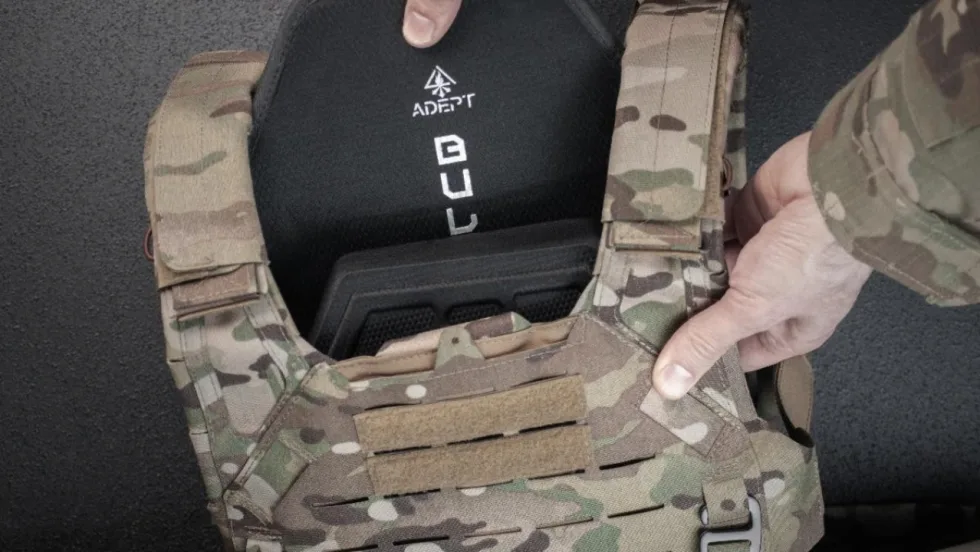
Adept Armor Introduces Two New Rifle Plates
Adept Armor has launched two new Level IV ballistic plates, the Emperor and the Archon Mark 2, which brings Adept Armor’s new Quatroid ceramic to the high-threat, performance-value center of the range at 5.2 pounds.
Read More →
POLICE Product Test: Benchmade Bailout
The Benchmade Bailout is a slim, lightweight carry knife with a deep-ride pocket clip and comes in a variety of blade steels and scales. Here is a detailed review of the Taiga Green Bailout, released earlier this year.
Read More →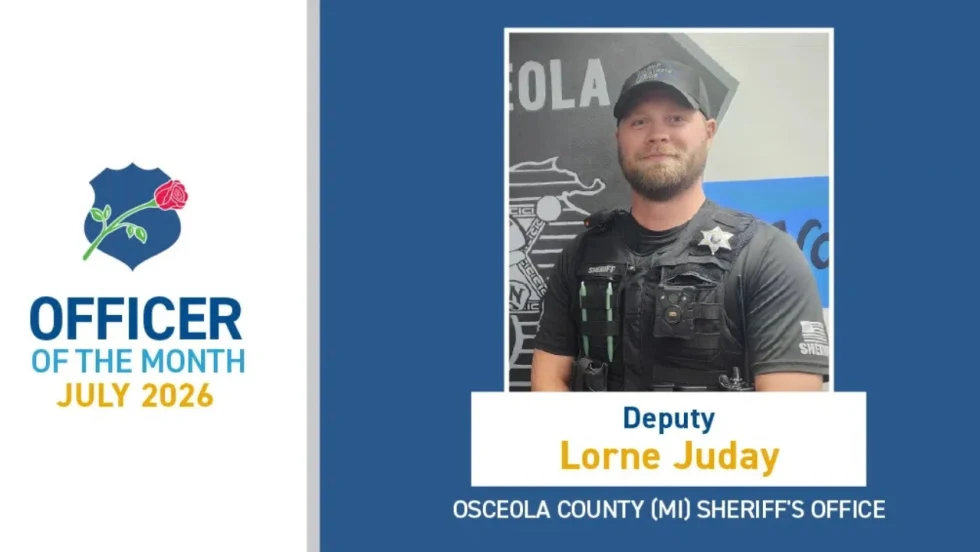
NLEOMF Announces July 2026 Officer of the Month
NLEOMF honored a Michigan deputy sheriff as the July 2026 Officer of the Month for rescuing a trapped driver from a burning vehicle following a Fourth of July crash.
Read More →
Streamlight to Showcase Newest Lighting Products at National Safety Council’s Safety Congress & Expo 2026
Streamlight will showcase its latest lights, including the Portable Scene Light III and the LiteBox 1Million, at the 2026 National Safety Council (NSC) Safety Congress & Expo.
Read More →
The 2027 World Police & Fire Games Set for Perth, Australia
The 2027 World Police & Fire Games (WPFG) will take place in Perth, Western Australia, from Friday, March 12 through Sunday, March 21, 2027.
Read More →
5.11 Partners with National Fallen Firefighters Foundation to Support #ForThe343
5.11 has joined the nationwide movement honoring the 343 New York City Fire Department firefighters lost on Sept. 11, 2001.
Read More →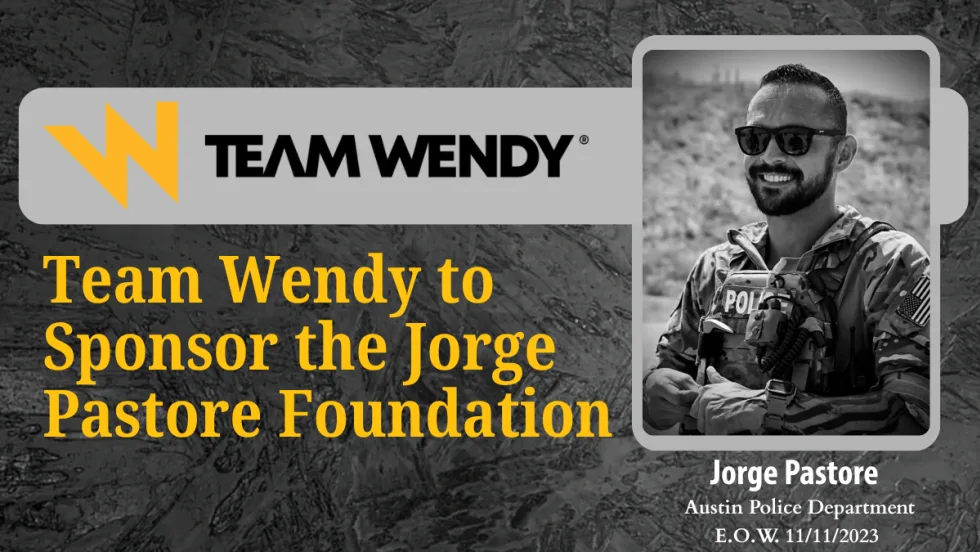
Team Wendy Announces Title Sponsorship of the Jorge Pastore Foundation
Team Wendy’s 3-year partnership with the Jorge Pastore Foundation expands access to programs that strengthen those who serve.
Read More →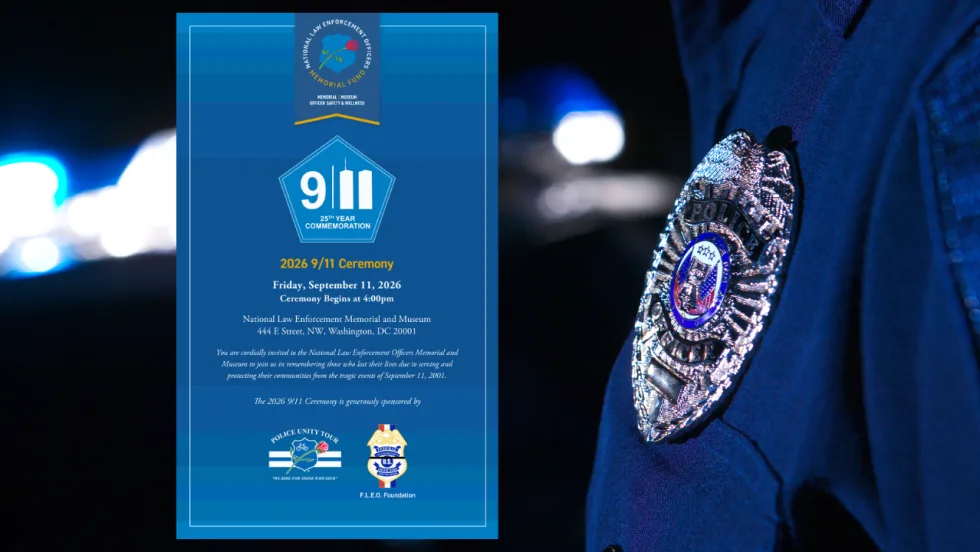
National Law Enforcement Memorial and Museum Hosting 9/11 25th-Year Commemoration Ceremony
The National Law Enforcement Memorial and Museum is hosting a 9/11 25th Year Commemoration Ceremony on Sept. 11 at 4 p.m.
Read More →
National Law Enforcement Officers Memorial Fund Announces June 2026 Officers of the Month
The National Law Enforcement Officers Memorial Fund (NLEOMF) named 15 officers of the Chico Police Department (California) as the Officers of the Month for June 2026 for their roles in responding to an active-shooter incident at a public library.
Read More →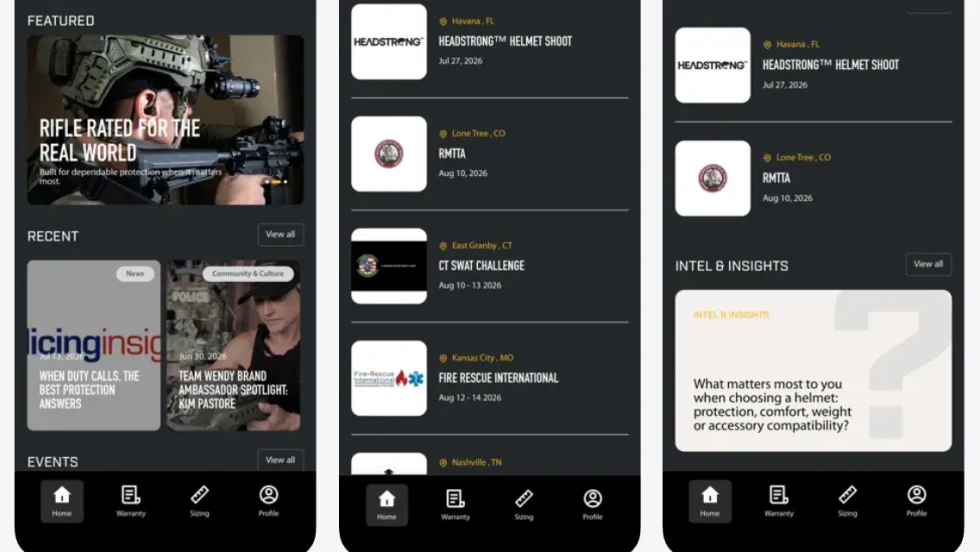
Team Wendy App Creates New Digital Hub for Helmet Owners
The Team Wendy Community App provides one location for warranty registration, size-fit tools, product updates, and community connection. For helmet owners, the new app creates a simpler path to the information and tools that matter most.
Read More →