



Magic Lessons
Magicians use humor and empathy to lower your guard, so keep yours up and don't relax just because the subject you are dealing with seems "nice." Rather, you should be the one to use humor and empathy to lower the guard of the people you're dealing with: suspects, witnesses, and internal affairs alike.

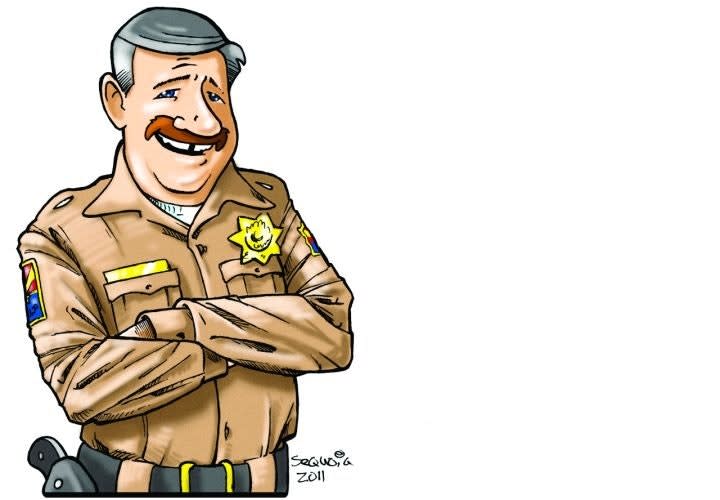
Illustration: Sequoia Blankenship
One of the great things about working in law enforcement is the remarkable characters you meet along the way. I am not just talking about suspects and victims, but the unique personalities drawn into our profession. From the arts to sports to theater, crime fighters bring a broad array of talents and skills to the table and often find these of great use in the true artistic adventure that is police work.
Bill Breen is one such fellow who brings his magical skills to the job in many ways. That's right…Bill is a true magician. He dazzled us in the office with his sleight of hand and then made arrests by weeding out the cheaters that flocked to our state after Arizona passed a law allowing social gambling. But Bill's ability to awe us with his legerdemain, and spot its use by others, was just one lesson of magic we learned.
Magicians have known about the limits of human attention for millennia and they've used this to make magic—literally. Reginald Scot, in 1584, described magic in his work, "The Discoverie of Witchraft," but only today is modern neuroscience really discovering what happens in our heads. The magic of magic lies in understanding the limits of human attention and the brain's tendency to fill in gaps of perception.
Bill showed me that tricks that entertain could also be used to swindle, cheat, and injure, and controlling your own attention was an essential element in foiling evil "tricks." When you look at a dash cam or body camera video of an officer injured, think about how often the assailant distracted with word and deed. A magician building your expectation while distracting your eye is no different than an assailant speaking compliance while positioning for a sucker punch…except, of course, that the ending of the trick is not as entertaining.
When I took a course on motor learning in grad school I was taught that a person's short-term memory will hold five to eight separate items in its awareness only for about 20 seconds. Every enchanter knows that card tricks depend on inattentional blindness, a phenomenon scientists only recognized in the mid-1990s in which your brain simply cannot detect the visual objects that are not attended to. And this, dear readers, can get you killed.
In fact, understanding magic explains why we have so many maxims designed to focus our minds properly and help us defy the tricksters among us. Telling us to "watch the hands" or "expect the unexpected" are examples of mnemonics aimed at keeping our heads in the game and preventing our natural tendencies that tricksters use against us.
In the book "Sleights of Mind," the authors explain how science is understanding the phenomena magicians use to create illusions, and this helps us understand why eyewitness testimony can fail and suspects can hurt us. I don't want to take the enjoyment of magic tricks away from you but I think they make some great points that can improve officer safety.
First, magicians know multitasking is a myth and if you try to do multiple things simultaneously you will probably do nothing well, so focus on one thing at a time.
Second, memory is fallible and the more time between acquisition and recovery the greater the inaccuracy, so take notes immediately after an event.
Third, magicians use humor and empathy to lower your guard, so keep yours up and don't relax just because the subject you are dealing with seems "nice." Rather, you should be the one to use humor and empathy to lower the guard of the people you're dealing with: suspects, witnesses, and internal affairs alike.
Finally, magicians know that focusing attention on one thing suppresses everything else; so remember to break your fixation, think about other options, and trust your gut.
The simple truth is we have a limited ability to attend to things, remember things, and even perceive things. Magic uses these facts to build false expectations and draw attention in the wrong direction. This permits the limits of memory to do their dirty work. These sure do sound like the kinds of things bad guys use to their advantage. Understanding these limitations is the first step in controlling them.
Now when I watch magic I understand what is happening to me and remember working with Bill and learning the lessons he taught us. It was a lot of fun; he was a dang good crime fighter, a great magician, and—whether he knew it or not—a superb officer safety instructor.
Dave Smith is an internationally recognized law enforcement trainer and is the creator of "JD Buck Savage." You can follow Buck on Twitter at @thebucksavage.
More Patrol

Streamlight Portable Scene Light III Wins 2026 OH&S New Product of the Year Award
Streamlight’s Portable Scene Light III has won the 2026 Occupational Health & Safety (OH&S) New Product of the Year Award in the Lighting category.
Read More →
Adept Armor Introduces Two New Rifle Plates
Adept Armor has launched two new Level IV ballistic plates, the Emperor and the Archon Mark 2, which brings Adept Armor’s new Quatroid ceramic to the high-threat, performance-value center of the range at 5.2 pounds.
Read More →
POLICE Product Test: Benchmade Bailout
The Benchmade Bailout is a slim, lightweight carry knife with a deep-ride pocket clip and comes in a variety of blade steels and scales. Here is a detailed review of the Taiga Green Bailout, released earlier this year.
Read More →
NLEOMF Announces July 2026 Officer of the Month
NLEOMF honored a Michigan deputy sheriff as the July 2026 Officer of the Month for rescuing a trapped driver from a burning vehicle following a Fourth of July crash.
Read More →
Streamlight to Showcase Newest Lighting Products at National Safety Council’s Safety Congress & Expo 2026
Streamlight will showcase its latest lights, including the Portable Scene Light III and the LiteBox 1Million, at the 2026 National Safety Council (NSC) Safety Congress & Expo.
Read More →
The 2027 World Police & Fire Games Set for Perth, Australia
The 2027 World Police & Fire Games (WPFG) will take place in Perth, Western Australia, from Friday, March 12 through Sunday, March 21, 2027.
Read More →
5.11 Partners with National Fallen Firefighters Foundation to Support #ForThe343
5.11 has joined the nationwide movement honoring the 343 New York City Fire Department firefighters lost on Sept. 11, 2001.
Read More →
Team Wendy Announces Title Sponsorship of the Jorge Pastore Foundation
Team Wendy’s 3-year partnership with the Jorge Pastore Foundation expands access to programs that strengthen those who serve.
Read More →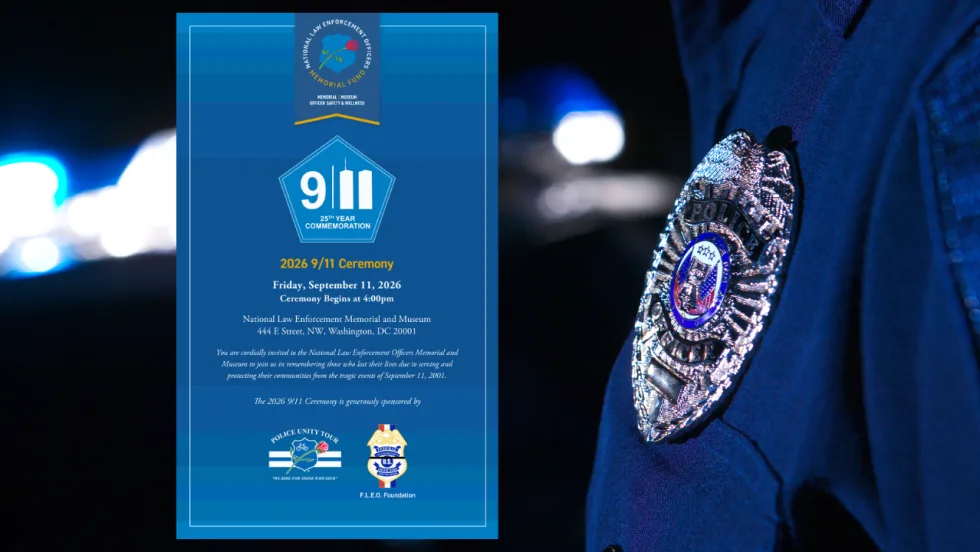
National Law Enforcement Memorial and Museum Hosting 9/11 25th-Year Commemoration Ceremony
The National Law Enforcement Memorial and Museum is hosting a 9/11 25th Year Commemoration Ceremony on Sept. 11 at 4 p.m.
Read More →
National Law Enforcement Officers Memorial Fund Announces June 2026 Officers of the Month
The National Law Enforcement Officers Memorial Fund (NLEOMF) named 15 officers of the Chico Police Department (California) as the Officers of the Month for June 2026 for their roles in responding to an active-shooter incident at a public library.
Read More →