



Leading by Example
What most agencies do well is produce managers; it helps with short-term goals but exasperates long-term ones. Please don't tell me you are part of that innocuous group of lost souls that think managing and leading are the same thing, because they're not.


Photo: Amaury Murgado
Anything I ever needed to know about leadership I learned serving in the U.S. Army prior to becoming a law enforcement officer. In my 22-year Army career (active and reserve combined) I attended leadership schools required for promotion, including graduating from the Sergeants Major Academy. The Army takes leadership seriously and makes it a training priority. In fact, its battle cry (no pun intended) is to lead by example. It's a credo taken to heart by privates on up through the chain of command. I wish those in law enforcement had the same mindset.
It seems to me that in law enforcement circles there is a great deal of talk about leadership but you seldom see the things preached about put into practice. Take for example a typical promotional exam. It usually includes memorizing some type of management/supervision book. And although most of these types of books have one section on leadership, you seldom find a book devoted entirely to leadership included in the required study material.
In practice, agencies give leadership principles mystical qualities because they seldom appear in real life. What most agencies do well is produce managers; it helps with short-term goals but exasperates long-term ones. Please don't tell me you are part of that innocuous group of lost souls that think managing and leading are the same thing, because they're not.
Business icon and former '90s presidential candidate Ross Perot made the difference clear when he said, "Lead and inspire people. Don't try to manage and manipulate people. Inventories can be managed but people must be led." Over time, this sage wisdom has evolved into a simple message that we should all take to heart: "You manage things, but you lead people."
The Problem
This problem statement is very simple to write: Law enforcement lacks leadership training at all levels. It's such a common problem I can't blame those often placed in leadership positions for the way they act; they really don't know any better. Think about it, one day you're sitting with this guy at the academy and five years later he's your lieutenant. In seven years he becomes a captain because he's buds with the head of the agency. It wasn't long ago that this guy was your zone partner asking you questions on how to do things. Now he is making decisions that directly affect your career. In reality, without the proper training, he is no better prepared for the position than you are. The only differences between the two of you are a jump in pay, a day job, and an office with a view.
Let's be fair and say the same guy has a few schools under his belt that should help him be both a good manager and a proper leader. He has several plaques hanging up in his office for everyone to see. And they hang there, collecting dust, because they don't mean anything. You see, he never attends training. He comes to work late, takes long lunches, and leaves early. When he is at work, he fills his day with gossip or looking things up he wants to buy on the Internet. On the rare occasion that he is given a task to complete, he sends it down range to someone else. It's not that you dislike the person; you dislike what he does. Or better yet, what he doesn't do. He may be your supervisor, but he is as much of a leader as you are an ancient time traveler.
What Not to Do
Leadership begins and ends by setting the example. It's not about doing something right every once in a while, it's about doing what's right all of the time. It becomes a philosophical question in which your actions become the answer. Let me give you some examples you might be familiar with.
You are a road officer and part of your duties entails traffic enforcement. On duty you're fair about your enforcement but you do have a reputation for stroking people with multiple tickets on a regular basis. Off duty, however, you have a lead foot. Every month you write people tickets for the very infractions you commit. You're not leading by example but rather teaching by example; you are teaching others that it's OK to speed as long as you don't get caught.[PAGEBREAK]
You are the same guy as before, with the same lead foot, but now you're a sergeant. You have to handle a speeding complaint on one of your subordinates. Since it's his third complaint in a month, you issue him a written reprimand. The only difference between you and your subordinate is that you haven't been caught yet and you both know it. There's no building respect there.
You can't be an effective leader if you have one set of standards for members of your command and then a more relaxed set for yourself. If you do, all you are is a guy filling a position that can make someone do something as part of their employment. You don't motivate, you castrate.
Look at it another way. How many times have you been at a meeting and thought the person speaking was full of crap? Here is this clown, talking about overdue evaluations, and Bozo over there is five months past due on several of his own. Unfortunately, law enforcement is filled with "do as I say but don't do as I do" type supervisors. I bet if I asked you to name three supervisors in your agency who act that way right now, you could, and without hesitation.
What You Can Do
First and foremost, understand that the only person you can change is yourself. You must make a commitment and stick to your guns. You have to forget everyone else and what they get away with. If not, they will drag you down in the mud with them. Yes, it's a fact of life that certain people get away with things that make you grit your teeth in disgust. Keep your standards high anyway. Remember that you do this job for personal satisfaction and to help others. No one comes into law enforcement expecting to become rich and famous. Most of us become cops because of a sense of duty, commitment, and the knowledge that like so many others before us, someone has to draw the line in the sand. Draw your line and don't let some Bozo blur it for you.
Second, if your agency doesn't believe in leadership training, find some training on your own. There are plenty of resources out there and many of them are free. FEMA has a Professional Development Series (PDS) that includes an independent study course on Leadership and Influence, Effective Communication, and Decision Making and Problem Solving.
Find a military manual on leadership. The U.S. Army Leadership Field Manual is a classic book broken down into three parts: leadership common to all, skills and actions required from field leaders, and actions required from organizational and strategic leaders. It's my favorite, but then again I am a little biased toward the Army.
You could also spend some time reading historical biographies on leaders of your choice. The study of history combined with leadership has led to an entire genre of books. These works revolve around "leadership lessons from..." themes. Two of my favorite leadership books come from one in each category: "Leadership" by Rudolph W. Giuliani and "Lincoln on Leadership" by Donald T. Phillips.
Third and most important, if you are going to talk the talk, you have to walk the walk. For example, it's not what you say that matters but what you do. If you're conducting vehicle inspections, your vehicle better be in order. If you're checking guns after range training, yours better be the first one cleaned. Make sure you always have on a good clean uniform and you better never need a haircut. It's not just doing your job, but doing it well that matters.
Are Leaders Born or Made?
Leadership is not limited to the military or big business. The age-old question "Are leaders born or made?" can easily be argued in law enforcement circles as well. I have known some great supervisors that never had any formal training and were never in the military. They were great to work with and did nothing more than apply common sense and treat people with respect, and they were never afraid to get their hands dirty. I have known other supervisors with college degrees and FBI National Academy or other credentials that couldn't lead their way out of a paper bag. Leadership is about setting the tone, not about what's hanging up on your wall.
A classic example of leaders not being born was made famous by the HBO hit series "Band of Brothers." One of the main real-life characters in the series is Richard D. Winters, who grew up on a farm and before the war was attending Business College. He enlisted in 1941 and in 1942 was selected for Officers Training School. The only leadership training he received was during officer training. He would later go on to lead his unit with skill and conviction. Winters shared in all his men's hardships and never asked them to do something he wouldn't do himself. Some of his tactics are still being taught at West Point. Like so many others, he wasn't born with it, but instead rose to the challenge and led by example. You can do the same.
Be a True Leader
You hear catchy leadership phrases all of the time. What you don't see all of the time is leadership in action. Your actions have to match your mouth. Leadership includes management, but not the other way around. Be a leader not a manager. Even if you don't have any rank, you can still become an informal leader and make a difference. As Gen. George S. Patton once said, "Lead me, follow me, or get out of my way." I think that sentiment is as relevant today as it was back then.
Amaury Murgado is a special operations lieutenant with the Osceola County (Fla.)
More Patrol
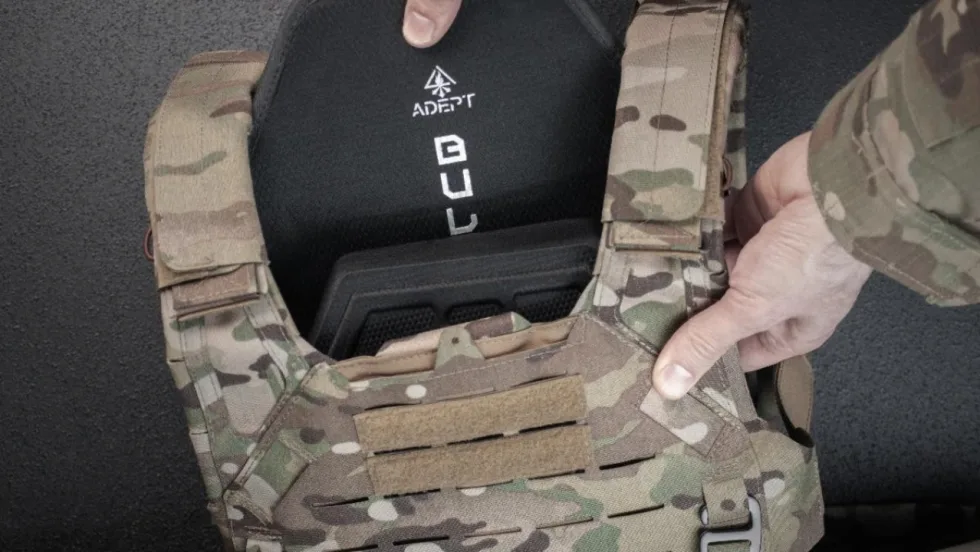
Adept Armor Introduces Two New Rifle Plates
Adept Armor has launched two new Level IV ballistic plates, the Emperor and the Archon Mark 2, which brings Adept Armor’s new Quatroid ceramic to the high-threat, performance-value center of the range at 5.2 pounds.
Read More →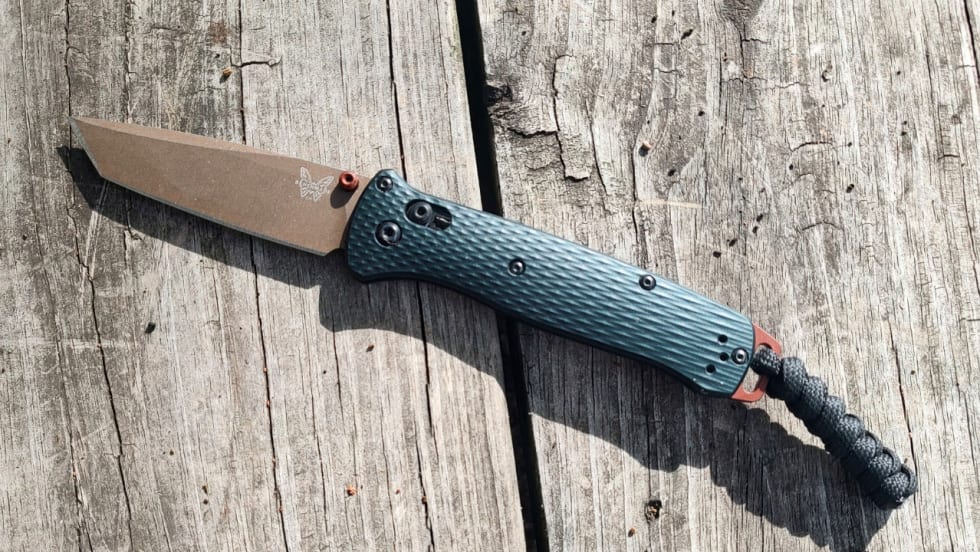
POLICE Product Test: Benchmade Bailout
The Benchmade Bailout is a slim, lightweight carry knife with a deep-ride pocket clip and comes in a variety of blade steels and scales. Here is a detailed review of the Taiga Green Bailout, released earlier this year.
Read More →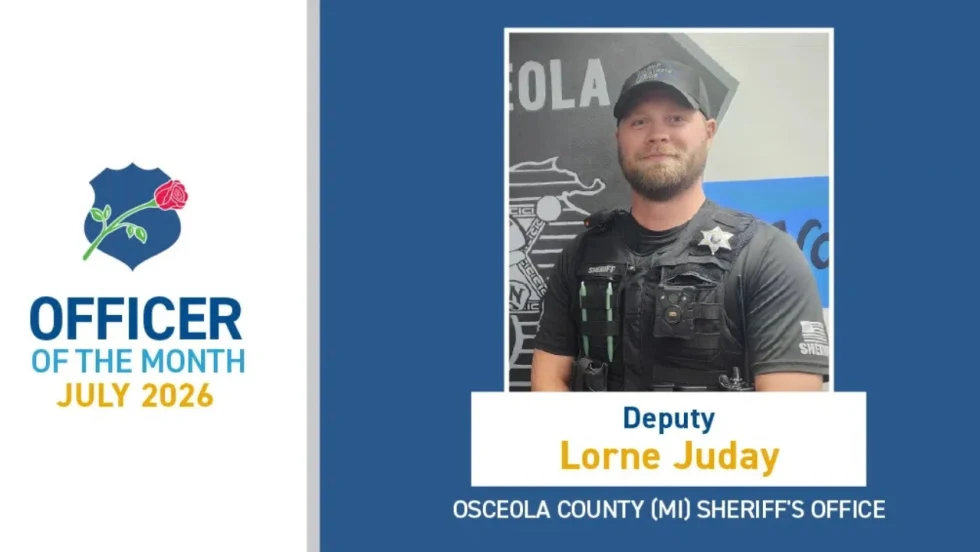
NLEOMF Announces July 2026 Officer of the Month
NLEOMF honored a Michigan deputy sheriff as the July 2026 Officer of the Month for rescuing a trapped driver from a burning vehicle following a Fourth of July crash.
Read More →
Streamlight to Showcase Newest Lighting Products at National Safety Council’s Safety Congress & Expo 2026
Streamlight will showcase its latest lights, including the Portable Scene Light III and the LiteBox 1Million, at the 2026 National Safety Council (NSC) Safety Congress & Expo.
Read More →
The 2027 World Police & Fire Games Set for Perth, Australia
The 2027 World Police & Fire Games (WPFG) will take place in Perth, Western Australia, from Friday, March 12 through Sunday, March 21, 2027.
Read More →
5.11 Partners with National Fallen Firefighters Foundation to Support #ForThe343
5.11 has joined the nationwide movement honoring the 343 New York City Fire Department firefighters lost on Sept. 11, 2001.
Read More →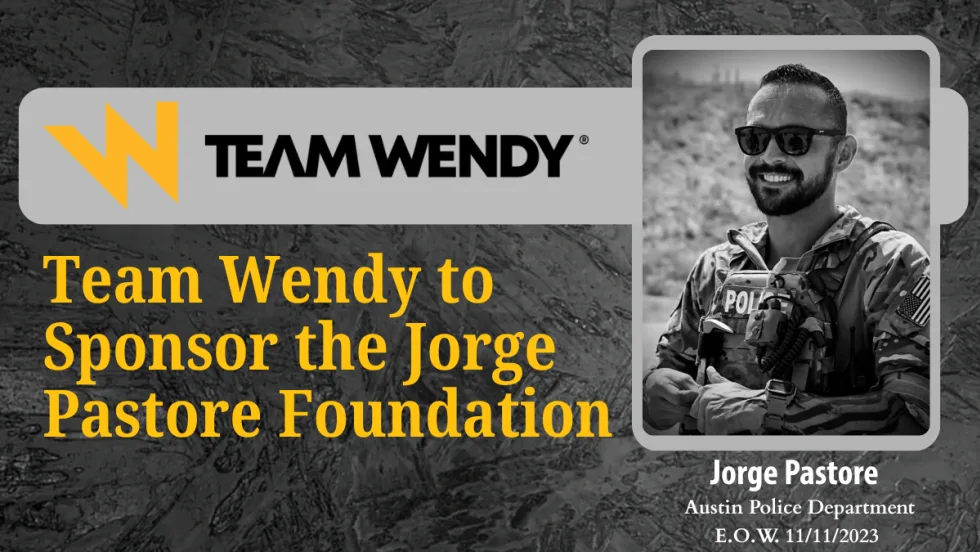
Team Wendy Announces Title Sponsorship of the Jorge Pastore Foundation
Team Wendy’s 3-year partnership with the Jorge Pastore Foundation expands access to programs that strengthen those who serve.
Read More →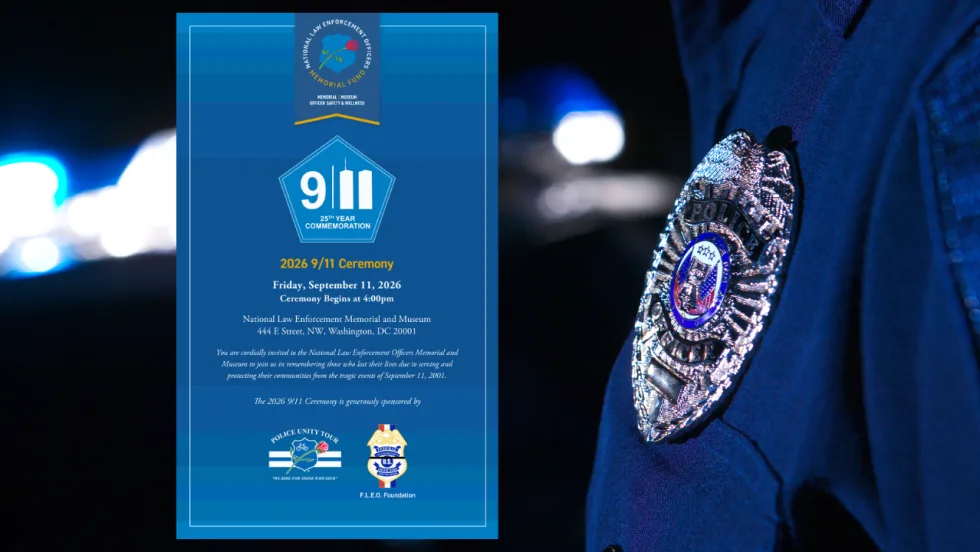
National Law Enforcement Memorial and Museum Hosting 9/11 25th-Year Commemoration Ceremony
The National Law Enforcement Memorial and Museum is hosting a 9/11 25th Year Commemoration Ceremony on Sept. 11 at 4 p.m.
Read More →
National Law Enforcement Officers Memorial Fund Announces June 2026 Officers of the Month
The National Law Enforcement Officers Memorial Fund (NLEOMF) named 15 officers of the Chico Police Department (California) as the Officers of the Month for June 2026 for their roles in responding to an active-shooter incident at a public library.
Read More →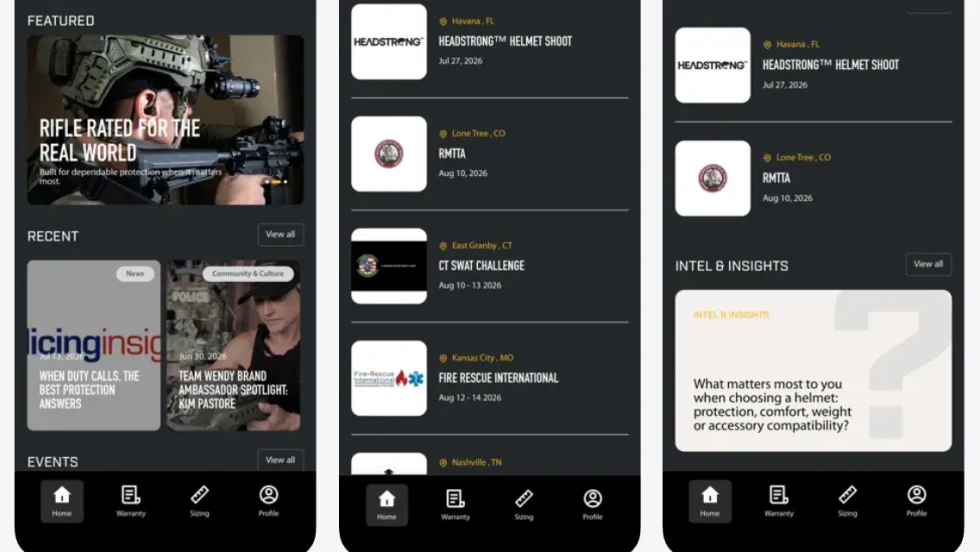
Team Wendy App Creates New Digital Hub for Helmet Owners
The Team Wendy Community App provides one location for warranty registration, size-fit tools, product updates, and community connection. For helmet owners, the new app creates a simpler path to the information and tools that matter most.
Read More →