



Law Enforcement Product Companies Help in the Fight Against COVID-19
Manufacturers and retailers are pivoting to provide protection and services for first responders on the front lines during the coronavirus crisis.

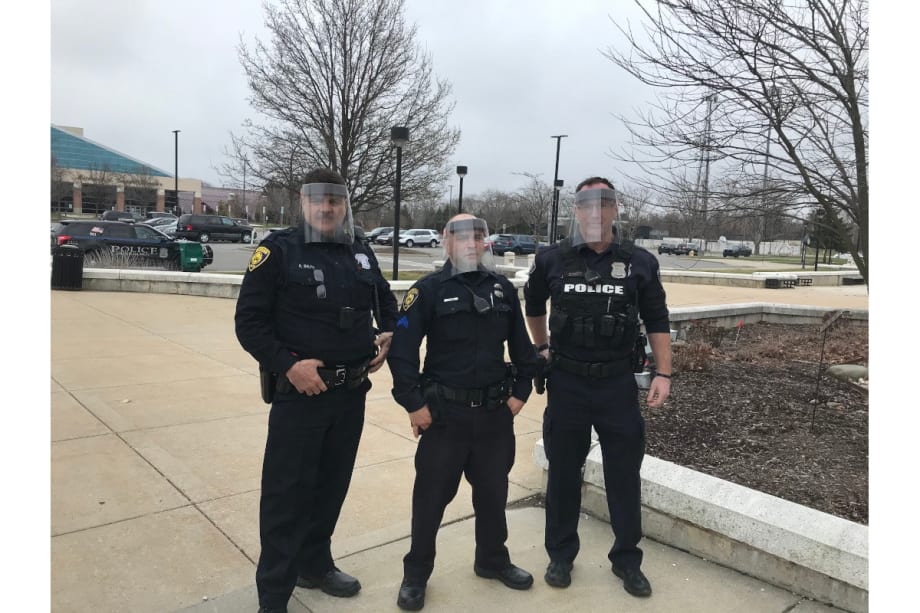
Ford Motor Company began producing face shields in its factory and was able to deliver more than 7,500 of them to the New York Police Department between March 25 and April 6. (Photo: Ford)
As the COVID-19 pandemic began to spread, many manufacturers shut down their usual operations because of a lack of demand for their products and supply chain problems, among other issues. But instead of letting their factories sit idle, some companies altered their production lines to help meet the growing need for face masks and other supplies to protect law enforcement officers and other first responders.
While a good chunk of the population has been sheltering at home to limit possible exposure to COVID-19, officers have not had that luxury. They've had to work longer shifts and forgo time off while risking their health, sometimes without enough personal protective equipment to keep themselves safe.
To help, Ford delivered more than 7,500 face shields to the New York Police Department between March 25 and April 6. The face shields were produced in a Ford factory by Ford workers. By that time the automaker announced it had delivered 1 million face shields to medical workers and first responders nationwide since March 23.
The face shields delivered directly to the NYPD were in addition to 30,000 that were shipped to New York City by Ford.
By creating a task force and working with relevant suppliers, designers, and engineering and program managers, Ford was able to make the 1 million face shields in about two weeks. The process began on March 19, when the Mayo Clinic alerted Ford of the shortage of personal protective equipment and asked for help to protect first responders. Production began on March 23, and the next day the company was producing 6,500 face shields, ramping up to 225,000 face shields per day by April 5. More than 300 United Auto Workers employees were working two shifts to assemble the shields. By April 13, Ford had produced more than 3 million face shields in Plymouth, Michigan.
Ford then continued to expand its efforts to design and produce supplies and medical equipment for first responders, health care workers, and patients fighting the coronavirus. The company worked with 3M to increase the output of powered air-purifying respirators (PAPRs) and N95 respirators at 3M's U.S.-based manufacturing facilities. Ford also worked with Thermo Fisher Scientific to help produce collection kits for COVID-19 tests, setting up and adapting production machinery to suit a new purpose.
Of course, Ford is not the only company to make such efforts.
Automaker General Motors was able to adapt its facility in Warren, Michigan, to produce masks in less than seven days. According to the company, the facility is projected to produce approximately 1.5 million masks each month.
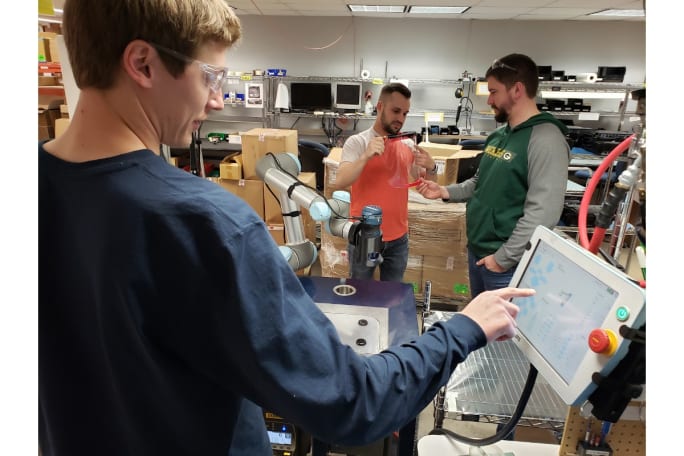
Gamber-Johnson, which normally manufactures mounting systems for devices in public safety vehicles, partnered with a central Wisconsin not-for-profit to create components for face shields. (Photo: Gamber-Johnson)
Gamber-Johnson, a leading supplier of rugged mounting systems for fleet and public safety vehicles, partnered with a central Wisconsin not-for-profit to create components for face shields.
Hardwire LLC manufactures vehicle armor to protect law enforcement officers, including clear ballistics that cover vehicle windows. The company has now started using that expertise to make face shields for police officers, other first responders, and medical professionals. It added a separate production line to produce them in less than a week.
Other companies have joined efforts to purchase and donate needed supplies to law enforcement officers.
Axon partnered with the National Police Foundation (NPF) to raise funds to provide one million masks to first responders worldwide. The company pledged to match up to $500,000 in donations, all of which will go toward sending first responders medical masks and other personal protective equipment.
MT2 Firing Range Services, which cleans up lead on shooting ranges to protect officers, donated personal protective equipment to local law enforcement in Colorado to help protect them from COVID-19 exposure.
To do their part to help officers, some retail chains are offering them special benefits. For example, Costco big box stores are allowing first responders to go directly to the front of the line to enter their retail locations so they can quickly and efficiently do their shopping for themselves and their families. BP and Amoco gas stations gave first responders and healthcare workers 50 cents off per gallon of gas for the month of April.
More Patrol
The First Responders Children’s Foundation National First Responders Day Roll Call of Heroes Ceremony Returns to Times Square, NYC
First Responders Children’s Foundation (FRCF), in collaboration with T-Mobile, will host the Roll Call of Heroes ceremony in Times Square to commemorate National First Responders Day on Wednesday, Oct. 28. During the event, FRCF will present 18 Hero Awards.
Read More →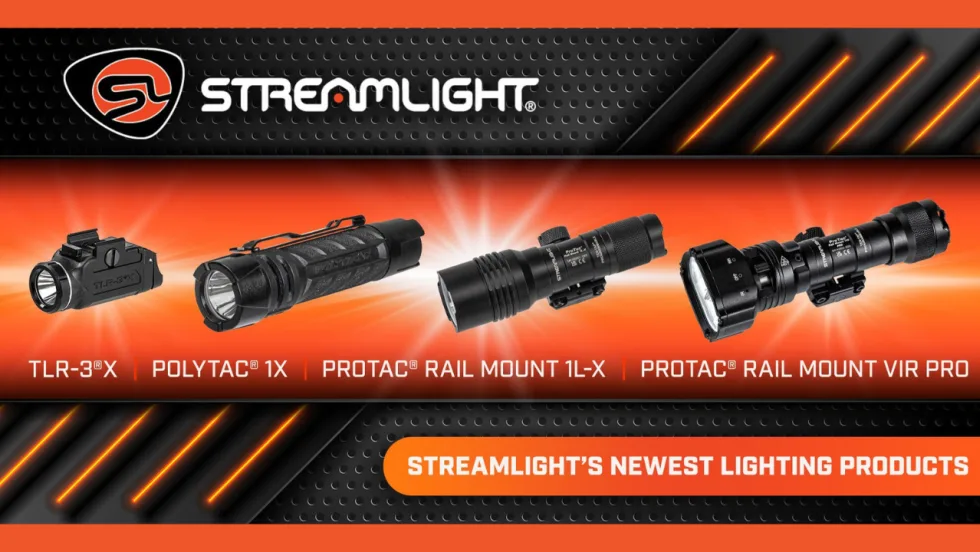
Streamlight to Showcase Newest Lighting Products for Law Enforcement Professionals at IACP 2026
Streamlight will showcase its newest lights for law enforcement at the International Association of Chiefs of Police Annual Conference & Expo. Featured lights will include the TLR-3 X, the PolyTac 1X, and more.
Read More →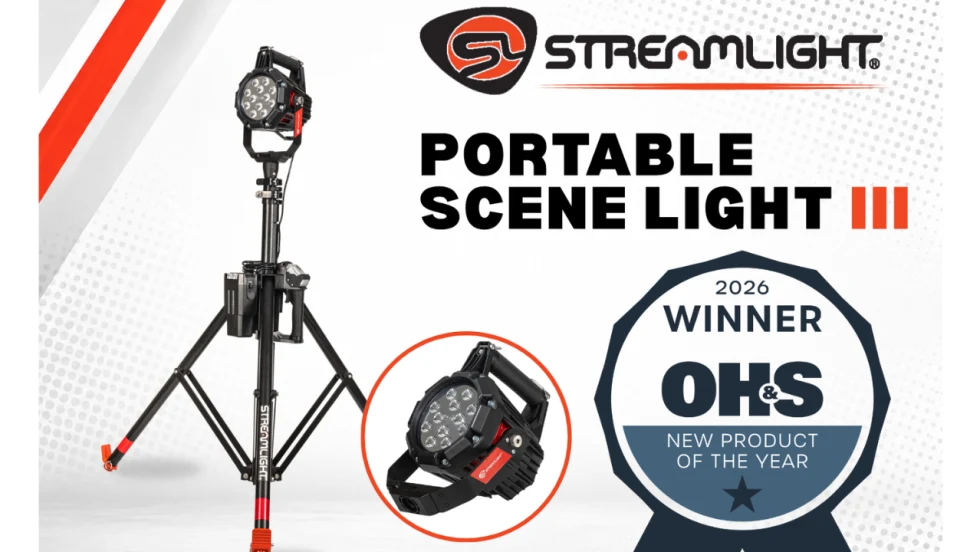
Streamlight Portable Scene Light III Wins 2026 OH&S New Product of the Year Award
Streamlight’s Portable Scene Light III has won the 2026 Occupational Health & Safety (OH&S) New Product of the Year Award in the Lighting category.
Read More →
Adept Armor Introduces Two New Rifle Plates
Adept Armor has launched two new Level IV ballistic plates, the Emperor and the Archon Mark 2, which brings Adept Armor’s new Quatroid ceramic to the high-threat, performance-value center of the range at 5.2 pounds.
Read More →
POLICE Product Test: Benchmade Bailout
The Benchmade Bailout is a slim, lightweight carry knife with a deep-ride pocket clip and comes in a variety of blade steels and scales. Here is a detailed review of the Taiga Green Bailout, released earlier this year.
Read More →
NLEOMF Announces July 2026 Officer of the Month
NLEOMF honored a Michigan deputy sheriff as the July 2026 Officer of the Month for rescuing a trapped driver from a burning vehicle following a Fourth of July crash.
Read More →
Streamlight to Showcase Newest Lighting Products at National Safety Council’s Safety Congress & Expo 2026
Streamlight will showcase its latest lights, including the Portable Scene Light III and the LiteBox 1Million, at the 2026 National Safety Council (NSC) Safety Congress & Expo.
Read More →
The 2027 World Police & Fire Games Set for Perth, Australia
The 2027 World Police & Fire Games (WPFG) will take place in Perth, Western Australia, from Friday, March 12 through Sunday, March 21, 2027.
Read More →
5.11 Partners with National Fallen Firefighters Foundation to Support #ForThe343
5.11 has joined the nationwide movement honoring the 343 New York City Fire Department firefighters lost on Sept. 11, 2001.
Read More →
Team Wendy Announces Title Sponsorship of the Jorge Pastore Foundation
Team Wendy’s 3-year partnership with the Jorge Pastore Foundation expands access to programs that strengthen those who serve.
Read More →