



Justifying Temporary Detentions
When a marked police car pulls into a high-crime area and people start running away for no apparent reason, this is reasonable suspicion to stop them.

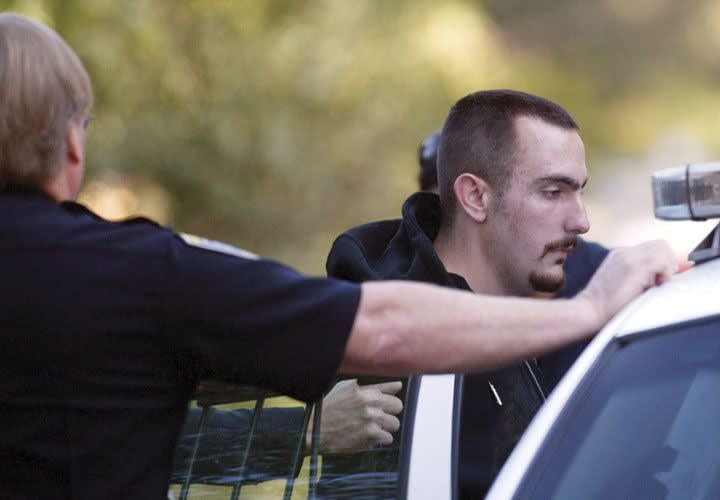
Since the 1968 decision in Terry v. Ohio, the U.S. Supreme Court has divided police infringements on a suspect's liberty into two principal categories: detentions and arrests.
A detention occurs when an officer has said or done something that would cause a reasonable innocent person to believe he is not free to disregard the police presence and go about his business. (Florida v. Bostick) A detention must be justified by "reasonable suspicion" of criminal activity on the part of the detainee. Under this standard, it is counter-productive error for officers to speak of "PC for the stop." Probable cause is never constitutionally required for detentions. (US v. Sokolow)
An arrest occurs when a person is told he is under arrest and submits to custody, or when the person is restrained beyond the bounds of a temporary detention (such as being involuntarily transported to the police station for investigation). (Kaupp v. Texas) An arrest must be supported by "probable cause" to suspect the arrestee of a criminal act. (Beck v. Ohio) Although it isn't always easy to determine when an encounter that starts as a detention ripens into an arrest, some of the characteristics of each level can be set apart.
Assorted Detentions
Detentions include the pedestrian stop, the vehicle stop, and the restraint of occupants while a search warrant is being served. The lawfulness of this latter kind of detention is rarely in question, because the Supreme Court has ruled that the existence of a valid search warrant "implicitly carries with it the limited authority to detain the occupants of the premises while a proper search is conducted." (Michigan v. Summers) The lawfulness of ped stops and vehicle stops, on the other hand, has been the subject of numerous decisions attempting to define the circumstances that may justify the detention, and to set the boundaries of permissible investigative activity.
What Does "Reasonable Suspicion" Mean?
Reasonable suspicion is "a particularized and objective basis for suspecting the particular person stopped of criminal activity." (US v. Cortez) The facts known to the officer and the inferences drawn based on the officer's training and experience "need not rule out the possibility of innocent conduct." (US v. Arvizu) Reasonable suspicion is a lower level of justification than the probable cause required for arrest, and it can be established with evidence that is lower in both reliability and amount than would be needed for PC, as the court has said in a pair of decisions:
"The police can stop and briefly detain a person for investigative purposes if the officer has a reasonable suspicion supported by articulable facts that criminal activity may be afoot, even if the officer lacks probable cause. The officer, of course, must be able to articulate something more than an inchoate and unparticularized suspicion or hunch.
"The level of suspicion required for a detention is obviously less demanding than that for probable cause. The Fourth Amendment requires some minimal level of objective justification for making the stop. That level of suspicion is considerably less than proof of wrongdoing by a preponderance of the evidence." (US v. Sokolow)
"Reasonable suspicion is a less demanding standard than probable cause not only in the sense that reasonable suspicion can be established with information that is different in quantity or content than that required to establish probable cause, but also in the sense that reasonable suspicion can arise from information that is less reliable than that required to show probable cause." (Alabama v. White)[PAGEBREAK]
What Could Justify a Detention?
The Supreme Court has considered several common circumstances that might be relied on by law enforcement officers to initiate an investigative detention. These cases create a list of factors that can be used to show that a ped stop or car stop was reasonable under the Fourth Amendment.
Collective knowledge: "Effective law enforcement cannot be conducted unless police officers can act on directions and information transmitted by one officer to another. This rule is a matter of common sense and enables officers in one jurisdiction to act promptly in reliance on information from another jurisdiction." (US v. Hensley)
The "collective knowledge doctrine" permits a vehicle stop based on a wanted flier, a radio broadcast, or an NCIC hit. It also permits a sergeant or detective who sees a suspected impaired driver to radio the pertinent information to a patrol officer, who can then lawfully stop the vehicle.
Observations, training, and experience: "When discussing how reviewing courts should make reasonable-suspicion determinations, we have repeatedly said that they must look at the totality of the circumstances of each case to see whether the officer has a particularized and objective basis for suspecting legal wrongdoing. This process allows officers to draw on their own experience and specialized training to make inferences from and deductions about the cumulative information available to them that might well elude an untrained person." (US v. Arvizu)
Drug courier profiles: Although hunches and racial profiles cannot form the basis of a stop, specific traits of particular kinds of criminals may. For example, a nervous traveler who buys a roundtrip airline ticket from a drug source city to a distribution hub with only hours before the turnaround and who pays cash and carries no luggage, fits a courier profile known to well-trained narcotics investigators, justifying an investigative detention. (US v. Sokolow)
Unprovoked flight in a high-crime area: There is nothing particularly suspicious about a person's mere presence in a high-crime area, since some people live in such places or must travel through them. (Brown v. Texas) However, when a marked police car pulls into a high-crime area and people start running away for no apparent reason, this is reasonable suspicion to stop them. "Headlong flight-wherever it occurs-is the consummate act of evasion: it is not necessarily indicative of wrongdoing, but is certainly suggestive of such." (Illinois v. Wardlow)
Traffic violations: An officer who suspects the driver or passengers of a vehicle of criminal behavior is allowed to use an observed traffic violation as a reason to stop the vehicle for a brief investigation, during which observations and questioning may establish PC for an arrest. (Arkansas v. Sullivan; Virginia v. Moore)
Checkpoints: Law enforcement agencies may establish detention checkpoints to look for illegal aliens entering the country (US v. Cortez), to check for unlicensed drivers (Delaware v. Prouse; Texas v. Brown), to screen drivers for impairment (Michigan v. Sitz), to solicit witnesses to a recent crime (Illinois v. Lidster), or to catch a dangerous criminal who is likely to use a particular escape route. (Indianapolis v. Edmond)
Length of Detentions
"In assessing whether a detention is too long in duration to be justified as an investigative stop, we consider it appropriate to examine whether the police diligently pursued a means of investigation that was likely to confirm or dispel their suspicions quickly." (US v. Sharpe) There is no set time limit on detentions; the length of the detention will depend on the circumstances. "Police often are not yet aware of the exact sequence and scope of events they are investigating-indeed, that is why police must investigate in the first place." (Texas v. Cobb)
Devallis Rutledge is a former police officer and veteran prosecutor who currently serves as Special Counsel to the Los Angeles County District Attorney. He is the author of 12 books, including "Investigative Constitutional Law."
More Patrol

Team Wendy Introduces the EXFIL Endurance Ballistic Helmet, Engineered to Reduce the Burden of Extended Wear
Team Wendy has launched its EXFIL Endurance, a new lightweight ballistic helmet engineered to deliver protection, comfort, and fit during demanding, extended operations.
Read More →
The First Responders Children’s Foundation National First Responders Day Roll Call of Heroes Ceremony Returns to Times Square, NYC
First Responders Children’s Foundation (FRCF), in collaboration with T-Mobile, will host the Roll Call of Heroes ceremony in Times Square to commemorate National First Responders Day on Wednesday, Oct. 28. During the event, FRCF will present 18 Hero Awards.
Read More →
Streamlight to Showcase Newest Lighting Products for Law Enforcement Professionals at IACP 2026
Streamlight will showcase its newest lights for law enforcement at the International Association of Chiefs of Police Annual Conference & Expo. Featured lights will include the TLR-3 X, the PolyTac 1X, and more.
Read More →
Streamlight Portable Scene Light III Wins 2026 OH&S New Product of the Year Award
Streamlight’s Portable Scene Light III has won the 2026 Occupational Health & Safety (OH&S) New Product of the Year Award in the Lighting category.
Read More →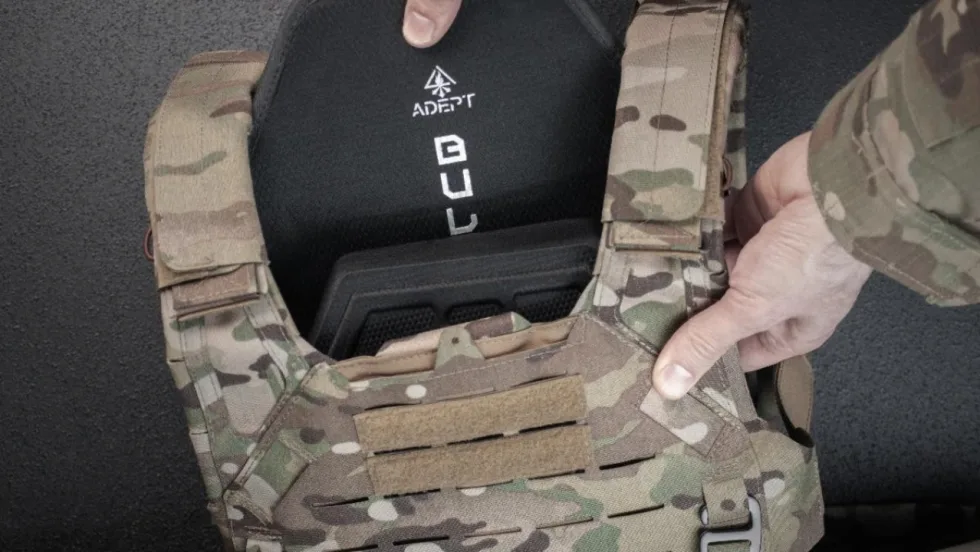
Adept Armor Introduces Two New Rifle Plates
Adept Armor has launched two new Level IV ballistic plates, the Emperor and the Archon Mark 2, which brings Adept Armor’s new Quatroid ceramic to the high-threat, performance-value center of the range at 5.2 pounds.
Read More →
POLICE Product Test: Benchmade Bailout
The Benchmade Bailout is a slim, lightweight carry knife with a deep-ride pocket clip and comes in a variety of blade steels and scales. Here is a detailed review of the Taiga Green Bailout, released earlier this year.
Read More →
NLEOMF Announces July 2026 Officer of the Month
NLEOMF honored a Michigan deputy sheriff as the July 2026 Officer of the Month for rescuing a trapped driver from a burning vehicle following a Fourth of July crash.
Read More →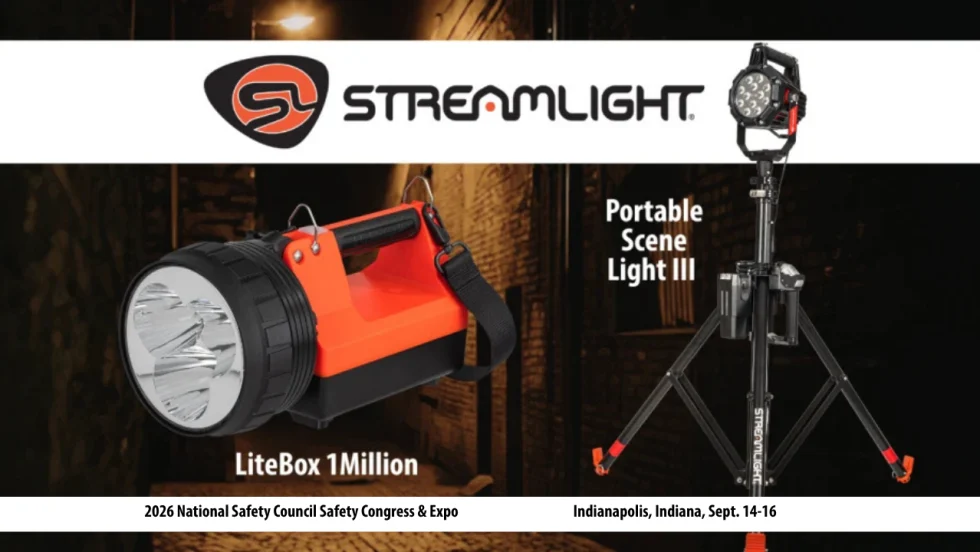
Streamlight to Showcase Newest Lighting Products at National Safety Council’s Safety Congress & Expo 2026
Streamlight will showcase its latest lights, including the Portable Scene Light III and the LiteBox 1Million, at the 2026 National Safety Council (NSC) Safety Congress & Expo.
Read More →
The 2027 World Police & Fire Games Set for Perth, Australia
The 2027 World Police & Fire Games (WPFG) will take place in Perth, Western Australia, from Friday, March 12 through Sunday, March 21, 2027.
Read More →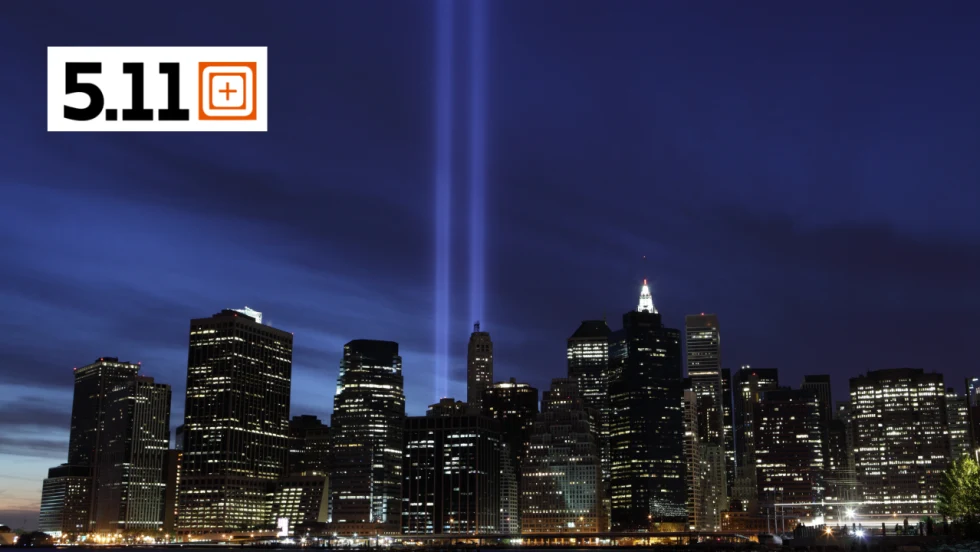
5.11 Partners with National Fallen Firefighters Foundation to Support #ForThe343
5.11 has joined the nationwide movement honoring the 343 New York City Fire Department firefighters lost on Sept. 11, 2001.
Read More →