



In the Crosshairs
What happened that day in Texas should have served as a wake-up call to law enforcement agencies worldwide. But the Texas Tower incident was treated as an anomaly, a once-in-a-lifetime event that couldn't possibly happen again. And the law enforcement community has chosen to largely ignore this threat.

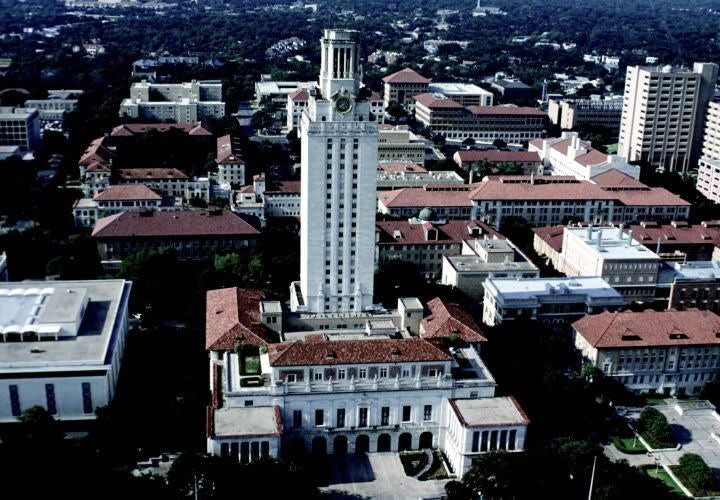
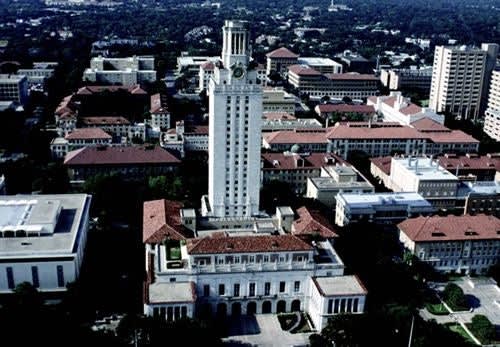
On the morning of August 1, 1966, Charles Whitman, a former U.S. Marine sharpshooter, walked out onto the clock tower observation deck at the University of Texas in Austin. From his barricaded vantage point, he proceeded to shoot at targets of opportunity on the campus below. He killed 12 people and wounded another 30.
Both university and city police officers responded, but they immediately found themselves at a disadvantage. Not only did Whitman's position, some 28 floors above the street, provide him a wide kill zone and ample ballistic protection, he also possessed weapons superior to the handguns and shotguns available to the police. Whitman's rampage wasn't ended until two courageous Austin PD officers entered the tower, made their way to the observation deck, and killed the gunman in a harrowing shootout.
It Can't Happen Here
What happened that day in Texas should have served as a wake-up call to law enforcement agencies worldwide. But the Texas Tower incident was treated as an anomaly, a once-in-a-lifetime event that couldn't possibly happen again. And the law enforcement community has chosen to largely ignore this threat.
Philosopher Georges Santayana said, "Those who refuse to learn from the past are doomed to repeat it." But nearly 40 years after Whitman terrorized Austin, agencies still reassure themselves by saying, "A sniper attack is an isolated incident. It can't happen here."
A Sad History
But it can happen here or there. And since that August afternoon in Austin, criminal snipers have been carrying out similar attacks, and in most cases, police response to such attacks has not evolved to meet the threat. The result has been casualties among both civilians and law enforcement officers.
Whitman's strategy, superior firepower, and positioning led many law enforcement officers to believe that he was unique. But just about anybody with a rifle and a modicum of training and tactical insight could do the same.
And some have. Here's a quick look at some tragic incidents of criminal snipers in America.
Louisiana-A single criminal sniper attacks police headquarters and a downtown New Orleans hotel, eventually killing nine people, including five police officers, and wounding more than a dozen.
Indiana-A sniper shoots and kills a police officer responding to a "shots fired" complaint in a trailer park.
Mississippi-From a hide in a shopping center, a concealed shooter kills one and wounds 10 before killing himself.
Arkansas-A pair of juvenile snipers attack their school, orchestrating an ambush that kills five, including a teacher, and wounds 12.
The D.C. Beltway Area-A pair of snipers paralyze the area during a three-week campaign of calculated death and terror. This unprecedented pair of hit-and-run snipers kills 13 people before they are finally arrested.
Make no mistake about it. A sniper incident is not your usual call for service. If you and your agency approach it as such, the consequences will be tragic. Nor is it the rare, isolated event you may think it is.
Administrators, tactical team leaders, and supervisors should be aware that a criminal sniper incident can happen anywhere, anytime. Snipers have victimized huge metropolitan areas, rural highways, and suburban shopping centers. This means your town is a potential target for a sniper incident that could take place tomorrow.
It's mistakenly believed by many in law enforcement that sniper attacks are rare. They're not. Thousands of sniping incidents have taken place since Whitman. But only those resulting in body counts make the news. Consequently, the majority of these incidents go underreported and unknown. Also, it should be noted that many unsolved, seemingly random homicide cases may be the work of criminal snipers.
Sniper Types
Criminal snipers fall into two broad categories: the hit-and-run sniper and the barricaded sniper.Every responding officer should be aware that any call of random shots fired could be the work of a hit-and-run sniper. These individuals take up a position of concealment, fire a few shots, and then withdraw, or move to another hide. Their targets may be buildings, streetlights, passing cars, or people. As people or police begin to recognize his presence and respond to it, the hit-and-run sniper will retreat. The Beltway snipers are prime examples of how deadly hit-and-run snipers can be and how difficult it can be to stop them.
The barricaded sniper is in contrast not concerned about being caught. Something in this person has snapped, and he wishes to commit suicide and take as many people as possible with him. The barricaded sniper sets up a firing position, attacks his targets, and is still there when the police arrive. He has made a decision to continue his killing spree until you find a way to stop him and, accordingly, he represents the most dangerous threat you will ever face in an armed encounter.
Responding to Snipers
Preparation is the essential element necessary for a safe and effective response to a sniper attack. This means developing plans ahead of time for the probability of having to deal with a sniper call, and taking the time to practice them. As the bullets are flying and the bodies are falling is the wrong time to be making up a strategy.
Recognize the probability. A sniper incident is going to happen. You have no control over when or where. However, it is your responsibility to be ready and equipped to handle it quickly, safely, and effectively.
Potential sniper encounters should be anticipated in any of the following scenarios:
Riot Situations and Civil Unrest-Some individuals take advantage of the chaotic circumstances surrounding riots to take pot shots at the crowd and/or at emergency personnel on the scene. Review the after-action reports of any large civil disturbance, and you will find stories of firefighters and police officers who have come under fire from snipers.
Dignitary and Protection Details-Every time your agency is tasked with providing security for a visiting dignitary, politician, celebrity, or other high-profile individual, you run the risk of someone trying to kill your protectee. Remember, two of the most famous assassinations of the 1960s-Rev. Martin Luther King Jr. and President John F. Kennedy-were perpetrated by snipers.
Ambushes-Planned attacks on police officers have become an alarming trend. The standard tactic is to make a bogus 911 call, wait for officers to respond, and open fire when they arrive on scene. A graphic demonstration of this tactic was employed a couple of years ago in Texas where three officers were killed one by one, as they arrived to handle a phony domestic dispute call.
SWAT Calls-Special Operations teams are used to responding to a hostage situation or a barricaded subject. The standard response in these circumstances is to contain and contact. The culprit is usually passive and defensive, and content to negotiate. But on rare occasions, the culprits have turned offensive, actively attacking responders in their containment positions. When that happens, standard SWAT logic goes out the window and a different, more offensive, approach needs to be adopted.
Random Acts of Terror-One of the major lessons learned from the Beltway sniper attacks was the impact an extended hit-and-run sniper campaign could have on an area. The presence of a mystery shooter on the loose basically shut down several states, tying up public safety resources, and altering the way people lived their daily lives. As a result, the paralyzing effect of a sniper campaign as a terror tool certainly was not lost on those predisposed to attacks on civilians.
These are not the only situations that may lead to a sniper incident. Crime is limited only by the imaginations of the people perpetrating it, and tomorrow a new sniper may create his own initiating event.
Inside Their Heads
A sniper attack is rarely a spontaneous event. Contrary to popular belief, the perpetrators do not simply wake up one morning, grab a rifle, and go on a shooting rampage.
The majority of sniper incidents are the final product of extensive planning and practice. Snipers purchase their weapons and ammunition in advance, and some even train specifically for their "mission," right down to mapping out their kill zones. Snipers also tend to be proud of their work, and take great pains to document their preparation, writing about their intentions in journals and letters well in advance of the actual event.
Most sniper attacks are precipitated by motivations that only the shooter can understand. They are usually not political and, with the possible exception of a SWAT incident that evolves from a domestic call, there are rarely hostages involved. As a result, there are no demands from the shooter, and negotiations are pointless. His agenda is strictly offensive. Stopping to talk takes away from shooting time.
Commonly, the shooter does not personally know his targets. They are faceless strangers, chosen at random by where they are, or with whom they associate on the day he initiates his attack. The exception to this, of course, is the deliberately chosen assassination target.
Executing the Attack
Criminal snipers attack with a plan. And if you look at the hundreds of documented sniper incidents from the last decade, a method to their madness appears.
First, the sniper will choose a kill zone. Usually, this is a location that he already knows, or he will take the time to scout out a prospective kill zone. For example, Charles Whitman spent a lot of time on his university campus, and he knew where to position himself to best take advantage of its target-rich environment.
Once a sniper has established a hide and a kill zone, he will often use some method to draw targets into his line of fire. In Jonesboro, Ark., the juvenile snipers pulled a fire alarm to bring their middle school classmates out to the playground. Other snipers have set fires or made false 911 calls to bring their victims into their crosshairs. One extremely vicious but favored tactic that has been around for more than a hundred years is that the sniper will wound one person and then lie in wait to attack anyone attempting to rescue or render aid to his first victim.
The Sniper's Advantage
When the first shots are fired, the sniper has the upper hand. He is initiating the attack at a time and place of his choosing, and he has scouted the area and knows the approaches and escape routes.
The sniper is also likely to be familiar with your response practices and is anticipating your every move. Any officer doubting that snipers are so well versed in police tactics should read some of the interviews granted by surviving snipers who are in custody. They knew what they were doing, and what they expected the police to do. Consequently, they were able to predict and counter most police tactics as they were employed.
In addition to these advantages, the sniper is operating from a position of concealment and cover. He sees responding police units long before you can see him.
Compounding this advantage are his rifle and scope, which are often ballistically and optically superior to any of the equipment available to responding officers. He will see you first, and he can shoot you long before you are within range to return fire. That makes you a likely and possibly intended target.
There is a tendency among police officers to underestimate the criminal sniper. Admittedly, barricading oneself in a building and shooting at everything that moves is an act of complete madness. It is not something a rational human being is noted for doing. But don't make the strategic gaffe of thinking this person can be dealt with like your average nut case. Crazy does not equal stupid.
The criminal sniper may well be better trained, better equipped, and better prepared for this encounter than any of your responding personnel. To treat him as anything less than a tactically savvy sharpshooter, regardless of his mental or emotional state, invites disaster because it gives him yet another tactical advantage.
Your Best Response
So with these facts in mind, what should law enforcement do to handle the next major sniper incident?
To begin with, you must initiate your response to a sniper attack long before one actually occurs. Battles are won in the planning and, if you are to prevail in a sniper attack, you must take a proactive approach to the potential of a sniper attack.
This means that you should take the time to learn from the snipers of the past. Books and articles written about the Who's Who of sniping will reveal a wealth of valuable lessons. Today, we have the advantage of studying the cases of Charles Whitman, Jimmy Essex, James Kristian, Julian Knight, Brenda Spencer, and others like them, from the last 30 years.
I won't repeat the Santayana saying, but much can be learned from the past. The attack profiles and tactics of the shooters are often repeated; likewise, the responses and mistakes made by law enforcement are also running on a tape loop. These case studies provide a textbook for all of law enforcement to study sniper behavior and plan a response. If you take nothing else from this article, become a student of history.
Agencies must establish policies dictating responses of all involved resources. Such policies are already in place for major accidents, natural disasters, and large events. A sniper incident, especially a barricade, requires the same level of involvement and coordination of responding resources. Police, fire, EMS, and other public safety personnel may all be called in during a major sniper call. If no policy is in place today, then you will be making it up on the fly tomorrow.
Plan for the worst-case scenarios, and train for them on a departmental level. It may be a major task to coordinate, and it will be costly and time consuming, but training is the only safe place to try out the elements of your proposed plan and make corrections. Training is the time when mistakes can be made without sacrificing lives.
Be sure to take special care to properly prepare your patrol personnel. In all sniper incidents, they will be among the first to make contact with the shooter, and they will often be counted among the first casualties. They need to know the potential threat they will be facing, and how to respond to and safely contain the shooter. They also need to be equipped with weaponry that will give them an equal chance in fighting the sniper. Handguns and shotguns are no match for a barricaded sniper with a scoped rifle. Your agency needs patrol rifles.
Develop a structured operational sequence for locating, isolating, and neutralizing the sniper as quickly as possible. This plan will be put into motion by the first responders, but as the incident goes on it will have to be continued to completion by SWAT personnel. Classroom instruction by qualified and knowledgeable personnel is the best starting point for this process. Practical exercises help to fine-tune the plan and reinforce the details.
A criminal sniper incident is like nothing else in law enforcement and safely resolving it requires planning and training. Realizing the probability of such an incident taking place in your jurisdiction and not taking immediate action to prepare your personnel to handle it, borders on deliberate indifference. Robert Miles, chief of the Austin PD, gave a news conference shortly after the Texas Tower shootings, and he sounded almost prophetic when he said, "This could have happened in any city in America, or in the world for that matter."
Nearly 40 years of criminal sniper incidents have proved Miles to be right. The question you have to ask yourself and your agency is, "Are you ready for the next Charles Whitman?"
Derrick Bartlett is currently a member of the Ft. Lauderdale (Fla.) Police Department SWAT sniper team. He is the director of Snipercraft Inc. and the president of the American Sniper Association.
More Patrol

Adept Armor Introduces Two New Rifle Plates
Adept Armor has launched two new Level IV ballistic plates, the Emperor and the Archon Mark 2, which brings Adept Armor’s new Quatroid ceramic to the high-threat, performance-value center of the range at 5.2 pounds.
Read More →
POLICE Product Test: Benchmade Bailout
The Benchmade Bailout is a slim, lightweight carry knife with a deep-ride pocket clip and comes in a variety of blade steels and scales. Here is a detailed review of the Taiga Green Bailout, released earlier this year.
Read More →
NLEOMF Announces July 2026 Officer of the Month
NLEOMF honored a Michigan deputy sheriff as the July 2026 Officer of the Month for rescuing a trapped driver from a burning vehicle following a Fourth of July crash.
Read More →
Streamlight to Showcase Newest Lighting Products at National Safety Council’s Safety Congress & Expo 2026
Streamlight will showcase its latest lights, including the Portable Scene Light III and the LiteBox 1Million, at the 2026 National Safety Council (NSC) Safety Congress & Expo.
Read More →
The 2027 World Police & Fire Games Set for Perth, Australia
The 2027 World Police & Fire Games (WPFG) will take place in Perth, Western Australia, from Friday, March 12 through Sunday, March 21, 2027.
Read More →
5.11 Partners with National Fallen Firefighters Foundation to Support #ForThe343
5.11 has joined the nationwide movement honoring the 343 New York City Fire Department firefighters lost on Sept. 11, 2001.
Read More →
Team Wendy Announces Title Sponsorship of the Jorge Pastore Foundation
Team Wendy’s 3-year partnership with the Jorge Pastore Foundation expands access to programs that strengthen those who serve.
Read More →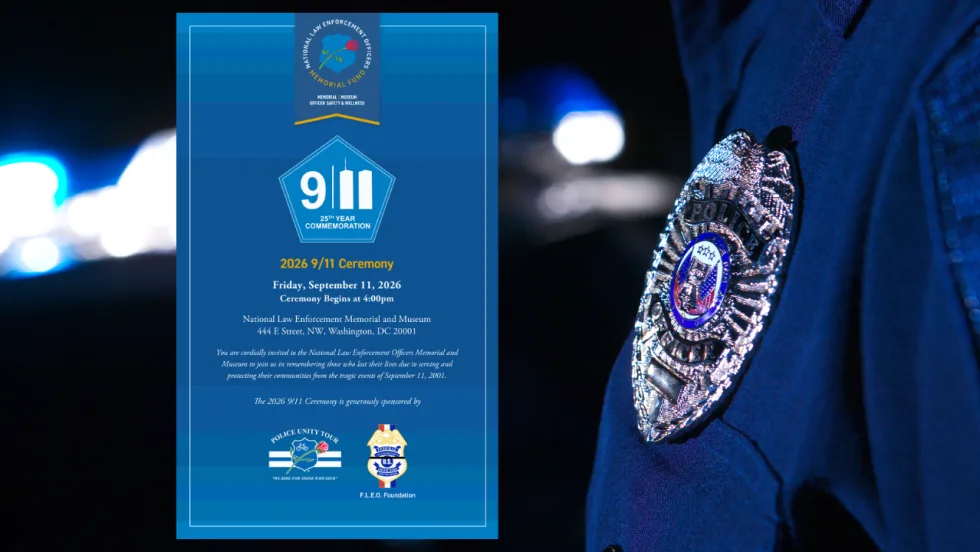
National Law Enforcement Memorial and Museum Hosting 9/11 25th-Year Commemoration Ceremony
The National Law Enforcement Memorial and Museum is hosting a 9/11 25th Year Commemoration Ceremony on Sept. 11 at 4 p.m.
Read More →
National Law Enforcement Officers Memorial Fund Announces June 2026 Officers of the Month
The National Law Enforcement Officers Memorial Fund (NLEOMF) named 15 officers of the Chico Police Department (California) as the Officers of the Month for June 2026 for their roles in responding to an active-shooter incident at a public library.
Read More →
Team Wendy App Creates New Digital Hub for Helmet Owners
The Team Wendy Community App provides one location for warranty registration, size-fit tools, product updates, and community connection. For helmet owners, the new app creates a simpler path to the information and tools that matter most.
Read More →