



ID'ing with Surveillance Photos
By now, most banks and convenience stores have installed video cameras or still cameras to preserve evidence of any criminal event. Following a robbery or other crime, law enforcement officers can use the surveillance video or photos to trace the crook and put together a photo array or lineup to be displayed to witnesses for identification.

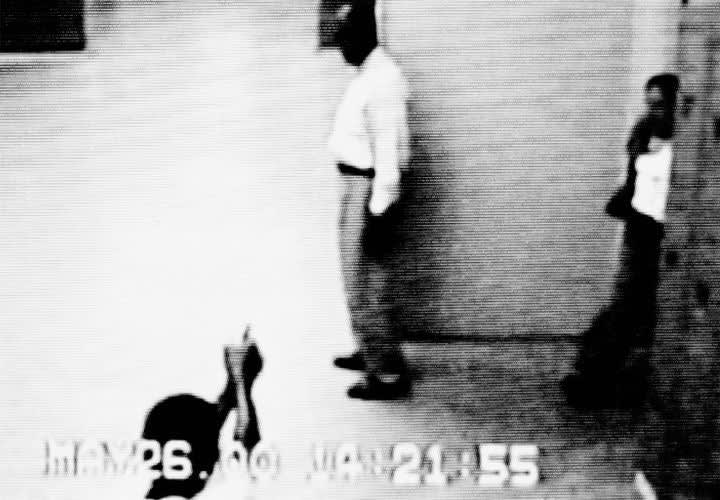
By now, most banks and convenience stores have installed video cameras or still cameras to preserve evidence of any criminal event. Following a robbery or other crime, law enforcement officers can use the surveillance video or photos to trace the crook and put together a photo array or lineup to be displayed to witnesses for identification.
The Supreme Court has repeatedly ruled that to minimize risks of misidentification, an eyewitness ID cannot result from an “impermissibly suggestive” procedure that “assists” the witness in selecting the person who committed the crime.
(Simmons v. U.S.; Neil v. Biggers) Does this prohibit showing the surveillance photos to the witness before seeking an ID? Fortunately, it does not.
If you pulled a picture of the suspect from the mug files or DMV records and showed it to the witness, then asked him or her to make an ID from a photo display or lineup, a resulting ID might be inadmissible in court because of this procedure’s suggestive nature. However, if you show a surveillance photo of the actual criminal taken during the commission of the crime, a subsequent ID will not be considered tainted and can be used in evidence, if otherwise admissible. Cases from around the country make this distinction.
U.S. V. Ervin
In pre-9/11 times, a hijacker boarded a plane in Atlanta and diverted it to Cuba, at knifepoint. As he left the plane and walked away in Havana, a passenger snapped his picture. This picture was later shown to numerous witnesses who identified him both in a photo spread and at his federal trial after his return to Georgia. He objected to the identification evidence because his single photo had been shown to witnesses before they made their IDs.
In ruling the IDs admissible, the federal Fifth Circuit Court of Appeals explained why this procedure does not make an ID impermissibly suggestive:
“The photograph here involved was certainly not a typical ‘mug shot.’ It was instead a film-preserved part of the res gestae showing the Havana, Cuba, airport during the actual process of the accomplishment of this criminal action while it was still in progress.”
U.S. V. Evans
When Evans robbed a New York bank, a surveillance film captured his image. This film was later shown to numerous witnesses, who then picked his picture from a photo display and later identified him in court. Again distinguishing surveillance photos from those obtained from other sources, the Second Circuit court allowed the IDs.
“The film contained the likeness not of some possible suspect in the police files, but of the man who actually committed the robbery. As a consequence, to refresh the memory of each eyewitness from that source ran a significantly smaller risk of misidentification than to refresh it from a source unrelated to the actual events,” the court ruled.
U.S. V. Beck
Beck robbed an Oregon bank, and the teller activated a surveillance camera that took his picture as he left. Once the FBI focused on Beck as the suspect, they composed a “six-pack” photo spread. Before asking witnesses to make an ID from the display of six mug shots, the agent showed them the surveillance photo to refresh their memories. Two of the witnesses picked Beck’s photo from the six-pack, and Beck argued that it was impermissibly suggestive to show the surveillance photo prior to displaying the six-pack.
The Ninth Circuit court held, consistently with the rulings of other federal courts, that the procedure was acceptable.
“The surveillance photograph that Agent Whipple showed to Green depicted the actual robber as he left the bank. Little possibility of misidentification arises from the use of photographs depicting the likeness not of some possible suspect in the police files, but of the persons who actually committed the robbery,” the Ninth Circuit ruled.
People V. Ingle
In a state case in California, a liquor store robbery was caught on videotape. After viewing it, the investigating officer put together a photo display to present to the store clerk. She asked to see the tape before making an ID because she “didn’t want to pick somebody who didn’t do anything.” She then picked Ingle’s picture from the photos, and he argued at trial and on appeal that this ID evidence should be suppressed.
Following the lead of the federal appellate courts, the California Court of Appeal ruled the ID admissible because the procedure used enhances reliability of an ID.
“The camera is not subject to the frailties of the human condition. It has no bias, motive, intent, or emotional response with respect to events that it views. In short, unlike the recollections and descriptions of a human witness, the recorded memory of the surveillance camera has little serious potential to mislead. Indeed, its opposite potential to correct and enhance the reliability of an identification in cases like the present would appear greater than its potential to cause an incorrect result,” the court explained.
Jackson V. State
During Jackson’s robbery of a Texas convenience store, a surveillance camera took his picture, which was shown to the witness before she picked a separate photo of him from a display. Upholding his robbery conviction, the Texas Court of Appeals contrasted this kind of procedure with the impermissible practice of highlighting a particular suspect by repeatedly displaying a file photo to a witness in order to prompt an ID.
“The danger of misidentification will be increased if the witness views only the picture of a single individual who generally resembles the person he saw, or the witness views a photo array that emphasizes the photo of the suspect, or the suspect’s picture reappears within the array,” the court wrote. “But the surveillance photograph complained of by appellant does not display a suspect or someone resembling appellant. The photograph accurately and clearly displays the actual perpetrators in commission of the crime.”
Tactical Use Of Surveillance Photos
Obviously, you would create admissibility issues if you pulled a mug shot of the person you suspect of a crime, showed it to the witness, and then presented a display or a lineup that included your suspect, or if you showed several arrays or lines, each of which contained the suspect. In such instances, you would be impermissibly emphasizing one individual.
There’s always a risk—especially the more time intervenes between the crime and the ID procedure—that the witness may be unable to make an ID, or may pick someone other than the suspect, when examining a photo display or viewing a lineup.
But since the courts have recognized a distinction where the pre-ID picture or video shown is of the crime as it occurred or of the perpetrator as he fled, you are free to reduce the risks of non-identification or misidentification by displaying the surveillance photo to the witness prior to seeking an ID to refresh the witness’s recollection. The cases even hold that the prosecutor may do the same before eliciting an ID from the witness stand.
The general rule that surveillance photos may be exhibited to the witness before seeking an ID is drawn from state and federal court opinions from a number of areas. However, you should consult your local prosecutor or legal advisor to determine whether different rulings may apply in your jurisdiction.
Devallis Rutledge, a former police officer and veteran prosecutor, is Special Counsel to the Los Angeles County District Attorney.
More Patrol

Streamlight Portable Scene Light III Wins 2026 OH&S New Product of the Year Award
Streamlight’s Portable Scene Light III has won the 2026 Occupational Health & Safety (OH&S) New Product of the Year Award in the Lighting category.
Read More →
Adept Armor Introduces Two New Rifle Plates
Adept Armor has launched two new Level IV ballistic plates, the Emperor and the Archon Mark 2, which brings Adept Armor’s new Quatroid ceramic to the high-threat, performance-value center of the range at 5.2 pounds.
Read More →
POLICE Product Test: Benchmade Bailout
The Benchmade Bailout is a slim, lightweight carry knife with a deep-ride pocket clip and comes in a variety of blade steels and scales. Here is a detailed review of the Taiga Green Bailout, released earlier this year.
Read More →
NLEOMF Announces July 2026 Officer of the Month
NLEOMF honored a Michigan deputy sheriff as the July 2026 Officer of the Month for rescuing a trapped driver from a burning vehicle following a Fourth of July crash.
Read More →
Streamlight to Showcase Newest Lighting Products at National Safety Council’s Safety Congress & Expo 2026
Streamlight will showcase its latest lights, including the Portable Scene Light III and the LiteBox 1Million, at the 2026 National Safety Council (NSC) Safety Congress & Expo.
Read More →
The 2027 World Police & Fire Games Set for Perth, Australia
The 2027 World Police & Fire Games (WPFG) will take place in Perth, Western Australia, from Friday, March 12 through Sunday, March 21, 2027.
Read More →
5.11 Partners with National Fallen Firefighters Foundation to Support #ForThe343
5.11 has joined the nationwide movement honoring the 343 New York City Fire Department firefighters lost on Sept. 11, 2001.
Read More →
Team Wendy Announces Title Sponsorship of the Jorge Pastore Foundation
Team Wendy’s 3-year partnership with the Jorge Pastore Foundation expands access to programs that strengthen those who serve.
Read More →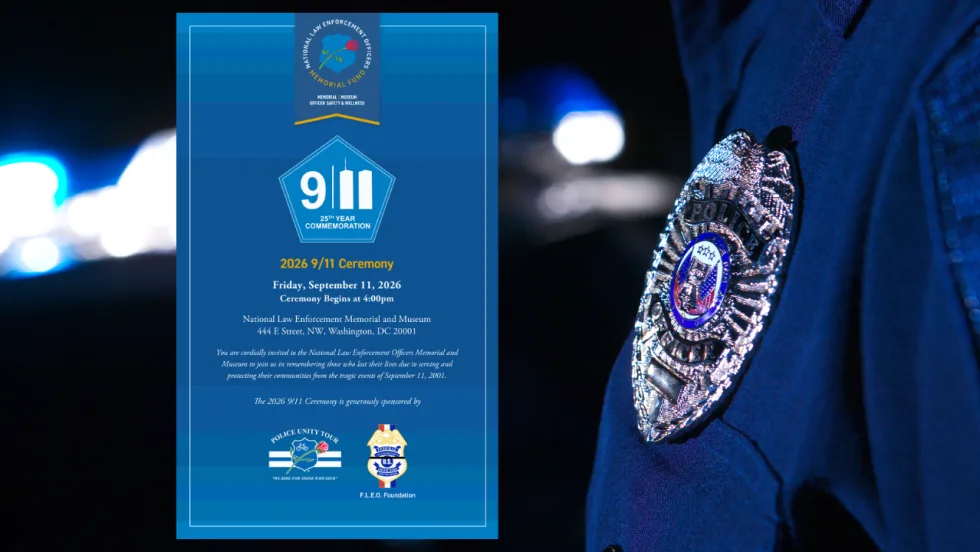
National Law Enforcement Memorial and Museum Hosting 9/11 25th-Year Commemoration Ceremony
The National Law Enforcement Memorial and Museum is hosting a 9/11 25th Year Commemoration Ceremony on Sept. 11 at 4 p.m.
Read More →
National Law Enforcement Officers Memorial Fund Announces June 2026 Officers of the Month
The National Law Enforcement Officers Memorial Fund (NLEOMF) named 15 officers of the Chico Police Department (California) as the Officers of the Month for June 2026 for their roles in responding to an active-shooter incident at a public library.
Read More →