



Hydrate Properly: Drink More Water
Fortunately, there are many things officers can do to get themselves in a better position to perform at a high level during their shifts. One is to hydrate properly.

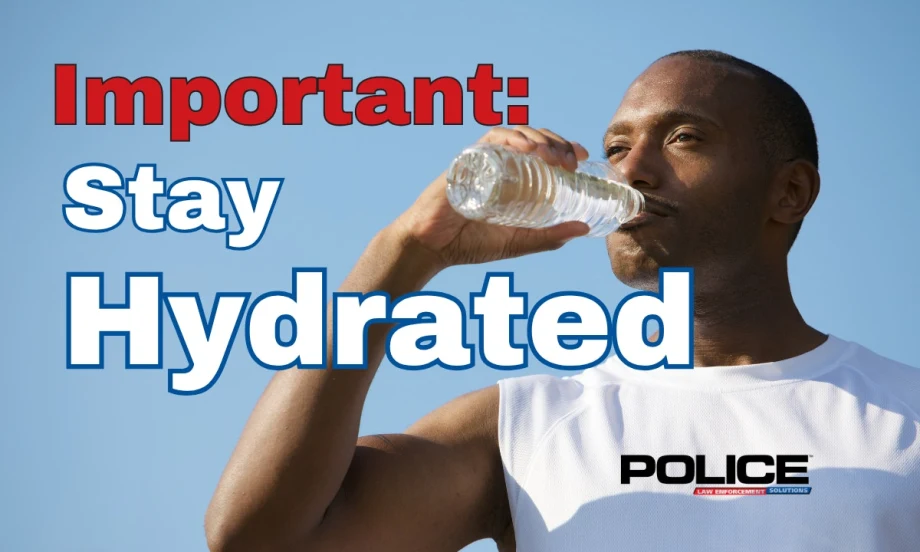
While people disagree about the exact amount of water needed to maintain proper hydration, there's no question drinking enough water is important.
POLICE
The old cliché about cops and their coffee and donuts is the subject of jokes about police and a visual gag in many movies. But, in reality, it is a stereotype born out of the law enforcement officer's need to stay alert. Like surgeons and pilots, alertness in our profession can be the difference between success and failure, life and death. Also like surgeons and pilots, we must remain as cognitively sharp as possible as our brains process all kinds of conscious and subconscious stimuli while making crucial assessments, adjustments, and decisions. As a result, police work can be physically, emotionally, and mentally exhausting.
Fortunately, there are many things officers can do to get themselves in a better position to perform at a high level during their shifts. Officers can exercise, get enough sleep, eat as healthfully as possible, train in tactics, analyze recent crime trends, consult with detectives, and so on. But there is one thing that we can all easily do to improve performance: hydrate properly.
The Science of Hydration
We know that dehydration makes us feel physically ill. If you have had a bad flu or you have gone for a long run on a hot afternoon, you have felt the physical misery of dehydration. But research has also shown a link between hydration and thinking. This is so important because law enforcement is, above all, about thinking.
Clinical sport psychologist and applied sport scientist Dr. John Sullivan recently told me that proper hydration benefits people because it not only improves physical performance, it also improves decision-making, brain function, and attention span
Dr. Daniel Amen wrote in his book "Magnificent Mind at Any Age: Natural Ways to Unleash Your Brain's Maximum Potential" that "The brain is 80 percent water. Anything that dehydrates you makes it harder for you to think."
The when, where, why, and how of hydration turns out to be a little more complex than "stay hydrated." In my research for finding ways to improve my own hydration, I ran across enormous amounts of often conflicting advice.
Some experts say sports drinks are good. Others say sports drinks are bad. Some say drink a ratio of water to body weight at one ounce of water for every two pounds of body weight per day. So if you weigh 200 pounds, this advice says you should drink 100 ounces. Others say that's too much. I also ran across one article that said that if a person cannot tolerate the blandness of water, then drinking soft drinks all day is better than not drinking at all, which is bad advice. In fact, the only real consensus that I found in my research is that caffeine is not hydrating and that energy drinks are unequivocally, universally understood to be very bad. The information out there on hydration is enough to make your head spin as badly as when you are dehydrated!
All this research did bring me to a study published by Lt. Col. Paul D. Lindseth, USAF (Ret.) in the July 2013 Military Medicine that I believe is very relevant to law enforcement officers. The name of the study is "Effects of Hydration on Cognitive Function of Pilots." In this study, dehydration was defined as a loss of 1% or more of body weight and the volunteer participants were broken into groups who were placed on carefully controlled diets. Some had "high-fluid diets" and some had "low-fluid diets." As the abstract of this study summarizes:
"Results showed flight performance and spatial cognition test scores were significantly (p < 0.05) poorer for pilots who had low fluid intakes and experienced dehydration in comparison to the hydrated pilots. These findings indicate fluid intake differences resulting in dehydration may have safety implications because peak cognitive performance among pilots is critical for flight safety."
After reading this study, I thought about how dehydration could adversely affect an officer while driving Code 3, or while driving in pursuit of a robbery suspect, or even while searching a building for an armed suspect.
I also found the "Discussion" section of this study to be particularly helpful. It concludes:
"On the basis of the results of our study and related studies, flight preparation should include a plan to maintain adequate fluid intake before and throughout flights."
This pretty much sums up the essence of what we need to pay more attention to as law enforcement personnel. We need to think about our hydration both as a long-term goal that is part of our overall lifestyle and as something we need to focus on when we are called upon to perform tasks that will deplete our hydration. In other words, let's get proactive when it comes to hydrating.
Have a Plan to Perform
Working in the heat of Southern California has, in a sense, forced me to be proactive about hydration. Over time, I have developed my own personal hydration plan, and it has served me well for many years. When I wake up, I drink 16 to 20 ounces of water. I also drink water before, during, and after my shift. In addition, I drink water with all of my meals. It helps that I keep bottled water with me during my shift. This way I have no excuse for not drinking water, and it allows me to keep track of my water intake during the day.
I also readjust my water intake based upon workouts, climate, and the day's activity level. For example, when I was assigned to SWAT, our gear weighed anywhere from 40 to 50 pounds. During hot days, I would put two 16-ounce bottles of water in my drop-pouch when we were dispatched to handle barricaded suspect incidents. This way I could hydrate in the event of an extended operation.
Finding Your Baseline
In addition to what I have found that works for me, I know that there is the well-documented advice to drink 8 x 8-ounce servings of water a day. Is that enough or too much? Will it work for you? It depends.
Each person will have a baseline, and each person will have experiences throughout the day that will dictate hydration needs. Your baseline is always going to be individually driven by your personal biology, activity level, exercise, job demands, the climate you operate in, and time on target. In addition, you may wear wool uniforms, duty belts, vests, and boots while on patrol. These cause extra exertion and contribute to sweating. Then, as your environment or activity level changes, your hydration needs change too.
Invest some time into assessing your hydration baseline: When do you feel well hydrated and when do you feel under hydrated? How do you feel when you are well hydrated and how do you feel when you are under hydrated? You may even want to have a hydration conversation at your next doctor's appointment.
Above all, try to find a way to increase your alertness through paying more attention to proper hydration. The coffee and donut approach is better left to the jokes.
Melissa Ryan assisted with the preparation and writing of this column.
George Ryan is a sergeant with a major Southern California agency. He spent 17 years in SWAT, and he created his department's Peak Performance and Recovery Training program.
More Patrol

Team Wendy Introduces the EXFIL Endurance Ballistic Helmet, Engineered to Reduce the Burden of Extended Wear
Team Wendy has launched its EXFIL Endurance, a new lightweight ballistic helmet engineered to deliver protection, comfort, and fit during demanding, extended operations.
Read More →
The First Responders Children’s Foundation National First Responders Day Roll Call of Heroes Ceremony Returns to Times Square, NYC
First Responders Children’s Foundation (FRCF), in collaboration with T-Mobile, will host the Roll Call of Heroes ceremony in Times Square to commemorate National First Responders Day on Wednesday, Oct. 28. During the event, FRCF will present 18 Hero Awards.
Read More →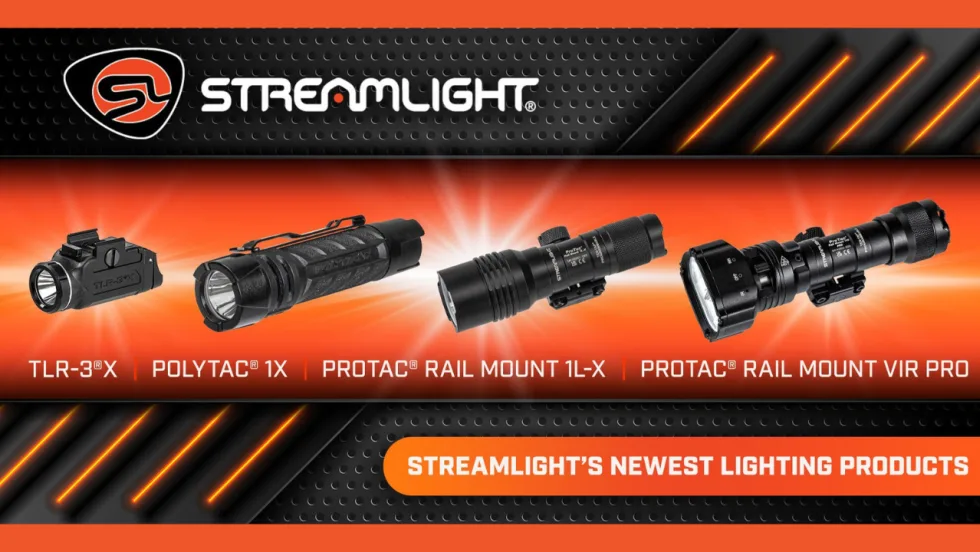
Streamlight to Showcase Newest Lighting Products for Law Enforcement Professionals at IACP 2026
Streamlight will showcase its newest lights for law enforcement at the International Association of Chiefs of Police Annual Conference & Expo. Featured lights will include the TLR-3 X, the PolyTac 1X, and more.
Read More →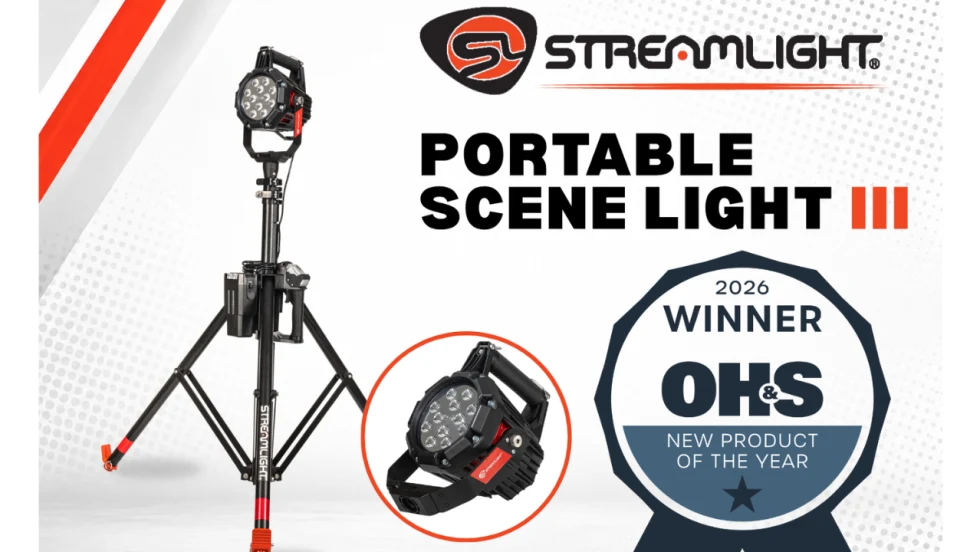
Streamlight Portable Scene Light III Wins 2026 OH&S New Product of the Year Award
Streamlight’s Portable Scene Light III has won the 2026 Occupational Health & Safety (OH&S) New Product of the Year Award in the Lighting category.
Read More →
Adept Armor Introduces Two New Rifle Plates
Adept Armor has launched two new Level IV ballistic plates, the Emperor and the Archon Mark 2, which brings Adept Armor’s new Quatroid ceramic to the high-threat, performance-value center of the range at 5.2 pounds.
Read More →
POLICE Product Test: Benchmade Bailout
The Benchmade Bailout is a slim, lightweight carry knife with a deep-ride pocket clip and comes in a variety of blade steels and scales. Here is a detailed review of the Taiga Green Bailout, released earlier this year.
Read More →
NLEOMF Announces July 2026 Officer of the Month
NLEOMF honored a Michigan deputy sheriff as the July 2026 Officer of the Month for rescuing a trapped driver from a burning vehicle following a Fourth of July crash.
Read More →
Streamlight to Showcase Newest Lighting Products at National Safety Council’s Safety Congress & Expo 2026
Streamlight will showcase its latest lights, including the Portable Scene Light III and the LiteBox 1Million, at the 2026 National Safety Council (NSC) Safety Congress & Expo.
Read More →
The 2027 World Police & Fire Games Set for Perth, Australia
The 2027 World Police & Fire Games (WPFG) will take place in Perth, Western Australia, from Friday, March 12 through Sunday, March 21, 2027.
Read More →
5.11 Partners with National Fallen Firefighters Foundation to Support #ForThe343
5.11 has joined the nationwide movement honoring the 343 New York City Fire Department firefighters lost on Sept. 11, 2001.
Read More →