



Hurricane Response: Weathering the Storm
By the time Florence blew into Wilmington, a city of around 100,000 people, she was much diminished. But then came the rain.

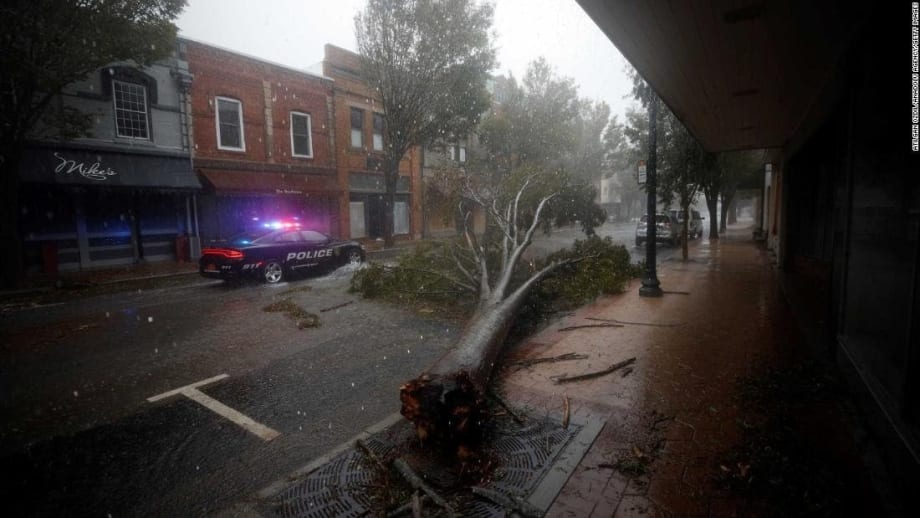
New Bern officers dealt with flooded and tree-blocked streets as they tried to help residents affected by the storm. Photo: New Bern (NC) PD
Immediately after Hurricane Florence made landfall near Wrightsville Beach early on the morning of Friday Sept. 14, public safety officials in the coastal cities and communities of North Carolina believed they had dodged a bullet. As the storm had approached the Southeastern seaboard it had been measured with sustained gusts of 130 mph, a Category 4 on the overused and little understood Saffir-Simpson scale. But it hit the beach as a Category 1, a dangerous storm capable of serious damage, but not the monster that they had feared.
Storm surge had flooded the beach towns and people had to be rescued. Trees were down. Power was out. But overall, the effect wasn't nearly disastrous. "That first day everybody was thinking the damage was minimal, and we felt a great sense of relief," says Michael Fanta, a lieutenant in the city of Wilmington just upriver from the beach cities where the storm came ashore.
By the time Florence blew into Wilmington, a city of around 100,000 people, she was much diminished. But then came the rain.
Wilmington
Florence stalled over the southern coast of North Carolina, moving no faster than a slow walk of 3 to 4 mph. Within two days she had dumped as much as 40 inches of rain on the area. That might not have been so bad, but the area is crisscrossed with rivers, tributaries, and creeks, and they were already swollen by earlier summer storms. Adding to the recipe for disaster was the fact that the ground was saturated and could not absorb more water.
The intensity of the rain and the fact that Florence just wouldn't leave caught many of the public safety officials by surprise. They had never seen anything like this, and they hope to never see it again. "We watched the storm on the map over a 12-hour shift, and it barely moved," says Fanta.
In accordance with their agency's policy, officers of the Wilmington PD were back on the street on Sept. 14 after the storm was downgraded from a hurricane. Because the policy allows for response to life-and-death calls, some of the officers had also been dispatched on priority calls in the teeth of the hurricane, including a domestic violence case that led to an arrest, but mostly they took shelter until the storm weakened.
The wind speed weakened but the effects of the storm intensified. Fanta says that for the officers of the Wilmington PD, the night that followed was much worse than when the hurricane force winds were blowing in the city. There was no power, no streetlights, tornadoes were touching down, and torrential rain fell in blackout conditions. "Officers said they couldn't see over the hoods of their vehicles," he says.
The rain came down so hard and so quickly that the Wilmington PD lost seven patrol vehicles to the rapidly rising waters. Fortunately, no officers were injured.
But conditions soon deteriorated to the point that the department's command had no choice but to take their officers off the street. "We had to withdraw police services," Fanta says.
When Wilmington officers went back out on the streets, they quickly discovered that their city had changed.
The heavy rain had flooded almost every access road into the city, including I-40 and U.S. 74-76, which connect the Wilmington area to the rest of North Carolina. The city was virtually an island. Which meant getting aid and personnel in and out was extremely difficult.
Worse, many of the city's streets were flooded or blocked by fallen trees. So officers responding to calls had to find new ways around town. "It was a maze," Fanta says. "Officers had to find ways to navigate through it, and it was very frustrating. Sometimes they had to start over again trying to get to their destinations."
New Bern
Days before Florence made landfall, the public safety officials in the city of New Bern could follow the storm track and predict that Florence was coming for North Carolina. They also knew the historic coastal city of 30,000 people was likely to get some flooding.
New Bern Chief of Police Toussaint E. Summers Jr. says there was even concern that police headquarters would flood. Accordingly, the department relocated its function to two different locations on higher ground with one on each side of the river just in case the other was disabled by the flooding. The New Bern PD also moved its emergency vehicles to an area that flood waters were not expected to reach. "The only thing we kept here at headquarters was the communications center. They are on the third floor," says Summers.
The predicted flooding did not hit police headquarters. But much of the city, which lies just upriver from Pamlico Sound and at the confluence of the Neuse and Trent rivers, was inundated. By the end of the week, swift water rescue teams had saved 800 people in some 400 different incidents just within the New Bern city limits. The primary police role in these rescues was security. Each team went out with an armed officer in the boat, just in case of hostile action. Fortunately, no one attacked the rescuers.
New Bern and surrounding jurisdictions had one advantage that agencies in the Wilmington area did not. Because access to New Bern was not disrupted by the flooding as it was in Wilmington, officers from other agencies were able to help. Officers and firefighters came from as far away as New Jersey and New York to assist in rescues. Officers from other jurisdictions in North Carolina came to help with police duties.
Summers explains that New Bern has mutual aid agreements with other area agencies, but they were dealing with their own hurricane-related issues and could not lend assistance. "We were very fortunate that the North Carolina Chiefs Association has a very good network," he says. The officers from other North Carolina cities helped New Bern officers patrol, provide security at shelters, enforce the curfew, and guard the barricades that protected flooded communities from looters.
Effects on Officers
In both New Bern and Wilmington and in other areas of the North Carolina and South Carolina coast, officers worked while their own homes were damaged by the storm and subsequent flooding.
New Bern Chief Summers says about 40% of his force lives in the city, and as much as 10% suffered damage to their homes from Florence. Officers who lived outside of the city in rural areas of Craven County also suffered property damage. One officer's home outside of New Bern was destroyed along with all of his possessions, according to Summers. "It was seven or eight days before he could get home to see the damage," the chief says.
Wilmington officers were also hit hard by the storm. Several lost their homes, according to Fanta. "One officer was on duty while his house was flooding, and we had to set up a rescue for his family," he says. Wilmington SWAT was able to make that rescue with the assistance of Cajun Navy volunteers, according to Fanta.
Fanta says one of the department's priorities during the storm and subsequent flooding was to let the officers go check on their homes. "We knew it was weighing on their minds, so when at all possible we let them go do that."
What Worked
Before Florence hit, the Wilmington PD realized that fuel could be an issue. With the power out, the pumps might be disabled. Also, there might be a run on fuel by the populous. So the planners took steps to ensure that public safety personnel had fuel to respond to calls for help after the winds died down.
Fanta says the city closed its public safety fuel center days before the storm arrived. Officers were told to fuel at local commercial service stations using city fuel cards. The result was that the city's fuel supply was held in reserve for after the storm. This became critical when flooding cut off fuel resupply to the city.
Both the New Bern and Wilmington police took steps to protect their vehicles by moving them to high ground. New Bern officials say they used historic flooding records and GIS analysis to determine where to position their vehicles, and they were not damaged by flooding.
Mutual aid agreements with the state chiefs association were extremely helpful for the New Bern police. The Wilmington PD could have availed itself of the same assistance, but getting personnel, equipment, and supplies into the city was extremely difficult because of flooding on access roads and highways.
What Didn't Work
The preplanning for such a disaster was lacking in Wilmington, according to Fanta. He says he was "surprised" the department did not have a template for hurricane response. Fanta was assigned to help produce a plan as Florence was still far out at sea. He and other officers met daily to assign duties, allocate resources, and establish policies.
While Wilmington's fuel allocation measures ensured that their vehicles had gas, New Bern went through some challenges in this area. City pumps were down, according to Summers, but local gas stations were sporadically operating. Eventually, a tanker was brought into the city and stood by to fuel public safety vehicles.
The types of patrol vehicles available to Wilmington officers proved to be a great issue during the flooding. All of the department's squad cars were traditional sedans, and Fanta says their lack of clearance led to some of them being destroyed by water. He hopes the city will be able to soon acquire some patrol SUVs or trucks to respond to future hurricanes. But that may not be possible, as the city budget is now strained by storm recovery.
Wilmington also experienced a communications issue in the aftermath of Florence. After the 911 center lost power, a generator was used to get the center back up and running. Then the generator caught fire and comms went down again. Fanta says the response plan anticipated this possibility and had set up access to some state run VIPER (Voice Interoperability Plan for Emergency Responders) channels. But that didn't work out as planned, and soon all of the city's public safety agencies were operating on one VIPER channel. Fanta says that could have led to a major disruption of communications, but the same catastrophic rain and flooding that had taken out power to the 911 center also made the single VIPER channel a non-issue. "We had made the decision that we couldn't deploy. So there wasn't that much radio traffic," Fanta explains.
Recovery
Both the Wilmington and New Bern police departments said their operations were back to normal when they were contacted last month. Fanta says the Wilimington PD is still affected by the loss of some of its vehicles and by damage at some of its facilities but those facilities are operational.
The cities these departments serve, however, are still recovering and will be for months to come as the citizens try to rebuild their lives and their property. "We had as many as 4,000 homes damaged by the storm," Summers says. Some of those homes belonged to officers who responded to help others while suffering their own losses.
Hurricane Florence Lessons Learned
The experiences of the Wilmington, NC, and New Bern, NC, police departments during and immediately after Hurricane Florence offer a number of lessons for agencies facing impending hurricane impact.
All hurricanes regardless of category strength can lead to devastating flooding.
It's important to have mutual aid agreements with agencies outside your immediate region. In a major disaster all of your neighboring agencies could be too busy to help you.
A major storm can cut off your resupply of food, water, fuel, and other necessities. If you can, conserve resources before the disaster strikes.
Have a detailed plan for what to do in case of disaster in your region. The plan should emphasize what to do in case of your most common disaster.
Protect your vehicle fleet from flooding. It's also a good idea to have a variety of vehicle types in your fleet.
Know what the federal bureaucracy will require of you before the disaster strikes. New Bern Chief of Police Toussaint E. Summers Jr. says it's important to have access to the right forms and to know how to fill them out and submit them when working with the Federal Emergency Management Agency (FEMA).
Expect the unexpected. No matter how well you think you've planned, things can and will go wrong.
More Patrol
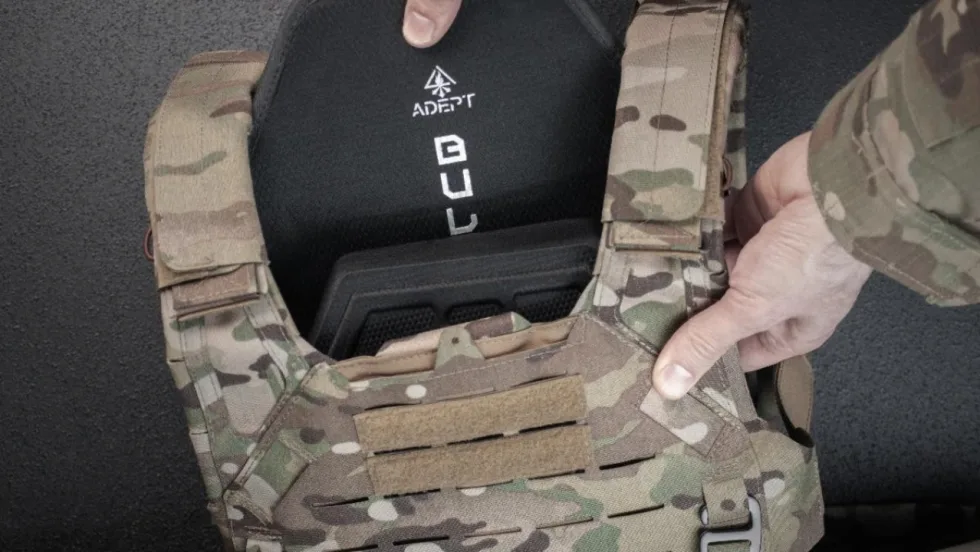
Adept Armor Introduces Two New Rifle Plates
Adept Armor has launched two new Level IV ballistic plates, the Emperor and the Archon Mark 2, which brings Adept Armor’s new Quatroid ceramic to the high-threat, performance-value center of the range at 5.2 pounds.
Read More →
POLICE Product Test: Benchmade Bailout
The Benchmade Bailout is a slim, lightweight carry knife with a deep-ride pocket clip and comes in a variety of blade steels and scales. Here is a detailed review of the Taiga Green Bailout, released earlier this year.
Read More →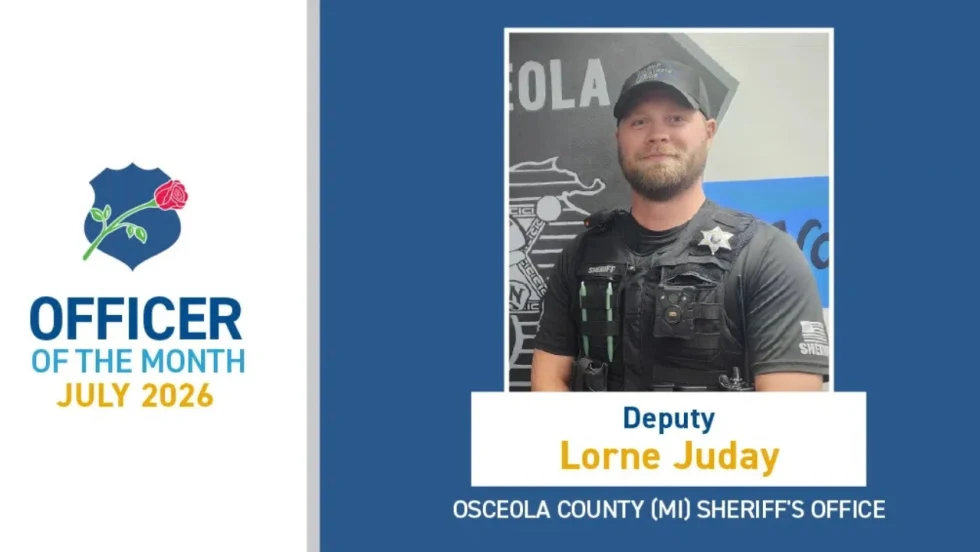
NLEOMF Announces July 2026 Officer of the Month
NLEOMF honored a Michigan deputy sheriff as the July 2026 Officer of the Month for rescuing a trapped driver from a burning vehicle following a Fourth of July crash.
Read More →
Streamlight to Showcase Newest Lighting Products at National Safety Council’s Safety Congress & Expo 2026
Streamlight will showcase its latest lights, including the Portable Scene Light III and the LiteBox 1Million, at the 2026 National Safety Council (NSC) Safety Congress & Expo.
Read More →
The 2027 World Police & Fire Games Set for Perth, Australia
The 2027 World Police & Fire Games (WPFG) will take place in Perth, Western Australia, from Friday, March 12 through Sunday, March 21, 2027.
Read More →
5.11 Partners with National Fallen Firefighters Foundation to Support #ForThe343
5.11 has joined the nationwide movement honoring the 343 New York City Fire Department firefighters lost on Sept. 11, 2001.
Read More →
Team Wendy Announces Title Sponsorship of the Jorge Pastore Foundation
Team Wendy’s 3-year partnership with the Jorge Pastore Foundation expands access to programs that strengthen those who serve.
Read More →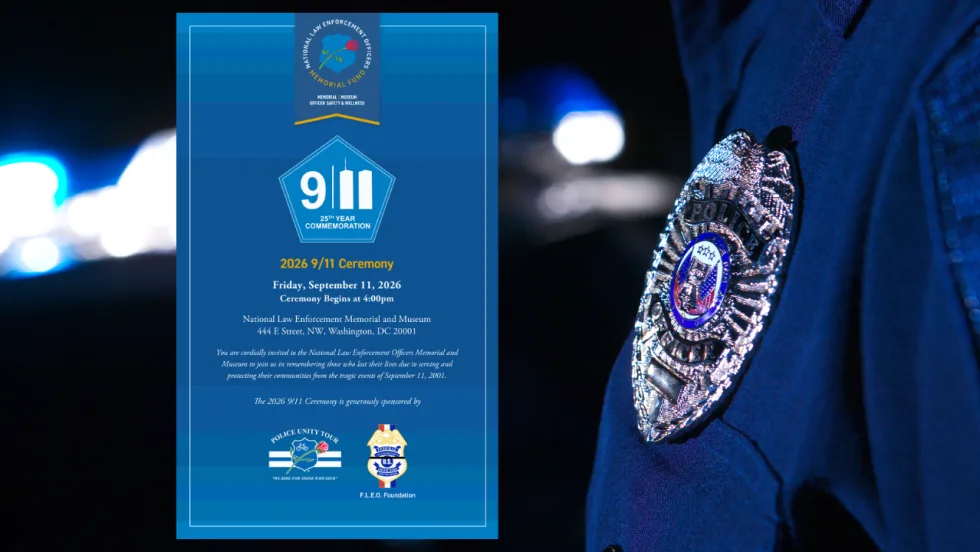
National Law Enforcement Memorial and Museum Hosting 9/11 25th-Year Commemoration Ceremony
The National Law Enforcement Memorial and Museum is hosting a 9/11 25th Year Commemoration Ceremony on Sept. 11 at 4 p.m.
Read More →
National Law Enforcement Officers Memorial Fund Announces June 2026 Officers of the Month
The National Law Enforcement Officers Memorial Fund (NLEOMF) named 15 officers of the Chico Police Department (California) as the Officers of the Month for June 2026 for their roles in responding to an active-shooter incident at a public library.
Read More →
Team Wendy App Creates New Digital Hub for Helmet Owners
The Team Wendy Community App provides one location for warranty registration, size-fit tools, product updates, and community connection. For helmet owners, the new app creates a simpler path to the information and tools that matter most.
Read More →