



How to Crack Down on Street Racing
Street racing of automobiles has been an American tradition since the early 1950s and probably long before. It’s not hard to imagine the first owners of Model T Fords staring each other down as they ran their “Tin Lizzies” down the rutted roads of the early 20th century. But the hey-day of street racing was the “I Like Ike” era when kids in souped-up Chevys and Fords would race for car titles and teenage glory.

Street racing of automobiles has been an American tradition since the early 1950s and probably long before. It’s not hard to imagine the first owners of Model T Fords staring each other down as they ran their “Tin Lizzies” down the rutted roads of the early 20th century. But the hey-day of street racing was the “I Like Ike” era when kids in souped-up Chevys and Fords would race for car titles and teenage glory.
Today’s street racers are in many ways exactly like their grandparents who raced in the ‘50s. They are rebellious, high on horsepower and adrenaline, they feel indestructible, and they are influenced by Hollywood. Their grandparents were urged to rebel and race by such films as “East of Eden” and “The Wild One.” And today’s street racing boom followed the success of the 2001 movie “The Fast and the Furious.” Really, the only thing that’s ever changed in the long history of American street racing is the cars and the fashions worn by the participants.
Contemporary street racing is just as exciting for its devotees as it was for the ducktail and leather jacket generation. It’s all about the speed, the flash, the guts, the adrenaline, and the danger.
And as many communities have discovered, street racing can be extremely dangerous for the driver, the spectators, and innocent motorists and bystanders. Consider the following fatal incidents that have been linked to street racing:
• A drag race in Fort Lauderdale, Fla., ended in a fiery crash that killed four people and injured three others. The drivers of the cars involved did not know each other, but made a spontaneous decision to race. The victims were in their teens and twenties.
• On an early spring day in Munster, Ind., a young mother was getting ready to take her children home from a play date with friends. Suddenly she heard a loud noise. She called out for her six-year-old son, but it was too late. A drag race had claimed not only his life, but the lives of three others.
• A 23-year-old man drag racing at what police estimate to be speeds of more than 100 miles per hour was killed in a popular street racing spot in the Queens borough of New York City. Despite police efforts to patrol the area, reports say that up to 100 spectators could gather in minutes if word got out that a race was about to happen.
Drag racing can also be hazardous for law enforcement officers who attempt to stop it. In Boone County, Ky., a deputy sheriff suffered broken bones and head injuries after he deployed spike strips onto the road to stop a chase that began with a drag race. The cars that were racing went over the spikes and, while the deputy was removing them, he was hit by another car.
These are just a few of the tragic street racing incidents that have been reported nationwide. Street racing has become a serious problem for law enforcement. Many officers believe it’s getting worse, and they are working to find ways to crack down on street racing and offer safer alternatives to street racing enthusiasts.
Racing for Education
Sgt. Chuck Williams of the Phoenix Police Department is part of “Racing for Education,” one of the more successful local street racing interdiction programs. He credits its success, in part, to his own past, saying he knows first hand why street racing is so popular, and he believes he can use his experience to reach the kids. “I’m just like them,” he says. “I used to street race. This is kind of my penance. I used to run away from cops.”
Today, Williams has feet in both worlds. He is a cop, but he still drag races. Phoenix PD’s “Racing for Education” was launched with a worn-out patrol car, a 1989 Chevy Caprice. The car lived a second life after being recycled and rebuilt for racing.
Of course, it’s hard to get “The Fast and the Furious” generation excited about racing a car that was built when they were infants, no matter how souped up it is. In 2000, Williams took over the program with one of his first goals to replace the Caprice with something that would capture the imagination of young drivers. “We needed a better mouse trap to get their attention. Something that would say, ‘See, look at us. We’re cool too,’” he says.
The new car is named “Blackout,” and Williams says Blackout Racing is now the home of “the quickest and fastest multipurpose police cruiser on the planet.” Blackout is a 1995 Chevrolet Caprice four-door, retired police cruiser that is equipped with a 6.2-liter stroked LT4 engine that generates 520 horsepower.
Blackout Racing’s mission is to show young drivers how high-speed racing can be done safely and to show that racing can be fun as well as safe when done under the proper conditions.
Williams also goes out and meets with the kids. He then gives them the opportunity to meet on the track to race him or to settle their grudges with other kids. He says if they race against him he tells them that they have two options: “If I win, I get bragging rights. If I lose, you get bragging rights and a high five. Best of all, no one gets a ticket.”
Williams takes pride in relating to the kids. He tries to bridge the generation gap by showing them that he is not some “high and mighty” member of law enforcement. More importantly, he urges them to race on the track, not on the streets.
Racing for Education has raised more than $25,000 in donations. It has also received a lot of support from the Phoenix business community.
Williams says he has no statistical evidence that his program is a success. However, he speaks to more than 10,000 kids per year about the hazards of street racing. So he believes he is having an impact. “If I save one person, then it is a successful day,” he says.
Dragnet
In San Diego, street racing had been a serious problem for years and it soon reached epidemic proportions. Eventually, the local racing devotees got so out of control that the state’s Office of Public Safety approached the San Diego Police Department with an offer of a grant to establish a program to combat the problem. So in 2001, a full-time street racing unit dubbed “Dragnet” was established.
“We used non-traditional means of enforcement,” says Det. John Austin. “We did pretty much what the kids would not expect. We would go out and document an incident, and we might take action at that time. Or we would show up at a house of a young racer weeks or months later with an arrest warrant.”
At one location, the Dragnet team documented more than 2,000 cars in one night. “So we knew we had a big problem on our hands. In 2001, we had 16 fatalities and 31 serious injuries,” Austin says.
The Dragnet team decided to establish a multi-pronged approach of enforcement and education. The Dragnet officers addressed the kids, the teachers, the parents, and the media. They also tried an innovative approach of using the Internet.
“We contacted the Internet sites promoting local street racing activities and established moderated forums so that when forum members logged on, the first thing they saw was the cops. It gave them an opportunity to ask questions and get straight answers,” Austin explains.
The Dragnet team also trained other police officers, who spread their message and their methods to other departments. With the receipt of a second grant, more money was then devoted to training throughout the state. This training included hands-on visual training by experts on illegal modification of cars and how to do enforcement of street racing activities. “We look at training of street officers as a force multiplier. If they know what we know, and can look for it, it will have a bigger impact,” says Austin.[PAGEBREAK]
Another effort that had a “huge impact,” according to Austin, was the establishment of laws that made it a crime to be a spectator at a street race. “Racing is a huge spectator sport. Well, what if you take that away? The hard core racers will still race. What we stopped was the thousands or so kids who go watch the races,” Austin explains.
With everyone involved in racing being prosecuted and with prosecutors working closely with the police department, Dragnet has seen tangible success. This year, there have been no deaths and no injuries in San Diego that have been attributed to illegal drag racing.
Boise PAL
In 2003, the Boise, Idaho, Police Athletic League started its own racing program with two donated cars: a 1972 Chevrolet Chevelle SS funny car and a 1992 Corvette.
Both cars display the Boise Police patch, and the Chevelle is painted like a police car with overheads and sirens. The Boise PD’s Chevelle runs on a 509-cubic-inch engine that is ethanol injected and reaches speeds of 138 mph in a quarter-mile run, averaging approximately 9.6 seconds. The Corvette is powered by a Chevy LT-1 350-cubic-inch engine with a high-performance exhaust system. It reaches approximately 100 mph in a quarter-mile run, averaging 14.4 seconds.
Both cars are fixtures in six of the local high school drag races at Firebird Raceway. Backed by donations, the officers give out T-shirts and encourage kids to come to the track to race, rather than racing in the streets.
Det. Greg Eisenbeiss boasts that the Boise PD’s car is the fastest in the area. And he says that while street racing is still a problem in Boise, illegal races are less frequent and less likely to draw a crowd because of the police efforts.
Beat the Heat
Most of the local street racing interdiction programs are affiliated with “Beat the Heat,” an organization that began in 1984 in Jacksonville, Fla. In 1990, the program expanded into Dallas and, in 1992, the organization incorporated and received a tax-exempt status from the IRS. Today, Beat the Heat is in 30 states and racing teams are operating in 411 agencies.
Officer Jim Harris of the Amarillo Police Department serves on the executive board of Beat the Heat. He believes that by using the cars to get the kids’ attention, you can then talk to them about racing.
“We are losing more and more young people not only driving the cars but in the crowd of spectators when the drivers lose control, and we are losing more and more each year,” he says. Harris adds that things are getting so bad that in most states if you are caught illegally drag racing, the law enforcement agency can seize your car and the spectators’ cars as well. “That is how bad it is getting,” he says. “We are hitting them real hard.” There are no statistics to show how many people are killed each year by street racing, so the success of programs like Beat the Heat cannot be quantified.
Still, Harris believes cops participating in street racing interdiction programs are making a difference. “We put out the word, and I know of some people that decided not to take part in illegal street races, choosing instead to go to the track. Are we making a great impact? I would like to say, “yes,” but it is still unknown,” he says.
Shelly Feuer Domash is a Long Island-based freelance writer and a frequent contributor to Police Magazine.
Stopping Street Racing
Officers working in street racing interdiction units offer the following advice on how to crack down on the fast and the furious.
“Start with the teaching and offer them an alternative,” says Sgt. Chuck Williams of the Phoenix Police Department. “You have to realize that drag racing is going to happen. So, if it is going to happen, why not corral it to a safe place?”
An alternative can persuade some street racers to take their activities to the track. But some people insist on racing in the streets. Det. John Austin of the San Diego Police Department advocates a carrot and stick approach to cracking down on illegal racing.
“Don’t ignore the warning signs that you have a street racing problem,” Austin says. “Consider when investigating collisions that the primary cause may not be just speed, but a contest or race. And if you identify a racing problem, then enact a spectator ordinance and a forfeiture ordinance.”
More Patrol

Team Wendy Introduces the EXFIL Endurance Ballistic Helmet, Engineered to Reduce the Burden of Extended Wear
Team Wendy has launched its EXFIL Endurance, a new lightweight ballistic helmet engineered to deliver protection, comfort, and fit during demanding, extended operations.
Read More →
The First Responders Children’s Foundation National First Responders Day Roll Call of Heroes Ceremony Returns to Times Square, NYC
First Responders Children’s Foundation (FRCF), in collaboration with T-Mobile, will host the Roll Call of Heroes ceremony in Times Square to commemorate National First Responders Day on Wednesday, Oct. 28. During the event, FRCF will present 18 Hero Awards.
Read More →
Streamlight to Showcase Newest Lighting Products for Law Enforcement Professionals at IACP 2026
Streamlight will showcase its newest lights for law enforcement at the International Association of Chiefs of Police Annual Conference & Expo. Featured lights will include the TLR-3 X, the PolyTac 1X, and more.
Read More →
Streamlight Portable Scene Light III Wins 2026 OH&S New Product of the Year Award
Streamlight’s Portable Scene Light III has won the 2026 Occupational Health & Safety (OH&S) New Product of the Year Award in the Lighting category.
Read More →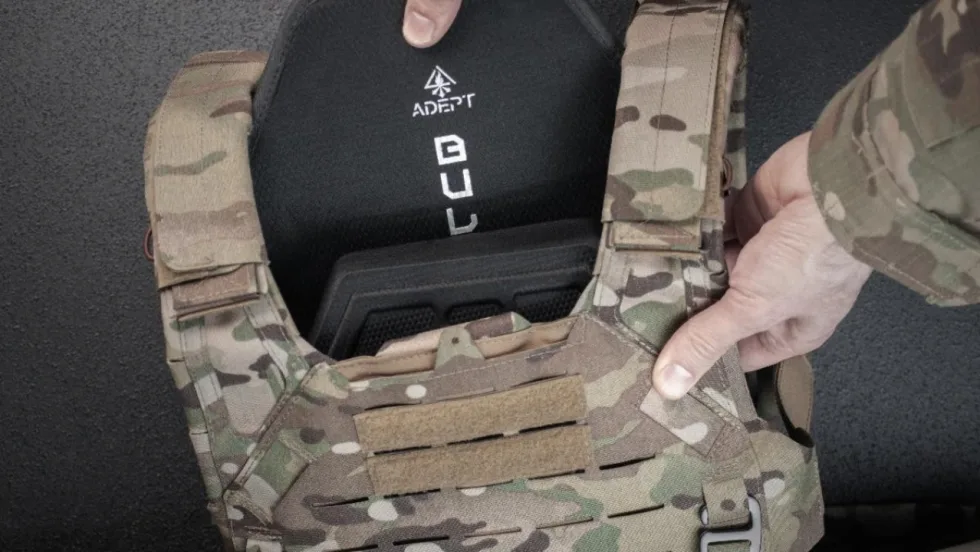
Adept Armor Introduces Two New Rifle Plates
Adept Armor has launched two new Level IV ballistic plates, the Emperor and the Archon Mark 2, which brings Adept Armor’s new Quatroid ceramic to the high-threat, performance-value center of the range at 5.2 pounds.
Read More →
POLICE Product Test: Benchmade Bailout
The Benchmade Bailout is a slim, lightweight carry knife with a deep-ride pocket clip and comes in a variety of blade steels and scales. Here is a detailed review of the Taiga Green Bailout, released earlier this year.
Read More →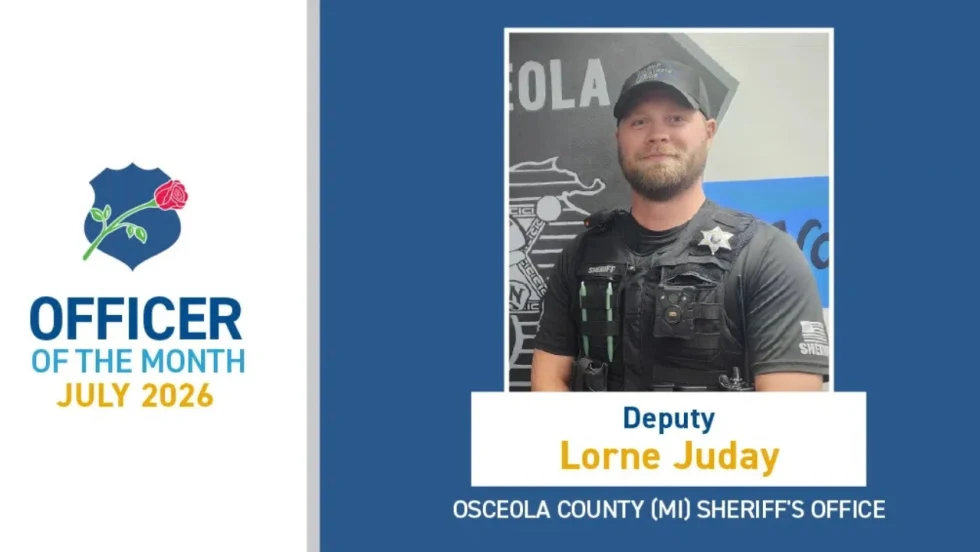
NLEOMF Announces July 2026 Officer of the Month
NLEOMF honored a Michigan deputy sheriff as the July 2026 Officer of the Month for rescuing a trapped driver from a burning vehicle following a Fourth of July crash.
Read More →
Streamlight to Showcase Newest Lighting Products at National Safety Council’s Safety Congress & Expo 2026
Streamlight will showcase its latest lights, including the Portable Scene Light III and the LiteBox 1Million, at the 2026 National Safety Council (NSC) Safety Congress & Expo.
Read More →
The 2027 World Police & Fire Games Set for Perth, Australia
The 2027 World Police & Fire Games (WPFG) will take place in Perth, Western Australia, from Friday, March 12 through Sunday, March 21, 2027.
Read More →
5.11 Partners with National Fallen Firefighters Foundation to Support #ForThe343
5.11 has joined the nationwide movement honoring the 343 New York City Fire Department firefighters lost on Sept. 11, 2001.
Read More →