



Heat Seekers: Thermal Imaging
The technology known as thermal imaging senses heat using infrared—a part of the light spectrum the unaided human eye cannot see—and displays it on a screen as images in varying shades of gray.

It's a dreary winter night, and you can't see your own hand through the fog, let alone the car thief you've been tailing for the past two miles. You think you see his taillights move over to the side of the road and you swerve over to the shoulder.
You park alongside the car you've been chasing, but your perp is nowhere to be seen. He might have run into the thick woods that cover this area. Or he could be hiding in one of the few houses nearby. Backup officers show up and together you contemplate your next move. You wish you could cut through the fog and darkness to nab the guy. If only you had a thermal imaging camera...
What is Thermal Imaging?
The technology known as thermal imaging senses heat using infrared—a part of the light spectrum the unaided human eye cannot see—and displays it on a screen as images in varying shades of gray. But perhaps it's easier to describe it by explaining what it's not.
Don't Call it Night Vision
If you call thermal imaging night vision, you won't just perturb manufacturers of equipment that use the two technologies, you just might request the wrong equipment for your mission.
Although it may seem that thermal imaging and night vision are the same thing, they perform very different functions.
Thermal imaging detects heat, while night vision magnifies light.
Night vision amplifies ambient light into green images seen on a display screen in much the way cats see in the dark what we can't. The technology can be useful on night surveillance missions. But it's not suited for every task after dark.
Night vision requires some form of light. And because it works by amplifying light, if an intensely bright light is caught on camera, it overamplifies it to such a degree that nothing else appears in the screen. It's like a photograph developed from overexposed film. All you can see is the bright light obscuring everything else in the image.
Color is another differentiating factor. Night vision shows one shade of green. Thermal imaging shows images in black and white. A range of varying shades of gray distinguish how hot something is, with pure white usually representing the hottest temperatures. New technology allows users to switch the polarity on thermal imaging cameras so that the hottest spots appear as black, reversing the image like a film negative.
You Aren't a Firefighter
Although firefighters and police officers share the common goal of protecting people, most of the two professions' functions are quite different. So are their uses of thermal imaging.
This isn't to say that you can't use a camera designed for firefighters. But you should realize that they meet the specifications of another line of work, so they might not suit yours.
Law enforcement officers most often use thermal imaging cameras to detect subtle differences in heat, not the high temperatures of fires. Because of this, you should make sure that the camera you're using will detect the range of temperatures you'll be searching for. You'll want the camera to be resistant to environmental changes, but a burning building is probably not something you'll need to deal with.
Beyond temperature, what your camera will see, or its field of view, is an important consideration. Police officers often want the widest field of view possible so they can search a wide area at once. If your camera has a small field of view used by firefighters it might not suit your purposes.
Putting it to Use
Uses for thermal imaging cameras vary. But the 12 applications approved by the Law Enforcement Thermographers' Association (LETA) are the ones proven to stand up in court and meet other criteria that make them the uses of choice for police agencies.
If you aren't familiar with the organization, LETA is a group of volunteer active law enforcement officers who maintain a comprehensive Website designed to help agencies and individual officers better use thermal imaging on the job. The staff are a great resource for everything relating to thermal imaging as used by law enforcement. The biggest service LETA has done the law enforcement community, however, is developing its list of approved LE uses for thermal imaging.
These include search and rescue, fugitive searches, vehicle pursuits, ground surveillance, perimeter surveillance, officer safety, and structure profiles. (See box on page 45 for complete list.)
There are always new and creative ways to use heat-sensing technology, however. Traffic investigators have begun using thermal imaging to detect heat signatures from invisible skid marks to more accurately determine what happened when cars collided in road accidents.
One agency even determined that a drunk driver had been lying with the technology. The person was found next to his car on the side of the road and told responding officers a friend of his had been driving the car and then ran into the woods after crashing it.
Investigators determined the man had been the one driving by checking the passenger seat for heat. When they found it completely cold, they realized there never had been anyone there or he would have left a heat signature. The cops were able to end the investigation without wasting valuable department resources searching for a man who never existed.
Is it Worth It?
Many agencies have gotten beaten up in the press because they used homeland security grants to purchase thermal imaging equipment. While the equipment may be expensive to purchase, it's made to last a lifetime. And it can do what no other technology can. What it can do often ends up saving time and money by answering questions that otherwise would have taken lengthy investigations to answer.
If you think your department would benefit from using a thermal imaging camera, it couldn't hurt to check out funding options, such as grants. The LETA Website is an excellent resource for this information. Sharing one with local agencies could also help with funding issues. It might not seem like a necessity now, but the one time you need thermal imaging capability and don't have it could cost time, money, and lives.
Thermal Imaging Applications
Search and Rescue
Fugitive Searches
Vehicle Pursuits
Flight Safety
Structure Profiles
Ground and Marine Surveillance
Officer Safety
Environmental Law Enforcement
Hidden Compartments in Vehicles
Disturbed Surface Scenario
Traffic Accidents
Perimeter Surveillance
More Technology

A police agency's guide to data-driven fleet management
Costs are rising and the public expects more transparency into how their tax dollars are spent. This e-book shows how police agencies can use fleet data to take control of fleet expenses while improving officer safety and demonstrating fiscal responsibility to the communities they serve.
Read More →
AI and analytics for law enforcement: Turning data into insights
Law enforcement agencies are managing more video, sensor data and digital evidence than ever before. Discover how AI and analytics can help turn that data into actionable insights that strengthen situational awareness, accelerate investigations and support more informed decisions.
Read More →
Vasco Electronics Adds Automatic Language Detection to Vasco Translator Q1
Vasco Electronics’ software update introduces hands-free language switching and expanded offline translation across 45 language pairs, empowering law enforcement, healthcare, and front-office enterprise teams
Read More →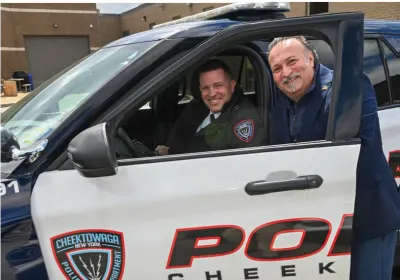

North Miami Police Department Deploys Mark43
The North Miami Police Department has deployed Mark43 as part of its Five-Year Strategic Plan that represents its collective vision and goals for a more proactive police department, anchored by a core commitment to leveraging modern technology to enhance efficiency and public safety.
Read More →
Cellebrite Genesis for Enterprise Now Generally Available
Made available to the public sector in June, Cellebrite Genesis is serving a growing mix of national, regional, and local agencies worldwide, including some of the largest regional and metropolitan police departments. It is now available for enterprise organizations.
Read More →
2026 Vision FirstNet Users Summit to Host Emerging Leaders Training on Grassroots Advocacy for Public Safety
“Emerging Leaders Training: Understanding the Importance of Grassroots Advocacy for Public Safety," a session during the 2026 Vision FirstNet Users Summit, will offer a roadmap for unified advocacy at the federal level.
Read More →
Motorola Solutions Completes Acquisition of D-Fend Solutions
Motorola Solutions has acquired D-Fend Solutions, an industry leader in counter-drone technology. This deal provides public safety and enterprise customers with access to advanced counter-unmanned aerial systems.
Read More →
ZeroEyes, Advantech & Camden Police Partner to Bring AI Gun Detection Technology to Delaware School District
ZeroEyes has partnered with Advantech and the Camden Police Department to deploy ZeroEyes’ AI gun detection and intelligent situational awareness platform at Delaware’s Caesar Rodney School District (CRSD).
Read More →
Leonardo U.S. Cyber & Security Solutions Introduces SignalTrace, the Next Evolution in Electronic Signature Detection Technology
SignalTrace reflects years of product refinement and a clearer expression of the technology’s purpose of recognizing and correlating electronic signatures in publicly broadcast wireless signals to reveal patterns, relationships, and trends that might otherwise go undetected.
Read More →
Pimloc Launches Secure File Sharing to Streamline Release of Redacted Video
Pimloc’s Secure File Sharing lets organizations deliver redacted video, audio, and documents through expiring, passcode-protected links, accelerating delivery while reducing security, compliance, and chain-of-custody risks.
Read More →